I remember sitting at my kitchen table at 2 AM, nursing a lukewarm coffee and obsessing over 750 characters. I was convinced that if I could just weave the right keywords into my Google Business Profile description, the phone would finally start ringing off the hook. I spent three nights polishing that text until it looked like a masterpiece. But when I checked my rank tracker a week later, nothing had moved. Not an inch. It was my first big wake-up call in the world of local search: Google doesn’t actually care about your prose as much as you think it does. It was a humbling moment that taught me to stop playing digital poet and start focusing on the data that actually drives calls.
Stop Obsessing Over the Perfect About Us Section
The harsh reality is that why your business description has zero impact on your map rank is one of those industry secrets that most gurus avoid mentioning. They want you to feel like you are doing productive work by editing text. I made the massive mistake of treating the description like traditional on-page SEO, where keywords are king. In the Map Pack world, however, the description is basically just a greeting card for the humans who find you, not a ranking signal for the algorithm. In fact, a famous study by local SEO expert Joy Hawkins at Sterling Sky confirmed that keywords in the description have no correlation with ranking positions. I found that out the hard way after wasting dozens of hours on “perfect” copy while my competitors were busy refining their categories. Today, I am going to show you how to redirect that energy toward things that actually matter, like maps analytics and categorical accuracy.
Is spending hours on your bio actually worth the effort?
Probably not. If you are looking for a real visibility boost, your time is much better spent looking at why your business category choice might be hiding you from customers. I spent months wondering why my rankings were stagnant, only to realize I had picked a category that was too broad. While I was busy being an amateur copywriter, I was missing the technical signals that Google actually uses to determine proximity and relevance. Have you ever felt that sting of frustration when a competitor with a one-sentence, poorly written bio still manages to sit at the top of the Map Pack? It is not a fluke; it is a sign that they are focusing on the invisible signals while you are focusing on the visible ones. Let’s get into the specific levers you should be pulling instead.
Pick the Category That Actually Matches How People Search
The biggest mistake I see small business owners make is choosing a category that reflects what they call themselves rather than what customers search for. Think of your primary category as the shelf you sit on in a massive digital grocery store. If you are a plumber but you list yourself as a ‘Home Improvement Contractor,’ you are sitting on the wrong aisle, and the customers looking for a leak fix will never see you. I once worked with a boutique gym owner who spent weeks writing about her philosophy on her profile, but her traffic was non-existent. We looked at the data and realized she was listed under ‘Physical Fitness Program.’ Within 48 hours of changing her primary category to ‘Gym,’ her phone started ringing. This is why why your business category choice might be hiding you from customers is the first thing you should audit. Don’t guess; look at what the top three businesses in your area are using. 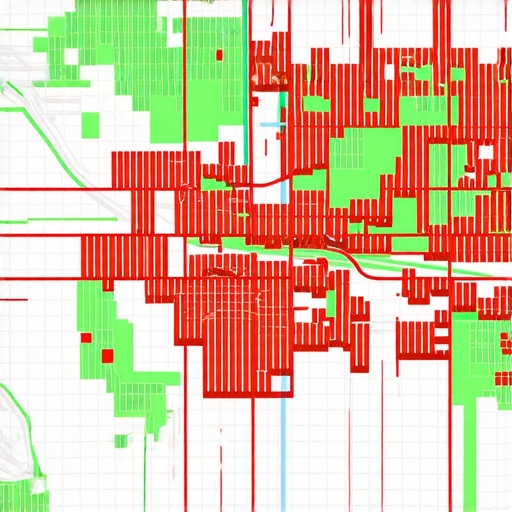
Clean Up the Digital Trails That Are Confusing Google
Google is a massive verification engine. If your business name is ‘Tony’s Pizza’ on Yelp but ‘Tony’s Pizzeria’ on a local chamber of commerce site, Google gets a tiny bit of doubt. Accumulate enough of that doubt, and your ranking drops. I spent a messy weekend three years ago hunting down every mention of a client’s old phone number because they had moved three times. It was a nightmare, but using a citation monitor allowed us to find those ghost listings and kill them. Citations are like references on a resume; if they don’t match, you don’t get the job. Accuracy beats volume every single time. Stop buying 500 cheap links and start fixing the 50 you already have.
Turn Your Review Section Into a Keyword Goldmine
Most people treat reviews as a place for politeness. I treat them as a data source for review management tools that transform customer feedback into revenue. When a customer leaves a review, they are using the natural language that Google loves. If you are a florist, you want reviews that say ‘best red roses in Austin,’ not just ‘great service.’ While you can’t tell customers what to write, you can certainly influence the conversation by asking specific questions. Instead of ‘leave us a review,’ try ‘let us know how you liked our anniversary bouquet.’ Your responses are also a chance to signal relevance. If someone mentions your business, respond by mentioning the specific service you provided. This creates a semantic map of your expertise that no ‘About Us’ section can compete with.
Use Real-Time Data to See Where Your Leads Actually Live
Traditional SEO is like looking at a billboard from a mile away, but local search is street-level combat. You need to know how you rank block-by-block. I used to rely on generic reports that gave me a single ranking number for a whole city, which is completely useless. You might be number one if you are standing in your lobby but number ten if you are three blocks away at the coffee shop. This is where you need to how to use heatmaps to visualize your map pack dominance. By using a sophisticated rank tracker, you can see a grid of your city that shows exactly where your proximity influence dies. If you see your ranking drop off a cliff to the north, that is where you need to focus your local content and citation efforts. It’s about fighting for every inch of that map. If you aren’t watching your maps analytics, you are essentially flying blind. You might see your rankings are up, but if you don’t understand the data gap why your rankings are up but calls are down, you are chasing a vanity metric that won’t pay the bills.I’ve seen it a thousand times: a business owner signs up for a massive citation blast and wonders why their ranking actually dips. The common industry ‘wisdom’ says more is better, but I’m telling you that stop chasing citation volume and focus on this accuracy metric instead is the only way to stay in Google’s good graces. When you flood the web with low-tier directory mentions, you’re often just creating more data noise for Google to clean up. Many people don’t realize that Google’s AI is smart enough to handle minor variations, but it’s the sheer volume of low-authority junk that triggers red flags. According to the 2023 Whitespark Local Search Ranking Factors study, citation consistency has actually seen a decrease in importance compared to behavioral signals and review quality. This is a massive ‘oops’ factor for beginners who ignore the local nuances.
The Proximity Glitch That Distorts Your Reality
One of the biggest traps you can fall into is checking your own rankings while sitting in your shop. Of course you’re number one—you’re literally standing on top of the signal! This is why your proximity rankings drop the moment you leave the office. If you aren’t using a tool that simulates searches from different neighborhoods, you are making decisions based on a fantasy. I once spent a whole month celebrating ‘top spot’ rankings for a client, only to realize we were invisible to anyone more than half a mile away. It was a brutal lesson in the limitations of standard reporting.
Does your rank tracker show the full picture of your city?
If you are using a standard keyword tool, you are likely missing the ‘local grid.’ Real results shift block by block. That’s why rank tracking software often misses the local grid, and if you don’t account for this, you might think you’re dominating a city when you’re actually only visible in a two-mile radius. 
Why Your Reviews Need More Than Just Five Stars
Most owners obsess over the average rating, but advanced local SEO is about velocity and diversity. A business with 500 reviews from three years ago will often lose to a business with 50 reviews from the last month. You need a review management strategy that triples positive feedback to keep your profile fresh and relevant. Google looks at how often people are talking about you *now*, not how popular you were during the pandemic. Also, don’t just stick to the big sites; why your local citation audit is probably missing these niche sites explains why industry-specific directories often carry more weight than another generic yellow-pages clone. You have to think like a human, not just a bot. Have you ever fallen into this trap of focusing on the wrong metrics? Let me know in the comments.It is one thing to fight your way to the top of the Map Pack, but it is a completely different battle to stay there while your competitors are gunning for your spot. I have found that the biggest threat to a stable ranking isn’t just a Google update—it is ‘listing drift.’ This happens when third-party data aggregators or even well-meaning users suggest edits that overwrite your correct information with outdated data. This is exactly why I personally rely on a citation monitor. I do not check it every day, but I have automated alerts set up to flag me the moment a ‘ghost listing’ or an inconsistent phone number appears. If you are serious about scaling to multiple locations, you must unlock the power of local seo software for small business growth. I use tools that offer a ‘data lock’ feature for my Google Business Profile. This prevents competitor-driven edits from going live without my explicit approval, which is a lifesaver when you are managing more than one storefront. 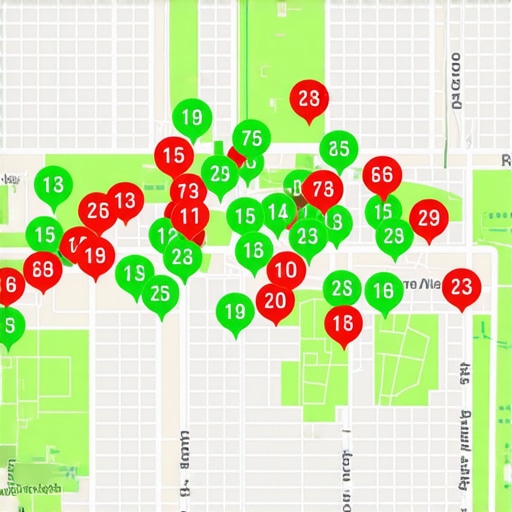 When I am managing complex accounts, I shift my focus from individual keywords to the macro view of the ‘influence circle.’ You cannot just look at a single ranking number; you have to see how your visibility expands or contracts across the city. Using a high-end rank tracker that supports grid-based reporting is non-negotiable for me. If I see a red zone appearing in a neighborhood where we used to be green, it is an immediate signal that a new competitor has moved in or our proximity authority is shrinking. I also lean heavily on maps analytics insights to boost your local map visibility to identify what I call the ‘Data Gap.’ If my impressions are skyrocketing but my ‘Request Directions’ clicks are flatlining, it usually means my primary image or my ‘Open Now’ status is the problem, not my actual rank.
How do I maintain my map rankings as the algorithm shifts?
Consistency is undeniably boring, but it is the only thing that actually works over the long haul. I set a ‘maintenance hour’ every Friday morning. During this time, I use review management tools that transform customer feedback into revenue to respond to every single mention from the past week. As noted by industry expert David Mihm in his local search analysis, Google’s ‘Possum’ update and subsequent tweaks have shifted the focus toward ‘real-world’ behavioral signals. This means Google tracks ‘place activity’ as a massive signal of relevance. If your profile goes dark for three weeks without any new photos or review responses, the algorithm naturally starts to favor the ‘busier’ shop down the street. It is not just about SEO; it is about proving to the bots that your business is alive and thriving. Looking toward the future, I predict that ‘Search Generative Experience’ (SGE) will make the Map Pack even more dependent on visual proof. We are moving toward a world where the one photo move that gets more clicks than a five star rating will be the deciding factor for a conversion. Google’s AI is already getting better at ‘reading’ the contents of your shop photos to verify you actually sell what you claim. My best advice for you today is to grab your phone right now, take three high-quality photos of a recent project or your team in action, and upload them immediately. It is the simplest, most effective way to signal authenticity both to the algorithm and to the customers looking for you. Go do it now—your rankings will thank you later.
The Hard Truths About Local Search I Learned the Hard Way
Looking back at my 2 AM coffee sessions, I realize that I was focusing on all the wrong things. Here is what I know now: First, your Google Business Profile isn’t a creative writing project; it is a database entry. If you treat it like data rather than a blog post, you win. Second, proximity is a moving target. You can’t just check your rank once and call it a day because why map rankings are vain if you arent tracking these three metrics—you need to see how you perform at the neighborhood level. Finally, don’t let “listing drift” steal your hard-earned authority. I’ve seen profiles lose half their traffic because an old phone number from five years ago resurfaced on a junk directory. That is where the citation monitor setting that catches profile hijacks in minutes becomes your best friend.
The Only Toolkit You Need to Own Your Neighborhood
I am often asked what software I actually pay for month after month. I keep it lean: I use a hyper-local rank tracker that shows me the “grid” because generic numbers are useless. I also rely on review management tools that transform customer feedback into revenue to keep the feedback loop moving without taking up my entire Friday. For citation health, I don’t go for volume; instead, I learn how to identify the local citations that actually move the needle. These tools don’t just save time; they give me the peace of mind that I’m not being out-maneuvered by a competitor with a bigger budget but less technical discipline.
The Future of Your Local Business Starts Here
Local SEO isn’t about outsmarting an algorithm; it’s about consistently proving to Google that you are the most relevant, most active, and most trusted option for a customer standing on a specific street corner. By embracing unlock the power of local seo software for small business growth, you move from guesswork to precision. Stop obsessing over your about us section and start looking at your maps analytics. You have the tools, you have the data, and now you have the strategy. Which part of your Google Profile feels the most stuck right now? Drop a comment below and let’s troubleshoot it together.