Why Service Area Pages Fail to Rank and the Street-Level Move That Fixes Them
For the modern service-based business (SAB), the digital landscape often feels like a series of mirages. You’ve built the website. You’ve launched twenty different “city pages” targeting every suburb within a fifty-mile radius. You’ve waited months for the leads to pour in, but instead, your analytics look like a ghost town. Your rankings are buried on page four, and your Google Business Profile (GBP) only seems to trigger when someone is standing directly in your driveway.
This is the “SAB Trap.” It is a cycle of creating thin, duplicate content that Google’s increasingly sophisticated algorithms have learned to ignore. In 2025 and 2026, the old playbook of “City Name + Service” is no longer enough to win the map pack. According to Shahid Anwar, a leading Local SEO & GMB expert, many businesses fail because they lack “proof of work” in the areas they claim to serve. Without granular, localized data, your service area pages are nothing more than digital placeholders that offer zero value to the end user and zero signals to Google.
To break out of this trap, you must stop thinking like a regional manager and start thinking like a neighborhood local. If you want to reclaim lost rankings, you need to understand The Simple Service Area Fix That Reclaims Leads From Neighboring Towns. It starts by abandoning the generic city page and embracing the “Street-Level” move.
The Three Pillars of Failure: Why Your SAPs Are Invisible
Google’s primary goal is to provide the most relevant, trustworthy, and geographically proximate result to a user’s query. Traditional Service Area Pages (SAPs) fail because they violate the core tenets of E-E-A-T (Experience, Expertise, Authoritativeness, and Trustworthiness) at a local level. Here are the three primary reasons your pages stay buried:
1. The Thin Content and Duplicate Text Epidemic
Most agencies and small business owners take a “cookie-cutter” approach. They write one page for “Plumbing in Chicago” and then duplicate it 50 times, simply swapping the word “Chicago” for “Naperville,” “Evanston,” or “Aurora.” Google’s “Helpful Content” updates are designed specifically to de-index this type of low-effort, mass-produced content. If the only thing changing on your page is the name of the town, Google views it as a doorway page, which is a direct violation of their quality guidelines.
2. Lack of Proximity and Trust Signals
Google doesn’t just take your word for it when you say you serve a specific area. It looks for external validation. If your google business profile seo is a mess – featuring inconsistent hours, a lack of local photos, or a mismatched phone number – Google loses confidence. google business profile seo requires more than just filling out a form; it requires a digital footprint that matches your physical claims. Recent SEO research indicates that Google looks for “proof” in the form of recent work photos and neighborhood-specific reviews to verify that a business is actually active in the claimed service area.
3. The “Generic” Penalty
A single page cannot rank for every service and every area simultaneously. When you try to optimize a page for “Emergency HVAC, AC Repair, Furnace Installation, and Duct Cleaning in [City Name],” you dilute your topical authority. Google prefers specialists over generalists. By being too broad, you fail to trigger the specific hyperlocal signals required to beat a competitor who has a physical office in that specific town.
Moving from City-Level to Street-Level: The Hyperlocal Shift
If city-level targeting is failing, what is the alternative? The answer lies in the “Street-Level” move. This strategy involves shifting your focus from broad metropolitan areas to specific neighborhoods, districts, and even famous intersections. Instead of targeting “Los Angeles,” you target “Silver Lake,” “Echo Park,” or “Los Feliz.”
Hyperlocal SEO is the process of optimizing your online presence for very small, specific geographic areas. This is the ultimate move for How to Build Service Area Pages That Actually Rank Without a Physical Office. By micro-targeting, you face less competition and can provide much more specific value to the user, which significantly boosts your google business profile optimization.
Tactics for Street-Level Dominance
- Neighborhood-Specific FAQs: Address issues unique to a specific area. For example, a plumber in a historic district might include an FAQ about “Handling 100-year-old clay pipes in Lincoln Park.”
- Local Landmark Mentions: Mentioning that you just finished a job “three blocks down from the Old Town School of Folk Music” tells Google (and the customer) that you are physically present in that community.
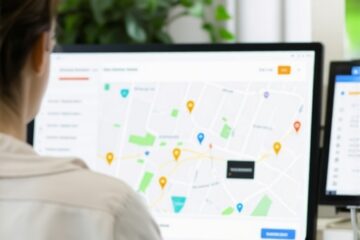
- Embedded Micro-Maps: Instead of a map of the entire state, embed a Google Map that shows a specific cluster of recent job sites or a specific neighborhood boundary.
This granularity creates a “density of relevance” that generic city pages can never match. When a user in a specific neighborhood searches for a service, Google’s proximity-weighted algorithm will prioritize the business that has the most “street-level” data points associated with that exact coordinate.
The Anatomy of a High-Ranking Hyperlocal Page
Building a street-level page requires a technical framework that goes beyond just writing good copy. You need to provide the “proof” that Google’s crawlers are looking for. Here is a checklist for the anatomy of a high-ranking hyperlocal page:
Localized Reviews and Testimonials
Don’t just pull your latest five reviews. Use a filter to display reviews specifically from customers in that neighborhood. If a resident in “Wicker Park” sees a testimonial from their neighbor on your page, the conversion rate skyrockets. This also provides Google with localized text strings (e.g., “Best roofer in Wicker Park”) that reinforce your rankings.
Geo-Tagged Media
Visual proof is the strongest signal of all. Upload photos of work actually performed in that specific zip code. While some argue over whether Google reads EXIF data, there is no doubt that Google’s AI can identify local landmarks and surroundings in photos. A photo of your service truck parked in front of a recognizable local building is worth more than a thousand words of SEO copy.
Advanced Schema Markup
Using local seo tools to implement LocalBusiness schema is non-negotiable. However, for street-level pages, you should go further by using “areaServed” and “hasMap” properties within your JSON-LD. This technical “handshake” tells Google exactly where your service boundaries lie. For more on this, check out The Schema Tweak That Puts Your Business on the Map in Neighboring Towns.
How Street-Level Content Feeds Your Google Map Pack Rankings
There is a powerful synergy between your website’s hyperlocal pages and your google business profile ranking. Many business owners treat their website and their GBP as two separate entities, but in reality, they are a feedback loop. When your website proves – through street-level content, localized reviews, and geo-tagged media – that you are an authority in a specific neighborhood, Google is significantly more likely to show your pin in the “Local 3-Pack” for that area, even if your physical office is miles away.
To rank higher on google maps, your website must act as the “evidence locker” for your GBP. Google’s algorithm uses “relevance” as one of its three main pillars (alongside proximity and prominence). By populating your site with neighborhood-specific data, you are maximizing the relevance pillar. This is why a well-optimized street-level page can often outrank a competitor who is physically closer to the user but has a generic, unoptimized website.
If you want to see a real increase in visibility, you should follow these 7 Tactics to Increase Map Views That Don’t Involve Keyword Stuffing Your Business Name. The goal is to build a web of local signals that makes it impossible for Google to ignore your presence in your target service areas.
Future-Proofing: Why Hyperlocal Matters for 2026 AI Search
As we move toward 2026, the way people search is fundamentally changing. We are entering the era of AI agents and predictive search. Virtual assistants and AI-powered search engines (like Perplexity or Google’s SGE) don’t just look for keywords; they look for the best answer to a highly specific problem.
An AI agent tasked with finding “the best plumber for historic homes in Brooklyn Heights” will skip over the business with a generic “Plumber Brooklyn” page. It will prioritize the business that has detailed content about historic brownstone plumbing, neighborhood-specific reviews, and a clear street-level presence. If you aren’t optimized at this granular level, you are essentially invisible to the next generation of search technology. This is a critical part of Why AI Bots Skip Your Store: 4 Rank Tracker Fixes for 2026 Maps.
Shahid Anwar emphasizes that the businesses that will thrive in the AI era are those that treat their digital presence as a living record of their local activity. Predictive search will favor businesses that have a consistent history of serving specific micro-locations, as this data allows the AI to predict a high level of customer satisfaction.
Stop Mapping, Start Dominating
The days of ranking with thin, “ghost” city pages are over. To succeed as a service-area business in 2025 and beyond, you must abandon the generic and embrace the hyperlocal. Stop trying to map your entire county with low-quality content and start dominating your key neighborhoods with the street-level move.
Your Action Plan:
- Audit Your Current Pages: Identify city pages with high bounce rates or zero rankings.
- Pick a Pilot Neighborhood: Choose one high-value neighborhood and “go deep.” Replace the generic text with localized FAQs, neighborhood project highlights, and specific testimonials.
- Update Your Media: Take 5-10 photos of recent jobs in that neighborhood and add them to the page with descriptive, localized alt-text.
- Refine Your Schema: Use a google maps ranking service or specialized tool to ensure your “areaServed” schema is perfectly tuned.
By shifting your strategy to the street level, you aren’t just chasing an algorithm; you are building a more trustworthy, more relevant, and more profitable local brand. Use a google business profile audit tool to find your current ranking gaps and start filling them with the proof Google demands. The map is waiting – it’s time to claim your territory.