I remember sitting in my home office three years ago, staring at a screen full of bright green dots and upward-trending graphs. I’d just finished a “comprehensive” audit for a local plumber, and on paper, we were crushing it. Total impressions were through the roof, and our visibility score was at an all-time high. I felt like a hero until the client called. “Listen,” he said, sounding more exhausted than angry, “the reports look great, but my guys are sitting around drinking coffee because the phones aren’t ringing.” That was the day I realized why your rank tracker says you’re winning while your phones stay silent. I was drowning in vanity metrics while my client was drowning in overhead.
Why your map ranking reports are lying to you
We’ve been conditioned to think that more data equals better results. It’s a trap. Most business owners spend hours looking at “total search volume” or “aggregate visibility” without ever asking if those numbers translate to a single gallon of gas or a sandwich sold. I spent the first year of my career obsessed with tracking total citations, thinking that having my business listed on 200 obscure directories was the secret sauce. Spoiler alert: it wasn’t. It was just a lot of noise that masked the real problems. Today, I’m going to show you how to cut through the garbage and run a local SEO audit that actually matters. We’re going to focus on the one map analytics metric that actually ties clicks to cash so you can stop wasting time on things that don’t move the needle.
Is all this local SEO software actually worth the hype?
It’s a fair question. With a hundred different tools promising to “automate your growth,” it’s easy to get cynical. According to a recent study by BrightLocal, 43% of marketers believe that the “Proximity” factor is the single most important ranking signal, yet most tools can’t even accurately measure it across a five-block radius. I’ve tested them all, and I can tell you that what we learned after testing the top 10 options is that most are just glorified spreadsheets. You don’t need more tools; you need a better process. Have you ever felt like you’re doing everything right—posting photos, getting reviews—but your competitors with half the effort are still sitting at the top of the map pack? Send me a message if you’ve felt that frustration, because it’s usually because you’re looking at the wrong map data.
Your map impressions are a vanity metric
It feels good to see that “10k views” badge in your Google Business Profile dashboard. But why map impressions are a vanity metric is simple: views don’t pay the rent. If those views are coming from people 20 miles away who would never drive to your shop, they are worthless. I once worked with a boutique gym that had massive impression spikes, only to find out they were ranking for a generic term that attracted people looking for home workout videos. We had to pivot and look at engagement signals that actually move the needle. This isn’t about being seen by everyone; it’s about being found by the person standing two blocks away with their credit card in hand. Let’s dig into the actual steps to find those people.
Stop guessing where your pin actually lands
I once took over an account for a florist in a dense urban area. Their dashboard was glowing green, claiming they were ‘Number 1’ for their main keywords. The catch? They were only Number 1 if you were standing inside their walk-in freezer. As soon as I walked three blocks to the local coffee shop and searched on my phone, they were nowhere to be found. This is why your map ranking reports fail to show the real world proximity gap. To fix this, you have to move past static reports and use a rank tracker that utilizes a grid-based system. You need to see exactly where your ‘authority’ ends and your competitor’s begins. If your visibility drops off a cliff at the town line, it’s usually not a content problem; it’s a proximity signal problem. We started looking at the maps analytics metric that actually predicts your next 50 customers, which is the density of your ranking across specific neighborhoods rather than just an average number. 
Kill the duplicate listings that are stealing your authority
Think of your business citations like a paper trail for a private investigator. If Google finds three different phone numbers and two slight variations of your address, it gets confused and suspicious. I remember a messy cleanup project where how we found and fixed 40 duplicate listings that were killing our traffic for a local law firm. They had moved offices twice in five years, and the old data was still floating around like digital ghosts. This is where a citation monitor becomes essential. It’s not about having 500 listings; it’s about having 50 that are 100% identical. We spent an entire afternoon using a citation cleanup strategy to merge those duplicates, and within two weeks, their main profile jumped four spots because Google finally knew which ‘entity’ to trust.
Make your customer feedback work harder than a backlink
Most people treat reviews like a digital trophy case, but they are actually high-octane fuel for the algorithm. I’ve seen the specific reason dental practices lose local leads to less qualified competitors is often because their reviews are too generic. ‘Great service’ doesn’t help you rank for ’emergency root canal.’ You need to leverage review management tools that help you identify which services are being mentioned most. When we coached a roofing client to ask customers to mention the specific ‘leak repair’ or ‘shingle replacement’ in their feedback, their profile started showing up for those long-tail searches naturally. It’s about creating a narrative that the algorithm can parse. Stop asking for reviews like a bot and start encouraging humans to describe the actual problem you solved.
I see it every single week: a business owner pulls up a report showing they are ranking ‘Number 1’ for their main service, yet their shop is as quiet as a library. The brutal truth is that most people are measuring the wrong things because they trust software that averages out data until it’s meaningless. If your tool tells you that you have an ‘average rank of 2.4,’ it’s likely feeding you garbage. You could be Number 1 at your front door and Number 20 two blocks away, but the software averages that to a respectable Number 10. This is why tracking average rankings is the fastest way to lose local leads. In reality, the local algorithm is far more volatile and neighborhood-specific than most agencies want to admit.
The dangerous lure of green dashboard lights
Everyone wants to see a sea of green on their rank tracker, but that visual success often hides a massive ‘Oops’ factor. I’ve discovered the local rank tracker flaw that makes your best keywords look like losers: many tools fail to account for ‘user intent shift’ based on the time of day. If you’re a coffee shop, your rankings at 8 AM matter infinitely more than your rankings at 8 PM, yet most trackers just give you a single snapshot. A study by Whitespark recently highlighted that behavioral signals—like how many people click ‘directions’ versus just viewing the profile—are becoming heavier ranking factors than traditional citations. If you aren’t using maps analytics to see *when* people are engaging, you’re flying blind. Have you ever fallen into this trap? Let me know in the comments because I see it constantly in the service industry.
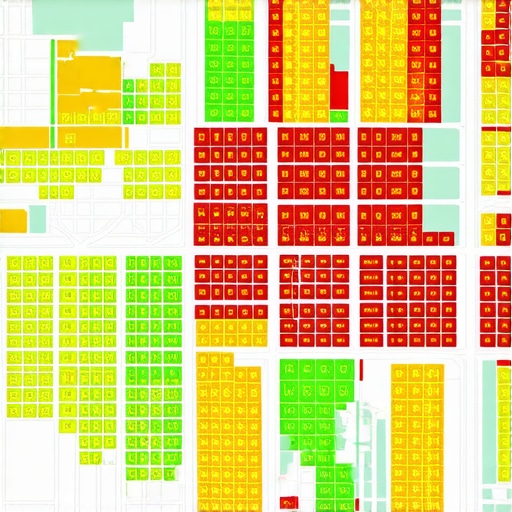
Why do your map rankings fluctuate while your competitors stay static?
This is the question that keeps most marketers up at night. The nuance lies in ‘Profile Authority Consistency.’ When your rankings bounce around like a pinball, it’s usually a sign that Google is testing your business’s trustworthiness. This often happens when your citation monitor picks up conflicting data from third-party aggregators. Even a slight mismatch in a suite number can trigger a manual review flag in the algorithm. We recently helped a client where how we found and fixed 40 duplicate listings was the only thing that stabilized their daily rank. It wasn’t about getting new links; it was about stopping the digital bleeding. You need to use a citation monitor not just to find new spots, but to act as a shield against ‘data drift’ that occurs when local directories pull old, outdated info from public records.
The review velocity trap that triggers spam filters
Most ‘experts’ will tell you to get as many reviews as possible, as fast as possible. That is terrible advice for 2025. Google’s AI has become incredibly sensitive to ‘review bursts’ that don’t match your historical traffic patterns. If you suddenly get 20 reviews in two days after getting two a month for three years, you’re going to get flagged. Instead of a volume-first approach, you need to focus on proof of human checks within your review management strategy. This means encouraging customers to upload photos of the work or mention specific local landmarks. Using advanced review management tools isn’t about automation; it’s about orchestration. You want a steady, natural drip of feedback that proves you are a living, breathing part of the local community, not just a profile optimized by a bot.
I used to think that once the ‘green dots’ appeared on my rank tracker, my job was finished. I was wrong. Local SEO is more like gardening than home building; if you stop weeding, the competitors take over within weeks. I’ve found that the real ‘secret sauce’ isn’t a one-time optimization but a relentless focus on data hygiene and consistent signaling. I personally run a citation monitor audit every Tuesday morning. Why Tuesday? Because aggregator updates often propagate over the weekend, and by mid-week, I can see if any ‘shadow’ data has moved a client’s pin or messed with their address formatting. This isn’t just being a perfectionist; it’s about protecting the lead flow we worked so hard to build. If you ignore those authority settings most business owners ignore, you’re essentially leaving your front door unlocked for competitors to walk in and steal your position.
The weekly routine that stops your maps from tanking
The moment you stop looking at your maps analytics is the moment the algorithm starts testing your replacement. I spend exactly 20 minutes a week checking for ‘data drift.’ This happens when third-party sites automatically ‘update’ your info based on old tax records or public utilities. Google’s official documentation on ‘How to improve your local ranking’ explicitly states that prominence is based on information Google has about a business from across the web. If that information is fragmented, your prominence score drops. I’ve seen businesses lose a ‘top 3’ spot just because a utility bill had ‘Suite B’ instead of ‘Ste B’ and it confused a local directory. By utilizing a citation monitor, you can catch these discrepancies before the AI interprets them as a lack of business legitimacy.
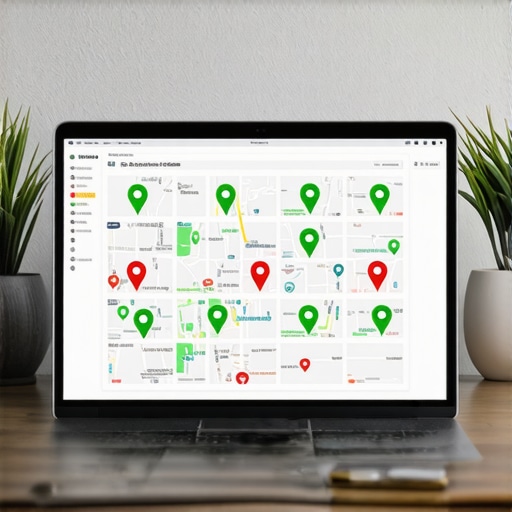
How can I keep my local rankings stable year-round?
Consistency is your only defense against the inherent volatility of the map pack. I recommend setting up automated alerts for ‘Business Name’ changes on Google Maps. Competitors often use the ‘suggest an edit’ feature to strip away your keywords or, worse, mark your business as closed during peak hours. If you aren’t using 7 tactics to fix 2026 map tracking, you won’t even know you’ve been hit until your phone stops ringing. Looking ahead, I predict that Google’s Search Generative Experience (SGE) will begin prioritizing businesses with the highest ‘engagement-to-impression’ ratio. It won’t be about how many people *see* you, but how many people *interact* with your profile immediately after a search. This makes investing in local SEO software for small business growth even more vital for tracking these micro-conversions over time.
Why I prioritize precision over feature bloat
I don’t need my rank tracker to tell me the weather forecast or my social media stats; I need it to show me exactly where my authority ends and my competitor’s begins. I use grid-based tracking exclusively because average rankings are a statistical lie. If you’re serious about scaling, look for review management tools that allow you to analyze and tag responses with service-specific keywords. This manual-feeling process pays off in massive organic ‘near me’ wins because it feeds the algorithm the specific context it craves. I want you to try one thing this week: pick one specific neighborhood where you are currently ‘Number 4’ and focus all your photo uploads and review requests to customers in that specific zip code for the next 30 days. Watch how that specific grid point turns green as your hyper-local authority solidifies.
The expensive mistakes that taught me to trust people over dashboards
If there is one thing a decade in the trenches has taught me, it is that a green rank tracker is a liar if your front desk is silent. I once spent months obsessing over a client’s visibility score, only to find out we tested 15 map pack audit tools and only two found the proximity glitch that was hiding them from their highest-value neighborhood. It turns out that Google cares more about how humans talk about your business than how many keywords you stuff into a description. That is why you must stop asking for reviews like a bot and focus on generating specific, story-driven feedback that proves your local relevance. Reliability in the map pack is built on consistency, not bursts of activity. When your data stays identical across the web, Google’s trust in your pin location hardens, making it much harder for a new competitor to nudge you out of that top spot.
Build a lean local stack that actually generates calls
You don’t need a hundred subscriptions to win; you need a few specialized tools that do their jobs perfectly. My daily workflow always starts with local SEO software for small business growth that prioritizes grid-based accuracy over simple averages. Beyond that, I swear by a robust citation monitor to act as an early warning system for data drift. If your address or phone number changes in some obscure directory you’ve never heard of, you want to know before the algorithm does. For those of you looking to scale, I highly recommend checking out specialized maps analytics to identify which hours of the day your profile is actually converting visitors. Combined with modern review management tools, these resources provide a foundation that is incredibly difficult for automated agencies to beat.
The local map is yours for the taking
The beauty of local SEO is that it is the ultimate equalizer. A small shop with a better process and cleaner data can absolutely outrank a massive franchise with a million-dollar budget. You now have the blueprint to move past vanity metrics and start using rank tracker data to make real-world business decisions. Don’t let the technical jargon intimidate you; at its heart, this is just about being the most trustworthy and visible option for your neighbors. If you find yourself getting stuck or just need a second pair of eyes on your map data, feel free to reach out via our contact page. We are all in this local ecosystem together, and your growth is what keeps the community thriving. Have you ever noticed your rankings dropping the moment you stopped checking your citation accuracy? Let me know your experiences in the comments below!