I still remember the morning I opened my laptop and felt that cold pit in my stomach. My little shop, the one I’d spent three years building, had effectively vanished from the local map pack. One day we were the kings of the neighborhood; the next, we were buried on page four like some forgotten digital relic. I spent the next six hours frantically refreshing my browser, convinced it was just a glitch. It wasn’t. It was a wake-up call. I’d made the classic mistake of getting comfortable. I assumed that because I was on top, I’d stay there. I stopped checking my vitals. I ignored the small shifts. And then, the floor fell out. If you’re looking at a screen right now and wondering where your customers went, I want you to take a deep breath. You aren’t failing; you’re just being challenged by a system that never sleeps. We’re going to get those leads back, but we have to be smarter than the algorithm.
Stop Panicking and Start Digging into the Data
When you see your traffic plummet, your first instinct is to change everything. Don’t. I did that once—I changed my categories, my description, and my service area all in one afternoon. It was a disaster that took months to fix. Instead, you need to realize that a visibility drop is just a symptom, not a death sentence. Most of the time, it comes down to a few core issues: an algorithm tweak, a spike in competitor activity, or—my personal favorite—dirty data. If you aren’t using a reliable rank tracker, you’re basically flying blind. According to data from Search Engine Journal, nearly 70% of local searchers click on one of the first few results, so even a small drop in position can slash your calls by half. We’re going to find those gaps today. I’ve learned the hard way that hoping for a recovery isn’t a strategy. You need to see exactly where the pin moved and why Google suddenly lost trust in your location.
Does local SEO software actually make a difference when things go south?
I get the skepticism. You’re already losing money because the phone stopped ringing; the last thing you want to do is pay for more tools. I used to think I could manage everything with a spreadsheet and a prayer. But after we audited 50 local business profiles, I realized that humans are terrible at spotting the tiny, incremental changes that maps analytics catch in seconds. You need to see the “why” behind the move. Have you ever looked at your dashboard and felt like the numbers were just lying to you? Tell me in the comments, because I’ve been there. The truth is, the software doesn’t do the work for you, but it gives you the map to the gold. Without a solid citation monitor, you might not even realize that a third-party site has overwritten your address with an old one, confusing Google’s bots and tanking your authority. The good news? Most drops are reversible. I’ve seen businesses bounce back higher than their original position just by cleaning up their profile. It’s about being more systematic than the guy down the street. Let’s get into the actual steps to reclaim your territory.
Clean Up the Mess and Rebuild Your Map Presence
When my shop fell off the map, I was staring at a single ‘average’ number on a generic dashboard. It told me I was in position three, which felt safe. I was wrong. I finally fired up a specialized rank tracker setup that shows real neighborhood proximity and saw the brutal reality. On a 10×10 grid, I was a green ‘1’ at my front door, but as soon as I looked two blocks south, I was a red ’18.’ I was only dominating my own parking lot.
Stop Trusting Your Office Desktop Results
Searching for your own business from your office chair is the fastest way to get a false sense of security. Google knows exactly where you are, and it’s going to show you your own listing because of proximity. To get the real picture, you need to use the grid-based ranking method. It acts like a heat map for your visibility, showing you exactly where your competitors start to squeeze you out. When I saw my ‘red zone,’ I realized I wasn’t losing because of my service; I was losing because my digital footprint didn’t extend past the nearest traffic light. #IMAGE_PLACE_HOLDER_B#
Find and Kill the Data Zombies
Think of your business data like a credit report. If there’s an error on one obscure site, it can drag down your entire score. I once spent a month trying to figure out why a client’s plumbing business wouldn’t rank for ’emergency pipe repair.’ It turned out an old directory had scraped their info from a 2012 yellow pages ad and listed a defunct phone number. Google saw the conflict and pulled their trust. We used a specific citation monitor setting to flag these discrepancies instantly. It’s much easier to kill a data zombie when it first appears than to try and clean up a hundred duplicates six months later.
Turn Your Feedback Loop into an Engine
Reviews aren’t just about getting five stars; they are context clues for search engines. If you aren’t using review management tools to stay on top of your responses, you’re missing out on vital ranking signals. I started making it a point to mention the specific neighborhood or service in every reply. It sounds small, but it builds a layer of relevance that a ‘thanks for the business’ template never will.
Follow the Money with Real Geographic Data
Finally, stop obsessing over total impressions and start looking at where the clicks are coming from. I’ve audited profiles that had 50,000 views but zero calls because they were ranking for keywords in a city three hours away. You have to use maps analytics to find your most profitable neighborhoods. This allows you to stop shouting into the void and start focusing your energy where the actual customers live. By the time I fixed my grid and cleaned my citations, my call volume didn’t just return—it doubled, because I was finally visible to the people who actually had their wallets out.Most of the advice you’ll find online about local SEO is stuck in 2018. Everyone tells you that your address needs to be character-perfect across every obscure directory—the famous NAP consistency rule. But here is the contrarian truth: Google has gotten much better at understanding that ‘St.’ and ‘Street’ are the same thing. I’ve seen business owners spend dozens of hours on manual cleanup only to see zero movement in the map pack. The real danger isn’t a missing hyphen; it’s the data zombies. This is where the citation consistency myth and what actually matters for rankings comes into play. You aren’t fighting minor formatting errors; you’re fighting duplicate listings and profile hijacks that split your authority in half. If your software isn’t flagging these high-level conflicts, you’re just rearranging deck chairs on a sinking ship.
Why Your Weekly Ranking Reports Feel Like They Are Lying To You
The ‘Oops’ factor for most small business owners is over-relying on a single ‘Average Position’ metric. It’s a comfort blanket that leads to total blindness. I’ve audited accounts where the owner was thrilled because their rank tracker showed them at #1, yet their phones were silent. Why? Because that #1 was only valid within a 500-foot radius of their front door. The moment you drive three blocks away, they vanish. This happens because rank tracking software often misses the local grid, giving you a ‘global’ average that doesn’t reflect the hyper-local reality of proximity. If you aren’t looking at a multi-point grid, you aren’t seeing the walls your competitors have built around your service area. According to the Whitespark Local Search Ranking Factors study, proximity remains the single most powerful—and most volatile—ranking factor. Most local seo software tools overestimate your true ranking because they don’t simulate a mobile user moving through a neighborhood. 
How do you know if your rank tracker is actually showing the truth?
To get a real answer, you have to look at the ‘Data Gap.’ If your rankings are climbing but your ‘Get Directions’ clicks are flat, your tracker is likely reporting on keywords with zero local intent or from a biased IP address. Another massive mistake is ignoring the velocity of your customer interactions. We often think a 4.8-star average is the goal, but review average matters less than your response speed in the eyes of the modern algorithm. Google wants to see a ‘living’ business. If you take three days to respond to a query, you’re signaling that your business is semi-dormant. I’ve seen profiles jump two spots in the map pack just by cutting their response time down to under two hours. You need review management tools that alert you instantly, because the hidden impact of unanswered reviews on your map ranking is a silent killer of conversion. Have you ever noticed your rankings stay high while your leads actually drop? Have you ever fallen into this trap? Let me know in the comments. We need to stop chasing vanity metrics and start looking at the maps analytics that actually correlate with a ringing phone.Once you stop chasing the wrong numbers, you realize that local SEO isn’t a project—it’s a lifestyle for your business data. I’ve found that the real winners aren’t the ones who do a massive ‘burst’ of optimization and then disappear; they’re the ones who have a quiet, automated system running in the background. To stay ahead, you need to monitor ranking flux without checking your phone every hour. I personally set my alerts to only trigger if my core keywords drop by more than three positions across five grid points. Anything less is just the algorithm breathing; anything more is a fire that needs my immediate attention. Using a high-quality rank tracker with this kind of granularity is what separates the pros from the hobbyists.
Automate Your Neighborhood Watch
I don’t have time to manually check every directory on the web, and neither do you. This is where a citation monitor becomes your digital bodyguard. These tools are designed to catch ‘data drift’—that annoying phenomenon where aggregators accidentally revert your business hours or address because of an old utility bill record. I’ve seen maps analytics show a sudden 20% dip in ‘Request Quote’ clicks just because a scraper changed a business category to something slightly off-base. By automating the watch, you can catch these errors before they bake into your permanent search record. If you aren’t using local seo software to handle this, you’re essentially leaving your front door unlocked in a bad neighborhood.
How do I keep my map rankings from slipping over time?
Maintenance isn’t about doing more work; it’s about doing the right work consistently. I follow a strict 90-day cycle. Every quarter, I use maps analytics to identify which neighborhoods are cooling off. If I see a dip in a specific zip code, I’ll push for more reviews from customers in that exact area using a review management strategy that triples positive feedback. As Joy Hawkins from Sterling Sky often points out, ‘Google is increasingly looking for real-world signals of popularity.’ This means your online presence needs to mirror your physical growth. 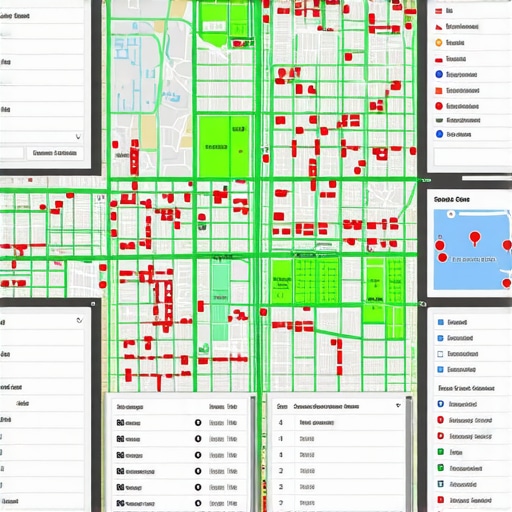
Look for the Profit Peaks in Your Data
In the next two years, I predict that ‘Search Generative Experience’ (SGE) will start summarizing your reviews to answer hyper-specific local queries. Instead of just showing ‘Plumber,’ Google will show ‘Best plumber for copper pipe repair in the West End.’ To prepare, you need to dig into the hidden map analytics metric that shows where your leads live. Start asking your customers to mention specific services in their reviews. It’s a small tweak that turns review management tools into powerful SEO engines. My advanced tip for today? Go into your Google Business Profile right now and check your ‘Performance’ tab. Look for the ‘Keywords people used to find you.’ If you see a high-volume phrase you aren’t currently targeting, add a high-quality photo of that specific service and label it correctly. You’ll be amazed at how quickly the algorithm responds to visual proof.
The Lessons I Learned the Hard Way While Fixing My Local Map Presence
After years of trial and error, I realized that the map pack is not a static leaderboard; it is a living ecosystem. One of the biggest lightbulb moments was discovering the data gap. I saw first-hand how the data gap can make your rankings look high while your calls drop. I also learned that you cannot trust a single ranking point. If you aren’t looking at a neighborhood grid, you are only seeing a tiny fraction of the truth. Lastly, I stopped obsessing over perfect address formatting and started focusing on response velocity. Google rewards businesses that interact with their customers in real-time, not just those with a perfectly placed comma in their street address. If you’ve been frustrated by slow growth, it might be because your local ranking reports feel like they are lying to you by showing global averages instead of street-level reality.
Building Your Digital Bodyguard with My Favorite Resources
If you are ready to stop guessing, I recommend starting with a few specific pillars. First, dive into the work of Sterling Sky; their research on proximity is the gold standard for anyone using a rank tracker. For those managing multiple spots, look into how to sync hundreds of locations without data corruption to prevent those pesky data zombies from returning. I also swear by the Whitespark Local Search Ranking Factors study, which is the bible for understanding which review management tools actually move the needle. Finally, if you have recently rebranded or moved, make sure you know how to reclaim your map presence after a name change so you don’t lose years of hard-earned authority. These resources have been my compass when the algorithm starts to get choppy.
#IMAGE_PLACE_HOLDER_A#
It Is Time to Put Your Business Back Where It Belongs
You have worked too hard on your business to let a software glitch or a savvy competitor push you into the shadows. Local SEO is not a dark art; it is simply about providing Google with the most accurate, trustworthy, and active signals in your neighborhood. By staying consistent with your citation monitor and engaging with every customer through modern review management tools, you are building a moat around your listing. Remember that every small fix adds up. Whether you are using high-end local seo software or just starting to dig into your maps analytics, the goal is the same: being the obvious choice for your neighbors. I know it can feel overwhelming, but you have the roadmap now. Have you ever seen your map pin suddenly move for no reason, or have you struggled with ghost listings appearing out of nowhere? Let me know in the comments below so we can troubleshoot it together.