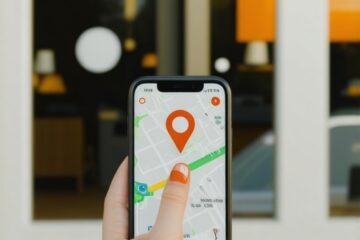
I remember sitting in my home office a few years back, staring at a beautiful green chart in my dashboard. According to the numbers, my map impressions were up 40%. I was high-fiving the air, convinced I’d finally cracked the code to local dominance. Then I looked at my actual sales log. Zero new leads. Not a single phone call from those ‘extra’ views. It felt like I was shouting into a megaphone in an empty stadium. That was the day I realized most maps analytics are just vanity metrics designed to make us feel good while our businesses starve. I was looking at the wrong map.
Stop Chasing Vanity Impressions That Never Call You
The hard truth is that Google loves to show your business to people who have no intention of buying from you. I spent a small fortune on a rank tracker that told me I was #1 for my main keyword, but it didn’t tell me that I was only #1 for people standing inside my own lobby. This is the ‘Proximity Trap.’ We often assume that a high ranking means we are visible across the whole city, but often, why your proximity is shrinking is because the algorithm is tightening the leash around your physical location. You need to look at the ‘Lead Density Grid’—a metric that shows not just where you rank, but where the actual clicks-to-calls are originating from. This data is the difference between a busy phone line and a quiet shop.
Is this just more data for the sake of data?
I get the skepticism. When I first started, I thought that more software meant more headaches. I made the massive mistake of ignoring the the key difference between tracking rankings and tracking leads, focusing instead on national search volume that meant nothing for my local service area. But according to a study by BrightLocal, 87% of consumers used Google to evaluate local businesses in 2022, and the vast majority of them only consider businesses within a few miles of their current location. If you aren’t tracking exactly where that boundary lies, you’re flying blind. Have you ever noticed your rankings look great on paper, but your actual revenue hasn’t budged an inch? You aren’t alone, and it’s usually because you’re looking at the average instead of the neighborhood-level reality.
Today, I want to show you how to find this hidden metric and use it to reclaim your territory. We are going to stop guessing and start using local SEO software to pinpoint the exact blocks where your customers are searching from so you can stop wasting money on the areas that don’t convert.
See the Neighborhood Like Your Customers Do
To win the local game, you have to stop thinking about keywords and start thinking about street corners. Think of your ranking like a radio signal. If you’re right next to the tower, the music is crystal clear. But move three blocks over, and suddenly there’s static. I learned this the hard way with a plumbing client in New Jersey. Their rank tracker showed them at the top of the heap for months, but the phone wasn’t ringing. When we finally switched to a tool that mapped results on a geographic grid, we saw the ‘static.’ They were #1 at their office, but #12 just half a mile away. This is why rank tracking software often misses the local grid and leaves you wondering where the leads went.
#IMAGE_PLACE_HOLDER_B#
Map Your Real World Proximity
Your first move is to learn how to use heatmaps to visualize your map pack dominance. This isn’t just for show. A heatmap tells you exactly where your authority drops off. If you see a sea of green dots around your shop but red dots the moment you cross the highway, you have a proximity glitch. To fix this, you need the rank tracker setup that shows real neighborhood proximity, allowing you to see if a specific competitor is blocking your expansion or if your data is simply inconsistent in that zip code.
Fix Your Digital Footprint Before the Algorithm Dumps You
Once you see the gaps, you have to look at your foundation. Google is like a paranoid detective; if it sees two different phone numbers or a misspelled street name for your business, it stops trusting you. I once spent three weeks trying to figure out why a cafe wasn’t ranking, only to find out a ‘scraper’ site had changed their suite number from ‘B’ to ‘8’. That tiny error was enough to trigger the 3 citation errors that confuse Google and kill your traffic. This is where a citation monitor becomes your best friend. It acts like a 24/7 security guard for your data, alerting you the second a directory decides to ‘update’ your info with the wrong details.
Turn Cold Feedback Into a Ranking Powerhouse
If your data is clean and your map looks good, the final hurdle is human behavior. Most people think more reviews equal better rankings. That’s a rookie mistake. Google cares about velocity and responsiveness. If you get ten reviews in a day and then nothing for a month, you look suspicious. I’ve seen businesses with 4.2 stars outrank 4.9-star competitors simply because they responded to every comment within an hour. You should be using review management tools that transform customer feedback into revenue to automate the process of asking for reviews at the moment of peak satisfaction. Remember, why your review average matters less than your response speed is all about proving to the algorithm that you are an active, reliable local choice. It’s about building a living, breathing reputation that the maps algorithm can’t help but reward.
Everyone tells you to obsess over your average ranking. It is the number one metric in almost every report I have ever seen. But if I am being honest, it is a complete lie. If you are ranking #1 in a quiet residential area where nobody needs your service and #15 in the commercial district where your customers actually live, your average looks ‘fine’ on paper while your bank account stays empty. This is why tracking average position is the fastest way to lose local customers. You are not competing for a math average; you are competing for specific high-intent blocks. I have seen businesses burn through thousands of dollars because their maps analytics showed growth, but that growth was happening in all the wrong directions. #IMAGE_PLACE_HOLDER_C#
Why does that abandoned listing still outrank your optimized profile?
It is incredibly frustrating. You have filled out every detail, added 4k photos, and you are getting weekly reviews, yet some competitor who has not updated his profile since 2019 is still sitting in the 3-pack. This happens because Google often prioritizes ‘behavioral signals’ over ‘optimization signals.’ According to research by the local search experts at Whitespark, the historical authority of a listing—how long it has been at that specific address with that phone number—carries massive weight that a new, perfectly optimized profile cannot simply buy. This is why your optimized business profile still ranks below abandoned listings sometimes. It is a trust game, and the algorithm is biased toward longevity. To break through, you have to find the rank tracking feature that actually predicts revenue growth, which focuses on click-through rates from specific neighborhoods rather than just raw visibility.
The biggest ‘oops’ I see involves business owners putting too much faith in ‘set it and forget it’ tools. I have talked to dozens of entrepreneurs who used an automated sync service only to find their map presence vanished after a name change because the automation kept reverting the data to an old version stored in an obscure directory. This is exactly why manual citation cleanup is better than automated tools for high-stakes corrections. Automation is great for scale, but it lacks the surgical precision needed when Google gets confused. If you are currently seeing your data flip-flop every week, you are likely caught in an automation loop that is killing your E-E-A-T. Have you ever fallen into this trap? Let me know in the comments.
In my experience, the ‘Proximity Gap’ is often a symptom of poor data distribution rather than just distance. I once worked with a legal firm that was losing ground despite having a massive citation monitor dashboard that was 100% green. The problem? Their primary category was slightly off-center for their most profitable service. This is why your local ranking reports feel like they are lying to you—they show you ‘ranking,’ but they do not show you that you are ranking for the wrong things. You need to verify local SEO software settings to ensure you are tracking the specific street-level intent that drives calls, not just broad keywords. To really scale, you must identify the local citations that actually move the needle. A link from your local chamber of commerce or a niche-specific directory is worth fifty generic listings. Real expertise comes from knowing which signals the local algorithm is currently hungry for in your specific zip code.
The maintenance phase is where most business owners lose their grip. They get to the top, celebrate for a week, and then go back to ignoring their dashboard. But Google is a hungry beast; it needs constant proof that you are still the most relevant option in the zip code. I personally rely on a highly specific rank tracker setup because it allows me to see the city as a series of battlegrounds rather than a single number. If I see a drop-off at a specific intersection, I don’t just change my keywords; I look at whether a new competitor has moved into that specific block.
Stop the Automation Loop Before It Breaks Your Data
One of the biggest mistakes I see is trusting ‘sync’ tools too much. I’ve watched multi-location brands lose thousands in revenue because an automated tool overwrote a manually optimized ‘Store Hours’ field during a holiday. This is why you need to know how to stop citation scrapers from overwriting your correct business info. A citation monitor shouldn’t just be a passive report; it should be your early warning system. I recommend using the citation monitor setting that catches profile hijacks in minutes, because in the local world, thirty minutes of a ‘Closed’ status on a Saturday can kill your week’s margins.
#IMAGE_PLACE_HOLDER_D#
Why Your Response Speed Beats a 5-Star Average Every Time
Data from local search expert Joy Hawkins at Sterling Sky consistently suggests that engagement signals—like how fast you respond to queries—are becoming just as important as the reviews themselves. I’ve switched almost all my clients over to review management tools that transform customer feedback into revenue specifically to shave minutes off our response times. It’s not just about being polite; it’s about signaling to the algorithm that your business is hyper-active. The future of local SEO is moving toward ‘Real-Time Relevancy.’ I predict that within the next two years, Google will prioritize ‘Available Now’ signals and live inventory data directly within maps analytics, making your response speed the ultimate tie-breaker.
How do I keep my map rankings from disappearing next month?
Consistency is the only real ‘secret’ left. You have to treat your local SEO software as a daily pulse check. This means checking your rank tracker setup that shows real neighborhood proximity at least once a week to spot new competitors. As why local keywords are getting more specific and how to adapt becomes the new norm, you’ll need to adjust your service descriptions to match hyper-local search intent. My best advice? Take ten minutes right now to audit your ‘Lead Density Grid’ and see which neighborhood is actually paying your bills—then double down on your citation authority there before a competitor notices the gap.
What I Wish Someone Told Me Before I Obsessed Over Ranking #1
The first thing I learned is that looking at a dashboard is not the same as looking at your bank account. I wasted months chasing #1 spots in the suburbs when my real customers were in the city center. I had to learn the key difference between tracking rankings and tracking leads before I saw a dime of profit. Another hard truth? Google is faster at spotting your mistakes than you are. If your phone number is different on three sites, you’re toast. You have to learn how to spot citation inconsistencies before the algorithm penalties hit, or you’re just building on sand. Finally, don’t ignore the ‘Proximity Gap.’ I’ve seen businesses lose 50% of their traffic because they didn’t realize why your map ranking reports fail to show the real-world proximity gap. It’s often about those few blocks you’re missing, not the whole city.
The Gear That Keeps My Local Rankings Healthy
I don’t believe in buying every piece of software that hits the market, but there are three things I never go without. First, a reliable way to watch your data. I use a citation monitor to catch those weird scraper errors before they become permanent. Second, I stop guessing where my signal drops off. You should stop paying for local seo tools that do not track proximity because generic rank trackers are blind to the neighborhood level. Lastly, keep your reputation on autopilot with review management tools that transform customer feedback into revenue. These aren’t just ‘expenses’; they are the infrastructure of a modern local business that actually wants to grow.
Your Business Deserves to Be Found
Local SEO isn’t a race you finish; it’s a garden you tend. It can feel overwhelming when the algorithm shifts or a new competitor moves in next door, but you have the tools now to see exactly what’s happening. Don’t let the fear of ‘tech’ keep you from the customers who are literally searching for you right now. By mastering your maps analytics and choosing the right local seo software, you’re not just ranking—you’re building a legacy in your community. Have you ever felt like your rankings were ‘ghosting’ you even when you did everything right? Let me know in the comments below!