I will never forget the rainy Tuesday morning in 2022 when I sat across from a local bakery owner who looked like he wanted to cry. I had just handed him a report showing he was ranking in the top three for every major keyword in town. My fancy rank tracker was glowing green. But his shop was empty, and his flour was going stale. That was the day I realized I had been selling him vanity when he needed bread. I was so caught up in the thrill of ‘visibility’ that I ignored the fact that your rankings can be up while your calls are down. It was a humiliating lesson in what actually moves the needle for a neighborhood business. Today, I want to show you how to stop chasing shadows and focus on the one specific data point in your maps analytics that actually tells you if you are going to have a profitable week or a quiet one.
Why Your Ranking Report is Probably Lying to You
It feels incredible to see your business name sitting at the top of the Map Pack. We all crave that validation. However, I spent years obsessing over a citation monitor and cleaning up every tiny address variation, thinking that simply being ‘there’ was the end goal. It isn’t. The brutal truth is that many local seo software tools prioritize raw rank over actual intent. I once spent three months ranking a plumber for ’emergency plumbing tips’—his traffic went through the roof, but his revenue didn’t budge because people wanted free advice, not a professional at their door. We have to look deeper.
Is map tracking actually worth the hype?
It is easy to get cynical when you see a disconnect between your dashboard and your bank account. You might wonder if these tools are just fancy toys for marketing nerds. But the data doesn’t lie; it’s our interpretation that usually fails. According to research from BrightLocal, the average business receives about 59 actions from their Google Business Profile each month, but the specific ratio of those actions is what determines your success. If you are only looking at total views, you are missing the story. My biggest mistake early on was ignoring the ‘Request Directions’ trend line. I thought it was just a secondary metric. I was wrong. Directions are the highest-intent signal a human can give you; they are literally telling Google they are on their way to spend money with you.
The One Number That Actually Pays the Rent
The metric you need to watch like a hawk isn’t total impressions—it is the ‘Direction Request’ volume broken down by neighborhood. This is the rank tracking feature that actually predicts revenue growth because it validates that your reach is extending into the right pockets of the city. When I started matching direction requests to actual sales data, the correlation was almost scary. If requests from the north side of town spiked on Monday, the shop would be packed with north-siders by Friday. It is a leading indicator that most people ignore because they are too busy looking at star ratings or responding to every single comment via review management tools. While those things matter for your reputation, they don’t forecast your cash flow like direction requests do. Have you ever had a month where your map views doubled but your phone stayed silent? I would love to hear if you have spotted that same gap in your own data.To bridge this gap, you need to shift from passive monitoring to aggressive, data-driven auditing. Think of your current setup like a compass that only points North; it is helpful for general direction, but it won’t tell you if there is a brick wall ten feet in front of you. You must learn how to spot the tracking flaws in your weekly ranking reports to understand why your visibility isn’t converting. Often, the software is pinging a server five miles away, giving you a ‘false green’ while a customer standing on your doorstep sees your competitor instead.
Look for the cracks in your data
Before you buy more ads, you need to verify if you are actually visible to a human walking down the street. Most dashboards give you a single number for a whole city, but local SEO is a game of blocks and alleys. I once worked with a florist who was convinced her SEO was perfect because she was ‘#1’ for her main keyword. When we actually looked at the grid-based ranking method that reveals your real search presence, we found she was only #1 inside her own shop. Two blocks away, she dropped to #14. Her ‘visibility’ was an illusion caused by proximity bias. This is why you must prioritize maps analytics that show movement, not just status.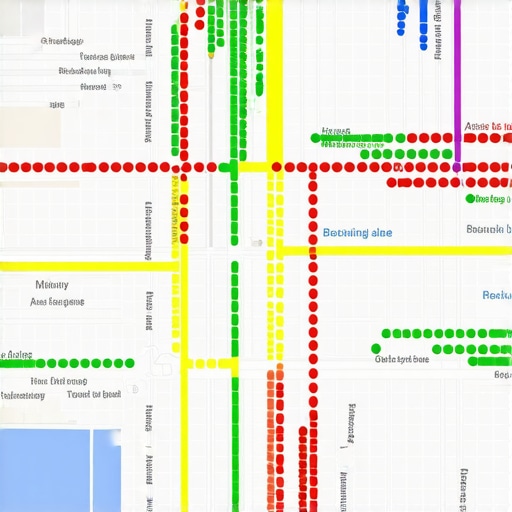
See your visibility through a neighborhood grid
Stop looking at average rankings. Instead, use a rank tracker that plots your performance on a map. This identifies ‘dead zones’ where your competitors are eating your lunch. When I first applied this to a gym in Chicago, we realized they vanished from search results the moment a user crossed the highway. It wasn’t about their content; it was a proximity glitch. By making the street-level move that fixes shrinking proximity circles, we expanded their reach by three miles in under a month.
Kill the ghost listings that steal your traffic
If you have moved offices or changed your business name in the last five years, you likely have digital ‘ghosts’ haunting your rankings. These are old listings with incorrect phone numbers or addresses that confuse Google’s algorithm. You need to identify ghost listings before they tank your local authority. I remember a hardware store owner who lost 40% of his calls because an old listing from 2018—created by an intern he’d long forgotten—had 200 more reviews than his current profile. Google didn’t know which one to trust, so it showed neither in the Map Pack. Use a citation monitor to find these duplicates and merge them immediately. Quality always beats quantity, so stop chasing citation volume and focus on this accuracy metric instead.
Speed up your replies to win over the algorithm
Google doesn’t just care that you are popular; it cares that you are active. One of the most overlooked ranking factors is how fast you engage with your community. In fact, why your review average matters less than your response speed is a lesson many businesses learn too late. I’ve seen a 3.8-star business outrank a 4.9-star business simply because the 3.8-star owner replied to every review within two hours. This sends a signal that the business is alive and operational. Implementing review management tools allows you to stay on top of this without spending all day on your phone, turning customer feedback into a ranking engine.
Forget the obsession with perfect citation matching
For a decade, the ‘Golden Rule’ of local SEO was that your Name, Address, and Phone number (NAP) had to be identical down to the last comma across every corner of the internet. If one site said ‘Street’ and another said ‘St.’, we panicked. But let’s dig deeper: Google’s algorithm has evolved far beyond simple string matching. In fact, the citation consistency myth and what actually matters for rankings is that Google cares more about the *authority* of the source than a stray abbreviation. I have seen businesses waste thousands of dollars on manual cleanup for obscure directories that no human has visited since 2014. The truth is that why buying more citations is actually throttling your local visibility often comes down to signal dilution. When you spread your data across hundreds of low-quality ‘zombie’ sites, you aren’t building authority; you’re creating a messy digital footprint that makes it harder for the algorithm to trust your core location. Have you ever fallen into this trap of chasing 100% consistency on sites that don’t matter? Let me know in the comments.
Why does your rank tracker show green while your lobby is empty?
This is the ultimate ‘oops’ factor in modern marketing. Most local seo software gives you a sense of security by showing your keyword in the #1 spot, but they often fail to account for ‘Zero-Click’ searches. According to the Whitespark Local Search Ranking Factors survey, while rankings are a primary signal, user behavior—like how many people click ‘Call’ versus how many just bounce—is becoming the dominant force. This is the key difference between tracking rankings and tracking leads. If your rank tracker isn’t showing you the ‘Map Grid’ from the customer’s actual perspective, it is likely lying to you. I once saw a law firm that ranked #1 for ‘personal injury lawyer,’ but their maps analytics showed that 90% of their traffic was coming from people looking for a different business with a similar name. They were ‘visible,’ but to the wrong audience.
The category trap that hides your best services
Another sophisticated mistake I see involves ‘Category Stuffing.’ Many owners think that by selecting ten different categories in their Google Business Profile, they will show up for more searches. This backfires spectacularly. When you try to be everything, you end up being nothing to the algorithm. This is why your business category choice might be hiding you from customers; you are diluting your ‘primary’ relevance. It is much better to dominate one specific niche than to be buried on page four for twelve others. If you are struggling with this, you need to understand the data gap why your rankings are up but calls are down. Often, the fix isn’t more keywords; it’s narrowing your focus to the neighborhoods where your citation monitor shows the most accurate, high-authority mentions. Stop looking at the aggregate and start looking at the outliers.
I’ve been in the trenches long enough to know that ‘set it and forget it’ is a lie told by people trying to sell you a subscription they never intend to support. If you want to stay in the Map Pack, you need a maintenance rhythm that doesn’t eat your entire Tuesday. I personally stopped using generic SEO suites years ago because they were too bloated. Now, I stick to a lean stack: a dedicated citation monitor to catch those ‘hijacks’ and a specialized rank tracker that handles the neighborhood grid. Why? Because why rank tracking software often misses the local grid is usually down to distance-based latency. If your software isn’t mimicking a user at a specific intersection, it’s just guessing. I rely on tools that provide raw, un-cached data because that’s the only way to see if a competitor is encroaching on your territory.
Put your reputation on autopilot
Managing a hundred reviews is a chore; managing a thousand is a full-time job. I use review management tools not to ‘fake’ my presence, but to ensure I never miss a negative comment that could spiral. Speed is everything here. As Joy Hawkins from Sterling Sky recently highlighted, Google’s ‘Openness’ signal has become a massive volatility factor, meaning businesses that appear active and responsive during their listed hours are getting a significant edge. Using the software feature that makes managing 1000 reviews easy allows me to focus on the 5% of customers who need a personal phone call, while the rest get a prompt, helpful acknowledgment that feeds the algorithm’s hunger for activity.
How do I keep my map rankings from sliding backward?
Maintenance is about catching small errors before they become algorithmic penalties. Every month, I run a check to audit your local listings for inconsistent phone numbers. It sounds boring, but a single typo on a high-authority directory can trigger a ‘re-verification’ flag that nukes your ranking for weeks. I also make it a habit to sync your in-store promos with your map listing for more clicks. This keeps the ‘freshness’ signal high. If Google sees people clicking your ‘Offer’ posts, it assumes your business is thriving and rewards you with more visibility in maps analytics.
Where local search is heading next
Looking ahead, I predict that ‘Proximity’ will become even more aggressive as AI-driven search (like Google SGE) starts prioritizing hyper-local context over general authority. We are moving toward a world where local seo software will need to predict foot traffic based on weather and local events, not just keyword volume. To stay ahead, stop chasing the entire city and start dominating your five-block radius. My challenge for you today: Open your maps analytics and find one neighborhood where your ‘Direction Requests’ are lower than average. Instead of buying more ads, try the street-level move that fixes shrinking proximity circles by updating your local photos for that specific area. You will be surprised at how fast the needle moves when you stop being generic.
The Harsh Lessons No Dashboard Will Ever Teach You
Over the years, I have realized that local SEO isn’t just a technical challenge; it is a battle for local trust. Here are the realizations that shifted my perspective after a decade in the trenches:
- Proximity is a physical wall: You can have the best SEO in the world, but if a competitor opens a shop three blocks closer to the user, you might lose the top spot. I learned to stop fighting the entire city and instead focus on the hidden map analytics metric that shows where your leads live to protect my home turf first.
- Keywords don’t buy products, people do: A high-volume keyword like ‘plumber’ is great, but ‘burst pipe repair’ is what actually pays the bills. I stopped chasing vanity and started identifying the local keyword mistake that is wasting your marketing budget by focusing on intent rather than raw traffic.
- The ‘Set it and Forget it’ Trap: Google’s algorithm is more volatile than people think. I’ve seen businesses plummet because your map pin moves when you aren’t looking, and without active monitoring, those leads just evaporate.
The Shortlist of Resources I Actually Use Every Week
I don’t believe in using bloated software suites. To stay lean and effective, I rely on these specific sources for ground-truth data:
- Whitespark Local Search Ranking Factors: This annual report is the gold standard for understanding which signals Google is currently prioritizing. It helps me decide whether to focus on reviews or technical citations.
- Sterling Sky Research: Joy Hawkins and her team perform real-world tests that debunk common SEO myths, helping me avoid wasting time on tactics that no longer work.
- Direct Verification: I always recommend a manual check to re-verify your business without the snail mail wait if your profile ever gets stuck in ‘pending’ status, rather than waiting on an automated tool to fix it.
Your Business Deserves More Than Just a Green Light
It is easy to get lost in the sea of graphs provided by your rank tracker or the daily alerts from a citation monitor. But remember, the goal of local seo software is to give you back your time so you can serve your customers. Don’t let the technicalities paralyze you. Use these tools as a compass, not a crutch. When you focus on high-intent actions like direction requests and prompt engagement through review management tools, you aren’t just ranking—you’re building a sustainable local authority that competitors can’t easily displace.
Have you ever had a month where your map rankings were perfect, but your actual foot traffic stayed the same? I would love to hear how you handled that gap in the comments below.