I remember sitting at my desk, sipping lukewarm coffee, and staring at a rank tracker that told me I was winning. The screen was full of beautiful green icons, showing my business at the number one spot for our main service. I felt like a local SEO genius. But there was a problem: the shop was quiet. Too quiet. My phone hadn’t buzzed with a new lead in two days, and the walk-in traffic was a ghost town. It was a gut-punch realization that our phones stopped ringing but our rank tracker said we were number one because I was only looking at a single data point from my own office chair.
The Day I Realized My Rankings Were a Total Lie
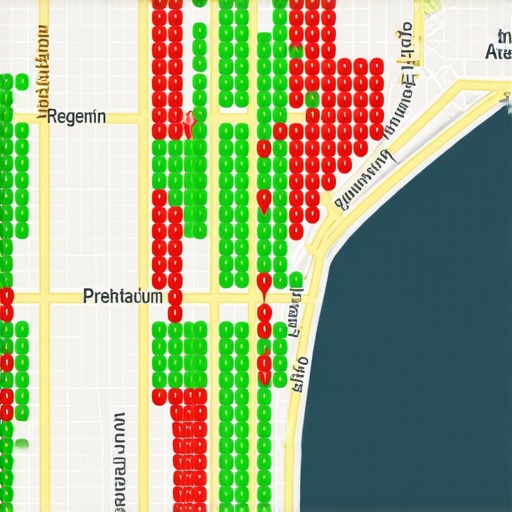
I made a classic rookie mistake that I see business owners make every single week. I assumed that because I ranked well in one spot, I owned the whole city. I didn’t. When I finally stepped out of my comfort zone and looked at a local heatmap, I saw the truth: I was a king on my own block and a nobody just three streets over. This is the reality of the “proximity bubble.” If you are relying on old-school reports, why your proximity rankings drop the moment you leave the office becomes a mystery that drains your marketing budget. I had to learn the hard way that the map pack is a battlefield of inches, not miles. By using the grid-based ranking method, I stopped guessing and started seeing exactly where my visibility hit a brick wall. It was embarrassing to realize I had spent months optimizing for keywords that only worked if the customer was standing in my parking lot.
Is this heatmap stuff actually worth the extra effort?
You might be skeptical. After all, you have a business to run, and playing with color-coded maps feels like a distraction. But consider this: according to research from Search Engine Journal, nearly 30% of all mobile searches are location-based, and Google’s algorithm is becoming increasingly obsessed with hyper-local relevance. If you aren’t checking the specific neighborhoods where your competitors are failing, you’re leaving money on the table. Have you ever felt like you’re shouting into a void despite having a decent website?
Finding the Cracks in the Big Brands Armor
Once I stopped licking my wounds, I started using maps analytics to hunt for weaknesses in the big national chains that were eating my lunch. What I found was fascinating. Big corporations have huge budgets, but they are often slow. I noticed a specific high-income neighborhood on my heatmap where the local giant was ranking poorly. I dug deeper and found they hadn’t updated their photos in three years and were ignoring negative reviews. By adjusting my rank tracker setup to focus on that specific geographic gap, I was able to pivot my strategy. I didn’t need to outspend them; I just needed to be more present in the exact spot where they were lazy. We started using more aggressive review management tools to flood that specific area with fresh customer feedback. Within three weeks, the heatmap for that neighborhood started turning from a sea of red to a promising shade of green. This wasn’t about magic; it was about seeing the data for what it really is: a map of opportunity.
Break Your City into a Grid to Stop the Guessing
Think of your local search presence like a cell phone tower signal. Just because you have five bars standing right next to the tower doesn’t mean you have service in the valley two miles away. Most business owners look at their rank tracker and see a #1 spot, not realizing they only have that ‘signal’ in a tiny radius around their front door. To fix this, you have to stop looking at average rankings and start using a grid-based audit. I remember the first time I ran one; I was shocked to see that while I was green at my office, I was completely invisible at the grocery store where my ideal customers shop. This is exactly why rank tracking software often misses the local grid and why you need to visualize your data geographically. 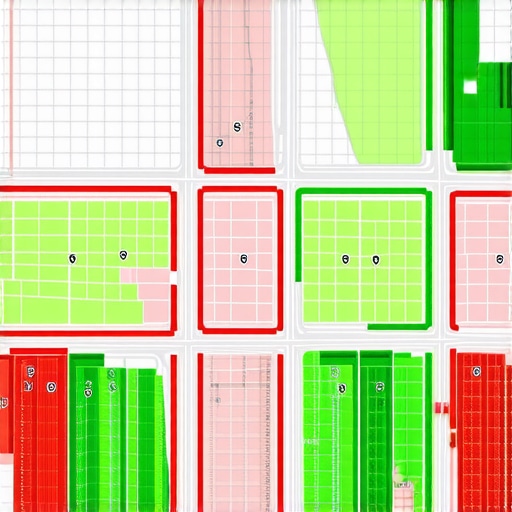
Identify Your Red Zones and Target Them
Once you see the red dots on your map, don’t panic. Those are your targets. I spent a whole weekend once trying to figure out why one specific zip code wouldn’t budge. I realized that my local seo software was flagging a competitor who had a keyword-stuffed name in that area. Instead of trying to out-spam them, I used maps analytics to find which neighborhoods were actually driving my phone calls. By focusing my energy on the ‘most profitable’ red zones rather than the whole city, I saved a fortune on wasted ad spend and focused on the street-level moves that actually matter.
Fixing the Digital Paper Trail That Sends Customers Elsewhere
You can’t win a race if you’re running with your shoelaces tied together. In the world of local search, your ‘shoelaces’ are your citations. A few years ago, I changed my office phone number and thought I had updated it everywhere. I hadn’t. For months, Google was seeing two different numbers and decided I wasn’t trustworthy enough for the top three spots. We found 12 citation errors that were siphoning our local lead flow just by doing a deep dive into our digital footprint.
Automate the Cleanup Process
If you try to manually fix every directory from Yelp to the Yellow Pages, you will lose your mind. You need a citation monitor that acts like a 24/7 security guard for your brand. It’s not just about having the same name and address; it’s about making sure no one else—like a disgruntled ex-employee or a confused algorithm—is changing your data behind your back. Consistency is the foundation that allows your other efforts to actually scale.
Turning Your Review Feed into a Local Magnet
Most people treat reviews like a trophy case—something to look at but not touch. That is a massive mistake. Google’s algorithm loves ‘freshness’ and ‘relevance.’ When a customer from a specific neighborhood mentions that neighborhood in a review, and you reply to it immediately, you are sending a massive ‘I am here’ signal to the map pack. We started using review management tools to speed up our response time to under two hours. The result? We didn’t just get more stars; we saw our map pin start to expand its reach into neighboring suburbs because the engagement proved we were an active, reliable local business. It’s not about the quantity of the stars; it’s about the velocity and the context of the conversation happening on your profile.Now, let’s get into the stuff most ‘gurus’ won’t tell you because it’s not as shiny as a top-ten list. I used to believe that more was always better—more citations, more keywords, and more five-star ratings. But that is a dangerous trap that leads to stagnation. For example, I have seen businesses think they are winning the search game by purchasing massive directory packages, yet why buying more citations is actually throttling your local visibility is a hard pill to swallow. If you are flooding the web with low-quality, automated mentions, you aren’t building authority; you are creating noise that Google’s spam filters eventually tune out. Instead of sheer volume, you need to stop chasing citation volume and focus on this accuracy metric instead. A single inconsistent suite number on a tier-one directory like Yelp or Bing is more damaging than a hundred perfect entries on obscure blogs nobody visits.
Stop Buying Citations You Don’t Actually Need
Many business owners fall into the ‘Oops’ factor of assuming all digital mentions are equal. This is the fastest way to dilute your brand. One of the biggest mistakes I ever made was focusing entirely on my ranking reports without looking at the bottom line. I call this the ‘Vanity Trap.’ You can have a green dashboard, but if those rankings are not in the right neighborhoods, they are worthless. This is the key difference between tracking rankings and tracking leads. I once worked with a contractor who was #1 for a high-volume keyword, but it was for a town where homeowners mostly did their own DIY work. We shifted the strategy to a slightly lower-ranked keyword in a high-income area, and his revenue tripled despite his ‘average ranking’ dropping. 
Can you actually dominate a map pack without an office in that specific neighborhood?
The short answer is yes, but it is not about shortcuts. According to the 2023 Local Search Ranking Factors survey by Whitespark, proximity remains a heavy hitter, but ‘behavioral signals’—how many people click your ‘Call’ button or request directions—are gaining massive ground. This means if you cannot be physically closer, you must be more relevant and responsive. Most people obsess over their star rating, but why your review average matters less than your response speed is a nuance that can win you the game. Google sees a quick response as a sign of an active, trustworthy business. We discovered the hidden benefit of responding to negative reviews within 2 hours; it actually improved our local visibility more than getting ten new positive ones that we ignored. It proves to the algorithm that the ‘lights are on’ and you are ready to serve. Have you ever fallen into the trap of chasing vanity metrics instead of actual leads? Let me know in the comments.
I used to think that once I hit the top of the map pack, I could coast. I was wrong. Local SEO is more like a garden than a trophy; if you stop watering it, the weeds of competition will choke you out in weeks. The biggest threat isn’t just a new competitor moving in; it’s the slow, silent decay of your digital footprint. I’ve seen perfectly optimized profiles drop because of a single citation monitor setting that catches profile hijacks in minutes being left unchecked. If you aren’t watching your data, someone else—or even an automated aggregator—can change your hours or website link, and Google will trust that data over yours if you don’t respond.
Stay Ahead of the Local Search Decay
To keep your edge, you need a routine that doesn’t eat your entire day. I personally rely on a highly specific setup within my local seo software that alerts me only when a significant ‘grid shift’ happens. This is much more effective than staring at a daily list of numbers. According to the BrightLocal 2024 Local Consumer Review Survey, 75% of consumers say they ‘always’ or ‘regularly’ read reviews when searching for local businesses, which means your maintenance isn’t just about technical settings—it’s about managing that social proof. I use the software feature that makes managing 1000 reviews easy to ensure I never miss a customer interaction, because even one unanswered question can signal to Google that your business is semi-dormant.
How do I maintain these rankings over the long haul?
Maintenance is about consistency, not intensity. You don’t need to spend ten hours a week on this. What you need is a weekly ‘health check’ on your maps analytics to see if your ‘proximity circle’ is shrinking. If you notice your reach is pulling back toward your office, it’s usually a sign that your engagement signals are weakening. I always look for the rank tracking-feature that actually predicts revenue growth rather than just vanity positions. If the calls are coming in, the rank is doing its job. If the rank is high but the calls are low, something is broken in your conversion funnel or your business information is inconsistent.
The Gear That Keeps My Business on the Map
When people ask me for recommendations, I tell them to look for tools that offer more than just a static report. You want software that helps you visualize the future. I believe we are moving toward a ‘conversational’ map era, where Google uses AI to answer queries based on the specific text inside your reviews and posts. This is why how rank tracker can skyrocket your local rankings in 2025 will depend entirely on how well it tracks these semantic signals. Don’t just settle for a tool that tells you where you are today; get one that identifies the neighborhoods where your competitors are most vulnerable.
My advice? Don’t wait for your rankings to drop before you take action. Audit your profile right now for ‘ghost’ listings or duplicate citations that might be confusing the algorithm. Try this: Set up an automated alert for any mention of your brand name that doesn’t include your verified phone number. It’s a simple move that prevents 90% of the proximity issues most businesses face. If you need help narrowing down your strategy, feel free to reach out via our contact page or review our privacy policy to see how we handle your data.
The Bitter Truths About Ranking That My Spreadsheet Never Told Me
After years of obsessing over dashboards, I’ve realized that the map pack doesn’t care about your feelings or your “perfect” website—it cares about proximity and proof. One of the hardest pills to swallow was discovering the data gap why your rankings are up but calls are down; you can be a king in a zip code where nobody actually buys what you sell. My “lightbulb moment” came when I stopped looking at a single number and started looking at how fast we responded to customers. Speed is the new SEO. If you aren’t responding to queries within minutes, you’re essentially invisible to the modern, impatient consumer.
My Minimalist Toolkit for Dominating the Local Pack
You don’t need a dozen subscriptions to win. I personally rely on a few core assets that I trust implicitly. First, a robust rank tracker that uses a grid-based system is non-negotiable. It’s the only way to see the real battlefield. Second, you must have a citation monitor setting that catches profile hijacks in minutes because, believe me, your competitors will try to “edit” your information. Lastly, lean heavily into maps analytics insights to boost your local map visibility. These tools aren’t just software; they are your early warning systems in a constantly shifting landscape.
#IMAGE_PLACEHOLDER_E#
Stop Being a Passive Passenger in Your Local Search Journey
The biggest mistake you can make is thinking that local search is a “set it and forget it” task. It’s a living, breathing part of your business. By leveraging the right local seo software and staying vigilant about your grid presence, you can turn a struggling shop into a neighborhood powerhouse. Remember, your goal isn’t just to be #1; it’s to be the most obvious and helpful choice for the person standing three blocks away with their phone in hand. The future of how a rank tracker can skyrocket your local rankings in 2025 is already here, and it belongs to those who act on data rather than just observing it. Which neighborhood on your heatmap is giving you the most trouble right now? Let’s troubleshoot it together in the comments.