I was sitting in a local bakery, just two miles from my office, sipping a lukewarm latte when I decided to check my rankings on my phone. Back at my desk, every report looked perfect; my dashboard was a sea of green, claiming I was ‘Number One’ for every keyword that mattered. But as I sat there on the bakery’s guest Wi-Fi, searching for my own services, I wasn’t in the top three. I wasn’t even on the first page. I was a ghost. It felt like I’d been sold a bill of goods by my own software. My expensive tools were telling me I was a local king, but the real-world search results were telling me I was invisible. That was my ‘shattered lightbulb’ moment. I realized that my rank tracker was zooming out so far it missed the actual neighborhood skirmishes that determine whether a phone rings or stays silent. If you aren’t seeing what your neighbors see, you aren’t really tracking anything at all. In this guide, I’m going to show you how to move past those deceptive city-wide averages and set up a system that reflects the street-level reality of your business proximity.
Why Your Current Ranking Reports Are Hiding the Truth
For years, I made the classic mistake of looking at ‘average position’ as my North Star. I assumed that if a report said I was in position two, it meant everyone in the city saw me there. I was dead wrong. Google’s local algorithm is hyper-sensitive to the exact coordinates of the searcher. I have personally seen rankings drop from a proud #1 to a dismal #18 just by crossing a single major intersection. This is exactly why your rank tracker misses the local grid changes that dictate your actual lead flow. Most standard tools ping Google from a single data center or a static city center point, which is useless for a business that depends on the surrounding five-mile radius. I spent a fortune on backlink campaigns to fix a ‘ranking problem’ that was actually just a lack of visibility in three specific neighborhoods I didn’t even know I was losing. I eventually learned that tracking average position is the fastest way to lose local leads because it creates a false sense of security while your competitors are quietly eating your lunch block by block.
Is this level of hyper-local detail really worth the effort?
You might be wondering if obsessing over street-level data is just overkill for a small business. I used to think so too, until I saw how much money was being left on the table. Proximity is currently the heaviest weighting factor in the local pack. According to a study by Moz, ‘Distance’ remains one of the top signals that Google uses to determine which three businesses get the coveted map spots. If you don’t map this out with a grid-based view, you will inevitably fall victim to the proximity paradox, where customers literally three blocks away from your front door can’t find you because of a minor technicality in your profile or a local competitor’s proximity advantage. We are going to dive into how to use maps analytics insights to finally see those ‘red zones’ where you’re invisible. Have you ever checked your own rankings while out for lunch and been shocked by what you didn’t see? I’d love to hear your story—it’s a frustrating realization, but it’s the first step to actually winning your neighborhood back. [image_placeholder_1]
Throw Away the Single Pin Mentality
The biggest lie in local marketing is the single-point search. When you check your rank from your office, you’re getting a ‘home field advantage’ that doesn’t exist for a customer five blocks away. To get the truth, you need to think of your service area like a chessboard, not a single target. I remember working with a family-run HVAC shop that swore they were the local leaders. Their dashboard said they were #1. But when we looked at the actual map, they were a ghost in the high-end suburbs where the big emergency calls come from. We had to stop looking at one-dimensional reports and start using local SEO software that specializes in grid-based tracking. This is the only way to see where your proximity bubble pops and your competitors take over.
Build Your Grid to Find the Real Red Zones
Your first move is to set up a 13×13 or 15×15 grid scan around your physical location. Think of this like a sonar sweep. Each point on the grid represents a potential customer’s smartphone. In my experience, you’ll likely see a cluster of green (top 3) right around your shop, which quickly fades into a sea of red as you move outward. This visualization is critical because it tells you exactly where you need to focus your ‘geo-relevance’ efforts. I once used this method to find a massive blind spot for a client; we discovered the map pin mistake that costs plumbers five calls a day: they had their service area set so wide that Google’s algorithm got confused and stopped showing them altogether in the most profitable nearby zip codes. By tightening the grid and focusing on specific neighborhood signals, we turned those red dots green within three weeks. 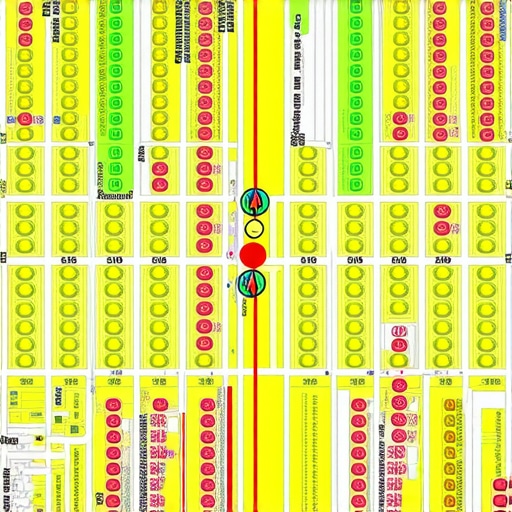
Fix the Foundation with Smarter Citation Monitoring
Once you’ve mapped the gaps, you have to look at your digital paperwork. If your address is ‘Suite 101’ on Yelp but ‘Unit 101’ on Google, the algorithm starts to lose trust in your location. It’s like a GPS that can’t decide which side of the road you’re on. I’ve seen businesses fall out of the map pack entirely just because of a messy data trail. You need a dedicated citation monitor to find these discrepancies before they settle in. I spent an entire weekend once manually cleaning up 40 listings for a locksmith, only to have a scraper site overwrite them with old data on Monday. That’s when I realized that how to wipe out the messy citation errors that are quietly tanking your local authority isn’t about a one-time fix; it’s about constant surveillance. If you aren’t watching your citations, your competitors will eventually find a way to suggest ‘edits’ that push you off the map.
Use Your Reviews as a Proximity Signal
Most people think reviews are just about the star rating, but they are actually powerful location signals. If a customer mentions the name of their neighborhood or a local landmark in their review, Google’s ‘brain’ connects your business to that specific spot on the map. I started coaching my clients to stop asking for reviews like a robot. Instead of ‘please leave a review,’ we started saying, ‘Let us know how we did on your project in [Neighborhood Name]!’ It’s a subtle shift, but it works wonders for your local relevance. We even found that how a specific review response style actually stops your customers from churning also helps signal to the algorithm that you are active and relevant in specific blocks. When you respond to a review by mentioning the street you worked on, you’re effectively pinning yourself to that location in a way no backlink ever could.
I often see business owners celebrating a sudden influx of 50 new citations from a bulk package they bought for a hundred bucks. They think more is always better, but in my experience, a massive dump of low-quality citations is like trying to build a skyscraper on a foundation of wet sand. The algorithm doesn’t care about the total number of times your business is mentioned on obscure directories that haven’t been updated since 2012. It cares about authority and niche relevance. This is a huge reason why manual citation cleanup is better than automated tools that just spray and pray your data across the web. If you are a plumber, a single link from a local hardware store’s ‘trusted partners’ page is worth more than 50 links from a generic directory in another country. I’ve watched profiles stagnate for months because their data was ‘synced’ but never actually verified for accuracy at the street level.
The Automation Trap That Actually Lowers Your Rankings
Here is a hard truth most software sales reps won’t tell you: automation can be your worst enemy if you don’t keep a human eye on the wheel. I’ve seen ‘reputation management’ tools accidentally flag and suppress genuine 5-star reviews because their filters were set too aggressively to catch spam. Even worse, many of these review management tools fail to catch the one metric that matters: the sentiment-based keywords that Google uses to categorize your expertise. If your tool is just counting stars, you’re missing the chance to see if customers are actually mentioning your core services. I once audited a client who had a 4.9-star rating, but they were invisible for their main keyword because none of their automated review requests encouraged customers to talk about the specific work performed. We had to pivot and start treating reviews as data points, not just ego boosts.
Does your rank tracker show real leads or just vanity ghosts?
I recently fell into a rabbit hole where a client’s dashboard was showing them at #1 for ’emergency roof repair,’ but their phone wasn’t ringing. We discovered how we caught the tracking glitch that was hiding our actual google maps traffic: the tracker was pinging Google from a desktop-simulated environment that didn’t account for the mobile ‘near me’ intent. This is the local rank tracker flaw that makes your best keywords look like losers or, in this case, fake winners. According to a study by BrightLocal, user engagement signals like ‘click-to-call’ are becoming just as important as the ranking itself. If your software tells you that you’re winning but your bank account says you’re losing, you’re looking at a vanity metric. I’ve spent enough time in the trenches to know that why your map rankings are lying often comes down to the software ignoring the ‘searcher intent’ and proximity shifts that happen throughout the day. Have you ever fallen into this trap of trusting a green dashboard while your shop stays empty? Let me know in the comments—I’ve been there, and I know how frustrating it is to feel like you’re winning a game that isn’t actually being played.
Winning the map pack is a high-adrenaline victory, but staying there is where the real work begins. I have seen countless business owners reach the top spot, pop the champagne, and then completely stop their optimization efforts. It’s a fatal mistake. Your competitors aren’t just sitting still; they are using their own tools to find your weaknesses. I personally learned this the hard way when a competitor started suggesting ‘edits’ to my business hours and phone number every single week. If I hadn’t been checking my dashboard, I would have lost my listing within a month. This is why you need to transition from a ‘growth’ mindset to a ‘fortress’ mindset. You need a system that alerts you the moment a scraper site messes with your data or a competitor tries to hijack your pin. This is the simple way to proof your citations against competitor edits that keeps your profile locked down while others are getting wiped out by malicious suggestions.
How do I keep my map rankings from falling off a cliff?
Consistency is the only thing the algorithm truly trusts. If you stop posting updates, responding to reviews, or monitoring your grid, Google assumes your business is less ‘active’ than the hungry new shop down the street. I recommend a ‘Monday Morning Audit.’ Every week, I spend twenty minutes checking my maps analytics insights to see if my ‘Proximity Bubble’ is shrinking. If I see red dots creeping into a neighborhood where I used to be green, I know I need to push out a geo-tagged post or request a review from a customer in that specific zip code. You also need to keep an eye on the authority settings most business owners ignore until their traffic drops, such as the attributes and secondary categories that Google frequently updates without telling you. According to local search expert Joy Hawkins, even minor ‘suggested edits’ from the public can override your data if you aren’t there to reject them. 
Tools that actually earn their keep in my workflow
I’ve tested dozens of platforms, and I can tell you that most of them are just pretty wrappers for the same basic data. However, a few are indispensable. You need a dedicated citation monitor that does more than just list your name; it needs to alert you to ‘data drift’—when a third-party site accidentally changes your suite number or phone extension. For reviews, I’ve moved away from manual spreadsheets and started using review management tools that transform customer feedback into revenue by automatically highlighting the service-related keywords that help me rank. These tools don’t just ‘manage’ reviews; they help you stop guessing how to actually measure your local share of voice by showing you exactly what percentage of the local conversation you own compared to the shop next door.
The future of local search belongs to the conversational
As we head into 2025, I’m seeing a massive shift toward AI-driven search snapshots. Google is getting much better at understanding the *context* of a review rather than just the stars. I predict that ‘Social Proof SEO’ will soon outweigh traditional backlinks. If your customers are describing your expertise in detail, AI-based search will prioritize you over a business with 1,000 generic ‘Great job!’ reviews. Understanding how rank tracker can skyrocket your local rankings in 2025 means moving toward tools that can track these sentiment shifts. If you want to stay ahead, stop focusing on the city-wide average and start obsessing over your street-level reputation. My advice? Take ten minutes today to run a fresh grid scan of your most profitable service area and find one ‘red zone’ to target with a specific customer shout-out this week.
Watching your rankings shift from a static list to a living, breathing map is a perspective shift that changes everything. It’s no longer about being ‘number one’ in a vacuum; it’s about being the most trusted, most visible choice on the very street where your customer is standing. Once you stop chasing vanity metrics and start focusing on real-world proximity, the game gets much easier and a lot more profitable.
Lessons from the Trenches of Local Search Battles
I’ve spent years digging through data, and if I could go back and tell myself three things, they would be these: First, your proximity bubble is fragile. One bad address update can pop it, which is why I now swear by using a citation monitor to keep my data locked down. Second, Google cares more about recent activity than historical dominance. If you stop engaging with your profile, you are essentially telling the algorithm you are closed for business. Finally, always trust your phone over your dashboard. If your maps analytics insights show growth but your phone is silent, you need to follow this 12-point checklist to reclaim your vanishing Google map rankings to find the leak in your conversion funnel.
The Shortlist of Gear That Actually Delivers Results
If you are tired of bloated software that doesn’t help you grow, here is my curated list of essentials. I personally rely on grid-based tracking tools because they are the only way to see the truth of your neighborhood visibility. For maintaining your reputation, review management tools that transform customer feedback into revenue are non-negotiable—they help you turn simple stars into powerful SEO signals. I also highly recommend diving into local SEO software for small business growth that prioritizes map pack data over traditional organic rankings. These tools aren’t just expenses; they are the radar and sonar you need to navigate a competitive local market. [image_placeholder_conclusion]
Your Journey to Becoming the Neighborhood Authority
The path to the top of the map pack isn’t a sprint; it’s a series of smart, consistent moves. By focusing on your street-level presence and understanding how rank tracker can skyrocket your local rankings in 2025, you are building a business that can’t be easily ignored or replaced by a distant competitor. You have the tools, the strategy, and the mindset to win back your neighborhood. Now, it’s time to put that first pin in the map and show your community that you are the local leader they’ve been looking for. Have you ever found a ‘red zone’ of invisibility right in your own backyard? Let me know your story in the comments below—I’d love to help you turn it green!