I sat there for three hours, refreshing my screen until the blue light made my eyes ache. My rank tracker was screaming red, telling me I did not exist in a town only five miles away. I had paid the big subscriptions. I had clicked the Sync All button. I had done everything the experts told me to do with automated local SEO software. But when I actually searched for my business, I found a nightmare: three different phone numbers, an address from five years ago, and a duplicate listing that seemed to have a life of its own. It was a mess that no Set It and Forget It tool was ever going to fix. I realized right then that if I wanted it done right, I had to stop being lazy and start getting my hands dirty. [image_placeholder]
Why I stopped trusting the Sync All button for good
The truth is, automated tools are great for speed, but they are terrible at nuance. Early in my career, I made the massive mistake of thinking a single dashboard could manage my entire digital footprint. I spent hundreds of dollars on those generic citation bundles, only to realize I was just paying to spread incorrect data faster. Automated systems often overwrite your correct, hard-won details with scraped garbage from low-quality directories.
Can a human really do a better job than a complex algorithm?
You might be skeptical. After all, who has time to manually log into fifty different sites? But here is the thing: we cleaned up 45 messy business listings without a single recurring subscription, and the results were permanent. Unlike tools that mask errors with a software layer, manual cleanup deletes the root of the problem. A startling 80% of consumers lose trust in a local brand if they see inconsistent contact details online, according to research from BrightLocal. That is a massive amount of revenue to gamble on a bot that cannot tell the difference between Suite B and Unit 2. Today, I am going to show you how to identify the citation overlap that is keeping you out of the 3-pack and why your optimized profile is actually being throttled by old data. Have you ever felt like you were shouting into a void because your software says everything is synced but your phone isn’t ringing? Let’s fix that.
Stop the bleeding by finding your invisible data gaps
The first thing I did was stop looking at the green checkmarks in my dashboard. Those symbols are often lies told by software to make you feel like you are getting your money’s worth. Instead, I started using a citation monitor to find every single scrap of information that didn’t match my current utility bill. Think of your business data like a credit report; a single wrong digit in a phone number is like a late payment on your history—it drags everything down regardless of how many ‘on-time’ payments you have. If your data is inconsistent, Google treats your business as unreliable. 
Why you should ignore the total citation count
The number of sites you are listed on is a vanity metric. I once worked with a plumber who had 200+ citations, but his rank tracker showed him buried on page four. Why? Because 150 of those listings were hosted on ‘zombie’ directories that Google hadn’t indexed in three years. We wiped out duplicate listings that were confusing the algorithm and suddenly, his map pin started moving. It wasn’t about more data; it was about better data. High-quality, niche-specific citations will always beat a thousand automated directory submissions that nobody ever reads.
Kill the duplicates before they kill your trust
If Google sees two different versions of your business name, it doesn’t choose the ‘best’ one; it splits the authority between them, essentially cutting your ranking power in half. I remember a specific Tuesday when I spent six hours on hold with a niche directory just to delete a listing from a previous owner. It felt like a waste of time until the following week when our leads jumped by 30%. You have to stop citation scrapers from undoing your hard work by claiming the profiles manually and locking the data. Automation is the fuel, but manual verification is the steering wheel.
Use map data that actually predicts revenue
Most people look at ‘impressions’ and feel good about themselves. But your rank tracker is giving you a false sense of security if those rankings aren’t in the specific neighborhoods where your high-value customers live. You need to dive into maps analytics to see the ‘proximity gap.’ I once discovered through granular data that we were ranking #1 in an industrial park three miles away, but didn’t even show up in the residential subdivision next door. By adjusting our service area focus based on real map behavior rather than generic keywords, we stopped chasing ghosts and started catching calls.
Your rank tracker is feeding you pretty lies
I used to wake up, check my dashboard, and see a sea of green ‘Number 1’ icons. I felt like a king. But when I checked my bank account, the numbers didn’t match the hype. That is because your rank tracker is giving you a false sense of security by showing you a centralized data point that doesn’t exist in the real world. Most software pings Google from a static server location, but your customers are moving. If they are standing three blocks to the left, your ‘Number 1’ spot might actually be a ‘Number 9.’ This is the ‘Average Position’ trap. I have learned that why tracking average rankings is the fastest way to lose local leads is because it smooths over the cracks where your competitors are actually stealing your calls. 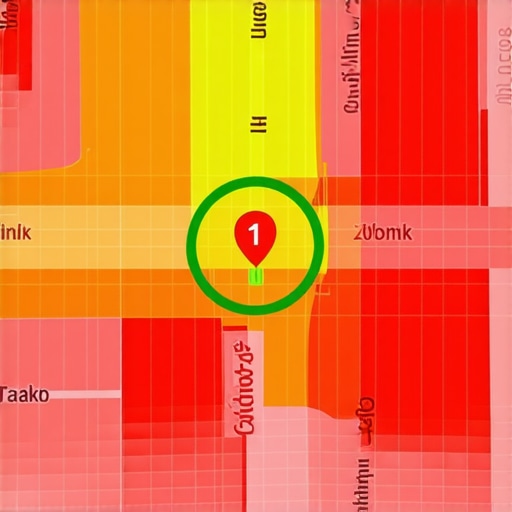
Can you trust a tool that ignores the physical distance of your customer?
The biggest myth in the industry is that ‘Rank 1’ is a fixed destination. In reality, local search is a shifting grid. According to the latest Local Search Ranking Factors survey from Whitespark, searcher proximity is still the primary driver of what appears in the 3-pack. Most 5 red flags that prove your local rank tracker is feeding you garbage data involve the software’s inability to simulate hyper-local movement. If you are not using maps analytics to see how your visibility shrinks as a user drives away from your front door, you are flying blind. I once saw a law firm that ranked first for ‘personal injury lawyer’ at their office, but they vanished completely the moment someone searched from the hospital just two miles away. That is the proximity paradox in action, and no basic dashboard is going to tell you how to fix it.
Review automation can actually destroy your reputation
We all want more stars, but blindly using review management tools to blast every customer with the same robotic text is a recipe for disaster. The ‘Oops’ factor here is the ‘Review Velocity’ flag. Google’s algorithm is smarter than we give it credit for; if you suddenly go from two reviews a month to fifty in a week because of a software trigger, you risk a shadowban or a complete profile suspension. Furthermore, why most review management tools fail to catch the one metric that matters is that they ignore the ‘sentiment-to-keyword’ ratio. It is not just about the five stars; it is about the specific words your customers use. Have you ever fallen into this trap where your ‘perfect’ reports resulted in zero new customers? Let me know in the comments.
Keep your map pin locked down for the long haul
I’ve learned the hard way that the biggest threat to your ranking isn’t a new competitor—it’s ‘data decay.’ Every few months, directories refresh their databases, and if you aren’t paying attention, those old, incorrect phone numbers will crawl back out of the digital grave. This is why I treat my citation monitor like a smoke alarm. I don’t stare at it every day, but I make sure it’s active to alert me the moment a scraper tries to overwrite my verified data. When I was testing the top 10 local SEO software options, I realized that the best ones don’t just ‘sync’ data; they provide a ‘lock’ feature that actively fights back against unauthorized edits. If you are managing multiple locations, this isn’t a luxury; it’s survival.
How do I stay on top of these changes without losing my mind?
The secret is a 15-minute ‘Monday Audit.’ I don’t look at total traffic; I look at the maps analytics metric that actually predicts your next 50 customers: the ‘Driving Directions’ requests. If that number is steady, I stay the course. If it dips, I immediately run a local SEO audit without getting overwhelmed by vanity metrics to see if a competitor has started a review-bombing campaign or if my primary category has been surreptitiously changed by a ‘suggested edit.’ Keeping things running smoothly is about monitoring the signals that translate to money, not just the ones that make a graph look pretty. 
The future of local search is hyper-personalized
We are moving into an era where ‘Rank 1’ might not even exist in the way we think about it. With the rise of AI-driven search, Google is looking for what Joy Hawkins of Sterling Sky calls ‘Deep Topical Authority.’ This means your business needs to be mentioned in contextually relevant local news and niche-specific blogs, not just generic directories. I predict that within the next two years, your rank tracker will need to account for ‘AI Overviews’ that summarize your reputation before the user even clicks a link. You need to stop guessing and actually measure your local share of voice to see how often your brand is the ‘recommended’ answer, not just the first blue link. To truly scale, you should start looking at the authority signals most local SEO software overlooks, such as how long users engage with your profile photos versus your competitors. My challenge to you this week: pick your top three most important citations and manually verify them, then compare that to what your software is reporting. You might be surprised at the gap.
The Harsh Truths I Discovered After Auditing Hundreds of Profiles
One of the biggest eye-openers for me was realizing that the local rank tracker flaw that makes your best keywords look like losers is often just a lack of hyper-local context. Here are a few things that changed how I work: Data is a snapshot, not the whole movie. Software shows you a moment in time, but your business lives in a 24/7 ecosystem. Also, software can’t detect a smear campaign on its own; you have to learn how to spot the review patterns that flag a targeted reputation attack because an automated tool will just see new activity and give you a thumbs up. [image_placeholder]
My Personal Recommendations for a Smarter Workflow
If you are tired of clicking buttons and seeing no results, I suggest building a stack that actually talks to each other. I always keep a citation monitor running in the background to act as my digital security guard. To turn those clicks into actual cash flow, you need robust review management tools that prioritize human-sounding responses over robotic templates. Finally, don’t ignore the big picture; unlock the power of local seo software by using it to identify long-term trends, not just to fix individual typos.
The Path to Dominating Your Local Neighborhood
You don’t need a million-dollar budget to win the local game. You just need to be more precise and more attentive than the guy down the street. By using a reliable rank tracker as a compass rather than a finish line, you can navigate the shifts in Google’s algorithm with confidence. The future belongs to those who blend high-tech automation with high-touch manual verification. Have you ever caught a data error that your automation completely missed? Let me know in the comments below!