I remember sitting at my desk, staring at a screen that didn’t make sense. My phone hadn’t rung in forty-eight hours. For a service business, that’s the sound of money evaporating. I checked my Google Business Profile and everything looked fine. But then I dug deeper into the smaller directories—the ones I thought didn’t matter. Someone had changed my suite number and updated my website URL to a broken 404 page. It wasn’t a glitch. It was a deliberate, calculated move by a competitor to shove me out of the map pack. I felt violated. I had worked so hard to build that authority, only to realize I’d left the keys in the ignition with the engine running.
Stop Letting Others Write Your Business Story
The truth is, most business owners treat their citations like a “set it and forget it” task. I made that same mistake early on. I thought once the data was out there, it was set in stone. It’s not. Most directories operate on a “community edit” model, which sounds nice until you realize your local rivals are part of that community. If you aren’t using a citation monitor to keep an eye on things, you’re essentially trusting your competitors to be honest. Spoiler alert: they aren’t always. We’re going to walk through the exact steps to lock your data down so tight that even the most persistent “helpful editor” can’t touch it. I’ll show you how I reclaimed map positions after a competitor hijacked our business details, and more importantly, how to make sure it never happens to you again.
Is all this monitoring actually worth your time?
You might be thinking, “I have a business to run. Do I really need to babysit a bunch of yellow page clones?” It’s a fair question. But consider this: according to research from BrightLocal, nearly 70% of consumers will lose trust in your brand if they find incorrect information online. One wrong phone number or a “permanently closed” tag on a random directory can bleed leads for months before you even notice. Have you ever searched for your own business only to find a ‘suggested edit’ that made your stomach drop? It’s a gut-punch, but it’s fixable. We aren’t just talking about fixing typos here. We are talking about building a defensive perimeter. I learned the hard way that knowing how to stop your citations from being hijacked by competitors isn’t just about one-time fixes; it’s about setting up a system that alerts you the second a change is proposed. Let’s get into the “why” of this vulnerability and how the search engines actually process these conflicting signals.
Hunting Down Ghost Listings That Steal Your Leads
The first step isn’t just about looking at your Google profile; it is about finding the “shadow” data that search engines use to verify you. I started by searching for my business phone number without the business name. What I found was a graveyard of old addresses and variations of my name that I hadn’t seen in years. You need to learn how to wipe out the messy citation errors that are quietly tanking your local authority before you even think about new backlinks. These errors act like weights on a runner’s ankles; no matter how hard you push, the inconsistencies hold you back from the map pack.
Build a Digital Fence Around Your Business Data
Once the audit is done, you can’t just walk away. You need a citation monitor. Think of this like a security camera for your digital storefront. It doesn’t just list where you are; it alerts you the moment someone tries to change a comma in your address. I remember working with a local plumber whose emergency calls stopped overnight. We found 45 messy listings where his suite number had been “corrected” to a competitor’s address by a bot. We spent two weeks on how we cleaned up 45 messy business listings without buying another subscription because the damage was so deep. If he had an alert system in place, we would have caught it in five minutes.
Look Beyond the Green Arrows on Your Reports
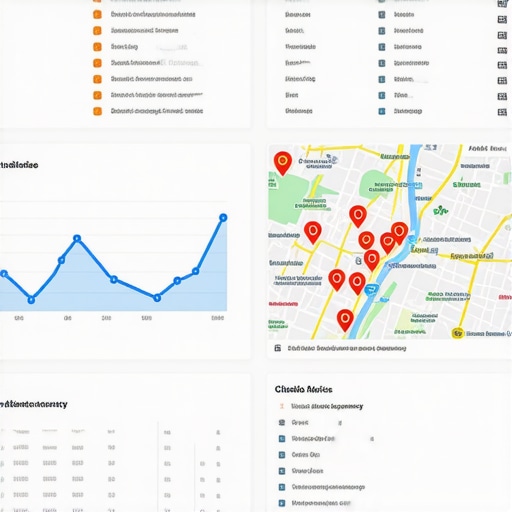
It’s easy to get addicted to seeing your name at the top of a search page, but that pride is dangerous. Most people look at a ranking tool and see a #1 spot, not realizing that searchers two miles away see them at #15. This is why why your rank tracker is giving you a false sense of security if it isn’t using a localized grid. You have to dive into maps analytics to see the actual heat of your visibility. If your rank says you are winning but your phone is silent, you are likely a victim of the proximity paradox, where your authority is high but your geographic reach is artificially throttled by bad data.
Stop Scrapers From Overwriting Your Progress
The most frustrating part of this process is that even after you fix an error, it can come back. Data scrapers constantly pull information from low-quality directories and feed it back to the big players. You need to know how to stop citation scrapers from overwriting your correct business info by claiming the source records. It is a game of digital whack-a-mole, but once you identify the primary aggregators that are feeding the lies, the rest of the ecosystem usually falls into line. I’ve seen businesses reclaim 30% of their lost traffic just by locking down these major sources.
Why Tracking Your Average Rank Is the Fastest Way to Go Broke
It is a bitter pill to swallow, but most of what you see in a standard PDF report is fluff. I see agencies bragging about a “Number 1 average position,” but that is actually why tracking average position is the fastest way to lose local customers. In the world of local search, an “average” doesn’t exist. You might be king of the hill at your office, but invisible three blocks away. This is why your rank tracker is giving you a false sense of security. Real growth happens when you stop looking at lists and start looking at grids. Traditional trackers often miss the “Vicinity” nuances that Joy Hawkins at Sterling Sky has highlighted, where Google prioritizes physical distance over almost everything else, meaning your ranking can change street by street.
Stop Using Reviews Just for Social Proof
Another massive “oops” factor? Your review responses. Most people use review management tools to say “Thanks for the feedback!” and leave it at that. That’s a wasted opportunity. Google reads your responses to understand the context of your services. If you aren’t naturally weaving in service keywords and specific neighborhood mentions, you’re leaving money on the table. However, we found that over-optimization here is just as dangerous as ignoring it. We eventually stopped tracking total citations and started tracking this one accuracy metric instead because the semantic alignment between your reviews and your core business data is what actually moves the needle in modern algorithms. It’s about precision, not volume. Using the right local seo software helps you automate the process without losing the human touch that converts readers into callers.
Can your analytics tool detect a proximity-based traffic drop before it happens?
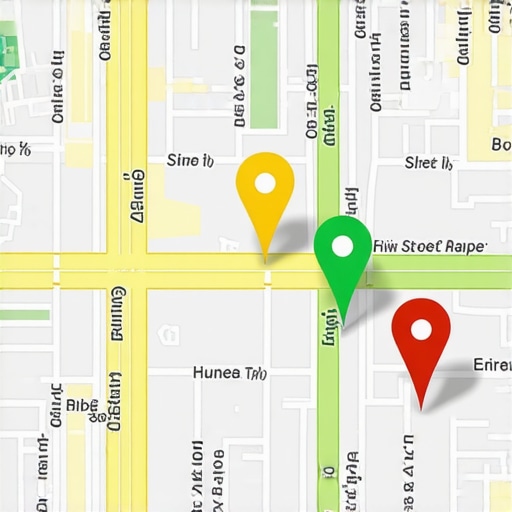
You have to look for the “donut hole” effect in your maps analytics. This happens when you rank everywhere *except* the high-value neighborhood right next to your physical location. Usually, this is caused by a conflicting citation from a high-authority scraper or a filtered-out review that Google has flagged as suspicious. If your rank tracker isn’t showing you a street-level grid view, you are essentially flying blind. Have you ever fallen into the trap of chasing “average” rankings while your actual lead flow stayed flat? Let me know in the comments below.
Maintaining your position in the local pack is a lot like maintaining a classic car; you can’t just drive it into the ground and expect it to start every morning. I’ve found that the secret to staying at the top isn’t about chasing the latest algorithm hack, but about building a bulletproof maintenance loop. Every Monday morning, I open my maps analytics first. I’m not looking at total views—I’m looking for ‘unexplained dips’ in specific neighborhoods. If I see a drop in a three-block radius where we used to dominate, I immediately fire up my citation monitor. More often than not, a rogue aggregator has pushed a ‘suggested edit’ that shifted our zip code by one digit. These small errors are the termites of SEO; they don’t knock the house down overnight, but they rot the foundation until the whole thing leans.
Stop the Bleed with Automated Watchdogs
You can’t be everywhere at once, which is why I’ve shifted my entire strategy toward automation. I rely on a robust local seo software stack that does the ‘boring’ work for me. For example, I set my rank tracker to scan at the street level every 72 hours. If we drop below position three in a high-intent area, I get a Slack notification. This allows me to react before the lead flow actually dries up. I personally use tools that integrate directly with the Google Business Profile API because third-party scrapers are often too slow to catch the ‘Not Publicly Visible’ bugs that can ghost your listing. 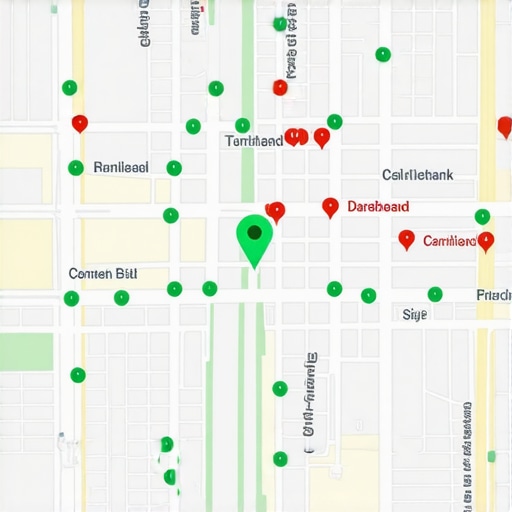
How do I maintain my local dominance without burning out?
The answer lies in your workflow. I treat my review management tools as a communication hub, not just a ‘thank you’ machine. The most successful businesses I’ve audited don’t just collect reviews; they use the feedback to identify the maps analytics metric that actually predicts your next 50 customers: the conversion-to-call ratio. If your ranking is high but your calls are low, your profile is likely suffering from ‘visual fatigue’—you need fresh photos or a more compelling response strategy. Darren Shaw from Whitespark often emphasizes that while citations are a foundational signal, their weight has shifted toward ‘accuracy over quantity.’ This is exactly why we stopped tracking total citations and started tracking this one accuracy metric instead. In 2025 and beyond, Google will prioritize ‘entity trust’ over simple mentions.
The Future of Map Visibility Is Intent-Driven
I predict we are moving toward an era where ‘proximity’ is no longer just about miles, but about ‘temporal relevance.’ Google’s AI will start predicting which business can solve a problem the fastest based on real-time data. If you aren’t using your why tracking average position is the fastest way to lose local customers logic to pivot toward hyper-local, neighborhood-specific content, you’ll be left behind. Start by auditing your most profitable service area today—find one ‘neighborhood gap’ in your grid and update your local posts to mention that specific landmark. It’s a five-minute tweak that can reignite your lead flow by tomorrow morning.
Why My Best Rankings Once Evaporated Overnight
When I first started, I thought high volume meant high authority. I was wrong. I spent months building hundreds of citations, only to realize that how to wipe out the messy citation errors that are quietly tanking your local authority is far more important than adding new ones. If your address has three different variations across the web, Google loses confidence. This inconsistency is a silent killer.
Another eye-opener was realizing why your rank tracker is giving you a false sense of security when it doesn’t account for the hyper-local nature of search. You aren’t ranking for a city; you’re ranking for a street corner. Once I embraced that, my strategy shifted from broad to surgical, and the results followed.
#IMAGE_PLACEHOLDER_E#
The Tools That Keep My Phone Ringing
Success in local search isn’t about luck; it is about having the right eyes on your data at all times. I rely heavily on a proactive citation monitor because it acts as my digital early warning system. Beyond software, I recommend following industry leaders like Sterling Sky and Whitespark, who consistently test these theories in the real world rather than just guessing. For anyone starting out, the most valuable resource you have is actually your own maps analytics dashboard—provided you know how to read the intent behind the numbers rather than just the vanity metrics.
The First Step to Reclaim Your Local Territory
You don’t need a massive marketing budget to dominate the local pack; you just need more discipline than your competitors. By choosing the right local seo software and staying vigilant about your data integrity, you build a foundation that even the most aggressive rivals can’t shake. The future of search belongs to those who show up accurately every single day and respond to their customers’ needs in real-time. Have you ever noticed a sudden drop in calls even when your rankings seemed fine? Let me know in the comments below.