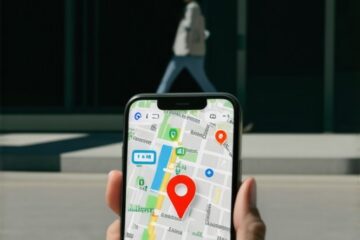
I remember sitting at my cluttered desk three years ago, staring at a screen full of bright green upward arrows. My dashboard looked like a digital Christmas tree, and according to every metric I had access to, I was winning. I had snagged the #1 spot for nearly a dozen high-volume keywords. But when I called my client to celebrate, the silence on the other end was deafening. "That’s great, but the shop is empty," he told me. I felt like a total fraud. I had the rankings, but I didn’t have the revenue. That was my rock-bottom moment where I finally realized why your ranking reports look great while your shop stays empty. I was tracking the wrong things, and I bet you might be too.
Why Those Green Arrows in Your Reports Are Probably Lying to You
For a long time, I made the classic mistake of focusing on "average position." I thought if I could just nudge that number from 5.4 to 2.1, the business would explode. But average position is a vanity metric that hides the truth about how people actually find you on the street level. In the world of local SEO software, most tools just give you a single data point from a single zip code. But your customers aren’t stationary; they are moving, and your visibility changes with every block they drive. If your rank tracker setup doesn’t account for proximity, you’re flying blind. According to a study by Search Engine Journal, nearly 46% of all Google searches have local intent, yet most businesses fail to capture that traffic because they don’t see the "proximity gaps" in their data. Today, I’m going to show you how to find the one feature that bridges the gap between a rank and a sale.
Is revenue-based tracking actually worth the extra effort?
You might be thinking, "Hey, a rank is a rank, right?" Wrong. I spent months obsessing over keywords that had high search volume but zero conversion intent. I was basically paying for digital trophies that didn’t pay the rent. The real secret isn’t just knowing where you rank, but knowing your local share of voice. This is the feature that finally turned things around for me. It tracks how often your business appears in the "Money Pack" (the local 3-pack) across a grid of locations, not just a single spot. When I stopped looking at lists and started looking at maps, my strategy changed overnight. Have you ever faced that frustration of seeing yourself at #1 on your phone while sitting in your office, only to realize customers three blocks away can’t find you at all? It’s a gut-punch, but it’s fixable once you stop trusting basic reports and start looking at the data that actually moves the needle.
I started by ditching the standard PDF reports my old agency sent. You know the ones—30 pages of fluff that essentially say, “Trust us, you’re doing great.” Instead, I moved to a visual grid. I remember working with a local plumber who was convinced he owned the city because his office location was #1. When we ran a 7×7 grid scan, we realized he was only in the top 3 within a half-mile radius of his shop. Everywhere else, he was ghosting. This is why tracking average rankings is the fastest way to lose local leads; it gives you a warm fuzzy feeling while your competitors are actually answering the phone and booking the jobs you should have had.
Stop Looking at Lists and Start Looking at Grids
The first thing you need to do is change how your rank tracker setup functions. Most people track one keyword from one specific location, usually their office. That’s like trying to judge the weather for an entire state by looking out a single window. You need a tool that overlays your rankings on a geographic grid map. When I saw that plumber’s “red zones” (areas where he was rank 10+), we didn’t just guess what to do next. We used maps analytics to see which competitor was eating our lunch in those specific neighborhoods. It turned out a guy with fewer reviews but better-optimized service area pages was winning. By seeing the grid, we knew exactly where to point our SEO efforts.
Fix Your Messy Citations Before the Algorithm Dumps You
Consistency is boring, but it’s the foundation of everything in local search. Last year, I helped a dental practice that had moved three times in a decade. Their NAP (Name, Address, Phone) data was a graveyard of old information scattered across the web. Google looked at their profile and saw three different addresses—it got confused and just stopped showing them to patients altogether. We used a citation monitor to find every stray mention of their old offices. I’ll be honest, it was a grind to fix. But how we cleaned up 45 messy business listings without adding another monthly bill came down to manual precision and ignoring the automated software that missed the niche directories. If your data is messy, your map pin will stay buried.
Make Reviews Work for Your Bank Account
Most business owners treat reviews as a scoreboard where they just want to see the number go up. But the algorithm cares about what people are saying and how quickly you react. I started using specific review management tools that helped us prompt customers to mention specific services in their feedback. Instead of just seeing “Great service!”, we started seeing “Best emergency pipe repair in Phoenix.” That keyword relevance within reviews is like rocket fuel for your local 3-pack visibility. When I saw the first few leads come in specifically mentioning a review they read, I knew we had moved past vanity and into actual revenue generation. This isn’t about being a bot; it’s about making sure your digital reputation is actually searchable by your future customers.
I’ve seen too many business owners fall into the ‘automation trap’ because it feels efficient. They buy a subscription, blast their data to 100 directories, and wait for the phone to ring. But here is the nuance most people miss: Google’s algorithm has become incredibly sensitive to ‘data noise.’ When you use automated tools to sync your business info, they often create duplicate clusters that conflict with your primary Google Business Profile. This is exactly why manual citation cleanup is better than automated tools. A person can spot the difference between ‘Suite 102’ and ‘Ste 102’ in a way that keeps the algorithm from getting confused. I’ve personally watched a client’s rankings jump four spots just by deleting three high-authority but slightly incorrect listings that were cannibalizing their trust score.
The Citation Volume Trap is Killing Your Map Pack Visibility
The biggest myth in our industry is that more citations equal better rankings. In reality, a study by Whitespark showed that citation volume has been steadily declining as a primary ranking factor. Today, it’s about the niche. If you are a plumber, ten links from local hardware blogs and neighborhood associations are worth more than a thousand generic directory listings. Many people ignore this and end up with a high ‘citation count’ but zero local relevance. Have you ever fallen into this trap? Let me know in the comments.
Why High Impressions Often Lead to Empty Calendars
Another mistake I see experts make is celebrating ‘Map Impressions’ in their dashboard. You might see a graph going up and think you’re winning, but why map impressions are a vanity metric if no one is clicking call is a lesson most learn too late. Impressions just mean your pin was on the screen; it doesn’t mean the user actually stopped to look at you. If your click-through rate is low despite high visibility, you have a conversion problem, not a ranking problem. You need to identify the one map analytics metric that actually ties clicks to cash: the ‘Actions’ report. This shows you exactly how many people requested directions or hit the call button after seeing your map pin.
Can I rank in the next town over without renting a fake office?
This is the question I get from every service-based business owner who feels trapped by their physical zip code. The answer is yes, but not by using the same old tricks. You have to understand how to build service area pages that actually rank without a physical office. The ‘Oops’ factor here is trying to trick Google with virtual offices or PO boxes. That is the fastest way to get your profile suspended. Instead, you should be focusing on hyper-local content that proves you are active in those neighboring areas—think project photos with geotags and reviews from customers in those specific zip codes. If your current tool isn’t showing you this, you’re likely dealing with the local rank tracker flaw that makes your best keywords look like losers. It might show you as #10 in the next town when, in reality, your service area relevance is actually non-existent because your website lacks ‘neighborhood-level’ signals.
I used to think local SEO was a set-it-and-forget-it project. I would fix the titles, clean up the listings, and move on to the next client. That was a massive mistake. The local algorithm is a living, breathing entity that shifts based on competitor moves and Google’s internal tweaks. To stay ahead without losing my mind, I had to build a workflow that didn’t feel like a second job. I started relying heavily on a citation monitor to handle the heavy lifting. Instead of manually searching for my business name every week, I let the software notify me the second a random data aggregator tries to change my phone number. This is the only real way how to stop citation scrapers from overwriting your correct business info before that bad data trickles down to your primary Google profile.
The Weekly Routine That Saves My Sanity
I realized that authority isn’t built in a day; it’s maintained through consistency. Every Monday morning, I spend exactly twenty minutes diving into my maps analytics dashboard. I am not looking for small trophies; I am looking for anomalies. If our impressions are steady but the actual phone calls have dipped, I know a competitor has likely updated their primary photo or started a new review push. I also rely on how to monitor ranking flux without checking your phone every hour by setting up automated triggers. If a keyword drops more than three spots, I get an email; otherwise, I stay off the dashboard and focus on running the business. As Joy Hawkins from Sterling Sky often points out, Google’s ‘suggested edits’ can be a silent killer where even well-meaning users accidentally change your business categories and tank your rankings overnight. Weekly monitoring is your only defense against this crowd-sourced chaos.
How do I maintain my map rankings over the long haul?
Maintenance is about rhythm, not intensity. Beyond technical checks, you need to keep your reputation engine running. I’ve transitioned to using review management tools that don’t just collect stars but actually help categorize customer sentiment. In the very near future, as Google integrates more AI-driven search generative experiences, the specific adjectives used in your reviews will dictate which ‘niche’ searches you show up for. If your reviews are generic, your AI-generated summary will be generic. I have started coached my team to prompt customers for specific details—like mentioning a specific neighborhood or service type—to feed that algorithm exactly what it wants to see. If you want to scale, you need to unlock the power of local SEO software for small business growth by automating the boring stuff so you can focus on these high-level reputation signals. My prediction? The map pack will soon move away from ‘proximity’ as the king and move toward ‘demonstrated trust’ through video reviews and real-time interaction data. Go into your Google Business Profile right now and check your ‘Actions’ report; if your directions requests are high but your calls are low, change your primary ‘cover’ photo tonight to something that shows your team in action. It is the fastest way to turn a viewer into a caller.
Hard Lessons from Three Years in the Local SEO Trenches
If I could go back to that day at my cluttered desk, I would tell myself that rankings are just a byproduct of trust. One of the biggest shifts in my thinking came when I realized why your google maps traffic never turns into actual phone calls even when you sit in the top three. It usually comes down to your profile being ‘static’—no active updates, generic reviews, and a cover photo that looks like it was taken in 2005. Another lightbulb moment was realizing that Google’s local algorithm is essentially a ‘reputation engine’ that penalizes inconsistency faster than it rewards backlink volume. I also learned that you can’t out-SEO a bad reputation; if your review management tools aren’t alerting you to negative sentiment within minutes, you’re losing the trust war before it even starts. Finally, remember that proximity is fluid; your visibility ‘breathes’ throughout the day based on searcher density and device movements.
#IMAGE_PLACEHOLDER_E#
The Exact Tools I Rely on to Keep My Map Pins Green
I don’t believe in buying every shiny new subscription, but there are three things I never skip to maintain my edge. First, I use a citation monitor to act as a digital watchdog for my brand data. It’s the only way to catch those weird aggregator errors before they tank your authority. For actual growth strategy, I prioritize maps analytics that show me ‘Action’ trends—calls and direction requests—rather than just raw impressions. Lastly, I always recommend a robust rank tracker that can handle grid-based neighborhood tracking. Without these, you are just guessing in the dark and wasting your marketing budget.
Your Next Move Toward Local Search Dominance
You now have the framework to stop chasing vanity metrics and start building a local presence that actually pays the bills. The local search landscape will keep changing as AI becomes more integrated, but the core principles of data accuracy, rapid responsiveness, and hyper-local relevance will always remain the winning play. When you unlock the power of local seo software, you aren’t just buying a tool; you’re buying back your time so you can focus on serving your customers. Go check your ‘Actions’ report right now and see where your real opportunities are hiding. Have you ever noticed your map rankings behaving differently in the last few months after an algorithm update? Let’s talk about it in the comments below.