I remember sitting in my kitchen at 11 PM, staring at a spreadsheet that just didn’t make sense. I’d spent three months building what I thought was a rock-solid online presence for a local client, only to find out they were losing calls to a competitor who hadn’t even updated their social media since the Obama administration. It wasn’t about who had more five-star ratings; it was about the ghost mentions—old addresses, misspelled business names, and forgotten directory listings floating around the web like digital trash. I realized then that if you aren’t hunting down every single mention of your brand, you’re basically leaving a trail of breadcrumbs that leads your customers straight to your rivals. Most people think they have their local SEO under control, but I learned the hard way that the 3 citation errors that confuse Google can happen even when you think you’re doing everything right.
Your brand exists in places you have never visited
Today, I want to show you how to stop the bleeding. We aren’t just going to talk about checking your Facebook or Yelp page. We are going deep into the citation monitor trick that uncovers those invisible mentions—the ones that are quietly tanking your authority while you sleep. Early in my career, I made the mistake of relying on one single dashboard. I thought my rank tracker was the only truth I needed. Because of that laziness, I missed a messy citation overlap that kept a small law firm out of the local 3-pack for half a year. It was embarrassing, but it taught me that citation monitor tools are only as good as the strategy you use to feed them. You need to know how to spot when your citations are being hijacked by competitors or simply decaying due to old data scrapers. According to a study by BrightLocal, roughly 68% of consumers say they would stop using a local business if they found incorrect information online. That is a massive chunk of change to lose just because you didn’t know your old phone number was still listed on a random niche directory from 2012.
Can a few tiny mentions really change my bottom line?
I get the skepticism. You’re busy running a business, and hunting down a mention on a site nobody visits feels like busywork. But here is the thing: Google sees those tiny mentions as votes of confidence. If those votes have the wrong name or address, Google loses trust in you. When trust drops, your map pin disappears. Have you ever searched for your own business and found a listing you didn’t create? It’s a jarring feeling, like finding a stranger wearing your clothes. I’ve spent hundreds of hours testing local SEO software to find the most efficient way to clean this up without losing my mind. We’re going to fix your digital footprint so that every mention points exactly where it should—to your front door.
Find the ghosts before Google does
The first step in taking back your local ranking is performing a ruthless audit. Think of your business information as a digital passport; if the details don’t match exactly, Google’s border patrol will deny you entry to the local 3-pack. You need to start by hunting down every variation of your business name, phone number, and old addresses. I once spent a weekend assisting a small HVAC company that was hemorrhaging leads. We discovered their business was listed under three different names across twelve different niche directories. By the time we finished, we had to identify 15 invisible citation gaps that were literally handing their customers to the guy down the street.
To do this right, don’t just search for your current name. Search for your old office address. Search for your personal cell phone number if you used it when you started. You are looking for citation inconsistencies that confuse the algorithm. When Google sees one site saying you are on ‘Main St’ and another saying ‘Main Street, Suite B,’ it creates a friction point. These tiny friction points aggregate into a lack of trust, which is exactly how the 3 citation errors that confuse Google start to dismantle your hard-earned authority.
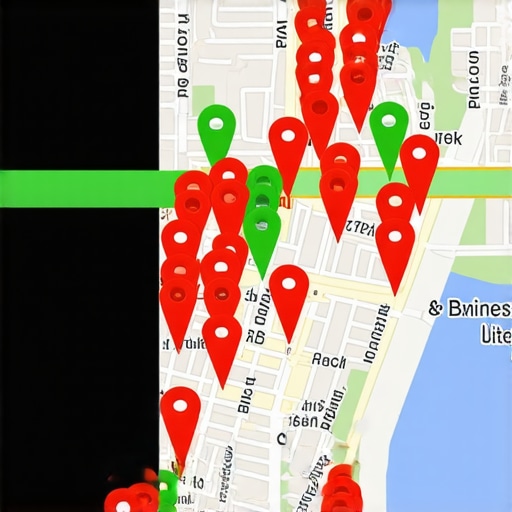
Clean up your digital footprint without losing your mind
Once you have your list of errors, you face a choice: manual labor or automated software. While big platforms promise a one-click fix, I’ve found that why manual citation cleanup is better than automated tools often comes down to those pesky niche directories that the big bots ignore. I remember a specific case where a solo attorney couldn’t crack the top 5 for ‘divorce lawyer’ in his town. We realized his messy citation overlap was caused by a defunct legal directory that kept overwriting his new data. We didn’t need a massive subscription; we just needed to clean up 30 messy listings manually to see the needle move.
Turn map data into actual revenue
Cleaning citations is the defense; using maps analytics is the offense. Most people look at ‘impressions’ and feel good, but impressions don’t pay the rent. You need to focus on the one map analytics metric that actually ties clicks to cash: the call-to-action rate. If your rank tracker says you are #1 but your phone isn’t ringing, your listing is likely suffering from a lack of social proof or poor formatting. I’ve seen businesses with perfect rankings lose out because they didn’t know how to filter out competitor review sabotage, leaving fake one-star reviews to rot at the top of their profile.
Stop relying on lying reports
If you are using a standard keyword tool, you are likely being lied to. Local SEO is granular. A citation monitor will tell you if your data is stable, but a local grid tracker is what tells you the truth about your proximity. I’ve learned that why your rank tracker is giving you a false sense of security usually boils down to it checking rankings from a single data center rather than the street corner where your customers actually stand. You need to verify that your profile is visible to the person three blocks away, not just the bot in a server farm. This is why local SEO software must be chosen based on its ability to provide real-world, hyper-local data points.
The biggest lie in the industry is that ‘more is always better.’ Most people think that hitting 100 or 500 reviews is the finish line. But in my experience, focusing solely on the count is how you get passed by smaller, more agile competitors. Google’s algorithm is increasingly prioritizing ‘Review Velocity’—how frequently you receive fresh feedback—over the total number sitting on your profile. If you have 200 reviews but haven’t received a new one in three weeks, you look like a dying business to a bot. This is why most review management tools fail to catch the one metric that matters: the steady heartbeat of consumer engagement. You need review management tools that transform customer feedback into revenue by keeping that stream active, rather than just acting as a trophy case. I once worked with a business owner who had the most reviews in his city, yet he was losing the map pack because he wasn’t responding to feedback correctly. He didn’t know how to filter out competitor review sabotage, which left a string of suspicious one-star ratings at the top of his ‘most relevant’ sort, tanking his conversion rate despite his ‘prestige.’
Is your rank tracker giving you a false sense of security?
If you are looking at a single number—like an ‘Average Rank’—you are flying blind. Local SEO is a game of inches, and your rank changes every time someone walks across the street. Most standard software gives you a ‘point-in-time’ report from a fixed location. A study by the experts at Whitespark has shown that proximity remains the heaviest ranking factor; if you aren’t tracking your visibility on a hyper-local grid, you aren’t seeing the real world. This is why your rank tracker misses the local grid changes that actually matter. You might be #1 while sitting in your office chair, but #12 at the coffee shop three blocks away where your customers are actually searching. If your software isn’t showing you that drop-off, it’s lying to you about your market share.

Stop chasing vanity metrics and start tracking real calls
The ‘Oops’ factor often comes when you trust an agency report that shows green arrows pointing up while your phone stays silent. I’ve learned the hard way that why tracking average rankings is the fastest way to lose local leads is that it hides the ‘proximity gap.’ You can be ‘improving’ your average score by ranking for low-intent keywords in the next town over while losing ground on high-intent keywords in your own neighborhood. You need to be looking at how deep your reach extends into specific ZIP codes, not just your overall score. Have you ever fallen into this trap of trusting a ‘green’ report while your sales were actually down? Let me know in the comments.
The set-and-forget trap will kill your momentum. I’ve seen it dozens of times: a business hits the top three, the owner stops looking at their dashboard, and six months later, they are back on page two. The reason is usually ‘data drift.’ Every time a new data scraper hits a minor directory, it risks overwriting your clean data with old information. This is why I religiously use a citation monitor. It isn’t just about the initial cleanup; it’s about having an early warning system. You need to know how to stop citation scrapers from overwriting your correct business info before those small errors compound into a major ranking drop. Your digital footprint is like a garden; if you don’t weed it regularly, the weeds will eventually choke out the flowers you worked so hard to plant.
How do I keep these local wins alive for the long haul?
Consistency beats intensity every single time. Instead of doing a massive audit once a year, I spend 15 minutes every Tuesday looking at my maps analytics. I’m looking specifically for any dips in direction requests or calls from specific neighborhoods. If I see a drop-off three miles to the east, I don’t just shrug it off. I fire up my rank tracker and look at the grid view for that specific area. According to the 2023 Local Search Ranking Factors survey by Whitespark, proximity of address to the searcher remains a top factor, but your ability to maintain a high conversion rate is what keeps you anchored in that spot. This is where review management tools that transform customer feedback into revenue become essential. They ensure you aren’t just collecting stars, but you’re responding in a way that signals to Google’s algorithm that you are active and engaged in real-time.
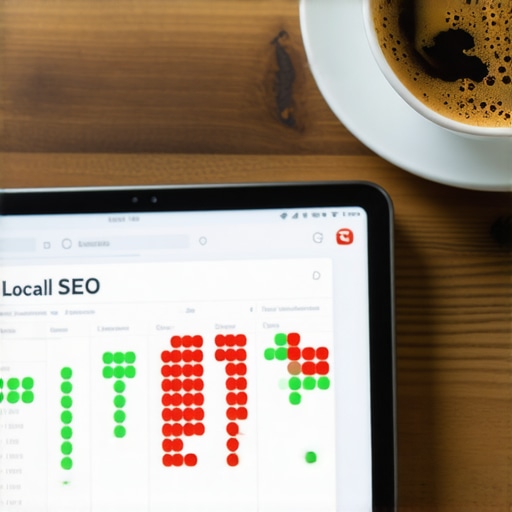
Beyond the tech, I also recommend a monthly ‘sanity check’ on your niche-specific directories. Even the best automated local SEO software can occasionally miss a vertical-specific site that suddenly gains authority. I once found a small roofing contractor who lost his #1 spot because a specialized industry directory updated its database with his home office address from five years ago. Because he didn’t have the simple way to proof your citations against competitor edits in place, the change went unnoticed for weeks. This is why I argue that software should serve your strategy, not replace it.
Your next customer might never even see your website
As we move deeper into the era of AI-driven ‘zero-click’ searches, I predict that your Google Business Profile and citation network will become more important than your actual website. Google’s Search Generative Experience (SGE) is already pulling data directly from these sources to answer complex local queries. If your data is messy or inconsistent, the AI will simply skip you in favor of a competitor with a cleaner record. This makes the one map analytics metric that actually ties clicks to cash the only truth you should care about. Stop obsessing over national search volume and start dominating the three-block radius around your front door. Here is my challenge for you: log into your maps dashboard today, find your lowest-performing neighborhood, and run a targeted citation audit on just that specific area. You might be surprised at the ‘ghost’ data you find lurking there.
What Experts Won’t Tell You About Scaling Local Presence
After years in the trenches, I’ve realized that the biggest mistake is treating these tools as a set-it-and-forget-it solution. I learned the hard way that accuracy beats volume every time. I’ve seen businesses with 500 citations lose out to those with 50 perfect ones because they stopped tracking total citations and started tracking this one accuracy metric instead. Another hard truth: your rank tracker is just a compass, not the destination. If your reports show green while your phone stays quiet, it’s a sign that your rank tracker reports are losing you clients by hiding a lack of real-world engagement. Finally, remember that reviews are a living conversation; the moment you stop responding is the moment your authority starts to rot.
Building Your Local Dominance Toolkit
If you’re ready to stop guessing and start growing, you need a curated stack of resources. For deep technical audits, I always keep the Whitespark Local Search Ranking Factors survey bookmarked—it’s the gold standard for understanding what actually moves the needle. When it comes to daily maintenance, I rely on local SEO software that prioritizes data integrity over vanity metrics. I also recommend following the Sterling Sky blog for the latest shifts in Google Business Profile behavior. These aren’t just tools; they are the eyes and ears of your digital storefront.
The Future Belongs to the Verified and the Responsive
As Google leans more into AI-driven answers, the boring work of cleaning up your data becomes your most powerful competitive advantage. You aren’t just fixing a map pin; you are building a foundation of trust that machines and humans alike can rely on. By staying on top of your maps analytics and leveraging review management tools that transform customer feedback into revenue, you are ensuring your business isn’t just a ghost in the machine. It’s time to take control of your narrative and show up where your customers are looking. Have you found any embarrassing ghost mentions of your business yet? Let me know in the comments below!