I will never forget the sinking feeling in my stomach when a loyal customer told me they tried to visit my office, only to end up at a dry cleaner three blocks away. I had just dumped a significant chunk of my marketing budget into what I thought was expert-level local SEO. My rank tracker showed I was doing okay, but my actual shop was empty. That is when it hit me: I was feeding Google a contradictory mess of data. I spent weeks cleaning up 45 messy business listings without buying another subscription, and the result was like flipping a light switch on my traffic. Today, I am going to show you how to identify and kill the three specific errors that are sabotaging your growth before you waste another dime on ads.
Stop Sending Google Mixed Signals About Your Business
Google’s algorithm is essentially a giant trust machine. If your citation monitor reveals that one site says you are on Main Street while another says Main St., you might think it is a minor detail. Google, however, sees two different entities. When the algorithm gets confused, it does not take a guess; it just hides you. It chooses a competitor with cleaner data instead. According to research by BrightLocal, 80% of consumers lose trust in local businesses when they see inconsistent or incorrect contact details online. It is not just about the user; it is about how Google perceives your authority. I made the mistake of thinking quantity outweighed quality, buying bulk packages that left a messy citation overlap across dozens of low-authority directories. This noise effectively drowned out my actual physical location.
Is cleaning this up actually worth your time?
You might be wondering if manual cleanup is a waste of a Saturday. I get it. You have a business to run and a life to live. But here is the reality: no amount of review management tools can fix a broken foundation. If your local seo software is reporting optimization while your phone stays silent, you are likely suffering from the same invisible data conflicts I was. Have you ever searched for your own business only to find a phone number you haven’t used in five years? If so, you are already losing money to the ghost version of your brand. Let us look at the first specific error that is likely tanking your local authority right now and how to scrub it from the web for good.
Audit Your Data Before Buying More Ads
The first step is a brutal reality check. You cannot scale a broken system. I remember a specific project where we spent two days just scouring the web for a law firm’s old suite number. It was tedious, but that one address formatting rule we ignored was the reason they were stuck on page two. You need to treat your NAP (Name, Address, Phone) like a secure password—any variation, even a misplaced comma, can lock you out of the 3-pack. Start by using a local seo audit to see what the internet actually thinks of your business right now. If you find a mess, do not panic. Most business owners are in the same boat. 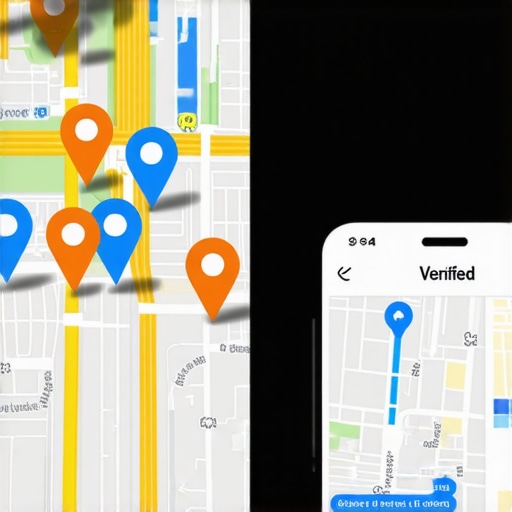
Stop the Duplicate Listing Bleed
Duplicates are the silent killers of local authority. I once worked with a dentist who had four different profiles for the same office because every new office manager had created a new one. It was a total mess that confused the algorithm. You have to learn how to wipe out duplicate listings without overpaying for citation cleanup services. This isn’t just about deleting pages; it’s about merging the power of those old listings into your primary profile. When you finally consolidate that data, the results are often like clearing a clogged pipe.
Track the Map Grid Not Just Averages
If you are still looking at a single number for your keyword ranking, you are flying blind. Local search is hyper-local—the results change every few hundred yards. I once had a client who was ‘Number 1’ in his office building but didn’t even appear on the map two blocks away. This is why your rank tracker misses the local grid changes that actually matter. You need a view that shows you a 13×13 grid over your city. If you see a sea of red circles around your shop, you know exactly where you need to focus your neighborhood-level content.
Connect Your Clicks to Actual Revenue
Data is useless if it doesn’t lead to a ringing phone. Many business owners get excited when they see map impressions rising, but impressions don’t pay the bills. You need to identify the one map analytics metric that actually ties clicks to cash. For most of us, that is ‘Phone Calls’ or ‘Direction Requests.’ If these aren’t moving, your SEO isn’t working, regardless of what your ‘optimized’ profile says. I recently saw a competitor systematically attack a local bakery by posting one fake review every Tuesday at 3 PM. We caught it because the timing was too perfect. You must know how to spot the review patterns that flag a targeted reputation attack before they do permanent damage to your trust score.
Why Proximity Kills Your Ranking Averages
Most SEO experts tell you to chase the number one spot like it is a fixed trophy. In my experience, that is the fastest way to go broke. The truth is that your rank is a moving target that changes based on where the searcher is standing. If your rank tracker reports are losing you clients because the data does not match the reality of their empty storefronts, it is because you are looking at averages instead of a local grid. Tracking average position is the fastest way to lose local leads because it masks the fact that you might be invisible just two blocks away from your office. Experts like Joy Hawkins from Sterling Sky have consistently noted that proximity is often the strongest ranking factor in the local algorithm, sometimes even outweighing your site’s authority or review count. This means your rank tracker is giving you a false sense of security if it is not providing a neighborhood-level view.
How do you know if your map visibility is real or just a proximity illusion?
The “oops” factor most business owners miss is the proximity glitch. I have seen businesses that look like they are dominating the city, but when we tested 15 map pack audit tools, we found that most were ignoring how the map pin behaves as you move further from the city center. If you are only checking your rank from your own desk, you are getting a biased result. 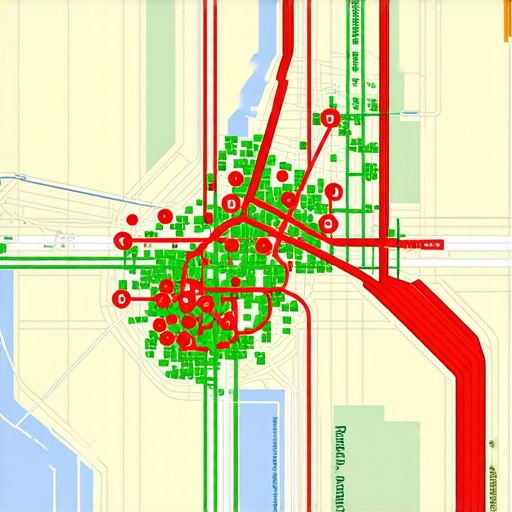
Stop Chasing Quantity and Monitor Your Accuracy Instead
Another massive mistake is the “more is better” approach to citations. People think having 300 listings on obscure directories is better than 50 accurate ones. It is not. In fact, a citation monitor is your secret weapon not because it finds new places to list you, but because it catches when a data aggregator reverts your phone number to one you used in 2014. These tiny regressions are what cause your map rankings to suddenly vanish. Furthermore, thinking review management is just about saying “thank you” to customers is a rookie move. If you are not using modern management tools to filter out competitor review sabotage, you are leaving your reputation open to targeted attacks that can tank your conversion rates overnight. Have you ever fallen into this trap? Let me know in the comments. Finally, do not get blinded by map impressions. High views are a vanity metric if they do not lead to a phone call or a walk-in. You must focus on the one map analytics metric that actually ties clicks to cash. If the intent behind the click is not there, your traffic is just noise.
Why Your Citations Will Rot the Moment You Stop Looking
Maintaining a local presence is not a ‘set and forget’ project. I have seen businesses claw their way into the top three, only to vanish 60 days later because they thought the work was finished. The internet is dynamic; data aggregators constantly push ‘updates’ that can overwrite your clean data with old, incorrect records. This is why a citation monitor is more of a smoke alarm than a reporting tool. It alerts you when a random directory suddenly decides your business is located in the suite next door. Darren Shaw, the founder of Whitespark and a leading voice in the industry, notes in his Local Search Ranking Factors study that while citations are foundational, their power lies in the ‘consistency of data’ rather than just the sheer volume. If you stop monitoring, you are essentially inviting data drift to slowly dismantle your authority. 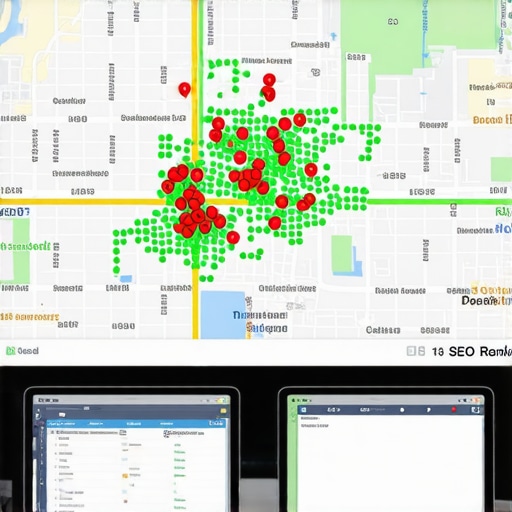
The Tool Stack That Actually Keeps Me Sane
I have wasted thousands on bloated platforms that promised the world but delivered nothing but colorful charts. Now, I keep it lean. I use local seo software that prioritizes map-grid visibility over average ranking numbers. Your rank tracker should tell you exactly where your proximity limits are, not just that you are ‘Number 3’ in the city. If your current tool doesn’t show you the grid, you are missing the context of your competition. I also rely heavily on maps analytics to separate real customer intent from bot traffic. The secret is to look for ‘Interaction Velocity.’ When Google sees a sudden spike in people asking for directions or clicking to call, it interprets that as real-world popularity and pushes your pin higher.
How do I maintain my visibility without spending ten hours a week on it?
The key is automation with a human touch. I use review management tools to handle the initial alerts, but I always write the responses myself to avoid looking like a bot. Consistency beats intensity every single time. Five minutes a day spent checking your rank tracker for major shifts is better than a ten-hour ‘SEO weekend’ once a quarter. As we look toward the future, I predict that AI-driven search, like Google’s SGE, will place even more weight on ‘Real World Signals.’ It won’t just be about who has the best keywords, but whose map analytics show a consistent flow of physical foot traffic and genuine customer interaction. If you want to stay ahead of the curve, try this one advanced tip: go into your local seo software today and identify the three neighborhoods where your ranking is ‘just outside’ the top three. Focus your next three customer review requests specifically on clients from those zip codes. You will be amazed at how quickly the algorithm responds to localized social proof.
The Hard Truth About Map Rankings I Had to Learn the Hard Way
After years in the trenches, I realized that rank trackers don’t pay the mortgage—actual customers do. My biggest lightbulb moment came when I stopped obsessing over being number one everywhere and started focusing on why my maps analytics weren’t showing actual phone calls. I learned that a single address formatting rule can be the difference between a thriving shop and a ghost town. I also discovered that your authority isn’t static; it decays over time if you aren’t paying attention. If you do not use a citation monitor, you are essentially building a digital house on shifting sand. Finally, I stopped asking for reviews like a bot because I saw how a simple human tweak triples response rates.
#IMAGE_PLACEHOLDER_E#
Tools That Earn a Permanent Spot on My Browser Bar
You do not need a massive budget, but you do need the right local seo software to scale. I personally swear by tools that offer a grid view because your rank tracker often hides the truth about your true reach. I also recommend keeping a close eye on your one map analytics metric that matters to ensure your traffic is actually converting into revenue. If you are feeling overwhelmed, start with a simple SEO audit to find the low-hanging fruit that your competitors are ignoring.
Stop Overthinking and Start Taking Back Your Local Territory
Local SEO is not a dark art; it is a game of consistency and verified data. You have the tools and the roadmap now to stop the bleed. Don’t let the fear of doing it wrong stop you from making your first move toward dominance. Whether it is using review management tools to clean up your reputation or fixing a map pin mistake, every small action you take today compounds into authority tomorrow. You have the knowledge—now go claim your spot in the local pack. Which part of your local data is giving you the biggest headache right now—the duplicate listings or the shrinking proximity? Let me know below!