I remember the exact moment my heart sank. I’d just spent a month’s marketing budget on a shiny new campaign, only to find out that about 30% of my potential clients were calling a disconnected line from a business I closed five years ago. I was essentially paying to frustrate my future customers. It’s a visceral kind of pain, seeing your maps analytics showing direction requests but never hearing the office phone actually ring. If you have ever felt like you are shouting into a void despite having great reviews, you are likely haunted by inconsistent phone numbers across the web. Today, I am going to walk you through the exact process I use to scrub these ghosts out of the machine so you can reclaim your local authority and finally get your phone ringing again. [image]
Why Google Hates Your Old Cell Phone Number
Google is essentially a giant recommendation engine. If you tell one friend your number is 555-1234 and another friend says it is 555-9876, that person isn’t going to recommend you to anyone because they don’t want to look like a fool when the call doesn’t go through. It is the same with search engines. When your citation monitor flags three different numbers for your shop, Google gets nervous. They would rather rank a competitor with a perfect profile than risk sending a user to a dead end. According to the 2023 Local Search Ranking Factors survey by Whitespark, citation consistency remains a foundational trust signal that determines whether you even get invited to the Map Pack party. If the bots find a conflict, they simply stop trusting your location data altogether.
Does a single wrong digit actually matter?
I used to be a skeptic too. I figured as long as my Google Business Profile was correct, the rest was just noise. I was wrong. I once let a minor typo on a small niche local directory sit for six months because I thought it was too insignificant to matter. That tiny error was picked up by data aggregators, and suddenly, my local traffic started tanking because the algorithm couldn’t verify which version of my business was the real one. Have you ever Googled your own business only to find a phone number you haven’t used in a decade?
Stop the Digital Confusion Before It Costs You More Leads
The reality is that the internet is full of automated scrapers that are constantly helping you by creating auto-generated listings. If they grab the wrong data from an old record, it spreads like a virus across the web. This is why learning how to clean up messy listings is the single most important boring task you will ever do for your SEO. It isn’t as flashy as getting a 5-star review, but it is the floor your entire strategy stands on. Without a solid foundation of consistent phone data, even the most expensive local seo software won’t be able to save your rankings. We need to move beyond just checking and start a deep-cleaning process that ensures every digital mention of your brand points to the same ringing phone on your desk.
Find Every Ghost Version of Your Business
It starts with a brutal audit. You need to how to run a local seo audit without getting overwhelmed by vanity metrics by searching for your old phone number in quotes along with your business name. I call this the ‘search operator’ hunt. If you have ever changed your number, Google likely still sees the old one tied to your brand on a random blog post from 2014 or a forgotten local directory. These are the ghosts that confuse the algorithm. I once spent six hours chasing a single incorrect digit on a small local blog about town festivals for a client. It felt like overkill until I realized that the specific citation fix that reconnected our shop to the 3-pack was exactly that—fixing the small stuff the scrapers kept finding. Once that one link was updated, our presence in the map pack stabilized almost overnight because the data conflict finally disappeared. 
Kill the Bad Data at the Source
The real problem is that bad data is like a weed; if you don’t get the root, it just grows back. This is why you must learn how to stop citation scrapers from overwriting your correct business info. These bots crawl old, authoritative directories and ‘refresh’ your listing with the wrong number. Think of it like a game of telephone where the person at the start of the line is a broken record. You need to use the simple way to proof your citations against competitor edits to ensure that once a listing is fixed, it stays fixed. I recommend starting with the primary data aggregators like Data Axle and Neustar Localeze. If your phone number is wrong there, it will eventually be wrong everywhere else, no matter how many individual profiles you update manually.
Proof Your Listings Against Future Errors
A few years ago, I helped a law firm that had moved offices three blocks away. They updated their Google profile but forgot a tiny legal directory they had signed up for in 2012. Because that one directory had high domain authority, it kept ‘correcting’ other sites through automated syncing. We only caught it by using the citation monitor trick to find every mention of your brand. After a three-minute email to that site’s admin, their map rankings jumped four spots in a week. Watching your progress is the final piece of the puzzle. I used to check Google manually every morning, but that is a fool’s errand because results change by the block. Seeing how rank tracker can skyrocket your local rankings in 2025 through consistent data monitoring is how you move from guessing to knowing that your cleanup efforts are actually working. Focus on the high-authority directories first, then let the smaller ones fall into place once the core data is solidified.
The Average Rank Lie That Keeps You Broke
Most business owners log into their dashboard and see a “3.2” average position and feel okay. But in my experience, that number is a complete fantasy. Average rankings often mask total failure in the neighborhoods that actually drive revenue. I have seen businesses celebrate a high average position while they were completely invisible to anyone standing more than two miles from their front door. This is why tracking average position is the fastest way to lose local customers. If your tools aren’t showing you a street-level grid, you are flying blind. You need the rank tracker setup that shows real neighborhood proximity to see where your authority actually ends. Have you ever fallen into this trap where your dashboard says you are winning, but the phones are silent? Let me know in the comments. 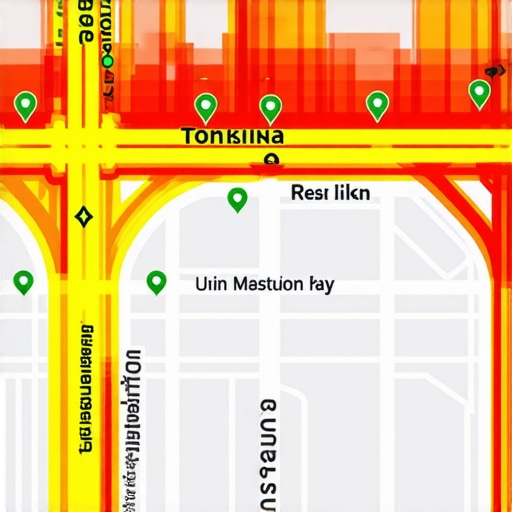
Why is my business ghosting users only three blocks away?
This “ghosting” usually happens because of a lack of hyper-local relevance. Most people think they need more backlinks, but often the issue is that Google does not see your business as an authority outside of a tiny radius. A 2023 study by BrightLocal highlighted that while proximity is a dominant factor, it can be stretched by high-velocity engagement signals. This means why your review average matters less than your response speed. If you take three days to reply to a customer, the algorithm assumes you are less “available” than a competitor who replies in ten minutes. Most people treat maps analytics like a scoreboard rather than a diagnostic tool. If your map impressions are skyrocketing but your phone isn’t ringing, you likely have a conversion bottleneck on your profile, not a ranking problem. I have found that the profile feature that actually converts map views into directions is often a neglected secondary category or a missing booking link that automated audit tools frequently overlook.
Stop Asking for Reviews Like a Bot
Another sophisticated mistake is treating review management as a volume game. If you send the same generic “Please leave us a review” text to every customer, you are missing the point of E-E-A-T. Google’s sentiment analysis is now capable of identifying specific keywords related to your services within the text of the reviews themselves. You need to stop asking for reviews like a bot and start encouraging customers to mention the specific problem you solved. This creates a data-rich profile that search engines will reward with higher visibility across a wider geographic area. I also recommend you learn how to use heatmaps to visualize your map pack dominance so you can identify exactly which street corners you are losing to the competition. The biggest “oops” I see is business owners who buy a subscription-based citation monitor and assume the job is done. These tools are helpful, but they often ignore niche-specific directories that actually move the needle for your specific industry. You must look for the authority signals most local seo software overlooks if you want to break out of a local pack plateau and dominate your entire service area.
Keep Your Map Dominance From Fading Away
I have seen too many businesses climb to the top only to fall back to page three because they thought the work was done. The reality is that local SEO is more like a gym membership than a one-time purchase. If you stop showing up, you lose your gains. I personally rely on the citation monitor setting that catches profile hijacks in minutes. This is my early warning system. Just last month, it flagged a competitor who tried to ‘suggest an edit’ to our office hours. Without that alert, I would have been ‘closed’ for business during my busiest afternoon. To truly unlock the power of local seo software for small business growth, you have to move from defensive auditing to offensive scaling. This means looking at your maps analytics to see where you are winning and doubling down on those neighborhoods with hyper-local content. 
How do I maintain my local rankings without a full-time staff?
It comes down to high-leverage automation. I use review management tools that transform customer feedback into revenue so I don’t have to manually ping every client. Instead, the system sends a nudge, filters for the best feedback, and alerts me if a negative review needs my immediate attention. According to Joy Hawkins, a leading expert at Sterling Sky, Google is increasingly looking for ‘real-world’ signals that a business is active, such as frequent photo updates and review velocity. If you are not seeing a steady climb, check the rank tracking feature that actually predicts revenue growth to see if your efforts are translating into actual visibility. My prediction? Within the next two years, AI-led search agents like ChatGPT and Google’s SGE will favor businesses with the highest ‘trust density’—which means your citation consistency and review history will be more important than your website’s backlink profile. Start using the rank tracker setup that shows real neighborhood proximity today to see where you stand before the algorithm shifts again. My best advice for right now? Set up a weekly ‘health check’ on your top five citations and reply to every single review—even the bad ones—within four hours. It is the fastest way to signal to Google that you are the most reliable option in town.
The Hard Truth I Learned After Chasing a Thousand Citations
Cleaning up your data isn’t a one-time event; it’s an ongoing commitment to accuracy that most business owners underestimate. I once thought that fixing my top five profiles was enough, but I quickly realized that your citation monitor is only as good as your follow-through with the primary data aggregators. You have to be persistent with the high-authority sites that the automated scrapers love to copy. Another lightbulb moment? Don’t panic if your rankings don’t jump the second you hit ‘save.’ Google takes time to digest these changes, so give the algorithm at least 30 days before you decide to pivot your strategy. Finally, remember that consistency is more important than volume; it is better to have fifty perfect citations than five hundred messy ones that confuse the bots.
The Exact Stack I Use to Keep My Data Clean
If you want to stay sane and avoid manual spreadsheet hell, you need a reliable rank tracker that provides hyper-local data for specific neighborhoods rather than just city-wide averages. I also swear by specialized review management tools that alert me the second a new comment drops, allowing for that crucial four-hour response window. To round out your toolkit, keep a constant eye on your maps analytics to spot weird traffic dips before they turn into a full-blown lead crisis. These aren’t just expenses; they are your eyes and ears in a digital marketplace that never sleeps.
Take Back Control of Your Digital Footprint
You’ve worked too hard on your business to let a legacy phone number or a lazy scraper keep you from your next client. This isn’t just about technical SEO; it’s about ensuring that the real people in your community who need your help can actually reach you on the first try. By choosing the right local seo software and staying diligent with your data cleanup, you are building a moat around your brand that competitors will find impossible to cross. Go out there, clear out the ghosts, and reclaim your rightful spot at the top of the map pack. Have you ever found a ‘ghost’ phone number for your business that you thought was long gone? Let me know how you tracked it down in the comments below!