I will never forget the weekend I lost my mind over a comma. I was managing a small florist’s account and found that Yelp had ‘Street’ while YellowPages had ‘St.’ I spent three hours—time I could have spent on actual strategy—trying to force a sync. I was convinced that this tiny discrepancy was the reason they weren’t in the Map Pack. I was wrong, of course. My early mistake was believing the ‘consistency at all costs’ dogma that still plagues the industry today. I was chasing ghosts instead of customers. [image placeholder]
Stop Obsessing Over the Tiny Details
In the early days of local search, Google’s algorithm was a bit of a blunt instrument. It needed identical data to connect the dots. But things have changed. If you are using a citation monitor, you know that keeping your core info straight is important, but it is not the magic wand it used to be. Google is incredibly good at ‘fuzzy matching’ now. They know ‘Suite 2’ and ‘#2’ are the same place. While you are manually editing a directory that gets three visitors a year, your competitor is busy getting five-star reviews and using review management tools to build real authority. I learned the hard way that focusing on accuracy metrics that matter beats chasing volume every single time.
Is chasing perfect listings actually worth your time?
It is a fair question to be skeptical about. We’ve been told for years that ‘NAP’ is everything. But the data tells a different story. According to the 2023 Local Search Ranking Factors study by Whitespark, citation consistency has actually dropped significantly as a top-tier ranking signal. Google cares way more about whether people are actually interacting with your profile and showing intent. Have you ever felt like you were just spinning your wheels with these listings while your rankings didn’t budge? I want to show you how to identify the specific citation errors that actually confuse the algorithm versus the ones you can safely ignore. Let’s get real about what is actually driving your leads.
Focus on the Power Players First
Instead of trying to fix every obscure directory on the internet, you need to identify the local citations that actually move the needle. Think of your business data like a high-stakes game of telephone; if the first three people get the message right, the rest usually falls into place. Start with the ‘Big Three’—Google, Apple Maps, and Bing—then pivot to the niche-specific sites for your industry. If you are a plumber, a citation on a localized home-services directory is worth ten on a generic business list. To keep your sanity, use a citation monitor to watch these primary sources like a hawk. When a competitor or a rogue scraper tries to change your phone number on Bing, you should be the first to know, not the last.
See Where You Actually Rank in the Real World
Most business owners check their rankings by typing their service into Google while sitting at their desk. This is a massive mistake because your proximity to the router virtually guarantees you’ll see yourself at the top. I once worked with a local locksmith who was popping champagne because his ‘average’ rank was #2. But when we dug into maps analytics, we found a ‘proximity glitch.’ He was #1 if you were standing in his parking lot, but #15 if you were two blocks over in the high-traffic shopping district. We realized why his local ranking reports felt like they were lying to him. To fix this, you need a rank tracker setup that shows real neighborhood proximity. You need to see a grid of your city, not just a single number. 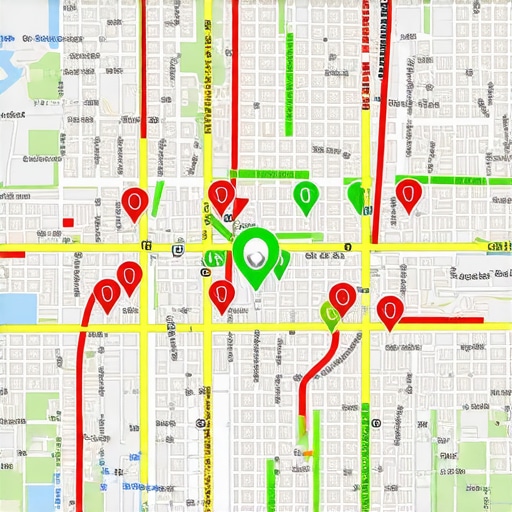
Turn Your Review Section into a Ranking Engine
Review management is not just about saying ‘thanks for the five stars.’ It is about signal density. Google’s algorithm scans your reviews for keywords and location-specific language. Instead of a generic link, use a review management strategy that triples positive feedback by prompting customers to mention the specific service they received. If a customer writes, ‘Best water heater repair in Austin,’ that is a massive authority signal. Most review management tools allow you to automate this follow-up, but the magic happens when you respond. When you reply, don’t just be polite; be strategic. Use the review response hack of mentioning your neighborhood or a nearby landmark. It bridges the gap between digital data and physical location.
Audit Your Software Before It Audits You
You might be tempted to buy every piece of local seo software you see, but more tools usually mean more noise. You need to run a local seo audit without getting overwhelmed by vanity metrics. Focus on ‘Share of Voice’—how often you appear in that top 3-pack compared to your neighbors. If you find your data is getting messy across multiple locations, learn how to sync hundreds of locations without data corruption. Precision is your best friend. A single address formatting rule can be the difference between Google merging your profiles or treating them like two different businesses.Let’s dig deeper into the data most people ignore. Everyone tells you that a high average ranking is the goal, but in my experience, tracking average position is the fastest way to lose local customers. Why? Because an average is a mathematical ghost. It masks the reality that you might be #1 in a residential zone but invisible in the commercial district where the money is. This is what we call the proximity paradox. If your maps analytics aren’t showing you a granular grid, you are flying blind. Have you ever fallen into this trap? Let me know in the comments. 
Why do your map rankings crater just three blocks from your office?
It is the most frustrating thing in local search. You have a verified profile, plenty of reviews, and yet your visibility drops off a cliff the moment a customer crosses a specific intersection. This happens because your map ranking reports fail to show the real-world proximity gap. Google’s algorithm is hyper-sensitive to the searcher’s physical location. If you aren’t using a rank tracker setup that shows real neighborhood proximity, you might think you are winning when you are actually losing ground in high-intent areas.
Review Diversity Beats a Perfect Five-Star Score
Here is a contrarian take: stop chasing a perfect 5.0 rating. A 2024 study by BrightLocal revealed that consumers are actually more likely to trust a business with a 4.8 rating and a high volume of recent responses than a 5.0 with zero engagement. High-velocity review diversity matters more than just your star rating because it signals to Google that you are an active, trustworthy entity. If you only have five-star reviews, you look like a bot. Furthermore, why your review average matters less than your response speed is a nuance many overlook. Speed indicates customer service excellence, a signal Google loves to amplify.
The Dangerous Trap of Set It and Forget It Citations
The biggest mistake I see veterans make is assuming a citation audit is a one-time project. Local data is volatile. Scrapers and third-party apps are constantly ‘suggesting’ edits to your profile that can overwrite your hard work. You need the citation monitor setting that catches profile hijacks in minutes to prevent your phone number from being changed to a competitor’s. If you aren’t vigilant, you risk the ‘Oops’ factor of how to spot an over-optimized profile before Google penalizes you. Over-stuffing your business name with keywords or using a virtual office address might give you a temporary boost, but it is a house of cards. Focus on real-world signals and genuine engagement to maintain long-term authority.Maintaining a local presence isn’t a race; it’s a garden that needs constant weeding. I’ve seen business names change overnight because a random user ‘suggested’ a more accurate-sounding name, and Google’s algorithm blindly accepted it. This is why I religiously use the the citation monitor setting that catches profile hijacks in minutes. If you aren’t watching the ‘suggested edits’ like a hawk, you are leaving your brand’s reputation in the hands of strangers. I personally set my alerts to trigger for any change in the phone number or the ‘Store Name’ field immediately. You should also be aware of why your map pin moves when you aren’t looking and how to lock it, as even a tiny shift in your pin’s location can disconnect you from the customers in your most profitable neighborhood.
How do I maintain my map visibility over the long haul?
The secret to longevity isn’t in adding more keywords; it’s in the 5 profile engagement signals that actually move the needle in map rankings. You need a rhythm. Every Tuesday, I audit the Q&A section. Every Thursday, I check how to use maps analytics to find your most profitable neighborhoods to see if our ‘reach’ is shrinking. If you find your visibility is dipping, don’t panic. Check if you’ve fallen victim to the proximity paradox. Often, the fix is as simple as updating your ‘From the Business’ description or adding three new photos of your actual storefront.
Why Your Next Tool Needs a Grid View
If you are still using a tool that gives you a single ‘Average Rank’ number, you are making decisions based on fiction. I only recommend a rank tracker setup that shows real neighborhood proximity that visualizes data on a map grid. Joy Hawkins, a leading voice at Sterling Sky, has frequently noted that since the ‘Vicinity’ update, Google weighs physical distance more heavily than ever before. If your tool doesn’t show you exactly where you drop from #1 to #10, you can’t possibly know where to focus your local ad spend or your review generation efforts. Using maps analytics insights to boost your local map visibility allows you to stop guessing and start targeting the specific blocks where you’re losing. 
Scale Without Breaking Your Data
When you move from one location to ten, the ‘manual’ method becomes a nightmare. This is where unlock the power of local seo software for small business growth becomes mandatory. You need a centralized dashboard that lets you see everything at once. For multi-location managers, I look for the software feature that makes managing 1000 reviews easy because manual replies are the first thing to get skipped when things get busy. But remember, automation is a tool, not a replacement for a soul. The future of local search is moving toward ‘visual search’ and AI-summarized reviews. Google is already testing ‘Search Generative Experience’ (SGE) which pulls specific snippets from your reviews to answer user queries directly. My prediction? In 2025, the most successful businesses won’t just have the most reviews—they will have the most ‘contextually relevant’ reviews. Start asking your customers to mention specific products in their feedback today. I challenge you: log into your Google Business Profile right now and reply to the three oldest unanswered reviews using the customer’s name and the specific service they bought. It’s the easiest win you’ll have all week.
The Hardest Lessons I Learned Managing Local Search Data
After years of obsessing over every decimal point, I realized that some errors just do not matter while others are lethal. If you want to keep your sanity, stop trying to fix every tiny discrepancy. Instead, focus on the 3 citation errors that confuse Google and kill your traffic. I spent months on perfect listings only to realize my competitors were winning simply by replying to reviews faster. It turns out why your review average matters less than your response speed is one of those counter-intuitive truths that changes everything. Finally, I had to accept that tracking average position is the fastest way to lose local customers—it is a ghost metric that hides where you are actually losing money in the neighborhood grid.
The Toolkit I Trust to Protect My Local Authority
I do not believe in buying every shiny new toy, but three specific tools are non-negotiable for my workflow. First, you need a rank tracker setup that shows real neighborhood proximity. If you cannot see the hyper-local grid, you are just guessing. Second, I never run a campaign without a citation monitor to alert me the moment a scraper or a competitor tries to mess with my data. Lastly, I rely on review management tools that transform customer feedback into revenue. These are not just software; they are my eyes and ears on the ground when I cannot be there myself.
Your Roadmap to a Dominated Map Pack
Local SEO is not about being perfect; it is about being the most active and relevant choice in your immediate neighborhood. When you finally unlock the power of local seo software for small business growth, you stop working for the algorithm and start making the algorithm work for you. Go out there, fix the big errors, and ignore the noise. Your future customers are already searching for you—you just need to make sure your digital light is on when they arrive. Success comes from consistent, small actions rather than one-time overhauls. Have you ever noticed your business disappear from the map the moment you drive just two blocks away from your office? Let me know your experience in the comments below!