The “Green Grid” Illusion: Why #1 Rankings Don’t Always Ring the Phone
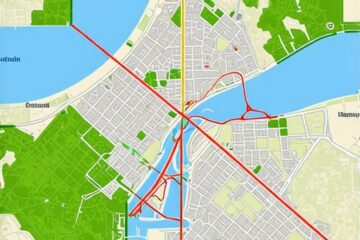
As a Local SEO expert, I’ve seen it a thousand times. An agency sits down with a business owner, slides a tablet across the table, and points to a beautiful, emerald-green grid. “Look,” they say, “you’re ranking #1 for your primary keywords across the entire city!” The business owner nods, but there is a visible tension in the room. Why? Because while the google maps rank tracker shows total dominance, the shop is empty, the technicians are sitting idle, and the phone hasn’t rung in three hours.
This is the Ranking Paradox. In the modern era of local search, a #1 position is no longer a guarantee of a lead. In fact, relying solely on traditional rank tracking is one of the most dangerous things you can do for your ROI. We are entering an age where the correlation between “rank” and “revenue” is thinning out, replaced by a complex web of user intent, SERP layout changes, and hyper-local proximity shifts.
Consider the data from industry leader Joy Hawkins: In a recent case study, a high-performing google business profile seo strategy actually led to a 48% drop in calls over a year, despite the fact that the profile’s rankings had actually increased. You read that correctly. They were more visible than ever, yet their phone traffic was cut in half. If you are still judging your success based on a static rank report, you aren’t just looking at the past; you are looking at a lie. To understand why, we have to look at how Google has fundamentally re-engineered the Local Pack.
How Google Hijacked the Local Pack (And Your Clicks)
The first reason your rank tracker is lying to you is that it fails to account for the “Real Estate War” happening on the mobile screen. Ten years ago, a #1 rank meant you were the first thing a user saw. Today, a #1 organic rank in the Map Pack might actually be the 7th or 8th item on the screen. This is a primary reason why your ranking reports look great while your shop stays empty.
Google has aggressively monetized the local search experience. Let’s look at the current hierarchy of a typical “plumber near me” search in 2025-2026:
- Local Services Ads (LSAs): These “Google Guaranteed” units now often show three practitioners instead of two, complete with headshots and star ratings. They occupy the most valuable “above the fold” space.
- Traditional PPC Ads: Below the LSAs, you often find one or two traditional text ads.
- The Map Pack: Finally, we get to the organic results. But wait – the first spot in the Map Pack is now frequently a paid ad as well.
By the time a user reaches your #1 organic listing, they have already scrolled past 4 to 6 competitors who have “paid to play.” Furthermore, Google has been experimenting with the “Disappearing Call Button.” In several test markets, Google has removed the direct click-to-call button from organic listings while keeping it prominent on paid ads. This forces users to click into your profile – adding a friction point – or simply click the “Call” button on an ad above you. If your google maps ranking service only tells you that you are #1, but doesn’t tell you that you are buried under a mountain of LSAs, they are giving you half the story.
Furthermore, the layout of the SERP is dynamic. Depending on the user’s intent, Google might trigger a “Research” layout that prioritizes directories like Yelp or Angi over the Map Pack entirely. If your gmb ranking service isn’t tracking SERP features, you’re flying blind. You might be #1 in a Map Pack that only 20% of users are even seeing.
Why Your Rank Tracker Misses the “Block-by-Block” Reality
The second major lie involves the technology behind tracking itself. Most traditional local seo software checks rankings from a single data center or a static latitude/longitude point (often the center of a zip code). This is a catastrophic flaw because Google’s proximity algorithm has become “hyper-local.”
In 2026, proximity is the undisputed king of the “three pillars” (Proximity, Relevance, and Prominence). We now see “Proximity Tightening,” where a business might rank #1 when a user is standing in their parking lot, but drop to #10 when the user is just two blocks away. A standard rank tracker might ping the “centroid” of the city and report a #1 rank, missing the fact that you are invisible to 90% of the actual city’s population. This is the local rank tracker flaw that makes your best keywords look like losers.
To get an honest look at your google business profile seo, you must use a “Geo Grid” tracker. These tools, like the ones found at SEO Viper Tools, map out your rankings across a grid of hundreds of points. This reveals the “failing zones” where your competitors are eating your lunch. If your google maps rank tracker doesn’t show you a heat map of your city, it is hiding the truth from you.
The “Near Me” Factor: Users have been trained to search for “[Service] near me.” Google interprets “near me” literally. If your business is located on the edge of a major metropolitan area, you might have incredible “Prominence” (backlinks and reviews), but you will never rank in the downtown core because your “Proximity” score is too low. A lying rank tracker will tell you that you rank for the broad keyword, but it won’t show you that you’re losing the “near me” traffic that actually converts into phone calls.
Beyond the Screen: Why 2026 Search Tech Broke Traditional Tracking
We are no longer in an era where search only happens on a 6-inch glass screen. The rise of AI Agents and Spatial Search has fundamentally broken the way we measure rank google business profile success. Your current tools are likely optimized for 2022, but the world has moved on.
AI Agents (Zero-Click 2.0): Whether it’s Claude, GPT-5, or Google’s own Gemini-powered Search Generative Experience (SGE), users are increasingly asking AI to make decisions for them. An AI agent doesn’t show the user a list of three businesses; it scrapes the Map Pack data and says, “I recommend Blue Ribbon Plumbing because they have the most recent reviews regarding emergency water heater repair.” In this scenario, the “rank” doesn’t matter as much as the data density of your profile. If the AI recommends you, you get the lead. If it doesn’t, it doesn’t matter if you were #1 in the old-school Map Pack – the user never saw the list.
Autonomous Vehicles & AR: As we look toward 2026, spatial computing (like Apple Vision Pro) and in-car navigation systems are becoming primary search interfaces. When a driver tells their Tesla, “Find a coffee shop on the way,” the car’s algorithm prioritizes convenience and route alignment over traditional ranking factors. To combat these shifts, you need to implement 5 rank tracker tips to fix 2026 hyper-local data gaps, focusing on structured data and real-time attribute updates.
Traditional gmb seo tools cannot track these interactions. They cannot tell you how many times an AI agent mentioned your business in a conversational response. This is why your “rankings” can stay steady while your actual lead volume fluctuates wildly based on how these AI models are weighing your business’s recent review sentiment or “Open Now” status.
Stop Tracking Ranks, Start Tracking Revenue
If rankings are a “vanity metric,” what should you actually be looking at? As an expert in google business profile optimization, I tell my clients to ignore the position and obsess over the action. You need to move your focus to “Performance-Based Analytics.”
You should be monitoring three core pillars of data:
- Conversion Actions: This includes “Click to Call,” “Request a Quote,” and “Driving Directions.” If your rankings are up but these actions are down, you have a conversion problem, not a ranking problem. Perhaps your recent reviews are negative, or your competitors have better photos.
- Search Intent Saturation: Are you ranking for “high-intent” keywords (e.g., “emergency AC repair”) or “low-intent” keywords (e.g., “how does an AC work”)? Many local seo tools, such as those provided by SEO Viper Tools, help you distinguish between keywords that drive calls and those that just drive “looky-loos.”
- GBP Insights vs. Reality: Google’s own “Insights” dashboard is notoriously laggy and often inaccurate. You must cross-reference your GBP data with your actual CRM (Customer Relationship Management) system. If Google says you got 50 calls, but your receptionist only logged 10 new leads, you need to investigate the “Call Tracking” gap.
Utilizing Maps Analytics insights to boost your local map visibility requires looking at the “Micro-Moments.” When does the phone ring? Is it after you post a new update? Is it when you respond to a review? These are the signals that correlate with revenue, not just a green bubble on a map.
How to Audit Your Google Business Profile for Real Growth
If you suspect your rank tracker is lying to you, it’s time to stop chasing the algorithm and start optimizing for the human being on the other side of the search. Here is a high-level checklist for rank higher on google maps strategies that actually convert into calls:
- Audit Your Citations: Ensure your Name, Address, and Phone Number (NAP) are 100% consistent across the web. Even a small discrepancy can confuse an AI agent.
- Optimize Secondary Categories: Don’t just set your primary category and forget it. Use google business profile optimization to find secondary categories that cover “long-tail” searches.
- High-Frequency Posting: In 2026, freshness is a massive ranking signal. Post at least 2-3 times a week with high-quality images and geo-tagged metadata.
- Review Velocity and Sentiment: It’s not just about having a 5-star rating; it’s about how recently those reviews came in and what keywords are used within them.
Stop settling for “green grids” that don’t pay the bills. If you want to dominate your local market, you need a google maps ranking service that understands the nuance of the modern SERP. Use professional GBP ranking tools to see the real picture, and focus your energy on the metrics that actually impact your bottom line.
The “Ranking Paradox” is only a problem if you refuse to see it. By acknowledging that Google has changed the rules of the game, you can pivot your strategy, outmaneuver your competitors, and finally make your phone ring again. If you’re ready to see the truth about your local visibility, it’s time to upgrade to advanced local seo tools like those found at SEO Viper Tools and start building a profile that AI agents and humans alike can’t ignore.