I was sitting in my home office three years ago, staring at a client’s dashboard with a sinking feeling in my gut. I had done everything right. I’d polished their Google Business Profile until it shone, used the best local seo software, and even snagged a handful of five-star reviews. But the phone wasn’t ringing. I felt like a failure because the map pin was stuck on page three, buried under competitors who hadn’t updated their photos since 2012. Then I saw it. On their website, the address listed ‘South Main Street.’ On Yelp, it was ‘S Main St.’ On Google, it was ‘S. Main St’ with a period. It seemed like a tiny, pedantic detail. But that was the moment I learned that Google’s algorithm is essentially a very grumpy librarian who hates typos. Today, I’m going to show you why your hard work is being ignored and how to fix the one formatting rule that serves as the gatekeeper for the Local Pack.
The Day I Realized My NAP Data Was a Mess
I used to believe that search engines were ‘smart’ enough to bridge the gap between abbreviations. I was wrong. In my early days, I ignored the nuances of address formatting, thinking that volume was more important than precision. I spent hours building hundreds of links, but I was actually doing more harm than good because messy citation errors were quietly tanking our local authority. The reality is that if your address isn’t perfectly mirrored across the web, Google loses trust in your location’s existence. According to research published by Search Engine Journal, inconsistent NAP (Name, Address, Phone) data remains one of the most significant negative ranking factors for local businesses. It doesn’t matter how many backlinks you have; if the algorithm is confused about your physical location, you’re out. I had to learn that tracking total citations is a vanity project if the accuracy isn’t 100%. You could have 500 listings, but if 400 of them use different formatting for your suite number, you’re effectively invisible.
Does a comma really matter that much?
It sounds ridiculous, doesn’t it? We’re living in an era of AI and self-driving cars, yet a missing suite number or an abbreviated ‘Avenue’ can kill your leads. But think about it from Google’s perspective. They want to provide the most accurate information possible to avoid a poor user experience. If they see three different versions of your address, they can’t be certain where to send a customer. Have you ever checked your own listings and noticed these tiny, annoying discrepancies? It’s a frustrating realization, but once you see it, you can’t ignore it. We are going to establish your ‘Single Source of Truth’ today so your citation monitor finally stops throwing red flags and starts showing the growth you actually deserve. Let’s get into the weeds of how Google reads your street address.
Build your master record first
The first thing you need to do is establish what I call the ‘Holy Trinity’ of your data. You cannot start fixing anything until you decide exactly how your name, address, and phone number will look on every single platform. Think of this like a digital fingerprint; if you’re off by even a fraction of a degree, your customers end up at a dead end. Use a simple spreadsheet and paste your verified Google Business Profile details at the top. This is now your law. If your GMB says ‘Ste. 200,’ then ‘Suite 200’ is officially your enemy. I’ve seen businesses use local seo software to automate this, but if your source data is flawed, you’re just automating a mistake.
Hunt down every ghost listing
Once you have your master record, you have to go on a hunt. You can’t just look at the big players like Yelp or Facebook. You need to dig into the obscure local directories that scrape data from each other. I once spent an entire Saturday afternoon searching for a client’s old phone number from 2015 that was still popping up on a random ‘Best Plumbers’ directory in their city. That one ghost listing was enough to make their citation monitor look like a Christmas tree of red alerts. You need to audit your current status to see exactly where the algorithm is getting confused. 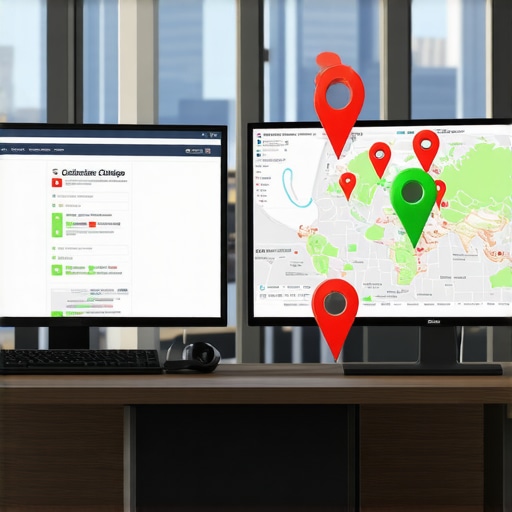
How we fixed a locksmith’s 45 messy listings
I remember working with a locksmith who was convinced his proximity was the issue. He couldn’t understand why his proximity was shrinking while he was literally standing in his shop. When we looked at his citations, he had ‘Chicago Lock & Key’ on his website, ‘Chicago Lock and Key’ on YellowPages, and ‘CL&K Services’ on a local blog. It was a disaster. We didn’t buy a new subscription; instead, we followed the path of how we cleaned up 45 messy business listings by reaching out to editors and updating the core aggregators first. The result? His rank tracker finally showed him climbing back into the top three within six weeks.
Keep your reviews and location in sync
It’s not just about the address on the footer of your site. Your review management tools should also reflect this consistency. When customers leave reviews, they often mention your location. While you can’t control what they type, your responses should always reinforce your official NAP. If you’re wondering why your Google Maps traffic never turns into actual phone calls, it’s often because the trust bridge is broken right at the point of contact. By aligning your responses with your master data, you’re giving Google the ‘thumbs up’ it needs to verify you are who you say you are. Make sure you are also checking your maps analytics frequently to see if these formatting changes correlate with a spike in ‘Get Directions’ clicks.Let’s dig deeper into the tools you’re likely paying for right now. Most business owners treat their local seo software like a set-it-and-forget-it solution, but that is exactly where the trouble begins. Everyone says you need to be number one, but in my experience, a traditional rank tracker is giving you a false sense of security. It often pulls data from a single point—usually the center of your zip code—which is virtually useless if your customers are searching from three blocks away. This discrepancy leads to what I call the proximity gap, where your dashboard looks green while your storefront stays empty. 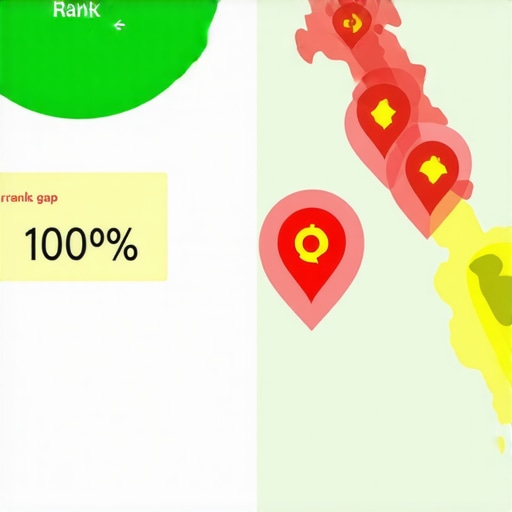
What happens when the map pin looks right but the phone stays silent?
This is the Proximity Paradox. You might see a positive report on your screen, but if you look at maps analytics, you might notice your actual engagement clicks are flatlined. A study by Whitespark on local search ranking factors confirms that proximity to the searcher remains the most powerful ranking signal in the local pack. If your software isn’t showing you a grid-based view of your entire city, you’re flying blind. I once worked with a client who ranked perfectly at their office coordinates but disappeared from the map just two miles south because of a map pin mistake that localized their relevance too tightly.
Why quantity is the ultimate citation trap
Here is the oops factor most people miss: they focus entirely on the quantity of listings. I’ve seen countless businesses waste money on five-hundred-citation bundles, only to realize that the messy citation overlap was actually diluting their authority. Google doesn’t count citations like votes in a popularity contest; it treats them like pieces of evidence in a court case. If dozens of pieces of evidence are slightly off, the algorithm simply loses trust in the business location. We’ve found that tracking one accuracy metric is far more predictive of revenue growth than having your name on a hundred low-tier directories that nobody actually visits.
The truth about review velocity and conversion
The same logic applies to your feedback loop. Most review management tools fail to catch the one metric that matters: the semantic relevance of the text itself. If your reviews don’t mention your specific services and location naturally, they aren’t moving the needle. When you use review management tools, you must ensure you aren’t sounding like a robot. Google’s latest updates are increasingly sensitive to AI-generated patterns in responses. You need to look at the one map analytics metric that actually ties clicks to cash—which is conversion intent per square mile. Have you ever fallen into this trap of chasing vanity rankings while your actual lead flow stayed stagnant? Let me know in the comments.
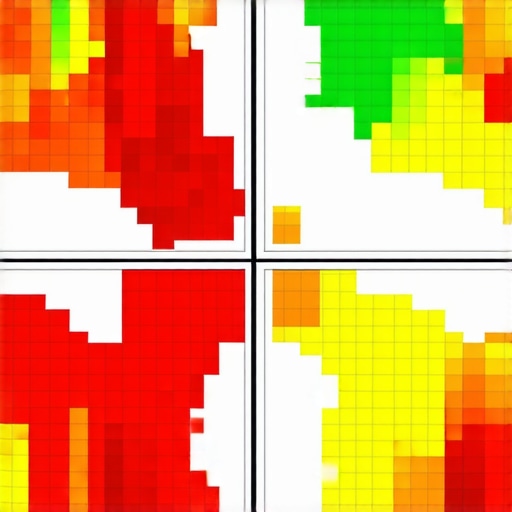
I stopped looking for the ‘magic’ button about two years ago. Most local seo software platforms on the market are just glorified spreadsheets that don’t reflect the chaos of the real world. I personally stick with grid-based tracking because it reveals the ‘hidden’ drops your client’s neighbor might see while your dashboard looks green. This is why learning how a rank tracker can skyrocket your local rankings is so vital—it’s about the shift from flat reports to geographic clusters that actually matter to your bottom line. I use a citation monitor as my silent alarm. If a rogue aggregator changes a suite number or swaps a phone digit, I get a notification immediately. It is significantly cheaper to fix one minor error today than to try and rebuild trust after your rankings tank in six months.
How do I maintain my map visibility over time?
Consistency isn’t a one-time project; it’s a hygiene habit. I spend exactly 30 minutes every Monday morning auditing maps analytics insights to see if my conversion actions—like calls and direction requests—match my rank. If I see a rank stay high but the phone stops ringing, I know there is a technical glitch afoot. For instance, I recently had to discover how we fixed the not publicly visible bug for a client whose profile simply vanished from search results despite looking ‘healthy’ in the back end. According to the Local Search Ranking Factors study by Darren Shaw of BrightLocal, the freshness and accuracy of your profile are living metrics. You can’t just fill it out and walk away; you need to feed the algorithm fresh signals like new photos, Q&A responses, and service updates.
Why AI search agents are the new gatekeepers
Looking ahead toward 2026, we are moving away from traditional search and toward ‘AI selection.’ Modern bots like Gemini and ChatGPT aren’t just giving users a list of names; they are recommending the ‘safest’ option based on ultra-consistent data. If your data is fragmented or outdated, these bots will skip you because they are programmed to minimize user friction. This makes understanding why your current rank tracker is lying to you a crucial step. Your software might tell you that you’re winning, but if an AI agent can’t verify your secondary services through your citations, you are effectively invisible to the newest wave of searchers. Try this today: Pick your top three competitors and look at their ‘Updates’ section on Google. If they haven’t posted in weeks, upload three high-quality photos of your team in action or a finished project. You will be surprised how fast your engagement metrics start to reflect that tiny bit of extra effort.
Hard-won secrets from the local map trenches
After years of wrestling with the algorithm, I have realized that Google rewards stability over sheer activity. You can post ten photos a day, but if your address is flickering across five different formats, you are just spinning your wheels. One thing I wish I knew earlier is that tracking one accuracy metric is the only way to stay sane in this industry. It is also important to recognize that why your proximity is shrinking usually comes down to trust signals rather than just physical miles. Don’t fall for the trap of high-volume, low-quality data; a single high-authority citation in your specific niche is worth more than fifty generic directory links. Most importantly, the algorithm has a long memory. If you change your name or phone number, expect a period of ‘re-trust’ where your rankings might dip before they soar.
Tools that won’t lie to your dashboard
I have tested almost every platform out there, and I have learned to be incredibly picky. If you want to scale, you need local seo software that emphasizes data integrity over just getting listed. For my weekly workflow, a reliable citation monitor is non-negotiable because it catches the errors that human audits miss. I also lean heavily on review management tools that focus on natural, semantic engagement rather than robotic automation. Finally, I always cross-reference my reports with actual maps analytics to ensure the rankings actually translate to real-world phone calls and storefront visits.
Your path to the top starts with one correct comma
Local SEO isn’t a dark art; it is a game of extreme precision and persistence. If you take the time to clean up the messy citation overlap that is currently confusing Google, you are already ahead of the majority of your competitors. Use a high-quality rank tracker to watch your progress across different street corners, but keep your eyes on the ultimate prize: helping local customers find exactly what they need. You have the strategy and the tools; now it is time to execute. Which of your local listings has the weirdest typo or formatting error? Let me know in the comments below.