I’ll never forget the rainy Tuesday I spent obsessing over every single character of my Google Business Profile description. I was convinced that if I just squeezed in my city name one more time, the algorithm would finally bless me with that top spot. I hit save, waited a week, and absolutely nothing happened. My phone stayed silent, and my rank didn’t budge an inch. It was a humbling realization that I’d been wasting my time on a ranking factor that doesn’t actually exist in the way most gurus claim. I was looking for a magic bullet in the text when the real power was hidden elsewhere.
Stop Treating Your Description Like a Keyword Dumping Ground
The hard truth is that Google’s local algorithm largely ignores the text in your business description when it comes to determining your position. I made the mistake of thinking it worked like old-school SEO where meta tags were king, but the reality is much more nuanced. If you’ve been losing sleep over your word choice, I’m here to tell you to breathe. We are going to fix your strategy today by focusing on the signals that actually trigger growth. Most people get blinded by vanity metrics, but we need to look at maps analytics to see the real story. According to a detailed study by the experts at Sterling Sky, adding keywords to your business description has zero impact on rankings. It’s a bitter pill to swallow, especially when you’ve put so much heart into your brand story, but knowing this frees you up to focus on what matters.
Does the description even matter for anything at all?
It absolutely does, but not for the reason you think. While it won’t help you jump from page two to the top of the 3-pack, it is your primary tool for conversion. It’s for the human beings reading your profile, not the bots crawling it. Have you ever spent hours tweaking your profile only to see your local rankings ghosting you? If so, you’re likely looking at the wrong levers. The description is your chance to explain why you’re the best choice, not why you’re a match for a search term.
The Algorithm Only Cares About Proximity and Trust
When I first started out, I ignored the real-world proximity gap and thought my optimized text would save me. It didn’t. The algorithm prioritizes your physical location, your categories, and the consistency of your data across the web. If you aren’t using a reliable rank tracker that accounts for proximity, you’re essentially flying blind. Stop worrying about the perfect sentence. Instead, start looking at how your local map visibility changes based on your actual service area. Have you checked your dashboard lately and wondered why your impressions are high but your calls are low? Tell me, are you currently seeing a disconnect between your ranking and your actual customer calls? [image_placeholder]
Find Out Exactly Where You Disappear on the Map
Thinking you rank #1 because you searched for yourself while sitting in your office is the ultimate local SEO trap. It’s like checking your own pulse and assuming you’re a marathon runner. To actually win, you need to see the grid. I remember working with a local locksmith who swore he was the king of his town. When we finally plugged his data into the rank tracker setup that shows real neighborhood proximity, he was horrified to find he dropped to rank #12 just two blocks away from his shop. That is the proximity paradox in action. If you aren’t looking at a heatmap of your rankings, you’re playing a guessing game with your livelihood.
Fix the Proximity Gap Before You Optimize Anything Else
You need to identify the exact street corner where your visibility dies. This isn’t about keywords; it’s about geographic relevance. Most local seo software will give you a single number for a ranking, but that number is a lie. Your rank is a moving target. By using a tool that tracks your position at specific intervals across a five-mile radius, you can see where you need more localized signals. I’ve seen businesses jump back into the 3-pack simply by adjusting their service areas to match their actual physical footprint rather than a hypothetical city boundary. 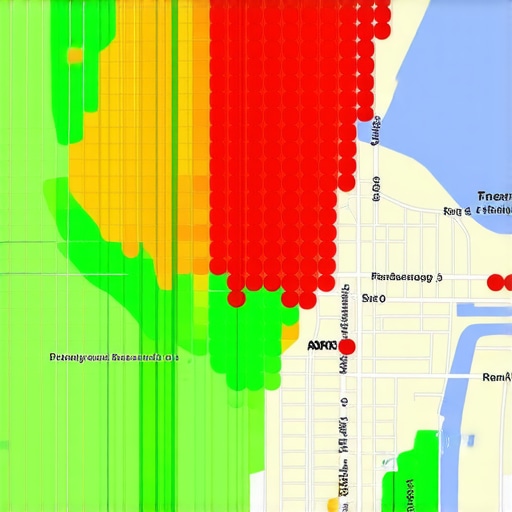
The Invisible Anchor Holding Your Ranking Back
If your address is listed as ‘Suite 200’ on your website but ‘Ste 200’ on a random directory, you are confusing the algorithm. It sounds pedantic, I know, but Google’s bot is a stickler for consistency. Think of your business information like a digital paper trail; if the signatures don’t match, the bank (Google) won’t cash the check. Last year, I spent three days helping a boutique law firm that was losing to a competitor with half their experience. We found eighteen different versions of their phone number scattered across old yellow page clones. We used a citation monitor to hunt down every single inconsistency. Within weeks of the cleanup, their map pin finally started moving toward the center of the pack. You have to spot citation inconsistencies before the algorithm decides your business isn’t trustworthy enough to show to users.
Reviews Are Your Second Sales Team
Stop asking for reviews like a robot. The ‘Please leave us a 5-star review’ line is dead. People ignore it, and even if they do it, the content is usually hollow. To really move the needle, you need a review management strategy that triples positive feedback by focusing on the human element. When I started asking clients to mention the specific service they received—like ‘the emergency pipe repair’—everything changed. These contextual reviews tell the algorithm exactly what you do without you having to stuff keywords into your description. Modern review management tools can help you automate this process, but the prompt must be personal. If you can stop asking for reviews like a bot, you’ll find that your customers are your best SEO specialists. It’s about building a library of social proof that actually converts a skeptic into a caller. Check your maps analytics after a month of high-quality, descriptive reviews; the correlation between detailed feedback and increased ‘get directions’ clicks is undeniable.
I used to think that as long as my rank tracker showed a nice green “1,” I was winning the local game. I was wrong. Most people treat local seo software as a scoreboard, but if you aren’t careful, it becomes a house of mirrors. The biggest mistake I see pros making is relying on “average position” as a metric for success. In my experience, tracking average rankings is the fastest way to lose local leads because it hides the holes in your visibility. You might be #1 at your front door and #20 three blocks away, yet your software tells you you’re averaging #10. That’s not a strategy; that’s a blind spot. Have you ever fallen into this trap? Let me know in the comments.
Average Rankings Are Actually Your Worst Enemy
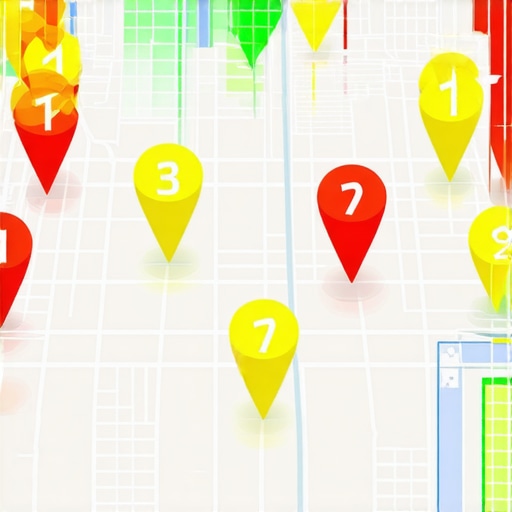
If you want to see the real picture, you have to move beyond the single-digit dashboard. You need the rank tracker setup that shows real neighborhood proximity. A study by Joy Hawkins at Sterling Sky confirmed that proximity is the most weighted factor in the local algorithm, often overriding even the most “optimized” profiles. This means your high-level maps analytics are likely lying to you if they aren’t broken down by zip code or neighborhood. I’ve seen businesses celebrate a 20% increase in impressions while their actual phone calls remained stagnant—the classic vanity metric trap. Stop looking at the aggregate and start looking at the grid.
The Automated Citation Trap You Need to Avoid
Everyone tells you to just “buy a citation bundle and forget it.” That is dangerous advice. While citation monitor tools are great for alerts, relying solely on automated syncs can cause data corruption. I once worked with a plumber who used an automated tool that accidentally pushed an old P.O. Box address to thirty different directories because of a sync glitch. It took us months to fix the mess. This is why manual citation cleanup is better than automated tools for your most important data points. You need to spot citation inconsistencies personally to ensure Google’s trust in your location remains ironclad.
How do I handle competitors who use fake reviews to bury me?
This is where your choice of review management tools becomes a defensive weapon, not just a collection plate. Advanced users know how to filter out competitor review sabotage by looking for patterns in IP addresses and account age. If you see a sudden spike in one-star reviews from accounts with no profile pictures and no other local activity, don’t just reply—report the pattern. By using the review management strategy that triples positive feedback, you create a buffer of high-authority, contextual reviews that make these attacks less damaging to your overall visibility.
Ignore the National Search Volume Noise
The final nuance most beginners miss is keyword intent. If you use a generic keyword tool, you’ll see massive volume for “lawyer,” but almost nothing for “car accident lawyer near [neighborhood name].” This is a gift. You should ignore national search volume for local keywords and focus on what I call “hyper-local intent.” Your local seo software should be telling you what people are searching for when they are standing on a specific street corner, not what a researcher in a different state is typing into a desktop. When you align your content with ranking flux patterns in your specific city, you stop chasing ghosts and start catching customers.
I’ve spent years testing every shiny new platform that hits the market, and I’ve learned that the ‘set it and forget it’ mindset is the quickest way to end up on page three. If you aren’t actively managing your digital footprint, the algorithm assumes you’ve gone stale. I’ve seen businesses lose a premium 3-pack spot simply because their competitors were more active in their review management tools, even if those competitors had fewer total reviews. Local SEO is a living, breathing thing that requires a consistent pulse check.
Stay on Top of the Map Without Losing Your Mind
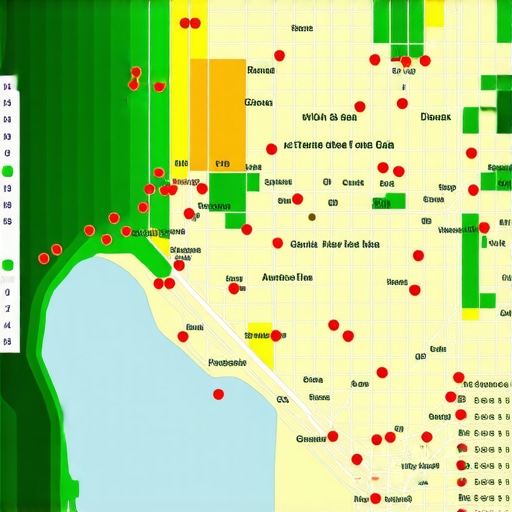
My personal workflow doesn’t involve staring at dashboards all day. Instead, I rely on a specific cadence. Every Tuesday morning, I open my rank tracker setup that shows real neighborhood proximity. I’m looking for ‘the bleed’—those areas where my green dots start turning yellow or red. This is how to monitor ranking flux without letting it consume your life. If I see a specific neighborhood dropping, I don’t change my keywords; I look for a data inconsistency or a fresh wave of competitor reviews in that specific zip code.
The Software Stack That Actually Pays for Itself
I only pay for three types of tools, and I’m ruthless about cutting anything else. First, a high-fidelity rank tracker that handles geogrids. Second, a citation monitor that alerts me the second a scraper site tries to overwrite my phone number. Finally, I use review automation to keep the feedback loop moving. I prefer this lean stack because all-in-one ‘megatools’ often provide diluted data. I’d rather have raw, accurate maps analytics than a pretty report that doesn’t tell me why my phone stopped ringing.
How do I keep these rankings alive month after month?
Consistency beats intensity every single time. You don’t need to spend ten hours a week on your profile; you need twenty minutes of high-impact maintenance. This involves responding to every review within 24 hours and checking for the not publicly visible glitch that often strikes after a Google update. As Mike Blumenthal, a leading expert often called the ‘Professor’ of local search, has noted, Google’s AI is now sophisticated enough to detect ‘business activity’ signals—meaning the more you interact with your customers through the profile, the more Google trusts you are still open and relevant.
Looking ahead, I predict we are moving toward an ‘Entity-First’ algorithm where Google will rely less on what you say about yourself and more on the ‘social proof’ and physical signals you leave behind. This means your reputation and your location accuracy will become even more weighted than they are today. If you want to stay ahead, stop obsessing over your description and start obsessing over your response time. My big tip for you today? Go into your Google Business Profile and verify your service areas one more time. Make sure you haven’t been hit by the ‘service area overlap’ penalty that happens when you try to cover too much ground. Tighten your radius, win your street, and then expand.
Hard Lessons from the Local SEO Trenches
The transition from a profile editor to a visibility strategist was a humbling experience, but three specific shifts changed everything for my clients. First, proximity is the ultimate gatekeeper. You can write the most poetic business description in history, but if you don’t address the geographic signals, you’ll remain a ghost to nearby customers. Second, I realized that tracking average rankings is the fastest way to lose local leads because it hides the specific streets where you are losing ground. Finally, I discovered that the human tweak that triples your responses is far more valuable than any keyword-stuffed sentence. When real people mention your service area in their reviews, Google listens much closer than when you mention it yourself.
The Toolkit I Use to Stay Ahead
I am frequently asked which tools are worth the investment. I keep my stack lean and focus on data accuracy over flashy interfaces. I religiously follow the research from Sterling Sky because they actually test the algorithm rather than just guessing. For daily protection, I rely on a citation monitor to ensure that scraper sites don’t corrupt my address data, which is the quickest way to tank a ranking. To measure actual success, I bypass the vanity metrics and dive into maps analytics to see where the physical ‘Get Directions’ clicks are originating. This data tells the truth when a ranking report lies.
Take Control of Your Neighborhood Map Pack
Dominating the local 3-pack isn’t about outsmarting a bot; it’s about being the most trustworthy and visible option for a human standing on a specific street corner. It is finally time to unlock the power of local seo software to identify your proximity gaps and close them before your competitors do. Your business deserves to be the first one seen when a local need arises. Don’t let a technical glitch or a data inconsistency keep you off the map. Have you ever noticed your ranking drop significantly just a few blocks away from your office? Share your experience with the proximity gap in the comments below!