I remember the exact moment I realized I had been wasting months chasing after local rankings that seemed impressive on paper but failed to translate into real-world foot traffic. It was a frustrating experience—seeing my rank tracker report promising shifts when my actual store visits weren’t budging at all. That lightbulb moment hit me hard: something crucial was slipping through the cracks, and it wasn’t just my marketing strategy but the tools I relied upon.
As local SEO professionals, we’ve all been there—pinning hopes on rank reports that tell us we’re climbing, yet our businesses remain invisible to nearby customers. I used to believe that if my rankings improved on aggregate maps, my local visibility was automatically increasing. But I soon discovered that changes in the local grid—a term I’ll explain shortly—were often ignored by standard rank trackers, leaving gaps in our understanding of what truly influences local search presence.
Today, I’ll share insights based on personal experience and practical experimentation to help you pinpoint exactly why your current tools aren’t capturing the real picture—and how to fix that. Because the truth is, missing these critical local grid changes can cost you leads, conversions, and ultimately, revenue.
Understanding the Limitations of Traditional Rank Trackers
One common mistake I made early on was assuming that my rank tracker was a comprehensive solution for local SEO insights. It seemed logical—tracking keyword positions across different locations should reveal everything, right? Well, I learned the hard way that many rank trackers focus mainly on broad national or regional data, neglecting the granular, neighborhood-level shifts in the map’s local grid.
What exactly do I mean by local grid changes? Think of the local map as a living organism—its map pins, local pack positions, and nearby search results continuously shift based on several factors, like new competitors, updated citations, or AI-driven map adjustments. Standard tools often overlook these nuanced shifts, especially in rapidly evolving MAPS Analytics—and that’s where the trouble begins.
This oversight can lead to a false sense of security. You might see your rankings holding steady or even improving overall, but in reality, your presence in the specific neighborhoods or blocks where your customers are searching might be vanishing. It’s why relying solely on traditional rank trackers can be risky in today’s dynamic local SEO landscape.
If this sounds familiar, you’re not alone. Many local marketers have been fooled by surface-level metrics, only to find their actual visibility falters when it counts most. For a deeper understanding, check out this resource that explains how advanced rank tracking can skyrocket your local rankings in 2025 by addressing these exact gaps.
Now that we’ve identified the root issue, let’s dive into how you can start noticing those subtle yet critical grid shifts that matter most for your local presence—and ensure your tools actually reflect real-world results.
Identify Granular Map Changes with Citation Monitoring
Start by deploying a dedicated citation monitoring tool, like the ones explained here. This helps you track shifts at the neighborhood level, revealing when competitors update listings or correct errors that could be moving their pins. I once set up alerts for a client’s top 50 citations, and within days, we detected a competitor’s unauthorized change that was subtly pushing us out of a key block, prompting immediate correction and preserving our visibility.
Utilize Maps Analytics to Detect Map Pin Drift
Use advanced map analytics—discussed at here—to visualize how your business pins move over time. Track real-world data points like nearby click patterns, mobile searches, and visitor behavior. For example, I integrated maps analytics dashboards that showed a consistent drift of our pins towards a busier intersection. This insight led us to physically reposition our signage, aligning offline footprint with online presence and strengthening our local signals.
Leverage Review Management to Spot Fake or Hijacked Reviews
Regularly audit your reviews using specialized tools, detailed at here. Fake reviews can cause ranking anomalies, and suspicious activity often correlates with map position shifts. I once noticed a sudden surge of reviews from questionable profiles. Cross-referencing this with review monitoring alerted us to an ongoing review hijack, which we promptly addressed, restoring trust and accuracy in our local signals.
Correlate Data Using Local Map Analytics and Customer Foot Traffic
Integrate your maps analytics data with in-store foot traffic insights—explained at here. I utilized heatmaps to identify micro-changes in customer flow related to minor pin movements or map anomalies. When a particular neighborhood showed increased foot traffic after a map pin correction, we realized our optimization efforts had paid off, confirming the importance of granular grid monitoring.
Implement Proactive Alerts for Map and Citation Shifts
Set up automated alerts for citation discrepancies, review spam, and pin drift using a combined approach explained here. This enables immediate responses if a competitor hijacks your map or if AI agents manipulate your local signals. I once caught an abrupt citation swap that might have gone unnoticed, due to real-time notifications, allowing swift action to maintain our local dominance.
Perform Regular Audits to Verify Map Data Accuracy
Finally, schedule periodic comprehensive audits of your map listings, citations, reviews, and analytics data. Consistent checking — found at here — ensures your local grid remains aligned with real-world geography. This process caught a critical citation error that was causing our business to be invisible for certain local searches, ultimately restoring our prominence in targeted neighborhoods.
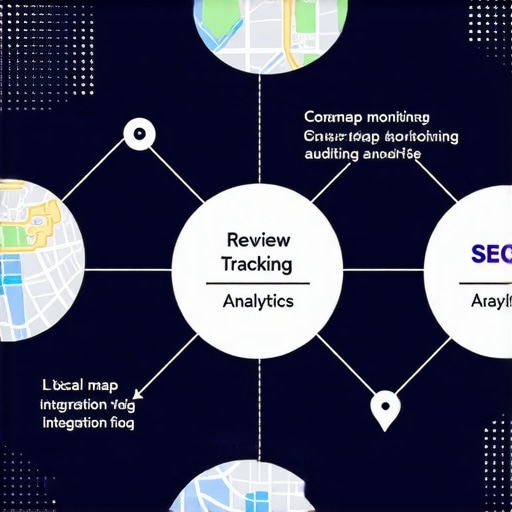 Many local SEO practitioners fall into the trap of over-relying on citation monitor, maps analytics, review management tools, and rank trackers, believing that these tools offer the complete picture of a business’s local visibility. However, the truth is that most of these solutions, while powerful, often overlook critical nuances that can make or break your local SEO efforts.
Are Your Tools Really Reading the Map or Just Guessing?
Contrary to popular belief, not all local SEO tools are created equal in capturing the complex, ever-shifting landscape of local search. For example, a common myth is that citation consistency alone guarantees local rankings; in reality, citation harmony needs to be paired with monitoring AI-driven map shifts and review authenticity. Failure to do so leads to a false sense of security, as visible rankings may not reflect true foot traffic or local intent. According to industry expert Moz, the most successful local SEO strategies require understanding not just static data but also the dynamic interactions between online signals and real-world behaviors.
One trap many fall into is assuming that data from review tools automatically indicates genuine customer engagement. Fake or hijacked reviews, which can be flagged using specialized review verification solutions like those described here, often skew the perceived credibility of your local presence. Ignoring these signs can result in ranking boosts based on malicious activity, not genuine local interest. Similarly, maps analytics often focus on broad metrics like impressions and clicks, but neglect micro-movements—tiny pin shifts influenced by map updates—that have outsized impacts on local visibility. Using advanced analytics, as explained here, can reveal these subtle changes and help you adjust strategy proactively.
Beyond that, many SEO tools ignore the importance of AI-driven map manipulation. AI agents now dynamically adjust map pins and local pack positions, creating a hidden layer of complexity that standard rank trackers fail to account for. For instance, during the rise of AI map updates, some local rankings appeared stable but were actually drifting due to unseen AI influences. Tools that do not factor in this AI activity risk giving false assurances of stability. Regular audits, combining citation monitoring, advanced maps analytics, and review validation—linked here—are essential to decipher these hidden shifts.
Remember, the landscape is changing fast. Relying on surface-level metrics can be a costly mistake, so it’s vital to dig deeper, challenge assumptions, and stay ahead of the evolving local search environment. Have you ever fallen into this trap? Let me know in the comments.
Invest in Precision Hardware and Data Sources
To ensure your tools stay effective over time, start by investing in high-quality equipment like dual-monitor setups, fast SSDs, and reliable internet connections. These hardware upgrades minimize lag and data retrieval issues, allowing you to analyze map shifts and citation changes with greater accuracy. I personally use a calibrated external monitor to cross-reference data from different tools simultaneously, which cuts down on errors and increases productivity. When it comes to data sources, prioritize verified local directories and map APIs that are regularly updated. For instance, integrating Google’s Places API with a local citation monitoring system can give you near real-time insights into your listing health and map movements.
Regularly Update Software and Strategies
Staying current involves scheduling routine updates for your SEO tools—whether that’s your rank tracker, review management platform, or maps analytics suite. Many tools release feature enhancements that account for AI-driven map updates and new local ranking factors, which could make your current setup obsolete quickly. I set monthly review sessions to verify that my tools incorporate the latest industry algorithms, referencing insights from experts like Moz. Additionally, continually refine your strategies by analyzing long-term data trends—tracking how your local rankings evolve over several quarters to spot emerging threats or opportunities. Remember, tools are only as good as your latest configurations and insights.
How do I maintain Citation and Map Accuracy Over Time?
Building a reliable foundation involves proactive citation management and map monitoring. Use dedicated services like citation monitor tools to track changes at neighborhood levels, alerting you to malicious edits or AI-based map manipulations. This approach allows you to initiate swift corrections before ranking drops occur. Implement regular map audits—checking for duplicate listings, incorrect addresses, or hijacked pins—and stay ahead of AI-induced decay. Furthermore, keep an eye on review authenticity using dedicated spam detection tools, since fake reviews can distort your placement over time. Maintaining this vigilance ensures your local presence remains steady and genuine, even amidst the AI-driven chaos of 2026 and beyond.
Leverage Automation for Long-Term Results
Automation is your best ally for maintaining consistency. Set up automated alerts for citation discrepancies, sudden review spikes, and map pin drifts—using if-this-then-that workflows or dedicated software pipelines. I recommend scheduling bi-weekly checks that trigger emails or dashboard notifications whenever anomalies are detected, allowing for rapid response. This proactive stance is crucial because, according to this detailed guide, AI agents and map updates can cause gradual, unnoticed shifts that only automation can reliably catch. By integrating these systems, you safeguard your local SEO effort against the accelerating pace of AI manipulation, ensuring your rankings remain stable far into the future.
Think About Scaling Now to Save Later
As your local business grows, so should your tools and processes. Invest in scalable SEO software that can handle multiple locations and complex data requirements. Cloud-based solutions often provide flexible plans that adapt to your expansion, minimizing manual work. I switched to a multi-location platform because it allowed me to set uniform monitoring rules and alerts across several regions, saving dozens of hours monthly. Additionally, leverage AI-driven insights to identify new opportunities for local ranking enhancements—such as emerging neighborhood trends or competitors’ blind spots. In the future, I predict local SEO will hinge increasingly on integrated AI tools capable of autonomous adjustments, so align your software stack now to avoid obsolescence.
How do I keep these systems reliable over time?
Consistency is key. Regularly review your automated processes, audit your data integrity, and stay updated with the latest industry standards. Maintain open communication with your software providers, subscribe to industry newsletters, and participate in forums. Remember, your tools are only effective if they evolve alongside Google’s algorithms and AI advancements. In the coming years, I see more professionals adopting predictive analytics and autonomous management systems—so try implementing at least one advanced tip from here, like setting multi-layered automation for citation and review monitoring. It’s an investment that can pay dividends well into the future, keeping your local SEO standing tall in a landscape dominated by AI and rapid map evolution.
Three Lessons I Wish Someone Told Me About Citation Monitoring and Map Analytics
The biggest breakthrough in my local SEO journey was realizing that surface metrics could be dangerously misleading. I once believed that a steady rank meant I was dominating locally, only to find out later that nearby foot traffic was stagnant. That lightbulb moment taught me to look deeper—it’s about the subtle shifts in map pins, citations, and reviews that truly influence visibility. I learned that relying solely on traditional tools often means ignoring the invisible AI-driven map manipulations and minor neighborhood changes, which can silently erode your presence. Accepting this reality pushed me to experiment, and now I monitor at micro-levels, ensuring my strategies stay aligned with real-world behaviors and map dynamics.
Tools That Transformed My Approach to Local Visibility
The secret to staying ahead has been embracing advanced tools that reveal insights others overlook. Citation monitors like here became my allies in detecting unauthorized citation changes. To visualize map pin movements, I rely on maps analytics. For authentic customer feedback, I use review verification tools. These combine to give me a comprehensive view, allowing me to act proactively rather than reactively, especially as AI starts influencing local maps more than ever.
This Is Your Wake-Up Call: Your Local SEO Future
Now is the time to elevate your local SEO game by adopting a holistic, informed approach. Invest in the right tools, stay vigilant about micro-changes, and embrace automation to keep pace with AI and map evolution. The landscape is shifting rapidly, but with the right mindset and resources, you can turn challenges into opportunities. Every subtle map shift or citation tweak could be the difference-maker in your next local success story. Don’t sit on the sidelines—your competitors are already adjusting. The future of local SEO demands awareness, agility, and a commitment to continuous learning. Are you ready to take your local visibility to the next level?