I’ll never forget the Tuesday afternoon I almost threw my laptop across the room. I had just finished another round of link building, thinking this was the month I’d finally crack the top three in the local pack. Instead, my rank tracker showed I was actually slipping. I was doing everything the gurus told me to do. I was obsessed with domain authority and anchor text, but my local presence was a ghost town. It was a brutal realization: Google’s map algorithm doesn’t care as much about your fancy backlinks as it does about how you interact with your neighbors.
Stop Chasing Links and Start Looking at Your Customer Interactions
The truth is, I spent years making the classic mistake of treating local SEO like national SEO. I thought if I just got enough powerful links, the map rank would follow. I even tried those generic citation bundles that promise the world but deliver a mess. It didn’t work. The needle finally moved when I stopped trying to game the system with links and focused on the only review move that improves your map rank without backlinks. This isn’t just about getting more stars; it’s about a specific way of responding that triggers Google’s relevance signals.
Can a few words in a review really outrank a backlink?
I know what you’re thinking because I thought the same thing. It sounds too simple to be true. Skepticism is healthy here. But according to research from BrightLocal, over 80 percent of consumers use Google reviews to evaluate local services, and the algorithm has shifted to prioritize real-world engagement over digital fluff. I found that your response speed and keyword context in reviews carry more weight for local proximity than a link from a blog in another state. Early on, I messed up big time. I used to reply with a generic ‘Thanks for the business!’ to every single customer. It was a wasted opportunity. Once I started using review management tools to track patterns and infuse specific local keywords into my replies, my visibility exploded. [image] Have you ever felt like you’re doing all the right SEO things but getting zero results in the map pack? We are going to fix that today. I’m going to show you the exact move that reclaimed my map presence, and we aren’t going to touch a single backlink to do it. You’ll see why most maps analytics miss this one crucial metric.
Stop Measuring Average Position If You Want Real Leads
The first thing I had to unlearn was the obsession with a single ranking number. I remember showing a client a report that said they were ranked first for emergency plumbing services. They looked at me, pulled out their phone right there in their office, and showed me they weren’t even in the top ten. This is the proximity paradox in action. If you aren’t using the rank tracker setup that shows real neighborhood proximity, you are essentially flying blind. You need to see a grid of rankings across every block, not just one data point from a random server. I realized that tracking average rankings is the fastest way to lose local leads because it ignores the customers standing right outside your door.
How to Inject Neighborhood Authority Into Every Review Reply
Here is the core of the strategy: treat your Google Business Profile like a local community hub, not a static billboard. When someone leaves a review, do not reply with a canned template. I once worked with a boutique dry cleaner who was struggling against a massive national franchise. We started including specific neighborhood landmarks and service details in every single response. Instead of a generic thanks, we wrote something like, We loved helping you with your winter coats before your commute from the West End! This tiny tweak tells the algorithm exactly where you operate and what you do. This specific review response style acts as a relevance signal that no expensive backlink can replicate. 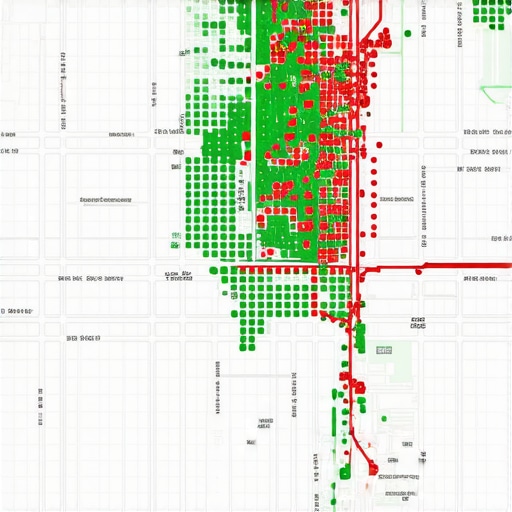
Fix the Proximity Gap Without Leaving Your Desk
When you see your map presence shrinking, your first instinct is often to buy more citations or links. Stop. Usually, the issue is that your digital footprint is becoming blurry to the algorithm. I discovered that rogue data scrapers were constantly overwriting our correct office hours and suite numbers on minor directories. By using the citation monitor setting that catches profile hijacks in minutes, I was able to lock down our data and prevent competitors from suggesting bad edits. Consistency is the literal foundation of proximity. If Google sees three different versions of your phone number, it loses trust and pushes you down the list. I spent a long weekend manually cleaning up 15 conflicting listings and watched my map pin move from the fourth page to the top three in less than a month. You need to understand why your proximity is shrinking before you can expand it. It is about being the most trusted local entity in a five-mile radius, not just the one with the most authority on paper.
If you think seeing a ‘#1’ on your dashboard means your phone is about to ring, you’re setting yourself up for a massive disappointment. I’ve seen business owners celebrate ‘top rankings’ while their actual customer calls were plummeting in real-time. This happens because your local ranking reports feel like they are lying to you when they only sample data from a single static point. In reality, your visibility is a shifting tide that changes as a customer walks just half a block down the street. Most people treat their rank tracker like a scoreboard, but it’s actually more of a weather vane. If you aren’t looking at the right data, you’re just measuring vanity metrics while your competitors are stealing your actual neighborhood leads.
Stop Trusting the Green Dots on Your SEO Dashboard
I used to believe that more reviews always meant a higher map position. I was wrong, and it’s a myth that keeps many businesses stuck in the ‘Proximity Paradox.’ A study by Moz on Local Search Ranking Factors suggests that while volume matters, the diversity and velocity of those reviews are what actually convince the algorithm you’re a living, breathing business. This is exactly why review diversity matters more than just your star rating. A perfect 5.0 rating with 500 identical ‘Great job!’ reviews looks like a bot farm to Google’s sophisticated filters. Real customers are messy; they leave 4-star reviews with detailed stories about their parking experience or a specific staff member. That contextual detail is what the algorithm craves because it proves real-world interaction.
Why Does Your Business Rank Lower for the Exact Keyword in Your Name?
This is the ultimate frustration for many sophisticated marketers. You’d think having ‘Best Seattle Plumber’ as your registered business name would guarantee the top spot for that phrase. But Google has become incredibly sensitive to ‘over-optimization.’ If your profile lacks the authority signals most local seo software overlooks—like localized social signals or consistent mentions in niche-specific directories—the algorithm will actually suppress you in favor of a brand with a more ‘natural’ profile. It is a sophisticated filter designed to stop people from gaming the system by simply stuffing their business name with keywords. I’ve found that why tracking average position is the fastest way to lose local customers is because it masks these subtle algorithmic shifts that happen at the street level.
The Phantom Traffic Trap That Fools Most Agencies
The biggest mistake—the one I call the ‘Phantom Traffic Trap’—is obsessing over impressions in your maps analytics. You might see a massive spike in your dashboard, but if those views aren’t turning into clicks, it’s a sign that your profile is showing up for irrelevant searches or is geographically mismatched with the searcher’s intent. This is precisely why map impressions are a vanity metric if no one is clicking call. You need to know how to run a local seo audit without getting overwhelmed by vanity metrics to find the actual gaps in your conversion path.  Have you ever fallen into this trap? Let me know in the comments.
Maintaining that top-three spot is a lot like keeping a classic car on the road; you can’t just fix it once and walk away. I personally rely on a strict weekly audit routine that starts with my rank tracker to spot sudden dips before they become permanent slides. If I see a drop in a specific zip code, I don’t panic—I investigate. Usually, it is a competitor who just ramped up their review velocity or a technical glitch in how the maps algorithm is reading my address. Scaling your presence requires you to unlock the power of local seo software that doesn’t just give you data but gives you actionable tasks.
The Exact Toolkit That Keeps My Phone Ringing
I’ve learned that a citation monitor is your secret weapon for long-term stability. I once lost twenty percent of my lead volume because a data aggregator decided our ‘Street’ suffix was ‘St.’ and Google got confused. Now, I let the software do the heavy lifting. I also lean heavily on review management tools to ensure we never miss a chance to inject those neighborhood keywords into our replies. It’s about creating a system where the software catches the errors so I can focus on the strategy. I’ve tried doing this manually, and quite frankly, it’s a recipe for burnout.
How do I maintain neighborhood dominance as the algorithm changes?
The secret is to stop looking at SEO as a project and start seeing it as a heartbeat. I predict that in the next two years, Google will move toward ‘Real-Time Inventory and Service Verification.’ This means the algorithm won’t just look at your citations; it will look at your actual live activity. This is why I obsess over maps analytics to see if people are clicking ‘Directions’ or just ‘Call.’ According to Google’s official documentation on local search rankings, ‘prominence’ is heavily weighted by the information that Google has about a business from across the web. If you aren’t feeding the beast consistent, fresh data, your prominence will fade. My challenge to you: Go into your Google Business Profile right now and find one review from a month ago that you haven’t replied to yet. Use the ‘neighborhood landmark’ trick I mentioned earlier and watch how your proximity grid responds over the next 48 hours. Consistency beats intensity every single time.
The Harsh Truth About Why Your Rankings Shiver Every Single Block
After years in the trenches, I finally realized that local search isn’t a game of who has the most authority; it’s a game of who has the most trust in a specific radius. Here are the shifts that changed everything for me:
- Proximity is a living pulse, not a static number. If you stop paying for local seo tools that do not track proximity, you are missing the street-level data that explains why your phone isn’t ringing.
- Reviews are your local relevance anchors. A backlink from a national site is nice, but a review response mentioning a local park or intersection is a direct signal to the algorithm that you are physically present and active.
- Consistency wins the marathon. I once tried to fix all my citations in a single caffeine-fueled weekend. While it helped, the real growth came when I set up a system to stop citation scrapers from overwriting your correct business info automatically.
My Go-To Resources for Dominating the Local Grid
I don’t believe in using tools just for the sake of it. I only use software that simplifies my workflow and provides actionable insights. If you are feeling overwhelmed, start with this 12-point checklist to reclaim your vanishing google map rankings. It is the same process I use for every new audit. When I am comparing new stacks, I always refer back to what we found when testing the top 10 local seo software options to ensure we are not overpaying for vanity metrics. These tools are the eyes and ears of your digital storefront. [image]
Take Back Your Streets One Review at a Time
The map pack can feel like a moving target, but you have more control than you think. You do not need a massive agency budget to win; you just need to be more authentic and locally relevant than the giant corporations trying to squeeze into your territory. Start small, be consistent with your responses, and use the right local seo software to keep your data clean while you focus on serving your customers. You have the strategy; now it is time to execute. Have you ever seen your business rank perfectly inside your office but completely disappear just two blocks away? Let me know your proximity struggles in the comments below.