I remember sitting in my home office, nursing a lukewarm coffee, staring at a screen filled with beautiful, bright green #1 icons. My client was a plumber three towns over, and according to my favorite software, we were dominating the map pack. I felt like a genius. Then, the client called. “Hey, I’m standing in the grocery store half a mile from my shop, and I searched for a plumber. I’m not even in the top ten. What am I paying you for?” That moment felt like a bucket of ice water to the face. I realized right then that most local SEO software tools overestimate your true ranking because they track from a static point, often ignoring how Google actually delivers results to a moving human being. [IMAGE_PLACEHOLDER]
Stop Trusting the Sanitized Global Average
The reality is that your local ranking reports feel like they are lying to you because they often provide a best-case scenario rather than a real-world experience. Most basic tools ping Google from a single data center or a fixed zip code center point. But as we know, Google’s recent algorithm updates made proximity the king of the mountain. According to research by BrightLocal, over 90% of consumers use Google to find a local business, yet many owners are flying blind because their software doesn’t account for the hyper-local nature of modern search. I spent months defending numbers that didn’t exist for the guy on the street, and it nearly cost me my best client. You have to realize why rank tracking software often misses the local grid if you want to actually grow your foot traffic and stop chasing ghosts.
Is this expensive tracking software actually worth the hype?
It is a common fear—are we just paying for vanity metrics that look good in a board meeting but don’t result in more phone calls? Early in my career, I focused entirely on keyword volume and global averages. It was a massive mistake. I didn’t realize that a #1 rank at your office desk could be a #15 rank just two blocks away at the local coffee shop. If you aren’t using the rank tracker setup that shows real neighborhood proximity, you are essentially guessing with your marketing budget. We are going to dive into how to close this gap today. Have you ever searched for your own business while out at lunch and been shocked to find you have completely vanished from the Map Pack despite what your dashboard says? Let’s get into why that happens and how to see what your customers actually see.
Stop G uessing Where You Rank and Map the Grid Instead
You need to think of your local visibility like a cell ular signal. It is strong near the tower (your office) but drops off fast as you move behind buildin gs or into the next neighborhood. If your tool only gives you one number, it is useless. To see the truth, you have to use heatmaps to visualize your map pack dominance. This is the only way to ide ntify the ‘dead zones’ where your competitors are eating your lunch. I remember working with a bouti que gym that had a perfect 5.0 rating. They were #1 at their front door, but when we ran a grid sear ch, we saw they dropped to #15 just two blocks east because a large park was blocking the ‘proximit y’ logic Google uses. We had to adjust our content to mention that specific neighborhood by name to claw our way back into that territory. 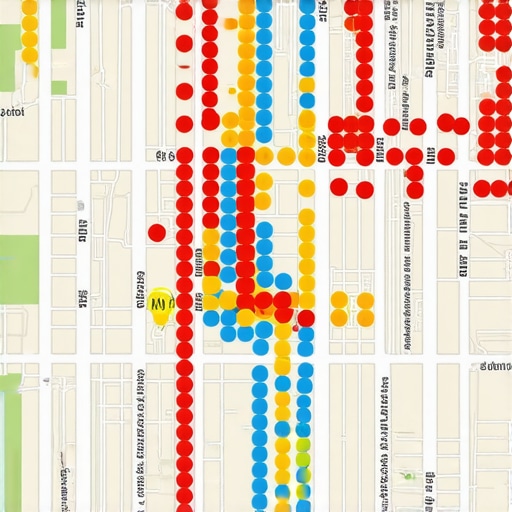
Identify the Tracking Flaws in Your Weekly Reports
Standard trackers are often too slow. They might pull data once a week, but the lo cal map pack fluctuates by the hour based on traffic and searcher intent. If you don’t spot th e tracking flaws in your weekly ranking reports, you might be making major business decisions ba sed on stale data. Real local SEO is about knowing why rank tracking software often misses the local grid changes that happen during peak business hours.
Kill the Inconsistencies That Confuse the Algorithm
Google is a giant trust machine. If your address is listed as ‘Street’ on your website but ‘St.’ on a random local directory, Google’s confidence in your location drops. I once spent th ree weeks wondering why a high-end bakery wasn’t showing up for ‘croissants’ despite a perfect GMB profile. It turned out a citation scraper had changed their ‘Suite’ to ‘Room’ on an obscure local d irectory. Google got confused and pushed them to page two. Once we used a citation monitor to find every mention of the brand, we caught the discrepancy and fixed it in ten minutes. This is why your listing optimization is useless if you miss this address formatting rule< /a>. It is the foundation of local trust.
Focus on Clicks Over Vanity Positions
Rankings don’t pay the rent; phone calls do. You must realize why map rankings are vain if you are not tracking these three metrics: directions, website clicks, and click-to-calls. If your software i sn’t showing you the correlation between a rank move and a lead increase, you are just playing a vi deo game. Use review management tools to not only gather stars but to analyze the keywords your customers are using in their feedback. This helps you pivot your strategy toward wha t actually converts. Speed is also a ranking factor; I have found that the review respo nse hack that actually fixes a damaged reputation is simply responding within two hours. It tel ls Google you are active and relevant right now.
Forget What You Heard About Citation Volume
Let’s talk about a hill I’m willing to die on: the obsession with having your business listed on 300 obscure directories is a waste of your time and money. For years, agencies have sold ‘citation building’ as a magic pill. But in my experience, citation volume is a vanity metric. If you are using a citation monitor, your focus shouldn’t be on the quantity of mentions, but on the authority of the sources. I’ve seen businesses with 20 high-quality, accurate listings outrank competitors with 200 messy ones. This is the citation consistency myth and what actually matters for rankings: Google cares about trust, not just noise. If you spend all day chasing a directory for ‘Local-Plumbers-Texas.biz,’ you’re missing the forest for the trees. Instead, stop chasing citation volume and focus on this accuracy metric instead to ensure your NAP (Name, Address, Phone) data is rock solid where it counts. 
Why Your Rank Tracker Might Be Your Worst Enemy
Here is the ‘oops’ factor that kills many local campaigns: relying on ‘Average Position.’ This is a dangerous trap. A rank tracker might tell you that your average position is 3.2, which sounds great. But if that 3.2 is skewed by high rankings in an unpopulated industrial park and a #20 ranking in the wealthy residential area where your customers actually live, you are failing. I learned this the hard way when a client’s calls dropped by 40% even though our ‘average’ rank went up. This is exactly why tracking average position is the fastest way to lose local customers. You need to look at the ‘Proximity Gap.’ According to the annual Local Search Ranking Factors survey by Whitespark, proximity to the searcher remains the #1 ranking factor. If your software isn’t visualizing that proximity through a grid, it’s useless.
Can you really outrank a competitor who has way more reviews?
This is the most common question I get from business owners who feel defeated by a rival with 500 five-star reviews. The short answer? Yes. Reviews are vital, but why your competitors rank higher with worse reviews often comes down to click-through rates and on-page signals that your review management tools might not be highlighting. If your competitor’s listing is closer to the searcher or has better keyword relevance in their business name, they might win the initial click. This is where maps analytics insights to boost your local map visibility become your best friend. You have to look at the data gap: why your rankings are up but calls are down. Are you getting the eyeballs but not the clicks? If so, the problem isn’t your rank; it’s your ‘curb appeal’ in the search results. Have you ever fallen into this trap of chasing rankings that don’t actually turn into money? Let me know in the comments below.
If you want to stop the bleeding, you have to look at the numbers that actually move the needle. I spent years obsessing over a static rank before I realized that maps analytics insights to boost your local map visibility are the only way to see if people are actually clicking the ‘Call’ button or if they are just scrolling past you. I personally rely on a daily citation monitor because the internet is a messy place. Data scrapers and competitors are constantly suggesting ‘helpful’ edits to your profile. If you are not using the citation monitor setting that catches profile hijacks in minutes, you are essentially leaving your digital storefront unlocked at night.
Don’t Let Your Data Go Stale
Maintenance is where most small businesses fail. They treat SEO like a marathon they only have to run once. In reality, it is more like a garden that needs constant weeding. According to research by Joy Hawkins at Sterling Sky, Google’s ‘Open Now’ filter is becoming a massive factor in real-time visibility, meaning if your hours are wrong for even one holiday, you vanish. This is the data gap: why your rankings are up but calls are down during specific times of the week. I use automated alerts to notify me the second my NAP data changes on any tier-one directory. You should stop chasing citation volume and focus on this accuracy metric instead to ensure Google never loses confidence in your physical location.

How do I maintain my map visibility as the neighborhood changes?
Consistency is your best friend. Every month, I run a fresh grid report to see if any new competitors have popped up in my ‘dead zones.’ If a new coffee shop opens three blocks away, Google might recalibrate the whole neighborhood’s proximity logic. By using a rank tracker that allows for scheduled, hyper-local snapshots, you can spot these shifts before they turn into a downward trend. I also recommend checking your review management tools at least twice a week. It isn’t just about the stars; it is about the metadata hidden in the words your customers use.
Scale Your Reach Without the Headaches
When you move from one location to five, you cannot manage this manually anymore. You need a centralized dashboard that flags anomalies across the board. I predict that by 2026, Google’s AI-SGE (Search Generative Experience) will prioritize ‘Inventory-led’ local search, where the software will need to prove what is physically inside your store to rank you for specific queries. The trend is moving away from keywords and toward ‘entity proof.’ If you want to stay ahead, start tagging your store photos with specific service attributes now. Try this today: Log into your Google Business Profile and set up an alert for ‘Suggest an Edit’ notifications—it is the fastest way to stop competitors from changing your phone number to theirs. Are you ready to see what is actually happening in your neighborhood?
The Hardest Lesson I Learned About Tracking the Map Pack
After years of managing local accounts, I’ve realized that the biggest mistake isn’t using the wrong tool—it’s believing everything the dashboard tells you without verifying the reality on the ground. Here are a few lightbulb moments that changed everything for me:
- Proximity is more than a distance: Google’s algorithm is incredibly sensitive to the searcher’s exact location. If you aren’t using a rank tracker setup that shows real neighborhood proximity, you are missing the visual cues of your dead zones.
- Averages will hide your failures: I used to celebrate a 3.0 average rank, but now I know that tracking average position is the fastest way to lose local customers because it masks the areas where you are completely invisible.
- Speed beats star count: I’ve seen businesses with fewer reviews outrank giants simply because they responded to feedback in under two hours. Your response speed often matters more than your star rating.
The Local SEO War Chest I Trust
I don’t believe in paying for bloatware. If a tool doesn’t provide actionable data that leads to more phone calls, it shouldn’t be in your budget. I recommend focusing on these specific areas:
- The Citation Watchdog: Use a citation monitor to keep your NAP data pristine. It is the easiest way to prevent competitors or scrapers from hijacking your hard-earned authority.
- Visual Heatmaps: You need to use heatmaps to visualize your map pack dominance. If you can’t see the grid, you can’t fix the gaps.
- Lead-Focused Analytics: Stop looking at impressions and start looking at maps analytics insights that track direction requests and click-to-calls.
Stop Chasing Ghosts and Start Owning Your Block
Local SEO isn’t a set it and forget it task; it is a living, breathing part of your business. The technology is finally catching up to the reality of the street, and those who unlock the power of local SEO software correctly will always outpace the ones still relying on outdated reports. Don’t be afraid to dig into the messy details of your neighborhood data. It is in those proximity glitches where the biggest growth opportunities are hidden. Have you ever noticed that your business vanishes from search results when you move just a few blocks away? Let me know your experience in the comments below!