I remember sitting in my home office three years ago, staring at a rank tracker report that told me I was sitting pretty at #1 for my main keyword. I felt like a marketing genius. But then I drove ten minutes down the road to grab a sandwich, pulled out my phone, and searched for my own business. I wasn’t in the top three. I wasn’t even on the first page. It was a gut-punch moment that made me realize I’d been chasing ghosts. My ‘average ranking’ was a total vanity metric that didn’t reflect the reality of my neighborhood presence. Today, I’m going to show you how to stop falling for those fake wins and use the grid-based ranking method to see exactly where your business stands in every corner of your town.
The Day I Realized My Rankings Were a Total Illusion
When I first started out, I made the classic mistake of tracking average position and thinking that was enough. It’s a comfortable lie we tell ourselves to feel better about our SEO efforts. Standard tools often give you a single data point from a single IP address, but Google’s algorithm is hyper-local and incredibly sensitive to your physical location. According to industry data from Search Engine Land regarding the ‘Vicinity’ update, Google significantly narrowed the ‘zoom’ of local search results to prioritize proximity over almost everything else. This means your business can rank #1 at your front door and #10 just three blocks away. This is why traditional rank tracking software often misses the local grid and leaves small business owners wondering why their rankings look great but their shop remains empty. I’ve spent countless hours trying to figure out why some pins move and others stay stuck. What I found is that most of us are looking at the map through a telescope when we should be using a microscope. Local SEO isn’t a city-wide game anymore; it’s a block-by-block battle. If you aren’t seeing your business through the eyes of a customer standing in a specific parking lot three miles away, you’re essentially flying blind.
Is this grid stuff just another fancy visualization for the same data?
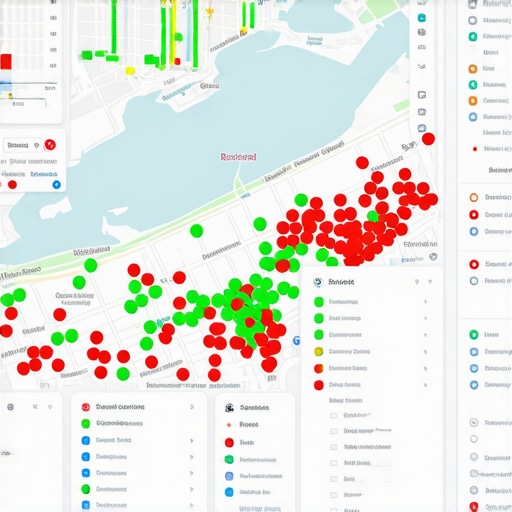
You might be thinking that a heatmap or a grid is just eye candy designed to make reports look more expensive. I’ll admit, I was skeptical too—until I saw a client’s map that looked like a checkerboard of green and red. We were dominating the north side of the street but were completely invisible to anyone living on the south side. By using the right rank tracker setup, we identified exactly where our visibility dropped off. We didn’t need more keyword stuffing or more generic backlinks; we needed to understand our proximity limits and adjust our local signals accordingly. Have you ever checked your rankings from a different part of town only to find you’ve disappeared from the Map Pack? It’s a common frustration, but once you use heatmaps to visualize your dominance, you can finally stop guessing and start targeting the specific streets that actually drive revenue. Let’s look at how we can turn that red grid green and reclaim your local authority.
Build a Neighborhood Grid That Shows the Hard Truth
First, you need to ditch the single-point search. To see what is actually happening in your market, you need to configure a rank tracker setup that shows real neighborhood proximity. I recommend a 7×7 or 11×11 grid centered on your office. When I did this for a local HVAC client, he was stunned. He was #1 at his desk, but #14 at the local high school just two miles away. This was a classic case of proximity fall-off that traditional reports hide. If you see a sea of red dots just outside your immediate area, you are likely suffering from a lack of geo-signals. This data is the foundation of unlocking the power of local seo software to actually move the needle for your business. 
Kill the Inconsistencies Before They Kill Your Rank
Once the grid reveals where you are failing, the first thing I check is the foundational noise. This is where a citation monitor becomes your best friend. Google is constantly trying to verify your location through third-party data. If your Yelp page says Suite 100 and your Google profile says Unit A, you are creating friction. I remember spending a whole weekend manual-fixing a client business name because they had added keywords like Best and Cheap to half their listings. It was a mess, but knowing how to clean up 50 duplicate listings without paying for extra software saved us a fortune and stopped the ranking bleed. Consistency is not about being perfect everywhere; it is about not confusing the algorithm. Remember, your listing optimization is useless if you miss this address formatting rule regarding USPS standards.
Turn Your Map Data into a Growth Engine
Do not just look at the pins; look at the intent. By using maps analytics to find your most profitable neighborhoods, you can see where people are actually requesting directions from. If you notice a cluster of direction requests from a specific zip code where your grid ranking is low, that is your low-hanging fruit. You do not need a huge budget; you need to focus your efforts on those specific streets. This is far more effective than tracking average position which treats all neighborhoods as if they were identical in value.
Stop Letting Your Star Rating Do All the Heavy Lifting
Finally, you have to talk back to your customers. Most business owners think a 4.8 rating is the finish line. It is not. I have seen 4.2-rated businesses outrank 5.0 competitors because they responded to every single review within two hours. Using review management tools that transform customer feedback into revenue allows you to stay on top of this without going crazy. The reality is that your review average matters less than your response speed when Google is calculating freshness and engagement signals. I once helped a shop owner who was getting hammered by one-star bots; by using the right settings, we learned how to filter out competitor review sabotage and regained our #1 spot in less than a month.
Let’s dig deeper into the actual mechanics of why your phone isn’t ringing, despite what your dashboard says. Most ‘gurus’ will tell you that citation consistency is the end-all-be-all of local search, but I’ve found that the citation consistency myth and what actually matters for rankings has shifted significantly in the last year. Google’s AI is now sophisticated enough to realize that ‘St.’ and ‘Street’ are the same thing. If you are losing sleep over a few minor formatting differences, you are wasting energy that should be spent on your proximity signals. In my experience, chasing a 100% consistency score is a fool’s errand. Instead, you should stop chasing citation volume and focus on this accuracy metric instead, specifically on the top-tier directories that actually feed the primary data aggregators.
The Danger of Putting Your Citations on Autopilot
I’ve seen business owners fall into a dangerous trap: relying entirely on automated ‘sync’ tools. While they promise a hands-off approach, these systems often overwrite manual, high-value optimizations you’ve made. Even worse, the citation monitor setting that catches profile hijacks in minutes is often disabled by default in budget software, leaving your business vulnerable to ‘suggested edits’ from competitors. I once worked with a plumber who used an automated tool that accidentally reverted his primary category to ‘General Contractor’ across forty sites, causing his map visibility to vanish overnight. It is a brutal reminder that why most local seo software tools overestimate your true ranking often comes down to the software ignoring these ‘hidden’ profile conflicts.
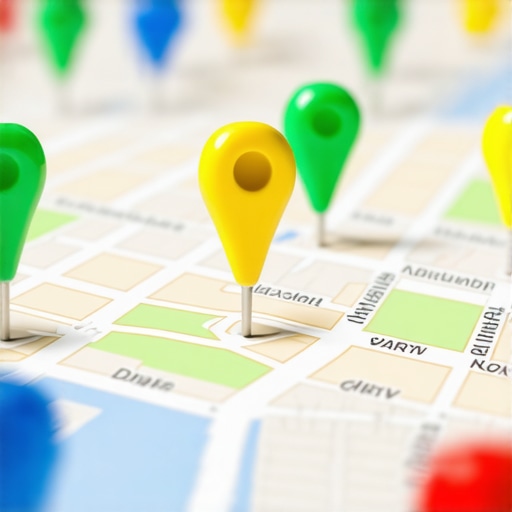
Why do my map rankings look like a success story while my phone stays silent?
This is the question that separates the amateurs from the pros. You might see a beautiful green grid on your report, but if your maps analytics insights to boost your local map visibility show zero click-throughs, you have a conversion problem, not a ranking problem. This is the data gap why your rankings are up but calls are down. According to a study by BrightLocal, proximity remains the #1 ranking factor, but ‘relevance’ and ‘prominence’ are what actually drive the click. If you rank #1 but have a generic, half-empty profile, users will skip right over you to the #3 spot that has recent photos and a detailed service list. You have to look at how to spot the tracking flaws in your weekly ranking reports to ensure you aren’t just celebrating ‘ghost rankings’ that nobody actually sees. Have you ever fallen into this trap of chasing rankings while your revenue stayed flat? Let me know in the comments.
Don’t Ignore the Behavioral Signals
Finally, we need to talk about what the algorithm is really looking for: engagement. A high star rating is great, but why review diversity matters more than just your star rating is a nuance many miss. Google wants to see a steady stream of reviews across different platforms, not just a burst of fifty reviews on GMB once a year. By unlocking the power of local seo software that tracks these engagement metrics, you can see if your response time is lagging behind the neighborhood average. Remember, the goal isn’t just to show up on the map; it’s to be the most compelling option once the user finds you. If you aren’t monitoring how users interact with your pin, you’re only seeing half the story.
I’ve seen too many businesses climb to the top of the Map Pack only to treat it like a trophy they can put on a shelf. Local SEO isn’t a trophy; it’s a garden. If you stop weeding, the competitors will overgrow you in a matter of weeks. When I look at the tools I use to maintain results across dozens of locations, I don’t look for the ones with the flashiest dashboards. I look for the ones that give me actionable alerts. For instance, I realized that most local seo software what we learned after testing the top 10 options isn’t built for the long-term grind—it’s built for the initial sale. You need a setup that flags issues before they become ranking drops.
The Stack I Trust When Things Get Messy
For me, scaling means automation that doesn’t sacrifice accuracy. I personally rely on a configuration that integrates my grid data directly with lead tracking. If you want to know how rank tracker can skyrocket your local rankings in 2025, it is by shifting your focus from ‘position’ to ‘share of voice.’ I use specialized modules to keep an eye on the high-value neighborhoods we identified earlier. If a competitor suddenly gains five reviews in a weekend, I want my system to bark at me. This is where the software feature that makes managing 1000 reviews easy becomes vital; it’s not about just reading them, it’s about identifying patterns in what customers are actually saying about your proximity and service speed.
How can you keep your local rankings from sliding backward?
The secret to long-term Map Pack stability is ‘Freshness.’ Google’s algorithm has a short memory. I recommend a monthly audit cycle where you check for ‘Ghost Listings’ or sudden competitor name-spamming. You can how to monitor ranking flux without checking your phone every hour by setting up automated delta reports. These reports only hit your inbox if your average grid position moves by more than 0.5 points. This prevents you from reacting to the natural ‘wiggle’ of the algorithm while ensuring you catch a real slide before it’s too late. I’ve found that the hidden map analytics metric that shows where your leads live is the ultimate North Star for this maintenance; if your leads are coming from the East side, that’s where your grid maintenance needs to be most aggressive.
Prepare for the AI-First Map Pack Before It Arrives
Looking ahead, I see local search becoming even more conversational and intent-based. According to Joy Hawkins of Sterling Sky, Google ‘justifications’—those small snippets of review text that appear in search results—are increasingly influencing the click-through rate more than the actual rank. This means your future success depends on your ability to generate reviews that mention specific services and locations. AI will soon be ‘reading’ your map profile to answer direct questions like ‘Which plumber nearby can fix a tankless heater today?’ If your profile doesn’t have the data to back that up, you’ll be invisible. My advice? Go into your maps analytics insights to boost your local map visibility dashboard today and find your ‘directions requests’ by neighborhood—it’s the most honest data you own. Start tailoring your review requests to those specific areas to build the ‘justifications’ Google’s AI is looking for.
I’ve spent the last decade obsessing over how Google treats local businesses, and if there is one thing I’ve learned, it’s that the map is always lying to you if you aren’t looking at the right data. We’ve covered a lot of ground today, but I want to leave you with some hard-earned perspective that isn’t in the standard manuals.
The Hard Truths I Learned After Staring at Red Grids for Months
When I finally stopped obsessing over national SEO and focused on my own backyard, I realized three things that changed everything:
- First, the citation consistency myth and what actually matters for rankings taught me that Google is smarter than we give it credit for. You don’t need to be a perfectionist; you need to be a reliable source of information.
- Second, I learned that how to spot the tracking flaws in your weekly ranking reports is the only way to avoid ‘false positives’ that make you feel successful while your revenue remains flat.
- Lastly, I realized that why your review average matters less than your response speed is the ultimate competitive advantage. Google rewards active businesses, not just ‘good’ ones.
My Non-Negotiable Kit for Local Growth
I don’t believe in buying every shiny new toy. Instead, I stick to a lean stack that provides actual insights rather than just noise. To replicate these results, you need a citation monitor that alerts you to hijack attempts, and you must utilize review management tools that transform customer feedback into revenue by keeping your engagement metrics high. I also suggest bookmarking your maps analytics insights to boost your local map visibility; it’s the only place where you can see the literal footprints of your customers before they walk through your door. These aren’t just tools; they are the eyes and ears of your local marketing strategy.
Stop Chasing Pins and Start Winning Neighborhoods
The journey from being a ghost in your own town to becoming the neighborhood authority doesn’t happen overnight, but it starts the moment you stop falling for vanity metrics. By learning how to unlock the power of local seo software for small business growth, you are giving yourself the gift of clarity. Don’t be afraid to see the ‘red’ on your grid today—it is simply a map showing you exactly where your next customer is waiting to find you. Take that first step, audit your proximity, and reclaim your territory. Have you ever seen your business rank #1 at your office but completely disappear when you search from the coffee shop just two miles away? Let me know your experience in the comments below.