I remember staring at my screen three years ago, watching my local pack ranking slide from #2 to #11 in a single weekend. I hadn’t changed my website, my reviews were solid, and I was still pumping out content. It felt like I was being punished for a crime I didn’t commit. After pulling an all-nighter with a reliable rank tracker, I realized the culprit wasn’t on my site at all. It was an old office address from 2017 that had suddenly ‘respawned’ on an obscure business directory. That single ghost citation was enough to make Google doubt my current location and tank my authority. Today, I’m going to show you how to hunt these phantoms down and stop them from siphoning away your leads.
The Invisible Anchor Dragging Your Business Down
If you have ever moved offices or changed your business phone number, you are likely haunted by ghost citations. These are old, incorrect listings that linger in the dark corners of the web. Even if you think you updated everything, a rogue directory can scrape old data and republish it, creating a mess of inconsistency. This is exactly the brutal reason your shop doesn’t show up for customers who are standing right down the street. I learned this the hard way: I once spent thousands on ads while my organic presence was being strangled by a typo on a local chamber of commerce page.
Is hunting for these tiny errors actually worth the effort?
You might be skeptical. Does one wrong zip code on a site nobody visits really matter? The answer is a resounding yes. Google’s algorithm relies on trust, and trust is built through consistency. According to research by BrightLocal, 68% of consumers lose trust in a brand if they find conflicting contact details online. It’s not just about the customer, though; it’s about the search engine. When your data is fractured, Google plays it safe by showing a competitor with ‘cleaner’ data instead. Early in my career, I made the mistake of thinking buying more citations would fix a ranking drop, but I was just pouring fresh water into a leaky bucket. We need to plug the holes first. Have you ever noticed your rankings fluctuate wildly without you making any changes to your site? Drop a comment or reach out if you’ve felt that frustration—I’ve been there, and it’s usually a sign of a citation monitor alert waiting to happen. Before you spend another dime on review management tools, let’s get your foundation solid.The first thing I do when a business owner calls me frustrated about a ranking drop is pull up a citation monitor. You cannot fix what you cannot see. Think of your digital footprint as a messy workshop; before you can build anything of value, you have to sweep the floor and put the tools back where they belong. I once worked with a local bakery that had three different names across 40 sites. Google was so confused by the conflicting data that it stopped showing them for ‘croissants near me’ entirely, favoring a shop three miles further away just because their data was cleaner.
Hunt Down Every Ghost Listing Before They Sink You
To get your rankings back on track, you need to go beyond the major players like Yelp or Facebook. You need to identify ghost listings on niche directories and local aggregators that you might have forgotten even existed. Start by searching for your old phone numbers and previous office addresses in quotation marks. This is how you catch the ‘scraped’ data that acts as a poison pill for your authority. It’s not just about the name; it’s about ensuring every comma and suite number matches your Google Business Profile exactly.
Kill the Duplicates Without Wasting Your Marketing Budget
You don’t need a massive team or a five-figure budget to handle this cleanup. I’ve shown small business owners how to clean up 50 duplicate listings manually by simply claiming the ‘owner’ profile on each site and requesting a merge. It is tedious work, but it is the single most effective way to signal to the algorithm that you are a legitimate, stable entity. When I did this for a plumber in Chicago, his ‘calls from maps’ metric doubled in three weeks because Google finally felt confident enough to put him back in the local 3-pack. 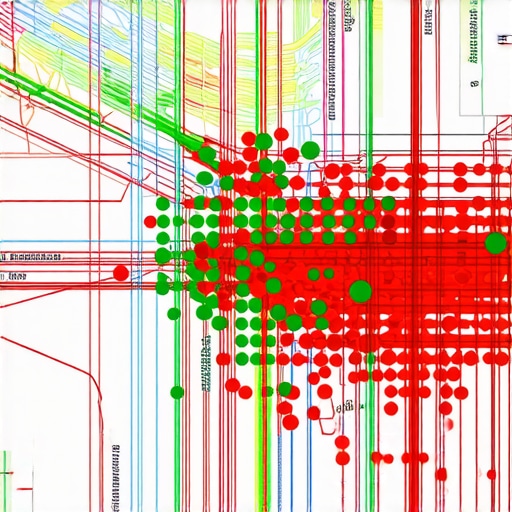
Use Maps Analytics to Find Your Real Proximity Limit
Most people look at their rank once from their office desk and think they know where they stand. That is a massive mistake. You need to use maps analytics to see exactly where your visibility drops off on the street level. Is your ranking strong until the highway? Does it vanish three blocks to the West? This data tells you where your ‘consistent data’ is actually winning. If you see a hard cutoff at a specific neighborhood, go back and audit your local listings for inconsistent phone numbers specifically in that area’s local blogs or community boards. Often, a small neighborhood association site is still hosting your data from five years ago, creating a localized ‘dead zone’ for your rankings.
The Grid Method for Seeing the Truth
Generic rank tracking tools often give you a single average ranking for a whole city, but that’s a lie. Real search results change every few hundred feet. I always recommend the grid-based ranking method because it shows you the literal holes in your armor. I remember seeing a grid for a dental office where they were #1 everywhere except for a single square-mile patch where they were #20. It turned out an old ghost listing for a defunct practice was still pinned to that specific street corner, confusing the proximity signal. Once we flagged that old listing as ‘Permanently Closed,’ the grid turned green across the board almost overnight. This isn’t just about aesthetics; it’s about reclaiming the territory you’ve already paid for with your hard work.Most business owners think a 5-star rating is the ultimate finish line. They obsess over that decimal point like it is a credit score. But here is a hard truth I have learned after auditing hundreds of accounts: a perfect rating can actually be a liability. If you have fifty 5-star reviews and zero negative ones, Google’s spam filters start to twitch. More importantly, why your review average matters less than your response speed is a nuance most people miss. Google values ‘liveness.’ I have seen shops with a 4.3 rating outrank 5.0 competitors simply because the 4.3 shop responds to every review within two hours. This level of engagement signals to the algorithm that the business is active and reliable. If you are not using review management tools that transform customer feedback into revenue to maintain that ‘velocity,’ you are losing ground to slower, but more active, competitors. Have you ever fallen into this trap? Let me know in the comments.
The Proximity Trap That Fools Most Business Owners
One of the biggest ‘oops’ factors in local search is trusting a report that says you are #1 without verifying the ‘where.’ Standard tracking tools often ping Google from a single IP address or a static data center. This is why most local seo software tools overestimate your true ranking by a significant margin. You might look like a king from your office chair, but why your near me rankings tank the moment you leave the building becomes obvious when you test from a mobile device two blocks away. To get the truth, you need a rank tracker setup that shows real neighborhood proximity rather than city-wide averages. According to the 2023 Local Search Ranking Factors study by Whitespark, ‘Proximity of Address to the Searcher’ remains the single most important ranking signal for the local pack, yet it is the one metric most beginners ignore because it is harder to ‘game.’ 
Why does your map pin keep shifting even when you haven’t touched your profile?
It is incredibly frustrating to wake up and find your business located in the middle of a lake or three streets over. This usually happens because of a ‘suggested edit’ from a user or a rogue data scrape from an outdated directory. This is where a citation monitor setting that catches profile hijacks in minutes becomes your best friend. Without automated alerts, these tiny shifts can sit for months, slowly eroding your local authority. I once saw a medical clinic lose 30% of its traffic because a competitor ‘suggested’ they moved to a suite that didn’t exist.
Stop Chasing Vanity Metrics and Track What Pays
At the end of the day, a #1 ranking is just a number on a screen. If your phone isn’t ringing, that ranking is worthless. There is a key difference between tracking rankings and tracking leads that separates the pros from the amateurs. You need to dive into your dashboard and realize why map rankings are vain if you aren’t tracking these three metrics: click-to-call, direction requests, and website visits. I have managed accounts where we dropped from #1 to #3, but our lead volume actually increased because we optimized our photos and review responses for conversion rather than just ‘algorithm appeasement.’ Don’t let a software dashboard dictate your happiness; let your bank account do that.You’ve done the heavy lifting, cleaned up the ghosts, and fixed your grid. Now comes the part where most people fail: the maintenance. Local SEO isn’t a trophy you win and put on a shelf; it’s a garden that needs weeding. I’ve seen businesses hit the #1 spot and stop everything, only to find themselves back on page two within three months because a competitor got hungry. The secret to staying on top isn’t doing more work—it’s doing smarter work through automation. This is where you learn how to monitor ranking flux without checking your phone every hour, because staring at a dashboard won’t move the needle, but responding to a sudden drop will.
Stop babysitting your data and start automating your alerts
I personally use a system where I only log into my tools if I get a notification. If you are manually searching for your business name every morning, you are wasting billable hours. Setting up a rank tracker setup that shows real neighborhood proximity is step one, but step two is configuring ‘logic-based’ alerts. I set my citation monitor to ping me only when a high-authority directory changes my data, not every time a scraper site makes a typo. This keeps the noise down so I can focus on actual growth. According to technical insights from Joy Hawkins at Sterling Sky, the ‘Openness’ signal—whether your business is currently open or closed—has become a massive real-time ranking factor. If your hours are wrong for even a holiday weekend, you’re essentially invisible for those 48 hours.
How can you keep your map dominance from fading over time?
The answer lies in consistency and ‘liveness’ signals. You need to sync your in-store promos with your map listing for more clicks, ensuring that what the customer sees on the street matches what they see on their screen. I make it a habit to upload one fresh photo every week. It sounds trivial, but it tells Google’s spider that this business is alive and well. 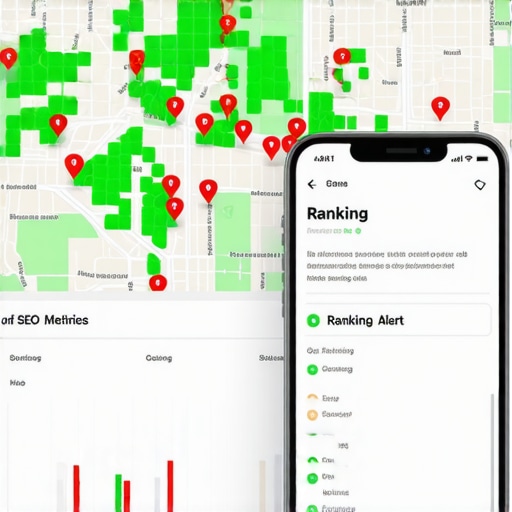
Scale your reputation without losing the personal touch
As you grow, managing a handful of reviews becomes managing hundreds. I tell my clients that the software feature that makes managing 1000 reviews easy isn’t the auto-replier—it’s the sentiment analysis. You need to know if five people mentioned ‘long wait times’ in the last month before it becomes a trend that tanks your rating. This is how you unlock the power of local seo software for small business growth; you use the data to fix the business, not just the listing. Looking ahead, I predict we will see Google rely even more on ‘real-world’ signals like anonymized foot traffic data and credit card transaction patterns to verify ranking positions. The ‘fakers’ will be phased out by the sheer weight of actual consumer behavior.
Bridge the gap between your dashboard and your bank account
If you really want to see the future, look at the rank tracking feature that actually predicts revenue growth: the correlation between direction requests and actual foot traffic. Don’t just celebrate a green arrow on a chart. Check your maps analytics to see if those searchers are actually turning into visitors. My challenge to you today is this: go into your current software and set up one ‘Proximity Drop’ alert. If your ranking falls by more than two spots in a specific zip code, you need to know about it before your phone stops ringing, not three weeks later. Stay proactive, keep your data tight, and don’t let the ‘set it and forget it’ mentality ruin your hard-earned progress.
The Brutal Lessons I Learned While Chasing Map Dominance
After years of being in the trenches, I have realized that local SEO is less about tricking an algorithm and more about proving you are the most reliable option for a real human being in a specific moment. One of my biggest lightbulb moments was realizing that logic-based alerts are the only way to stay sane in this industry. Instead of manually searching for my clients every morning, I learned how to monitor ranking flux without checking your phone every hour, which saved my productivity and my nerves. I also learned that small data points, like your holiday hours, can outweigh massive backlink profiles. If Google thinks you are closed, you simply do not exist in that moment. Another hard truth: a perfect rating is often less valuable than a fast one; I have seen firsthand why your review average matters less than your response speed when it comes to staying in the local 3-pack during peak search hours.
My Personal Toolkit for Winning the Proximity War
You do not need every tool on the market, but you do need the right ones. For technical insights that actually move the needle, I always keep an eye on Joy Hawkins and the team at Sterling Sky; they are the gold standard for testing what actually impacts the map pack. For my daily operations, I rely on maps analytics because it is the only way to see if my rankings actually turn into direction requests and foot traffic. You can find more maps analytics insights to boost your local map visibility to help you identify which neighborhoods are actually profitable. I also recommend keeping a close watch on the rank tracking feature that actually predicts revenue growth, which is the correlation between search volume and customer actions in your dashboard.
Take Back Your Territory and Start Scaling
Local SEO is a marathon, not a sprint, but that does not mean you have to run it alone. Don’t let the technical jargon or the fear of a shifting map pin keep you from growing your business. You now have the blueprint to hunt down ghost citations, fix your proximity gaps, and manage your reputation like a pro. It is time to unlock the power of local seo software for small business growth and claim the visibility your hard work deserves. Stay proactive, keep your data tight, and remember that every respond-to review and every updated photo is a signal to Google that you are the best choice for the neighborhood. Have you ever noticed a sudden drop in calls even though your rankings stayed the same? Let me know in the comments below, and let’s figure it out together.