I sat in my truck, parked right outside a busy shopping center in the next town over, and pulled up my phone. I typed in ‘plumbing repair near me.’ Nothing. My business, which dominated my home zip code, didn’t even show up in the top 20 here. It felt like I’d hit an invisible brick wall at the city limits. I was frustrated and, honestly, a bit embarrassed. I thought I knew how this worked. That was the moment I realized that my traditional ‘set it and forget it’ approach was leaving thousands of dollars on the table just a few miles away.
The time I tried to cheat the map and paid for it
Early on, I fell for the classic trap. I thought I could outsmart the algorithm by renting a tiny P.O. Box in a ‘prestigious’ downtown area three towns away. I spent $400, set up a new profile, and waited for the leads to pour in. Instead, I got hit with a hard suspension within forty-eight hours. It turns out, why your proximity is shrinking is a real technical hurdle that you can’t just bypass with a fake address. I had to learn the hard way that Google isn’t looking for where your mail goes; they’re looking for where your service actually happens. Today, I’m going to show you how to stop fighting the map and start working with it so you can finally claim your share of the pie in those neighboring towns.
Is it actually possible to rank where you aren’t?
I get this question at every local meetup. People are skeptical. They think if they don’t have a physical sign on Main Street, they’re doomed to stay in the shadows. But according to a study by Whitespark, proximity is just one piece of the puzzle, and while it is heavy, it is not the only factor that moves the needle. You don’t need a lease; you need a strategy that proves your relevance through street-level content moves and consistent data.
Stop guessing where your visibility ends
The biggest mistake I see neighbors making is relying on one single ‘average’ ranking number. If you aren’t using a rank tracker setup that shows real neighborhood proximity, you’re flying blind. You might be #1 at your house and #50 at the grocery store two miles away. I spent months thinking I was winning when I was actually losing the most profitable parts of the county. Now, I keep a close eye on my digital footprint with a citation monitor to ensure that every mention of my brand across the web points back to my service area authority, not just a single pin on a map. Have you ever checked your rankings from a different town and felt that sinking feeling in your gut when you couldn’t find your own name?
Stop treating your service area like a list of zip codes
I used to think that just creating a page titled ‘Plumbing in [City Name]’ was enough. I would swap the city name in the title tag, hit publish, and wonder why the phone didn’t ring. It was lazy and, frankly, ineffective. To really move the needle, you have to build service area pages that actually rank without a physical office by proving local relevance. This means talking about the specific neighborhoods, the local landmarks near your job sites, and even the unique challenges homeowners face in that specific soil or climate. Think of your website as a digital embassy; it needs to represent your business in foreign territory with enough detail that Google sees you as a local expert, not just a visitor.
Give Google a reason to believe you are actually there
When you create these pages, you aren’t just writing for humans; you are feeding the algorithm specific markers. I started implementing the schema tweak that puts your business on the map in neighboring towns by explicitly defining my ‘areaServed’ properties in the site code. It is like giving Google a GPS for your business capabilities. 
Fix the data leaks that are drowning your rankings
Most businesses are leaking authority through inconsistent data. If your address is listed as ‘Street’ on your site but ‘St.’ on a random directory, you are creating friction. I learned that your listing optimization is useless if you miss this address formatting rule. Google is essentially a massive matching engine. If the data does not snap together like LEGO bricks, the engine stalls. I once helped a buddy who owned an HVAC shop; he was struggling to get leads from the wealthy suburbs just ten minutes north. We realized he had three different phone numbers listed across old directories. We had to learn how to wipe out duplicate listings without overpaying for citation cleanup services, and once those signals were unified, his map pin started creeping north within weeks.
Use your customers as proof of life
The most powerful weapon you have in a neighboring town is a review from a resident of that town. I started coaching my technicians to ask for reviews that mentioned the specific neighborhood name. Instead of ‘They did a great job,’ I wanted ‘The crew arrived at my home in Oak Ridge and fixed the leak fast.’ When you use review management tools that transform customer feedback into revenue, you can actually filter and highlight these geographically relevant testimonials. This creates a ‘proof of life’ signal that tells Google you are actively working in that specific area.
Watch the map like a hawk
You cannot manage what you do not measure. I used to look at my dashboard once a month, but that is like checking your speedometer after the road trip is already over. You need maps analytics insights to boost your local map visibility in real-time. This allows you to see the actual ‘heat’ of your business footprint. Remember that HVAC buddy? We saw a ‘cold spot’ in a specific neighborhood on his rank tracker. It turned out a competitor was using the HVAC ranking move that local competitors are using to steal your emergency leads by flooding that area with localized blog posts. We did not panic; we just adjusted our content strategy to reclaim that territory.Let’s dig deeper into why most of those shiny dashboards are actually feeding you vanity metrics. I’ve seen business owners celebrate a ‘Top 3’ average ranking while their actual revenue was flatlining. The brutal truth is that why your map rankings are lying often comes down to the way software averages data. If you are #1 in your office but #20 in the high-value residential area five miles away, an average of 10.5 tells you absolutely nothing useful. In fact, why tracking average rankings is the fastest way to lose local leads is because it masks these ‘cold spots’ where your competitors are eating your lunch.
Stop trusting your average ranking reports
Most people believe that as long as their line graph is moving up, they are winning. I used to be one of them. But in my experience, a ‘flat’ ranking in the center of town is less valuable than a ‘growing’ ranking in a new territory. This is where you need to look at ‘Share of Voice’ rather than just a single number. According to local SEO expert Joy Hawkins, proximity is the primary ranking factor, but it is also the most easily disrupted by competitors who understand micro-local content. 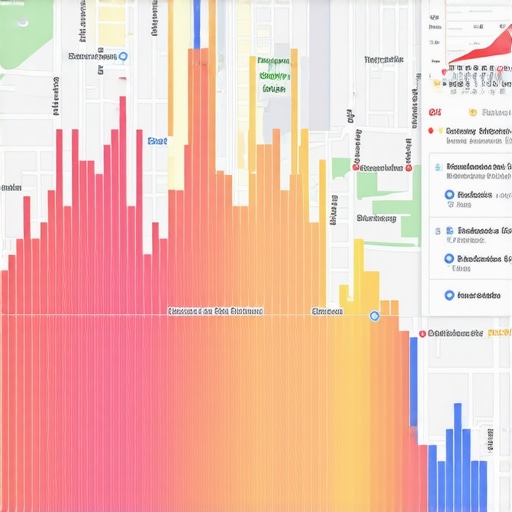
How do you spot a proximity gap before it kills your lead flow?
The ‘oops’ factor I see most often is relying entirely on automated citation tools. You pay a monthly fee, and you think your data is safe. But these tools often create a ‘revolving door’ of data. You fix a phone number manually, then the software ‘syncs’ and overwrites it with the old, incorrect data from a secondary scraper. I’ve found that why manual citation cleanup is better than automated tools often boils down to permanent authority. Once you kill a duplicate listing at the source, it stays dead. If you rely on a ‘layer’ of software to mask the problem, the moment you stop paying that subscription, your rankings can vanish like they were never there.
Why speed beats star ratings every single time
Everyone is obsessed with getting more five-star reviews. Don’t get me wrong, volume is great, but a study by BrightLocal indicates that consumers now value ‘recency’ and ‘owner response’ as much as the rating itself. I’ve actually seen businesses with a 4.2 rating outrank those with a 4.9 because the 4.2 business responded to every single review within two hours. This is why why your review average matters less than your response speed in the eyes of the algorithm. Google sees that active engagement as a signal that the business is operational and reliable. Have you ever fallen into this trap of focusing on the wrong numbers? Let me know in the comments.I spent years thinking that once I hit the top three, I was set for life. I was wrong. The map is a living, breathing thing, and if you aren’t actively tending to it, you’re basically waiting for a competitor to move into your backyard. I’ve found that the only way to stay sane is by leaning on specific local SEO software that handles the heavy lifting while I focus on running the jobs. It’s about building a moat around your digital territory.
Put your tracking on autopilot so you can sleep at night
I don’t manually search for my business anymore. That’s a rookie move. Instead, I use a rank tracker setup that shows real neighborhood proximity. This gives me a grid-view of exactly where I’m winning and where I’m invisible. If I see a red dot appearing in a neighborhood where I used to be green, I know someone is gunning for my spot. I also rely heavily on a citation monitor to keep an eye on my NAP (Name, Address, Phone number) data. If a random directory scraper tries to change my suite number or phone digit, I get an alert immediately.
How do I maintain my local visibility over the long haul?
Maintenance isn’t just about checking boxes; it’s about responding to the ‘signal decay’ that happens naturally. Google needs to see that your business is still alive. This means your maps analytics insights should show consistent engagement. I make it a point to upload one new photo a week—just a quick snap of a finished job or the team—to show activity. According to local search expert Mike Blumenthal, Google’s ‘Near Me’ algorithm is increasingly prioritizing ‘entity health,’ which is basically a fancy way of saying they want to see that you are active and reliable in your service area.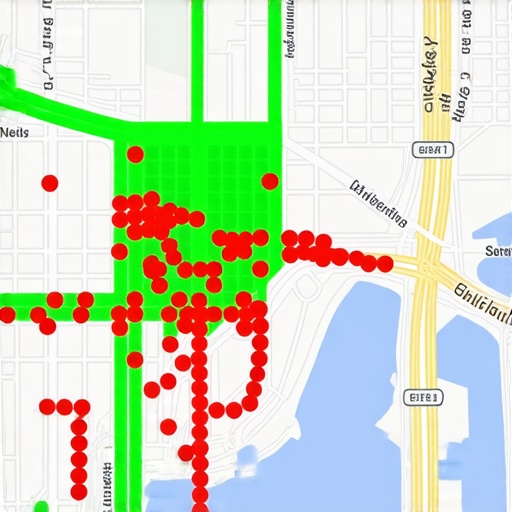
Fight the scrapers before they corrupt your data
One of the biggest headaches I’ve faced is ‘data drift.’ You fix your info, but then a month later, it’s wrong again. You have to learn how to stop citation scrapers from overwriting your correct business info by claiming the ‘primary’ nodes like your data aggregators. If you miss this, you’re just playing a game of digital whack-a-mole. I also recommend using review management tools that transform customer feedback into revenue because they help you stay on top of that response speed I mentioned earlier.
What the future of local search looks like for us
If I had to place a bet, I’d say the days of ‘gaming’ the system with keywords are numbered. We are moving toward a ‘proof of service’ model. Google will likely start using your actual location data from your work trucks or service apps to verify where you are. To stay ahead, you need to unlock the power of local SEO software for small business growth now, so you have a foundation of historical data that proves your authority. I want you to do one thing today: set up a high-frequency alert on your citation monitor. Catching just one incorrect phone number on a major directory can save you dozens of lost leads this month. It’s a small move that pays off in massive dividends.
The Hard Truth About Watching Your Map Pin Move in Real Time
I used to spend hours refreshing my browser, hoping a miracle would happen. The biggest lightbulb moment came when I stopped looking for ‘perfection’ and started looking for ‘patterns.’ Here is what I learned the hard way: if you aren’t careful, you will optimize for a green dot that doesn’t actually produce a phone call. I found out that why your map ranking reports fail to show the real-world proximity gap is usually because they ignore the nuanced neighborhood boundaries that locals actually care about. While software is great for monitoring, the real wins come from deep, manual surgery on your data. I am a firm believer in why manual citation cleanup is better than automated tools because it builds a foundation that doesn’t vanish when you cancel a subscription. Finally, remember that speed is the silent killer; you can have the best SEO in the world, but if you take three days to reply to a review, the algorithm will eventually bury you.
The Tools I Use to Stop Guessing and Start Growing
I do not believe in having a hundred different tabs open. To dominate a region, you need a lean stack that actually works together. My personal toolkit relies on a surgical rank tracker that shows me a grid of the city, not just a single number. This is how you spot those ‘cold spots’ before a competitor moves in. I also use a persistent citation monitor as a digital security guard to alert me the second a scraper tries to mess with my data. Most people use review management tools just to get more stars, but I use them for response speed and keyword-rich testimonials. In fact, why most review management tools fail to catch the one metric that matters is often because they ignore the geographical relevance of the reviewer themselves. By combining these with deep maps analytics, you can see the true ‘heat’ of your business footprint across the county.
It Is Your Turn to Claim the Map
The invisible walls between zip codes only exist if you let them. By focusing on data integrity and real-world proof of service, you can expand your footprint without ever signing a new lease. The technology exists to help you scale, but the strategy is what actually wins the fight. When you finally unlock the power of local seo software for small business growth, you aren’t just buying a tool; you are buying back your time and securing your business’s future in the digital landscape. Have you ever noticed your rankings suddenly drop when you cross a specific street or highway? Let me know in the comments below.