I was sitting in my kitchen, coffee in hand, staring at a screen filled with beautiful green “number one” bubbles. For a local plumber I was helping, this should have been the Holy Grail. But there was a problem: his phone wasn’t ringing. I spent weeks scratching my head, checking his citation monitor and tweaking meta descriptions, only to realize I was falling for a total illusion. I was tracking rankings from a single, static point in the middle of a city park, but my client’s customers were spread out across twenty different zip codes. That was the day I realized that traditional tracking is a death trap for service area businesses (SABs). Today, I’m going to show you how to stop chasing vanity metrics and start measuring the real-world proximity gap that actually determines if you get the job or if it goes to the guy three blocks over. [IMAGE_PLACEHOLDER]
Your ranking reports are likely lying to your face
In those early days, I made the classic mistake of bragging about “Average Position.” It felt professional, but it was practically useless for a business without a physical storefront. According to a study by Search Engine Journal, nearly 46% of all Google searches have local intent, but those results fluctuate wildly every few hundred feet. If your rank tracker isn’t showing you a grid of your actual service area, you’re essentially flying blind. You might be “number one” at the downtown post office, but completely invisible in the affluent neighborhood where people actually need their water heaters replaced. This is why your ranking reports feel like they are lying to you—they are giving you a macro view of a micro problem. Have you ever seen your rankings skyrocket while your lead flow stayed exactly the same?
Is local SEO software actually worth the investment?
It’s a fair question. With so many tools promising the moon, it’s easy to get cynical about the cost. After testing the top 10 options personally, I found that most are built for retail shops with a fixed door and a sign on the street. For us, we need a rank tracker setup that shows real neighborhood proximity. Without it, you’re just paying for a digital pat on the back while your competitors eat your lunch in the suburbs because they understand that proximity is the only signal that truly converts.Start by throwing away your single-point rank tracker. If you’re a locksmith or a roofer, you aren’t just working at your home office; you’re in a van moving through specific neighborhoods every day. You need a rank tracker that visualizes a 13×13 or 15×15 grid across your entire service area. I remember working with a local garage door tech who was ‘crushing it’ in the city center but dead silent in the wealthy suburbs just four miles away. We ran a specialized report and realized he had a map pin mistake that costs plumbers five calls a day—and it was costing him just as much because his service radius was incorrectly centered on a post office. Once he could see the ‘red zones’ on a grid, we knew exactly where his content was failing to signal local authority.
Map the entire neighborhood to see where you actually stand
Standard reports give you a single number, but local search is a game of inches. You might be number one on the street where you live, but move two blocks over and you drop to position seven. This is why a rank tracker setup that shows real neighborhood proximity is non-negotiable. By setting up these grids, you can identify ‘ranking cliffs’—areas where your visibility suddenly drops off. I once used this exact method to find that a client’s visibility died the moment you crossed a specific bridge. We realized his profile didn’t mention the neighborhood on the other side, a simple profile audit that found 20 leads we were giving to competitors every single month. 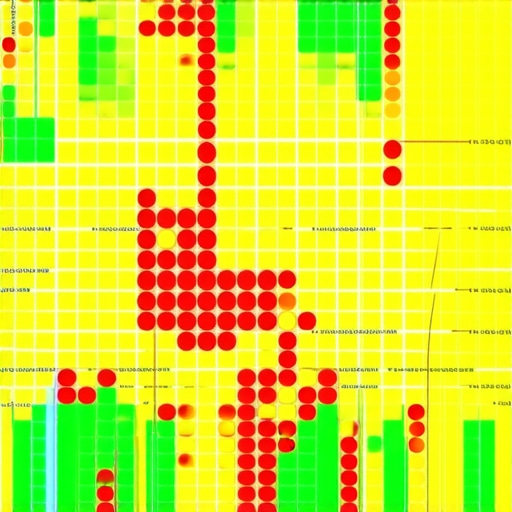
Clean up the citation mess that confuses the algorithm
Most people think more citations are better. That is a dangerous lie. It is like having twenty different business cards with three different phone numbers; nobody knows who to trust, least of all Google. We eventually stopped tracking total citations and started tracking this one accuracy metric instead. If your citation monitor finds your old business address on an obscure directory, it creates a conflict. Google’s algorithm is essentially a trust engine; if it sees conflicting data, it plays it safe and hides your listing. This is why manual citation cleanup is better than automated tools which often just create more duplicates rather than fixing the root cause.
Turn your reviews into a conversion machine
Your review management tools shouldn’t just be a place to say ‘thanks’ to customers. Use them to signal proximity and relevance. When a customer mentions their specific neighborhood in a review, and you reply mentioning that same street or a local landmark nearby, you are feeding the maps analytics engine exactly what it wants: proof of local activity. I’ve seen how a specific review response style actually stops your customers from churning while simultaneously boosting your map visibility for those hyper-local long-tail keywords. Don’t just look at the volume of reviews; look at the maps analytics to see which reviews are actually triggering more direction requests. That is the one map analytics metric that actually ties clicks to cash, and it’s usually hidden behind three layers of menus in most software.
Most experts will tell you to just “get more citations” to boost your authority. I am here to tell you that is a recipe for disaster if you do not understand the messy citation overlap that keeps your business out of the local 3-pack. More is not better; accurate and unique is the only way to win. In fact, according to the annual Local Search Ranking Factors study by Whitespark, proximity to the searcher remains the number one ranking factor for the local pack, but citation consistency is what keeps your trust score high enough to even be considered. If your citation monitor is just a scoreboard for how many profiles you have created, you are missing the point entirely. You need to use it to wipe out the messy citation errors that are quietly tanking your local authority.
Stop obsessing over your total citation count
I have seen business owners spend thousands on generic citation bundles, only to see their rankings stay flat. This happens because those automated tools often create duplicate listings on low-quality scrapers that confuse Google’s core algorithm. Instead of building more, focus on the quality of your existing data. If your citation monitor flags an old phone number on a niche directory, that is a much bigger priority than getting a new link on a random blog. You have to realize that maps analytics are a reflection of trust, and nothing kills trust faster than conflicting contact information.
What happens when your proximity starts shrinking for no reason?
You might notice that one month you are covering half the city, and the next, you are only visible within a mile of your office. This is not usually a glitch in the matrix; it is often the proximity paradox: why customers three blocks away can’t find your shop. It usually boils down to your profile becoming stale or a competitor using better tools to identify your weak spots. I have seen businesses lose 40% of their reach because they ignored a secondary category mistake that hides your shop from local searchers. They thought they were being thorough by adding every possible category, but they actually diluted their primary signal and confused the search engine.

Another massive trap is why you should ignore national search volume for local keywords. If you are a plumber in a town of 50,000, your rank tracker might show zero search volume for your most important local terms. Do not let that fool you into targeting broad phrases. Those zero volume keywords are often the specific reason dental practices lose local leads to less qualified competitors—they chase high-volume generic terms while the guy down the street snags every emergency call by ranking for the ultra-local, street-level phrases. Have you ever fallen into this trap, spending months ranking for a term that never actually rang your phone? Let me know in the comments.
Finally, stop looking at maps analytics just to see impressions. Impressions are a total vanity metric if your map impressions are spiking while actual clicks are tanking. You need to dig into the insights to boost your local map visibility that actually show intent, like direction requests versus website visits. If people are looking at your pin but not clicking call, your review management tools or your rank tracker should be telling you that your photos or your review snippets are the problem, not your actual position. Identifying these gaps is how you move from just tracking numbers to actually dominating a market.
I have spent far too many hours obsessively refreshing my browser to see if a client’s pin moved even an inch. If you want to keep your sanity while managing multiple service areas, you need to learn how to monitor ranking flux without checking your phone every hour. For my multi-location clients, the biggest headache is maintaining consistency across the board, and I personally rely on specialized software that allows us to sync hundreds of locations without data corruption. It is about building a sustainable system, not just reacting to every minor algorithm twitch or competitor edit.
How do I keep my local rankings stable over the long haul?
Maintenance is not just about technical audits; it is about keeping a steady pulse of local activity. I personally use review management tools that transform customer feedback into revenue by automating the request process while my team is still on-site with the customer. It is also vital to keep an eye on your brand’s footprint across the entire web; I use a citation monitor trick to find every mention of your brand that is not already a backlink. According to Google’s own official guidelines for service-area businesses, your service area should generally not extend more than about 2 hours of driving time from your base, or you risk being flagged for spam. I have seen this ‘radius bloat’ kill map visibility faster than any bad review ever could.
Predicting the shift toward a zero-click map experience
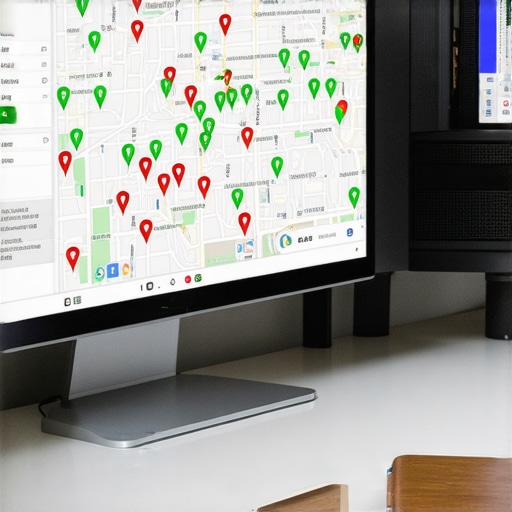
I believe we are heading toward a ‘Zero-Click Local’ future where Google answers almost every consumer question within the Map Pack itself. To stay ahead of this trend, you need to look at the authority settings most business owners ignore until their traffic drops. I predict that Google will soon lean even more heavily on video content and real-time inventory within profiles, so start uploading vertical clips of your team at work and tagging your services immediately. If you want to truly scale, unlock the power of local seo software for small business growth by setting up automated alerts for anytime a competitor changes their primary category. One specific tip you should try today: Go into your profile and check your primary category against your top three competitors. Often, a tiny shift in the market means your rivals have switched to a more specific sub-category that you are currently missing, and making that one-minute change can reclaim your lead flow overnight.
The Hardest Lesson I Learned While Chasing Ghost Rankings
I used to think that a green ‘number one’ icon on a dashboard was the ultimate win. I was wrong. The biggest mistake I made early on was ignoring the proximity gap—thinking that ranking in one spot meant I was ranking everywhere. Now, I look at maps analytics like a heat map of actual human behavior, not just a static scoreboard. I’ve learned that review management tools are more than just public relations; they are your most direct line to Google’s proximity algorithm. If you aren’t using your replies to anchor your business to specific landmarks or neighborhoods, you’re leaving visibility on the table. Lastly, remember that a citation monitor is a defense tool, not just an offensive one. Its job is to protect your reputation from the messy citation overlap that keeps your business out of the local 3-pack which confuses search engines and pushes your listing down into the abyss of page two.
The Digital Toolbelt That Actually Grows Your Revenue
If you are tired of guessing which changes actually work, start by looking at maps analytics insights to boost your local map visibility. I personally trust tools that prioritize accuracy over volume because you don’t need a thousand citations; you need a few high-authority ones that are bulletproof. I always suggest starting with a strategy that can how to wipe out the messy citation errors that are quietly tanking your local authority before you spend a dime on new ads. For keeping your sanity, invest in review management tools that transform customer feedback into revenue. This isn’t just about software; it’s about having a rank tracker that tells you the truth about your neighborhood reach so you can pivot before the leads dry up.
Take Back Your Local Territory
Local SEO isn’t a task you can set and forget—it is an ongoing conversation between your business and your community. When you unlock the power of local seo software for small business growth, you aren’t just buying data; you are buying the ability to see exactly where your customers are and what they need to hear to trust you. Don’t get overwhelmed by the technical jargon. Pick one neighborhood, fix your citation monitor alerts, and watch how those tiny adjustments turn into real-world phone calls. You have the skills and the local knowledge; now you have the strategy to match.
Have you ever noticed your rankings drop off suddenly when you cross a certain city line? Let me know in the comments below and let’s figure out why!