I still remember the day I thought I’d finally “made it.” I hit a milestone of fifty consecutive five-star reviews for my local business. I was checking my rank tracker every morning, expecting to see my pin glued to the top of the map. But instead of the phone ringing off the hook, the silence was deafening. Meanwhile, my biggest competitor down the street had a messy 4.3-star average, a handful of three-star complaints, and reviews scattered across four different websites. They were the ones getting the calls. That’s when the lightbulb went off: Google—and your customers—don’t just want to see that you’re “perfect.” They want to see that you’re real. If your feedback is only coming from one source, you’re building your house on a very shaky foundation. Today, I’m going to pull back the curtain on why review diversity is the engine that actually powers your local visibility. We’re going to move past the vanity metrics and talk about the strategy that turns casual browsers into paying customers.
Stop Obsessing Over the Perfect Five
Early in my career, I made a massive mistake that I see business owners repeating every single week. I funneled every single customer to my Google Business Profile. I thought if I could just get that number high enough, I’d be untouchable. What I didn’t realize was that I was creating a “review silo.” When I finally used a citation monitor trick to see what the rest of the web thought of me, I realized I looked like a ghost everywhere else. To the algorithm, I didn’t look like a local authority; I looked like someone who was potentially gaming the system.
The truth is, why your review average matters less than your response speed or where those reviews actually live is a concept most people miss. If you have 100 reviews on Google but zero on Yelp, Bing, or your industry-specific directories, you’re missing out on vital trust signals. In fact, a study by the Spiegel Research Center at Northwestern University found that consumer purchase probability peaks when a product’s star rating is between 4.2 and 4.5—not a perfect 5.0. You need a bit of grit and variety to look authentic in the eyes of a skeptical public.
Is a Flawless Rating Actually Making People Doubt You?
It sounds counterintuitive, doesn’t it? We’ve been conditioned to think that anything less than perfection is a failure. But think about your own habits as a consumer. When you see a business with 200 five-star reviews and not a single “the parking was tough” or “they were five minutes late” comment, do you trust it? Probably not. You start looking for the catch. Using review management tools isn’t just about collecting stars; it’s about managing a healthy, diverse ecosystem of feedback that proves you are a living, breathing business.
I’ve seen so many people get paralyzed by the fear of one bad review, but how we used review automation to filter out local competitor sabotage taught me that diversity actually protects you. When your reputation is spread across multiple platforms, one bitter competitor or one bad day can’t take you down. Have you ever felt that sinking pit in your stomach when a four-star review finally breaks your “perfect” streak? It’s a common fear, but it might just be the signal that finally makes your profile look human enough to convert.
Map Out Your Reputation Before You Hit the Gas
To stop being a ghost on the web, you need to treat your reputation like a diversified investment portfolio. I once worked with a local contractor who had nearly 150 Google reviews but was losing every high-value job to a competitor with only 30. Why? Because that competitor had a visible presence on four different trade directories and a solid Bing profile. We started by using a citation monitor to find every crack in his foundation. It turns out that the messy citation overlap that keeps your business out of the local 3-pack was actually diluting his authority. We found outdated addresses and old phone numbers on niche sites that were confusing Google’s algorithm, making it doubt if he was even still in business.
Target the Sites Your Customers Actually Visit
Diversity isn’t just about being everywhere; it is about being where the intent is highest. If you are a plumber, a review on a niche trade site is worth ten generic reviews on a social media platform. You need to leverage local SEO software to identify which platforms your top-ranking competitors are using. I remember a specific project where we discovered that why your listing optimization fails without verifying these 3 niche directories was the reason our client stayed stuck on page two. As soon as we shifted our focus to those secondary hubs, the proximity signals improved. 
Stop Asking Like a Bot to Triple Your Responses
The biggest hurdle to review diversity is the way we ask for feedback. Most business owners send a cold, automated text that feels like a court summons. I experimented with a “human-first” approach where we personalized the request based on the specific service provided. We found that the human tweak that triples your responses often comes down to timing and tone. Instead of asking for a “five-star rating,” we asked for “honest feedback on the project.” This naturally led to more descriptive reviews that included keywords our rank tracker picked up on within weeks. When customers write more than two sentences, they provide the contextual data Google needs to rank you for long-tail searches.
Shield Your Brand from Competitor Attacks
As you grow, you become a target. A diversified profile is your best defense against sabotage. If 100% of your reputation is on one site, a single coordinated attack can tank your business overnight. We’ve seen this happen to dental practices frequently. Learning how to filter out competitor review sabotage using modern management tools saved one of our clients from a total collapse after a rival hired a click-farm to leave negative feedback. Because we had a healthy spread of reviews on other platforms, the sudden dip on Google didn’t kill their overall lead flow. By using review management tools, you can spot these patterns early and respond before the algorithm penalizes your map pin.
Let’s dig deeper into a nuance that almost every “guru” gets wrong. Most people believe that the higher your average rating, the higher your ranking. In my experience, that’s a dangerous oversimplification. I’ve seen profiles with a 4.9 average consistently outrank those with a perfect 5.0 because the 4.9 profile had higher review velocity and more contextual keywords in the responses. If you aren’t seeing results, it’s often because why most review management tools fail to catch the one metric that matters—the frequency of new feedback—is at play.
Why does that messy competitor still sit at the top of the map pack?
The answer usually lies in the authority signals most local seo software overlooks. Google’s algorithm is looking for “sentiment density.” According to the 2023 BrightLocal Consumer Review Survey, consumers are increasingly wary of “perfect” businesses, and the algorithm mirrors this skepticism. If your reviews don’t mention specific services or neighborhood landmarks, they lack the geographic weight needed to move your pin. One massive “oops” factor I see constantly is business owners obsessing over their average position in reports. The truth is, why tracking average position is the fastest way to lose local customers is that it hides the reality of the street corner. You might be #1 in the office but #10 two blocks away. You need maps analytics insights to boost your local map visibility that show a grid-based view of your city.
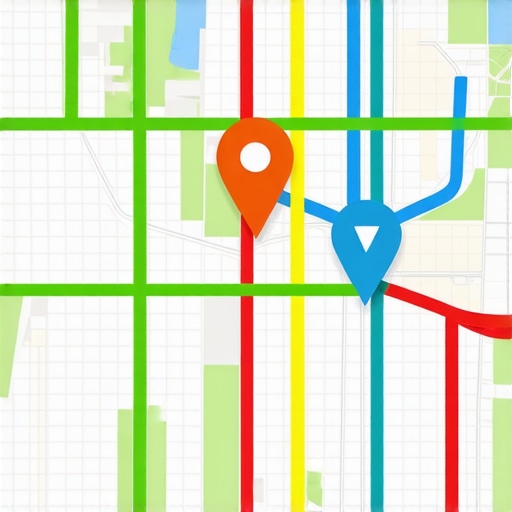
I once audited a client who was celebrating a #3 average rank, but the rank tracker setup that shows real neighborhood proximity revealed they were actually invisible in the high-income zip code just three miles away. Their why your map ranking reports fail to show the real world proximity gap was the silent killer of their lead flow. By using review management tools that transform customer feedback into revenue, you can actually see the correlation between where your reviews come from and where your rankings spike. But beware: if you see a sudden influx of generic praise, you might be looking at the hidden review patterns that signal a targeted reputation attack. This is specifically the specific reason dental practices lose local leads to less qualified competitors who have a more natural, “messy” footprint. Have you ever fallen into this trap of chasing a perfect 5.0 only to see your rankings stall? Let me know in the comments.
If you’re still manually checking your ranking across the city by driving around with your phone, you’re losing money and sanity. I used to spend my Sunday nights manually searching for my business in Incognito mode from different neighborhoods just to see if I was actually showing up. It was a complete waste of time. Now, I rely on local SEO software that does the heavy lifting for me. I’ve found that the rank tracker setup that shows real neighborhood proximity is the only way to see if your efforts in one zip code are actually bleeding over into the next. Without a grid-based view, you are essentially flying blind.
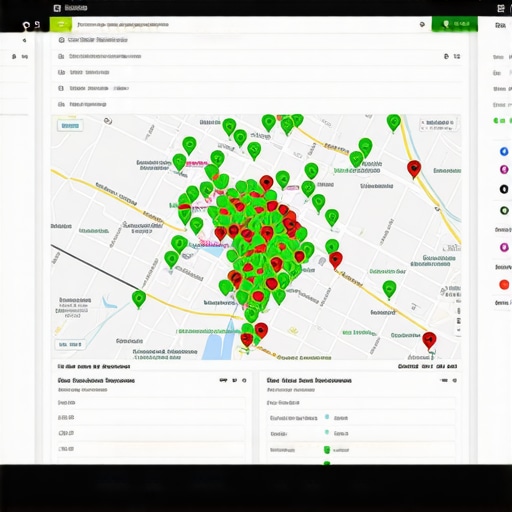
You can’t just set your profile and forget it. I’ve seen multi-million dollar businesses fall out of the map pack simply because a low-quality scraper site overwritten their phone number with a tracking line from three years ago. That’s why a citation monitor is non-negotiable. If you don’t know how to stop citation scrapers from overwriting your correct business info, you’re basically inviting your competitors to mess with your data. I personally check my alerts once a week—no more, no less—to ensure the ‘digital facts’ about my business stay consistent across the web.
How do I keep my local rankings from tanking next month?
Maintaining dominance isn’t about one big push; it’s about a concept called ‘review velocity.’ According to the annual Local Search Ranking Factors study by Whitespark, Google places significant weight on the recency and regularity of feedback. If you get twenty reviews in one week because you ran a promotion and then nothing for three months, your map pin will start to drift into the ‘dead zone’ of page two. I use review management tools to drip-feed requests so the algorithm sees a steady heartbeat of activity. This prevents the ghosting effect where you suddenly disappear from the top 3 for no apparent reason.
I predict that ‘Review Sentiment Analysis’—the actual words and feelings inside the text—will become the primary ranking factor by 2026. It won’t just be about having the keyword ‘plumber’ or ‘lawyer’ in the review; it’ll be about the context of the user’s experience. Google’s AI is getting much better at detecting the difference between a generic ‘Great job!’ and a detailed account of a service provided in a specific neighborhood. If you want to future-proof your business, you need to stop asking for reviews like a bot and start encouraging customers to tell a story. This builds the ‘semantic density’ that automated spam simply cannot replicate.
Here is an advanced tip you can implement today: stop using generic citation bundles that blast your info to 200 useless sites. Instead, start using this niche authority move: find the top three industry-specific directories in your city and get verified there first. This signals to Google that you are a specialist, which carries far more weight than a hundred links from generic directory sites that no one actually visits. Check your maps analytics insights after you do this; you’ll likely see a spike in ‘discovery’ searches within thirty days.
I still remember the day I thought I’d finally “made it.” I hit a milestone of fifty consecutive five-star reviews for my local business. I was checking my rank tracker every morning, expecting to see my pin glued to the top of the map. But instead of the phone ringing off the hook, the silence was deafening. Meanwhile, my biggest competitor down the street had a messy 4.3-star average, a handful of three-star complaints, and reviews scattered across four different websites. They were the ones getting the calls. That’s when the lightbulb went off: Google—and your customers—don’t just want to see that you’re “perfect.” They want to see that you’re real. If your feedback is only coming from one source, you’re building your house on a very shaky foundation. Today, I’m going to pull back the curtain on why review diversity is the engine that actually powers your local visibility. We’re going to move past the vanity metrics and talk about the strategy that turns casual browsers into paying customers.
Stop Obsessing Over the Perfect Five
Early in my career, I made a massive mistake that I see business owners repeating every single week. I funneled every single customer to my Google Business Profile. I thought if I could just get that number high enough, I’d be untouchable. What I didn’t realize was that I was creating a “review silo.” When I finally used a citation monitor trick to see what the rest of the web thought of me, I realized I looked like a ghost everywhere else. To the algorithm, I didn’t look like a local authority; I looked like someone who was potentially gaming the system.
The truth is, why your review average matters less than your response speed or where those reviews actually live is a concept most people miss. If you have 100 reviews on Google but zero on Yelp, Bing, or your industry-specific directories, you’re missing out on vital trust signals. In fact, a study by the Spiegel Research Center at Northwestern University found that consumer purchase probability peaks when a product’s star rating is between 4.2 and 4.5—not a perfect 5.0. You need a bit of grit and variety to look authentic in the eyes of a skeptical public.
Is a Flawless Rating Actually Making People Doubt You?
It sounds counterintuitive, doesn’t it? We’ve been conditioned to think that anything less than perfection is a failure. But think about your own habits as a consumer. When you see a business with 200 five-star reviews and not a single “the parking was tough” or “they were five minutes late” comment, do you trust it? Probably not. You start looking for the catch. Using review management tools isn’t just about collecting stars; it’s about managing a healthy, diverse ecosystem of feedback that proves you are a living, breathing business.
I’ve seen so many people get paralyzed by the fear of one bad review, but how we used review automation to filter out local competitor sabotage taught me that diversity actually protects you. When your reputation is spread across multiple platforms, one bitter competitor or one bad day can’t take you down. Have you ever felt that sinking pit in your stomach when a four-star review finally breaks your “perfect” streak? It’s a common fear, but it might just be the signal that finally makes your profile look human enough to convert.
Map Out Your Reputation Before You Hit the Gas
To stop being a ghost on the web, you need to treat your reputation like a diversified investment portfolio. I once worked with a local contractor who had nearly 150 Google reviews but was losing every high-value job to a competitor with only 30. Why? Because that competitor had a visible presence on four different trade directories and a solid Bing profile. We started by using a citation monitor to find every crack in his foundation. It turns out that the messy citation overlap that keeps your business out of the local 3-pack was actually diluting his authority. We found outdated addresses and old phone numbers on niche sites that were confusing Google’s algorithm, making it doubt if he was even still in business.
Target the Sites Your Customers Actually Visit
Diversity isn’t just about being everywhere; it is about being where the intent is highest. If you are a plumber, a review on a niche trade site is worth ten generic reviews on a social media platform. You need to leverage local SEO software to identify which platforms your top-ranking competitors are using. I remember a specific project where we discovered that why your listing optimization fails without verifying these 3 niche directories was the reason our client stayed stuck on page two. As soon as we shifted our focus to those secondary hubs, the proximity signals improved. #IMAGE_PLACE_HOLDER_B#
Stop Asking Like a Bot to Triple Your Responses
The biggest hurdle to review diversity is the way we ask for feedback. Most business owners send a cold, automated text that feels like a court summons. I experimented with a “human-first” approach where we personalized the request based on the specific service provided. We found that the human tweak that triples your responses often comes down to timing and tone. Instead of asking for a “five-star rating,” we asked for “honest feedback on the project.” This naturally led to more descriptive reviews that included keywords our rank tracker picked up on within weeks. When customers write more than two sentences, they provide the contextual data Google needs to rank you for long-tail searches.
Shield Your Brand from Competitor Attacks
As you grow, you become a target. A diversified profile is your best defense against sabotage. If 100% of your reputation is on one site, a single coordinated attack can tank your business overnight. We’ve seen this happen to dental practices frequently. Learning how to filter out competitor review sabotage using modern management tools saved one of our clients from a total collapse after a rival hired a click-farm to leave negative feedback. Because we had a healthy spread of reviews on other platforms, the sudden dip on Google didn’t kill their overall lead flow. By using review management tools, you can spot these patterns early and respond before the algorithm penalizes your map pin.
Let’s dig deeper into a nuance that almost every “guru” gets wrong. Most people believe that the higher your average rating, the higher your ranking. In my experience, that’s a dangerous oversimplification. I’ve seen profiles with a 4.9 average consistently outrank those with a perfect 5.0 because the 4.9 profile had higher review velocity and more contextual keywords in the responses. If you aren’t seeing results, it’s often because why most review management tools fail to catch the one metric that matters—the frequency of new feedback—is at play.
Why does that messy competitor still sit at the top of the map pack?
The answer usually lies in the authority signals most local seo software overlooks. Google’s algorithm is looking for “sentiment density.” According to the 2023 BrightLocal Consumer Review Survey, consumers are increasingly wary of “perfect” businesses, and the algorithm mirrors this skepticism. If your reviews don’t mention specific services or neighborhood landmarks, they lack the geographic weight needed to move your pin. One massive “oops” factor I see constantly is business owners obsessing over their average position in reports. The truth is, why tracking average position is the fastest way to lose local customers is that it hides the reality of the street corner. You might be #1 in the office but #10 two blocks away. You need maps analytics insights to boost your local map visibility that show a grid-based view of your city.
#IMAGE_PLACE_HOLDER_C#
I once audited a client who was celebrating a #3 average rank, but the rank tracker setup that shows real neighborhood proximity revealed they were actually invisible in the high-income zip code just three miles away. Their why your map ranking reports fail to show the real world proximity gap was the silent killer of their lead flow. By using review management tools that transform customer feedback into revenue, you can actually see the correlation between where your reviews come from and where your rankings spike. But beware: if you see a sudden influx of generic praise, you might be looking at the hidden review patterns that signal a targeted reputation attack. This is specifically the specific reason dental practices lose local leads to less qualified competitors who have a more natural, “messy” footprint. Have you ever fallen into this trap of chasing a perfect 5.0 only to see your rankings stall? Let me know in the comments.
If you’re still manually checking your ranking across the city by driving around with your phone, you’re losing money and sanity. I used to spend my Sunday nights manually searching for my business in Incognito mode from different neighborhoods just to see if I was actually showing up. It was a complete waste of time. Now, I rely on local SEO software that does the heavy lifting for me. I’ve found that the rank tracker setup that shows real neighborhood proximity is the only way to see if your efforts in one zip code are actually bleeding over into the next. Without a grid-based view, you are essentially flying blind.
#IMAGE_PLACE_HOLDER_D#
You can’t just set your profile and forget it. I’ve seen multi-million dollar businesses fall out of the map pack simply because a low-quality scraper site overwritten their phone number with a tracking line from three years ago. That’s why a citation monitor is non-negotiable. If you don’t know how to stop citation scrapers from overwriting your correct business info, you’re basically inviting your competitors to mess with your data. I personally check my alerts once a week—no more, no less—to ensure the ‘digital facts’ about my business stay consistent across the web.
How do I keep my local rankings from tanking next month?
Maintaining dominance isn’t about one big push; it’s about a concept called ‘review velocity.’ According to the annual Local Search Ranking Factors study by Whitespark, Google places significant weight on the recency and regularity of feedback. If you get twenty reviews in one week because you ran a promotion and then nothing for three months, your map pin will start to drift into the ‘dead zone’ of page two. I use review management tools to drip-feed requests so the algorithm sees a steady heartbeat of activity. This prevents the ghosting effect where you suddenly disappear from the top 3 for no apparent reason.
I predict that ‘Review Sentiment Analysis’—the actual words and feelings inside the text—will become the primary ranking factor by 2026. It won’t just be about having the keyword ‘plumber’ or ‘lawyer’ in the review; it’ll be about the context of the user’s experience. Google’s AI is getting much better at detecting the difference between a generic ‘Great job!’ and a detailed account of a service provided in a specific neighborhood. If you want to future-proof your business, you need to stop asking for reviews like a bot and start encouraging customers to tell a story. This builds the ‘semantic density’ that automated spam simply cannot replicate.
Here is an advanced tip you can implement today: stop using generic citation bundles that blast your info to 200 useless sites. Instead, start using this niche authority move: find the top three industry-specific directories in your city and get verified there first. This signals to Google that you are a specialist, which carries far more weight than a hundred links from generic directory sites that no one actually visits. Check your maps analytics insights after you do this; you’ll likely see a spike in ‘discovery’ searches within thirty days.
The Brutal Lessons I Learned While Chasing a Perfect Rating
Over the years, I’ve realized that the “perfect” profile is often the most fragile. Here is what the data actually tells us about long-term map dominance:
- Velocity outweighs volume every time. Ten reviews spread over two months is infinitely better than twenty reviews in a single afternoon. Steady feedback signals a thriving business.
- Negative feedback is a conversion tool. A well-handled three-star review builds more trust than a generic five-star rave. It proves there is a human behind the screen.
- Data integrity is your silent partner. You can have great reviews, but if the 3 citation errors that confuse Google are present, you’ll stay invisible.
The Toolkit That Keeps Me Sane and Ranked
If you are serious about scaling, you cannot do this manually. I’ve refined my stack down to three essential components that I check weekly. First, I use a rank tracker that focuses on hyper-local proximity rather than national averages. Second, I rely on a citation monitor to catch those annoying scraper sites before they overwrite my data. Finally, I leverage review management tools to ensure my response speed stays under the two-hour mark. #IMAGE_PLACE_HOLDER_E#
Stop Chasing Perfection and Start Building Authority
The local landscape is changing, and the businesses that win aren’t the ones with the most stars; they are the ones with the most authentic and diverse digital footprints. By diversifying where your reviews live and ensuring your data stays clean, you create a moat around your business that competitors can’t easily cross. It’s time to move past the vanity metrics and focus on the strategies that actually put your business on the map. Utilizing the right review management tools is just the first step in a much larger journey toward local dominance.
Have you ever struggled with a sudden drop in map rankings even though your reviews were great? Let me know your story in the comments below.