I remember the night I almost got “caught”—or at least, that’s how it felt. I was sitting in my dimly lit office, obsessively refreshing the Google Maps results for a competitor who had just jumped from the second page to the top spot in the local 3-pack. I was clicking their profile, checking their photos, and even looking at their latest reviews from my personal account. Suddenly, it hit me: I was essentially training Google’s algorithm to think this competitor was incredibly relevant by giving them all this engagement. I was helping the very person I was trying to beat. It was a rookie move, a total face-palm moment that forced me to rethink my entire approach to “spying” on the competition.
Why I stopped manually checking my rivals’ profiles
When you’re trying to figure out why a neighbor’s business is crushing it, your first instinct is to go look at them. But doing this manually is like trying to do a stakeout in a bright red neon suit. You see, Google knows where you are. If you keep searching for the same terms and clicking the same competitors, you are skewing your own maps analytics. You need to be a ghost. You need to see what the “average” customer sees from different street corners, not what you see from your desk. My biggest mistake early on was thinking I could outsmart the algorithm with a simple Incognito window. I was wrong. I realized later that why your local ranking reports feel like they are lying to you often comes down to the fact that proximity is hyper-local. If you aren’t using a sophisticated rank tracker that can spoof locations, you’re just guessing.
Is this kind of “spying” actually ethical?
I get asked this a lot. Is it “cheating” to look under the hood of a competitor’s strategy? Look, they are using the same public signals you are. Every business owner should know where they stand. According to data from Safari Digital, 97% of users learn more about a local company online than anywhere else. If you aren’t auditing the competition, you’re essentially closing your eyes while they take your customers. Today, I’m going to show you how to use local seo software to dismantle a rival’s strategy. We’ll look at how to set up a citation monitor to see exactly where they are listed and use review management tools to spot their weaknesses. Have you ever found yourself obsessing over a competitor’s ranking only to realize your own data was totally off? I’ve been in that rabbit hole, and it’s a waste of energy. Instead of clicking around like a frantic detective, let’s look at the actual data points that matter. We need to see the “invisible” factors—the things they aren’t even aware they’re doing right, and the glaring errors they’ve left wide open for you to exploit.
Stop guessing from your desk and start tracking real-world proximity
To truly dismantle a competitor, you have to stop looking at a single “ranking” number. Rankings are a fluid grid, not a static leaderboard. Think of your city as a chessboard; you might be the King on 5th Avenue but a lowly Pawn just three blocks over. I learned this the hard way with a boutique gym client. We were high-fiving over being #1 at the office, but when we drove to the juice bar a mile away, we were nowhere to be found. This is the proximity paradox in action. You need a rank tracker setup that shows real neighborhood proximity, using a grid-style visualization. This tells you exactly where your “border” is. If your rival is dominant in a specific zip code, don’t just mimic them—look for the gaps in their coverage. 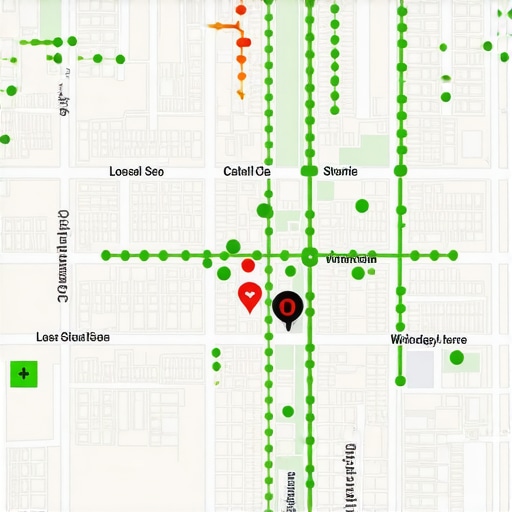
Finding the breadcrumbs your rivals leave behind
Every top-ranking business has a digital paper trail. Instead of manually searching, I use a citation monitor to scrape every mention of their business across the web. This is like following a breadcrumb trail. You aren’t just looking for Yelp or Yellow Pages; you’re looking for that random neighborhood association blog or the niche trade directory they’re listed on that you missed. I once audited a competitor for a solo attorney and found they had a link from a local “historical society” because they sponsored a plaque. That one niche signal was why they were beating us. When you see why tracking average position is the fastest way to lose local customers, you realize that these hyper-local citations are the anchors that hold a map pin in place.
Listening for the weaknesses in their customer feedback
Data isn’t just about dots on a map; it’s about the sentiment of the people clicking those dots. I use review management tools to perform a “gap analysis” on my rivals. Don’t just look at their 4.8-star rating. Look at what their 3-star reviews say. If everyone complains about their “slow response time,” that is your opening. Use your local seo software to track these patterns over time. This isn’t about being mean; it’s about being better. You can even learn how to filter out competitor review sabotage if you notice they are playing dirty with your own profile. By the time you’re done with maps analytics, you should have a heat map of their physical dominance and a list of their emotional failures with customers. That’s how you build a strategy that doesn’t just “rank” but actually takes their business.Let’s dig deeper into the actual mechanics because, quite frankly, most “experts” are still teaching 2018 tactics. For instance, the biggest lie in local search is that “more citations equal higher rankings.” In reality, a citation monitor isn’t there to help you collect more entries like they’re Pokémon cards. It’s there to protect your integrity. I’ve seen businesses pay for massive directory bundles, only to realize they’ve created a nightmare of citation inconsistencies that confuse Google’s bot. According to the Moz Local Search Ranking Factors report, “Consistency of Citations” is still a top-tier foundational factor, yet businesses keep buying generic packs. You need to stop buying generic citation bundles and focus on the hyper-local signals that your specific town cares about.
The address formatting error that silences your phone
One of the most painful “oops” moments I witness regularly is what I call the “Suite 200 Trap.” If your website says “Suite 200” but your Google Profile says “#200,” you are already losing. This might seem pedantic, but your listing optimization is useless if you miss this address formatting rule. The algorithm is a machine; it doesn’t “assume” those are the same place. This is why maps analytics can sometimes show a sudden drop for no apparent reason. You weren’t out-competed; you were out-formatted. 
Why does the algorithm ignore my perfectly optimized profile?
This is the advanced reader’s biggest frustration. You’ve done the work, you have the reviews, yet your optimized business profile still ranks below abandoned listings. Often, the culprit is the “engagement-to-distance” ratio. Google prioritizes active interaction over static keywords. If that abandoned listing gets one click-to-call every few months but has been there for a decade, it has “historical authority” that you have to overcome with fresh signals. Using local seo software to automate posts or Q&As isn’t enough; they have to be genuine.
Stop letting your rank tracker lie to you
If you are still looking at a single “average rank” number, you are making the same mistake I did in that dimly lit office. I’ve realized that why tracking average position is the fastest way to lose local customers is because it masks the truth of your proximity. A rank tracker should show you exactly where your influence dies. If you see your ranking drop from #1 to #10 just by crossing a major highway, that’s a “proximity gap” you can fix with better service-area pages, not more keywords. Have you ever fallen into this trap? Let me know in the comments. I’m curious if you’ve noticed your rankings vanish the moment you step outside your zip code. Also, remember that review management tools are useless if you only use them for damage control. They should be your primary tool for identifying these geographic gaps. If customers from the north side of town always complain about your “limited service range,” the algorithm hears that too.I’ve realized that the real secret to long-term success isn’t just the initial setup; it’s the ‘digital hygiene’ that happens while you’re busy actually running your business. I used to think I could just build a few citations, get ten reviews, and coast for a year. I was wrong. The map pack is a living organism. If you stop feeding it, you lose ground. Today, my Sunday morning routine involves a deep dive into maps analytics to see where my ‘influence’ is shrinking. I don’t look at totals; I look at the edges of my service area.
The Sunday morning audit that keeps my phone ringing
I rely heavily on a citation monitor to be my silent sentry. People think these tools are just for fixing phone numbers, but I use the citation monitor trick to find every mention of your brand that isn’t properly linked back to my profile. This catches those random blog mentions or local news snippets that should be boosting my authority but are currently ‘ghost mentions.’ When it comes to local seo software, I’ve found that most people pay for features they never touch. After looking at local seo software: what we learned after testing the top 10 options, I now stick to tools that prioritize proximity data over global search volume. If a tool doesn’t show me a street-level grid, I don’t buy it. 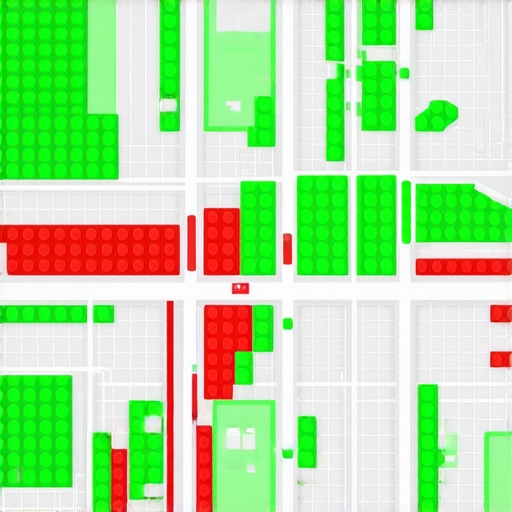
How do I keep my map rankings from disappearing overnight?
Maintenance is about consistency, not intensity. I’ve automated my review management tools to alert me the second a negative review hits, but more importantly, to analyze the ‘keywords’ customers are naturally using in their praise. If everyone mentions ‘fast emergency service,’ I make sure that exact phrase is mirrored in my Google Business Profile updates. You also need to monitor ranking flux without checking your phone every hour. I set ‘threshold alerts’ in my rank tracker. If I drop more than two spots in a core zip code, I get a text. This allows me to spot the lead generation glitch that sends your map clicks to dead ends before it costs me thousands in lost revenue.
The future of local search is visual and semantic
Looking ahead, I predict Google will rely even less on the text you write and more on the photos your customers upload. We are moving toward a ‘visual-first’ local algorithm. According to Mike Blumenthal, a leading expert in the field, Google’s ability to ‘read’ the contents of your photos is becoming a primary ranking signal. I’m already using the rank tracker feature that actually predicts revenue growth by correlating photo views with call volume. If you aren’t tagging your photos with geographic metadata, you’re leaving money on the table. My advice? Go check your citation monitor right now and look for ‘unclaimed’ variations of your name—it is the easiest win you will find this week.
The Brutal Lessons I Learned While Chasing the Map Pack
Over the years, I’ve realized that the biggest mistake isn’t doing the work, it’s doing the wrong work. For instance, I spent months obsessing over keywords with huge search volumes, only to realize that why you should ignore national search volume for local keywords is the first rule of real growth. You want customers, not just clicks from three states away. Another hard truth? Automation has its limits. I now believe that why manual citation cleanup is better than automated tools comes down to the nuance that a machine just can’t see—like a slight variation in a business name that confuses a human but looks ‘fine’ to a bot. Lastly, don’t ignore the weird signals; the citation source you are ignoring that actually drives traffic might be a local community forum or a hyper-niche directory you previously dismissed.
Tools and Resources That Actually Move the Needle
If you’re feeling overwhelmed, start small with a focused stack. After local seo software: what we learned after testing the top 10 options, I’ve narrowed my focus to tools that provide transparency. You need to know exactly how to handle technical hurdles, like how we fixed the not publicly visible glitch without re-verifying, because those glitches will happen eventually. #IMAGE_PLACEHOLDER_E# I also recommend hardening your defenses; check the review platform settings that prevent fake negative feedback to ensure your reputation isn’t at the mercy of a disgruntled competitor. Focus on quality over quantity every single time.
Take Back Your Local Neighborhood Today
Dominating your local market isn’t about being a tech genius; it’s about being the most consistent and observant business owner in your zip code. By using a citation monitor to protect your data, leveraging local seo software to scale your efforts, and keeping a close eye on maps analytics, you build a moat around your business. When you combine review management tools with a reliable rank tracker, you aren’t just guessing anymore—you’re executing a strategy. Your community is waiting to find you. Don’t let a messy listing or a proximity gap stand in the way of your next big customer. Which local competitor has been your biggest headache lately, and are you ready to finally outmaneuver them?