I remember sitting in my home office last Tuesday, coffee gone cold, staring at a ranking report that said I was #1 across the board. I was feeling pretty smug. Then the phone rang. It was a potential client who was literally standing on the corner of 5th and Main—just three blocks from my office—and he told me my business didn’t even show up on his phone. I felt like the floor had dropped out from under me. How could my expensive software say I was winning when a guy on the street couldn’t even see me? It was a wake-up call that my standard audit process was fundamentally broken. We spend so much time looking at the numbers that we forget to look at the map.
Your Audit Tools are Lying to You
The hard truth I learned the hard way is that most local SEO audits look at the broad strokes but ignore the fine details of the physical world. They check your citations and look for keyword density, but they completely miss the proximity gap. Early in my career, I spent months cleaning up messy listings thinking that was the silver bullet. It wasn’t. The reality is that Google’s local algorithm is obsessed with where the searcher is standing, and most rank tracking software often misses the local grid entirely. Today, I want to show you how to find these hidden blind spots so you can stop wondering why your map ranking reports fail to show the real world proximity gap. We are going to dig into the exact reason your visibility vanishes just a few blocks away from your front door.
Is proximity actually something you can control?
You might think proximity is just cold, hard math—distance equals rank. But in the world of local search, it is more of a glitchy relationship. I once made the massive mistake of thinking tracking average position was enough to understand my performance. It’s not. According to data from Search Engine Journal, nearly 46% of all Google searches have local intent, yet proximity remains the most volatile and misunderstood ranking factor. If your maps analytics are giving you a thumbs up while your phone stays silent, you are likely dealing with a proximity glitch that no standard checklist is going to catch. Have you ever looked at a perfect ranking report only to find out your actual foot traffic is ghosting you? If so, you’re not crazy—you’re just looking at the wrong data. Let’s get into how we actually bridge that gap.
Stop Guessing Where Your Shop Actually Ranks
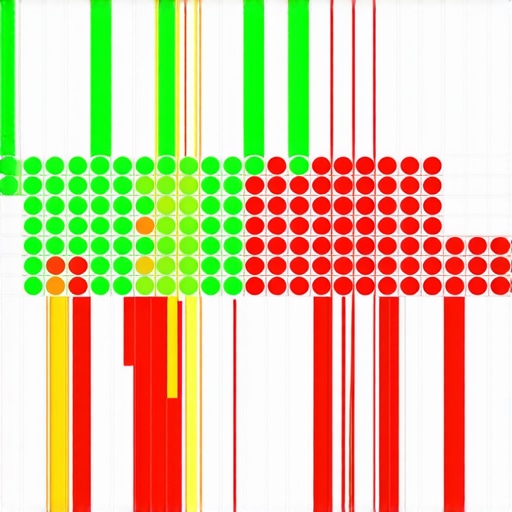
To fix a proximity gap, you first have to see it with clinical precision. Most business owners check their rank from their desk and assume that is what the whole city sees. It is not. You need to use tools that offer a grid-based view of the neighborhood. Think of it like a weather map; just because it is sunny at the airport does not mean it isn’t pouring rain three miles away. By using the right rank tracker, you can drop data pins every few hundred yards to see exactly where your visibility drops off a cliff. This is where you learn how to use heatmaps to visualize your map pack dominance and identify the precise streets where your competitors are eating your lunch.
Find the exact point where you disappear
I started using a specific rank tracker that focused on hyper-local neighborhoods rather than just broad zip codes. I discovered that for a local bakery client, they were #1 for ‘artisan bread’ in their own building, but fell to #15 just two blocks away. The reason was subtle: a competitor had slightly more consistent address data across niche directories. Setting up the rank tracker setup that shows real neighborhood proximity allowed us to see that the issue was not our content, but our geographic ‘gravity’ being pulled away by bad data.
Build a Fortress Around Your Digital Information
Google’s algorithm hates confusion. If your business name is ‘Main St. Pizza’ on one site and ‘Main Street Pizzeria’ on another, the algorithm treats it like a trust violation. This is why a citation monitor is a non-negotiable tool in your kit. It acts like a digital home security system for your reputation; it does not stop people from walking past, but it screams when someone tries to pick the lock. I once managed a law firm where a former employee had accidentally created four different listings over five years. We were basically competing against our own ghost profiles for the same map pin. We had to utilize a citation monitor as your secret weapon for local seo success to find every duplicate and merge them. It was not about building new links; it was about pruning the toxic ones that confused the search engines.
Catch the Hijackers Before They Steal Your Calls
Data decay is not always an accident. Sometimes it is malicious ‘crowdsourcing.’ Competitors can use the ‘suggest an edit’ feature on your Google profile to change your phone number or mark your shop as ‘permanently closed.’ If you are not watching your dashboard daily, Google might just accept the change. You need the citation monitor setting that catches profile hijacks in minutes so you can revert those changes before the weekend rush hits and your leads vanish.
Turn Every Interaction Into a Ranking Signal
If your maps analytics show thousands of views but zero phone calls, you have a massive trust gap. This is where review management tools become your bridge. High-volume, high-quality reviews tell Google your business is active right now, not just three years ago. I remember working with an HVAC company that had nearly 500 reviews but a 3.2-star average because they simply ignored the negative feedback. Once we implemented the software feature that makes managing 1000 reviews easy, we could respond to every customer within an hour. This signal of responsiveness is a heavy-hitter in the local algorithm. Furthermore, you must understand why service area pages fail to rank and the street-level move that fixes them if you want to expand your reach into the next town over without opening a new physical office.
Let’s dig deeper into the actual mechanics because the surface-level advice is what keeps businesses stuck on page two. You’ve likely been told that getting more reviews is the only way to climb the map pack. It’s a common myth. In my experience, why your review average matters less than your response speed is the actual key to staying relevant in Google’s eyes. If you have 500 reviews but haven’t replied to one in three weeks, the algorithm starts to view your business as ‘stale.’ According to the Whitespark Local Search Ranking Factors study, behavioral signals like the ‘velocity’ of engagement and response rates are now heavy-weight champions compared to static review counts. If you aren’t active, you aren’t relevant.
Why does that abandoned shop still outrank your perfect profile?
It’s incredibly frustrating to see a competitor who hasn’t updated their photos since 2018 sitting at the #1 spot while you’re grinding every day. This happens because of a ‘trust legacy’ that the algorithm is hesitant to break. You might be wondering why your optimized business profile still ranks below abandoned listings, and often it comes down to historical click-through data that the older listing has accumulated over a decade. To break through that, you need more than just keywords; you need the 3 subtle authority signals that force your business into the local pack, which include local brand mentions that aren’t just standard citations and high-quality, geo-tagged imagery that proves you are active in the specific neighborhood. 
The dangerous trap of automated citation cleanup
One of the biggest ‘oops’ moments I see with mid-sized agencies is the over-reliance on automated ‘sync’ tools. These tools are great for broad coverage, but they are often the reason why your map ranking reports fail to show the real world proximity gap. Why? Because these bots often overwrite specific, manual fixes you’ve made on hyper-local niche directories that the API can’t see. When you use a bulk tool, you risk losing the ‘niche authority’ that sets you apart. You must learn how to stop citation scrapers from overwriting your correct business info or you’ll find yourself in a loop of correcting the same error every 30 days. These scrapers hunt for inconsistent data and, if your citation monitor isn’t configured correctly, they will prioritize old, incorrect data from a legacy phone book site over your new, verified profile.
Proximity is more flexible than you think
A common misconception is that your ‘ranking radius’ is a hard circle drawn by Google. It’s not. I’ve seen solo practitioners outrank massive firms three miles away just by focusing on hyper-local neighborhood keywords that the big guys ignore. Most rank tracking software often misses the local grid, leading you to believe you’ve hit a ceiling. Have you ever fallen into this trap of paying for a tool that actually undid your manual progress? Let me know in the comments. We need to stop treating local SEO as a ‘set it and forget it’ task and start treating it like a physical territory we have to defend daily.Building a local presence is one thing; keeping it is an entirely different beast. I’ve seen too many businesses hit the top three and then stop doing the very things that got them there. You can’t treat your maps presence like a trophy on a shelf; it’s more like a garden that needs constant weeding. My personal routine involves a deep dive into maps analytics insights to boost your local map visibility every single Monday. I’m looking for more than just views; I’m looking for the ratio of ‘Directions’ requests to ‘Website’ visits. If directions are up but calls are down, something is broken on the ground level, not the digital one.
Stop chasing the ghost of last week’s rankings
If you want to scale, you need to move beyond static reports. I personally use a rank tracker that I’ve configured to scan every 24 hours at the most competitive intersections in my city. Why so frequent? Because local search is becoming hyper-dynamic. According to Joy Hawkins at Sterling Sky, Google’s ‘Openness’ factor now causes rankings to fluctuate based on whether a business is currently open or closed. If your local seo software isn’t accounting for these real-time shifts, you’re making decisions based on half-truths. You need to see how rank tracker can skyrocket your local rankings in 2025 by focusing on these behavioral triggers rather than just keywords.
How can I protect my local visibility from future algorithm shifts?
Maintaining dominance requires a mindset shift from ‘acquisition’ to ‘retention.’ This means your review management tools shouldn’t just be about getting stars; they should be about conversation. I’ve found that the hidden impact of unanswered reviews on your map ranking is often the reason a business suddenly drops to page two. Google sees a lack of response as a lack of business health. By using review management tools that transform customer feedback into revenue, you turn every customer interaction into a fresh signal of life. 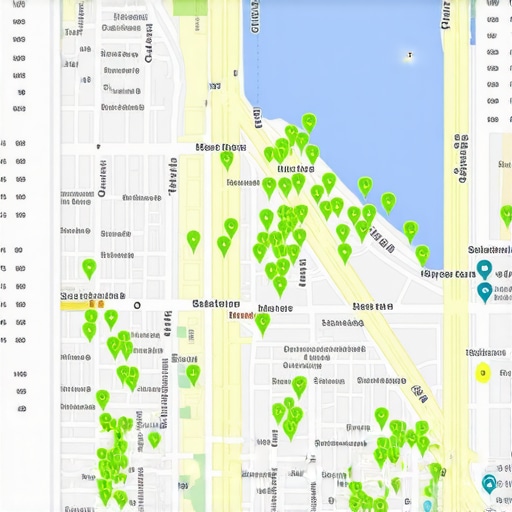
Keep your digital front door locked against data decay
The biggest threat to your long-term success is ‘data drift.’ Over time, third-party aggregators will try to ‘correct’ your information with outdated records from old tax filings or utility bills. This is why I keep a citation monitor running in the background at all times. It’s about more than just NAP (Name, Address, Phone) consistency; it’s about authority. If you aren’t using a citation monitor as your secret weapon for local seo success, you are essentially leaving your front door unlocked. I predict that in the next 18 months, Google will lean even harder into visual verification—using AI to cross-reference your uploaded photos with Street View data to ensure your shop actually exists. If you want to stay ahead, start uploading geo-tagged photos of your team working in the neighborhoods you want to rank in. This is how you unlock the power of local seo software for small business growth without getting stuck in the ‘pay-to-play’ cycle of local ads. My advice? Spend ten minutes today looking at your competitors’ review response times. If you can beat them to the punch, you’ve already won half the battle.
Hard Lessons I Learned While Battling the Map Pack Algorithm
One of my biggest lightbulb moments was realizing that a rank tracker is useless if you aren’t looking at the right variables. It is not about the average; it is about the outliers. I have seen businesses gain massive ground just by fixing one address formatting error that a citation monitor flagged in seconds. These small discrepancies create ‘friction’ in the algorithm that no amount of keyword stuffing can overcome.
Also, the ‘velocity’ of your reviews matters more than the total count. I have switched my focus to using review management tools that prioritize speed, because I discovered why your review average matters less than your response speed in the real world. A business with ten fresh reviews from this week will almost always out-signal a business with a hundred reviews from last year.
Finally, stop trusting the automated dashboard 100%. Sometimes you have to physically walk the street or use how to use heatmaps to visualize your map pack dominance to see where the signal actually drops off. It is often at the exact boundary of a neighborhood or a major intersection where a competitor’s data is simply ‘cleaner’ than yours.
The Software and Strategy Vault I Actually Use
If you want to move beyond the basics, I highly recommend diving into Whitespark’s Local Search Ranking Factors; it is the most honest data available for understanding how the local algorithm shifts annually. For daily monitoring, I rely on a rank tracker that handles 24-hour scans to catch those ‘Openness’ factor shifts that occur when your business closes for the day.
I also trust GMB Everywhere for deep category audits and BrightLocal for citation cleanup, though I always supplement them with manual checks on niche local directories. These are the foundations of any local seo software stack that actually produces a measurable return on investment for small businesses.
#IMAGE_PLACEHOLDER_E#
Take Back Your Territory One Block at a Time
The path to the top is not a secret code; it is about being the most reliable, most active, and most consistent business in your area. Do not let the technical jargon scare you. Use your maps analytics as a guide, not a gospel, and keep showing up for your customers both online and offline. Local search is a marathon, but when you have the right local seo software and a bit of persistence, that #1 spot is yours for the taking.
Have you ever found a weird citation error that was secretly tanking your rankings? Let me know in the comments below!