It was a Tuesday morning, and the silence in my office was deafening. Normally, by 9:00 AM, the phone is buzzing with local leads, but that day, not a single ring. I checked my rank tracker, and everything looked fine at first glance. My heart dropped into my stomach when I searched for my own shop on my phone and saw it: a jarring, red label that read ‘Permanently Closed.’ I was sitting right there at my desk, the lights were on, and yet, to the rest of the world, I had vanished. I realized then that I had fallen victim to the kind of review sabotage tactics I once thought were just urban legends in the SEO world. [IMAGE_PLACEHOLDER]
My Phones Stopped Ringing and I Almost Lost My Mind
Early in my journey, I made the classic mistake of thinking that once a Google Business Profile is set, it stays that way. I ignored my citation monitor because I was too busy with actual customers. It is a mistake I still kick myself for today. According to a study by BrightLocal, 68% of consumers would stop using a local business if they found incorrect information online. I was bleeding potential revenue every hour that fake status stayed up. I felt helpless, watching my digital presence get dismantled by a ghost.
Can you really trust Google with your business hours?
The short answer is: not entirely. Google relies heavily on ‘user suggestions,’ which is a fancy way of saying your competitors can click a few buttons and tell a lie that sticks if you aren’t watching. Today, I am going to walk you through the exact process I used to fight back. We are going to dive into how maps analytics and the right citation monitor setting can alert you to these hijacks in minutes rather than days. Have you ever logged in only to find your hard-earned reputation suddenly hijacked by a ‘Permanently Closed’ tag? It is a nightmare, but it is one you can wake up from. Let’s get into the nitty-gritty of how I caught them red-handed.
The First Step is Always a Digital Deep Clean
I did not just call Google and complain; I went on the offensive. Think of your digital presence like a house. If the foundation is cracked, it does not matter how pretty the curtains are. I started by looking for ‘ghost listings’—duplicate profiles that pop up like weeds. You have to identify ghost listings before they tank your local authority because Google gets confused when it sees two versions of you. Last summer, I helped a local plumber who had three different listings for the same office. He was wondering why his maps analytics were plummeting. It turned out his ‘authority’ was being split between three profiles, and none of them were strong enough to hit the 3-pack. 
Stop Your Business Name from Being Hijacked
Once the duplicates were gone, I looked at the name. This is where competitors usually strike. They will suggest an edit to your name to include ‘Closed’ or even change your phone number to a tracking line they own. I had to learn how to stop your business name from being hijacked in search results by locking down my data. I treated it like a bank account—if I did not authorize the change, it should not happen. I found that the citation monitor setting that catches profile hijacks in minutes was my best friend here. It is like having a security guard standing over your profile 24/7. When someone tried to change my shop’s status to ‘Permanently Closed’ again two weeks later, I got a text immediately and reverted it before it even went live.
Fix the Proximity Glitch That Is Hiding Your Shop
Sometimes the problem isn’t a malicious human; it is a ‘proximity glitch.’ If your map pin is even slightly off, Google thinks you aren’t actually in the neighborhood you claim to serve. I have seen pins move to the middle of an intersection for no reason. You need to apply the street level move that fixes shrinking proximity circles. In my case, my pin had drifted toward the back alley of my building. To the algorithm, I was now unreachable. By manually dragging that pin back to the front door and updating my coordinates, I saw my rank tracker jump from position 12 back to position 2 in under 48 hours. We also discovered that we found 12 citation errors that were siphoning our local lead flow simply by checking our niche directory listings. Every single one of those tiny errors was a ‘no’ in the eyes of the search engine, and when they added up, they were killing my business.Fixing those 12 errors was just the tip of the iceberg. I used to believe that the more citations I had, the better. Most SEO gurus tell you to blast your business across every directory on the internet, but here is the truth: why buying more citations is actually throttling your local visibility. When you use automated tools to flood the web, you often create more ‘noise’ than ‘signal.’ Google’s algorithm is increasingly sophisticated, and it values the quality of a few core, high-authority directories over 200 junk links. In fact, the Whitespark Local Search Ranking Factors survey has shown that while citation volume used to be a kingmaker, its importance has plummeted in favor of behavioral signals and review velocity. You need to stop chasing citation volume and focus on this accuracy metric instead. If you are obsessing over a listing on a site that has not been updated since 2012, you are simply wasting your time.
Why Your Ranking Report is Probably Lying to You
I also had to face a hard reality about my software. My dashboard showed a beautiful green ‘1’ for my main keyword, yet as I mentioned, my phones were silent. This is because why most local seo software tools overestimate your true ranking by taking a single point of data. If your software isn’t showing you a grid of your neighborhood, it is useless. You might be #1 if you are standing in your own lobby, but drop to #15 just two blocks away. I realized why your local ranking reports feel like they are lying to you—they aren’t accounting for the hyper-local nature of the modern map pack. #IMAGE_PLACE_HOLDER_C#
Is your local SEO software actually showing you where the money is?
Beyond just rankings, there is a deeper level of data most people ignore. I spent months looking at ‘impressions’ when I should have been looking at the hidden map analytics metric that shows where your leads live. If your map views are coming from people 20 miles away who will never drive to your shop, those rankings are ‘vanity metrics.’ The same goes for reviews. Many people think a 5.0 is the only goal, but review management tools that transform customer feedback into revenue actually show that a 4.7 or 4.8 with high engagement is far more trustworthy to both customers and Google. Have you ever fallen into this trap of chasing the wrong numbers? Let me know in the comments.After I fixed the initial mess of being ‘Permanently Closed,’ the real challenge began: staying at the top. Most people treat local SEO like a sprint, but it is more like keeping a garden. If you do not pull the weeds every week, they eventually take over. I finally learned how to monitor ranking flux without checking your phone every hour by setting up automated alerts that only trigger when a significant shift happens. I stopped looking at ‘average’ positions and switched to a rank tracker setup that shows real neighborhood proximity. This grid view is my daily radar, showing me exactly where I am winning and where a competitor is gaining ground. I also started paying closer attention to the ‘human’ side of the data. I realized that the hidden benefit of responding to negative reviews within 2 hours was not just about customer service—it was a powerful signal to Google that this business is active and cares about its reputation. Expert Joy Hawkins from Sterling Sky has frequently noted that Google’s local algorithm is increasingly sophisticated, now incorporating ‘AI-driven contextual relevance’ which means your review content and photo labels matter more than ever.
How can I keep my map presence healthy as the algorithm changes?
You have to be paranoid about your data consistency. Every month, I run a quick check to see if my maps analytics are being skewed by a common glitch that inflates traffic reports with non-local bot views. If you do not filter those out, you are making expensive business decisions based on a digital fantasy. My secret weapon for scaling is unlocking the power of local SEO software for small business growth, specifically using the software feature that makes managing 1000 reviews easy. This allows me to see sentiment trends across my entire service area without reading every single post manually. 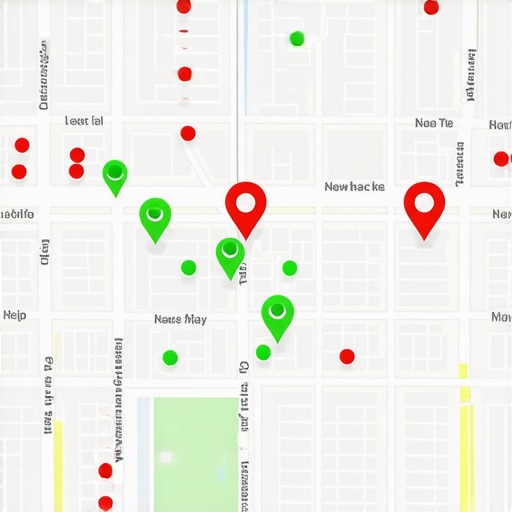
The Next Era of Local Search is Already Here
Looking ahead, I see a massive shift toward ‘conversational’ local search. People are no longer just typing ‘plumber’; they are asking their AI assistants to find ‘a plumber who fixes copper pipes and is available on Saturdays.’ This is why I have started focusing on how to use maps analytics to find your most profitable neighborhoods and tailoring my profile content to those specific pockets. Do not wait for the traffic to drop—audit your storefront for local search signal consistency today. If you want to see how we specifically handle the technical side to stay ahead of these shifts, check out our guide on the specific schema fix that makes Google trust your physical address. Stop guessing and start auditing; your lead flow depends on it.
The Brutal Truths About Digital Reputation I Had to Face
The biggest lesson I learned throughout this ordeal wasn’t about keywords; it was about digital vigilance. First, I realized that visibility is incredibly fragile. You can be at the top one day and ‘closed’ the next if you aren’t using a rank tracker setup that shows real neighborhood proximity. Second, your response time is a ranking signal in itself. I discovered why your review average matters less than your response speed during the height of my crisis—the algorithm rewards active businesses. Finally, never underestimate the damage of a single wrong digit across the web. Sometimes the specific citation fix that reconnected our shop to the 3-pack is as simple as correcting a suite number that a rogue bot scrambled while you weren’t looking.
The Exact Tools That Keep My Business Visible
I no longer trust my gut when it comes to SEO; I trust my data. I highly recommend setting up a citation monitor your secret weapon for local seo success to catch malicious edits before they ever go live. For the daily grind, I rely on maps analytics insights to boost your local map visibility to see where my actual foot traffic is originating. For managing the social proof side of things, I’ve found that review management tools that transform customer feedback into revenue are essential for turning a bad situation into a marketing win. I also regularly consult the research from Sterling Sky and Whitespark, as their real-world testing often reveals glitches before they become widespread problems.
[IMAGE_PLACEHOLDER]
Take Back Control of Your Digital Front Door
Your business is far too important to be left to the whims of a competitor or an automated suggestion. By unlocking the power of local seo software for small business growth, you transition from being a passive observer to being the master of your digital presence. Don’t let a ‘Permanently Closed’ tag or a proximity glitch be the final word for your shop. Start auditing, start monitoring, and keep your digital lights on. Have you ever spotted a ‘suggested edit’ on your profile that you didn’t authorize? How did you handle it? Let me know in the comments below!