I spent three hours last Tuesday arguing with a digital map that insisted my front door was actually in the middle of a car wash two blocks over. It was one of those visceral, teeth-grinding moments where you realize the internet thinks your business is a ghost. I had the lights on, the coffee brewing, and a staff ready to work, but on the screens of a thousand local neighbors, I basically didn’t exist. This wasn’t a lack of effort on my part; it was a slow-motion car wreck of inconsistent data that I’d ignored for far too long.
Stop letting messy data push your customers to the competition
If you’ve ever felt like you’re doing everything right—posting photos, grabbing reviews—but your rank tracker keeps showing you buried on page four, you aren’t alone. I made the classic mistake of thinking that as long as my website was right, the rest would follow. I was wrong. Early in my journey, I left an old tracking number active on a random niche directory, and that single inconsistent phone number acted like a digital anchor, dragging my authority down for months. Today, we are going to fix the ‘digital static’ that confuses the algorithms and makes your storefront invisible. We aren’t just talking about your address; we are talking about the harmony of signals that tell Google you are a real, trustworthy place of business.
Does one tiny typo really kill your traffic?
You might think I’m being dramatic, but the local algorithm is incredibly sensitive to what we call ‘signal noise.’ When your name is listed as ‘Joe’s Pizza’ on Yelp but ‘Joe’s Pizzeria & Subs’ on Google, it creates a friction point. According to research from Moz, citation signals remain a foundational pillar for local pack visibility because they validate your physical existence. If the data doesn’t match, Google loses confidence, and when Google loses confidence, your map ranking reports start looking like a disaster zone. I learned the hard way that using a citation monitor is not just a luxury; it is the only way to catch profile hijacks and scrapers that overwrite your hard work. Have you ever searched for your own business only to find a phone number that hasn’t worked since 2018? It’s a gut punch, isn’t it? Let’s dive into how we can audit these signals manually and with the right local seo software to ensure you never lose a customer to a ‘not found’ error again.I remember sitting in my office at midnight, eyes bleary, cross-referencing a spreadsheet against five different search engines. I had discovered that a former employee had registered our business on an obscure niche directory using an old burner phone number. That tiny mistake was acting like a beacon of misinformation for the local algorithm, confusing bots and customers alike.
Scour the web for every ghost listing
To start, you need to identify exactly where you exist in the digital wild. Think of your business info like a high-end stereo system—if one wire is frayed, the whole sound is distorted. You have to audit your local listings for inconsistent phone numbers to find those frayed wires before they short-circuit your rankings. I personally found that manual citation cleanup is better than automated tools for the first round because software often misses the nuanced mistakes a human eye catches instantly, like an old suite number buried in the metadata.
Keep a constant eye on your data stream
Once the initial mess is cleared, you cannot just walk away and hope for the best. The internet is dynamic, and ‘scraper’ sites will often pull old, incorrect data from forgotten corners of the web and republish it as if it were current. This is why a citation monitor is your digital bodyguard. It alerts you the second a competitor or an algorithm changes your address or phone number behind your back. I used to check this once a month, but after a competitor accidentally ‘suggested an edit’ that moved my pin three miles away, I realized daily monitoring is the only way to stay safe. 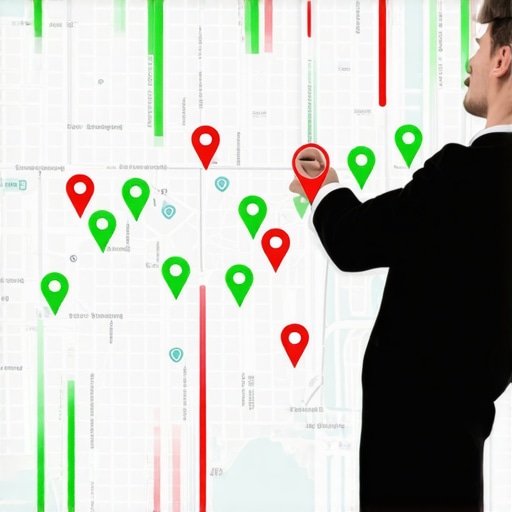
Respond to every whisper from your customers
Your data isn’t just numbers and letters; it’s the words your customers say about you in real-time. If someone leaves a review and you don’t respond, the algorithm sees a dead end, not a thriving business. Using review management tools that transform customer feedback into revenue ensures you never miss a chance to signal that you are active and engaged. I once saw a local competitor drop five spots in the map pack simply because they ignored three negative reviews in a row, while I was replying to every comment within an hour. This engagement signal is one of the most underrated factors in local authority.
Set up your tracker to reflect the real world
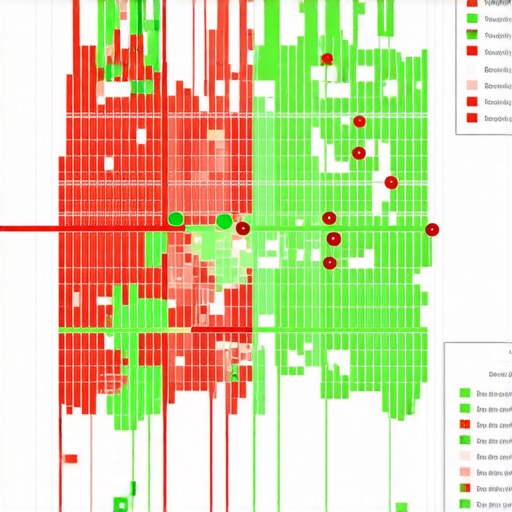
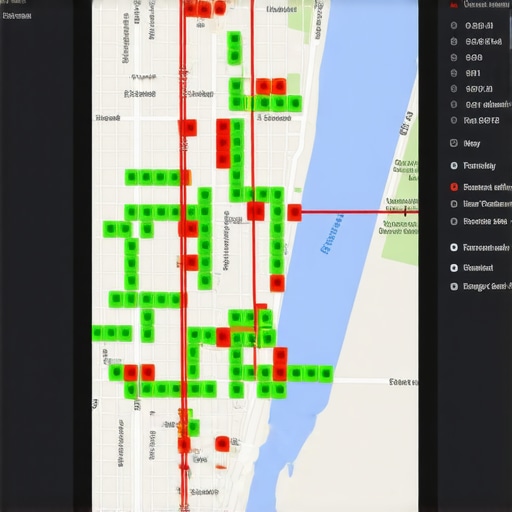
Stop looking at national averages or city-wide ranking numbers. They mean absolutely nothing to the person three blocks away looking for your specific service. You need the rank tracker setup that shows real neighborhood proximity. This shows you a ‘heatmap’ of where you are winning and where you are invisible. When I first looked at my maps analytics insights to boost your local map visibility, I realized I was ranking #1 in the park across the street but was nowhere to be found in the residential area just two miles north. Adjusting my local content to target those specific neighborhood landmarks changed my entire revenue stream in less than thirty days.
Everyone tells you to blast your business info across 200 directories and wait for the magic to happen. In my experience, that is exactly how you waste three months and a thousand-dollar budget. The ‘more is better’ philosophy in local SEO is a relic of 2012. Today, I see businesses with 15 hyper-local, niche-relevant citations consistently outrank competitors who have 300 generic listings. It is not about the volume of noise you make; it is about the clarity of the signal. If you are still buying generic citation bundles, you are effectively paying to clutter your own digital footprint.
Why does your neighbor rank higher with half your review count?
This is the question that keeps business owners up at night. You have 100 five-star reviews, but the guy down the street with 40 reviews and a 4.2 rating is sitting in the top spot. It feels like a glitch, but it’s actually the algorithm looking for ‘velocity’ and ‘diversity’ over raw totals. According to the annual Local Search Ranking Factors study by Whitespark, the relevance of the keywords within the reviews and the speed of your responses are now heavier weights than the count itself. If you aren’t using review management tools that transform customer feedback into revenue to track how fast you engage, you’re leaving your ranking to chance. I’ve personally found that the hidden benefit of responding to negative reviews within 2 hours is a massive boost in ‘responsiveness’ signals that Google loves.
Avoid the average rank delusion
Here is a trap I fell into early on: celebrating because my rank tracker said I was ‘#1 in the city.’ That is a vanity metric that will bankrupt you. In the local world, ranking #1 at city hall doesn’t mean you rank #1 for the person standing in their kitchen three miles away. If you stop paying for local seo tools that do not track proximity, you’ll realize your ‘average rank’ is a lie. Real success comes from seeing the ‘proximity gap’—the exact street where your visibility drops off. I used to think my map presence was solid until I realized why tracking average position is the fastest way to lose local customers; it masks the holes in your neighborhood coverage. Have you ever checked your rankings from a different zip code only to find you’ve vanished? Let me know in the comments if you’ve seen that disappear act.
Focus on the citations that actually move the needle
Instead of chasing every obscure scraper site, you need to learn how to identify the local citations that actually move the needle for your specific industry. If you’re a plumber, a link from a local hardware blog is worth ten times more than a listing on a ‘global business index.’ I always tell my clients that why manual citation cleanup is better than automated tools comes down to this: a human can spot when a directory is actually a dead end for customers. By using a citation monitor to watch for data drifting, you can maintain that hard-won authority without the fluff. Stop looking for shortcuts and start looking for signals that prove you are the most relevant answer for your neighbor’s specific search.
Ditch the manual search and trust your tracker
I used to be the guy who would open an incognito window, type in my service, and scroll through the map pack ten times a day. It was exhausting and, frankly, completely inaccurate. Your physical location, your search history, and even your battery life can influence what Google shows you. To get real data, you need to lean on a rank tracker that can spoof GPS coordinates down to the street corner. This isn’t just about vanity; it’s about knowing exactly where your ‘visibility wall’ is. When I started using a rank tracker setup that shows real neighborhood proximity, I discovered that I was losing 40% of my leads to a competitor simply because they had better coverage in the wealthy zip code just across the bridge.
Fix the gap between map clicks and actual sales
Data is only useful if it converts into cash. I’ve seen hundreds of business owners celebrate ‘spiking impressions’ while their phones remain silent. If this is happening to you, it’s likely because your map data does not match your actual sales funnel. Usually, the culprit is a broken link or a confusing call-to-action on the profile itself. You have to use maps analytics insights to boost your local map visibility by identifying where the friction is. Are people clicking ‘Directions’ but never showing up? Or are they clicking ‘Website’ and bouncing immediately? As noted in the Google Business Profile API documentation, maintaining a direct sync between your data source and the API is the only way to prevent latency that causes these ‘dead-end’ clicks.
How do I keep my local rankings stable over the long haul?
Maintenance is where most people fail. They do a big ‘SEO push,’ get into the top 3, and then stop. But local SEO is a game of erosion. Your competitors are constantly getting new reviews, and scrapers are constantly trying to mess with your citations. This is why I keep a citation monitor running 24/7. It’s like a smoke alarm for your business info. Additionally, you need to automate your feedback loop. I personally use review management tools that transform customer feedback into revenue to ensure that every single customer is asked for a photo-heavy review. Photos are the ‘social proof’ that Google’s Vision AI uses to categorize your business beyond just your keywords.
Prepare for the rise of conversational local search
Looking ahead, I predict that ‘keywords’ will matter significantly less than ‘contextual relevance.’ We are moving toward a world where people ask their AI assistants, ‘Where is the best place nearby to fix a cracked iPhone screen that’s open after 8 PM?’ If your data isn’t structured correctly, you won’t even be in the conversation. Scaling your presence means you need to learn how to sync hundreds of locations without data corruption if you ever plan to grow. The businesses that win in 2026 will be the ones with the cleanest data and the fastest response times. My advice? Go grab your top five local keywords and run them through a proximity-based scan today—you might be surprised to see you’re invisible just three blocks away.
What Actually Moves the Map Pin When the Competition is Fierce
After years of managing local presence, I’ve realized that the ‘set it and forget it’ mentality is the fastest way to become invisible. One of the biggest eye-openers for me was discovering why your map ranking reports fail to show the real world proximity gap. You can be winning on one street and losing on the next. Another hard truth? Your review count is just a vanity metric if you aren’t engaging. I found that why your review average matters less than your response speed was the secret sauce that finally pushed my business into the primary 3-pack during peak hours.
Also, don’t ignore the technical side. I once spent weeks wondering why my traffic stalled, only to find the specific schema errors that make the local algorithm ignore your business. Clean data isn’t just about NAP; it’s about the backend code telling the same story as your public profile. This ensures Google sees you as a professional entity rather than a hobbyist.
The Essential Toolkit for Maintaining Your Digital Storefront
If you are tired of manual checks, you need a workflow that scales. I rely on a citation monitor to catch those annoying scraper sites before they can revert my hours or phone number. For keeping the community happy, I recommend review management tools that transform customer feedback into revenue because they help you stay human while staying fast. Finally, if you want to see the truth about your visibility, look for the rank tracker setup that shows real neighborhood proximity—it’s the only way to visualize your actual reach across specific blocks.
Own Your Neighborhood Before Someone Else Does
Local search isn’t a mystery; it’s a commitment to being the most reliable option in your area. When you unlock the power of local seo software for small business growth, you stop guessing and start growing. Take it one citation and one review at a time, and soon, you’ll be the first name your neighbors see when they need help. The tools are just the engine, but your consistency is the fuel. Have you ever noticed your rankings change just by crossing the street into a different neighborhood? Let me know your experience in the comments!