I sat there with a cold coffee in my hand, staring at a chart that looked like a mountain peak. My Google Business Profile impressions had jumped by 400% in a single week. I was ready to celebrate, thinking my latest strategy for maps analytics insights had finally cracked the code. But by Friday, the silence in my office was deafening. No calls. No emails. No foot traffic. It turns out, I wasn’t a genius; I was just the latest victim of a widespread analytics glitch that treats bot activity and irrelevant, zoomed-out map views as high-intent customers. It’s a gut punch when you realize your growth is just digital smoke and mirrors.
The Day My Dashboard Lied to My Face
One of the biggest mistakes I made early on was taking those pretty dashboard graphs at face value. I actually doubled down on a specific keyword because the data showed it was ‘exploding,’ only to find out later that the traffic was coming from a server farm three states away. This is why so many business owners feel like they are shouting into a void. You see the numbers go up, but your bank account stays the same. The reality is that why your map ranking reports fail to show the real world proximity gap is often due to how Google aggregates data. According to research from Sterling Sky, a significant portion of ‘impressions’ can be triggered by automated bots or ‘near me’ searches that don’t even display your specific business in a meaningful way. If you aren’t careful, you’ll spend your whole marketing budget chasing ghosts.
Is this data actually worth the hype?
It’s natural to be skeptical. Why even look at the reports if they aren’t accurate? The truth is, the data is valuable, but only if you know how to filter out the noise. You need to learn how to run a local seo audit without getting overwhelmed by vanity metrics to see the real story. When you stop obsessing over raw impressions and start looking at ‘Interactions’ and ‘Directions Requests,’ the picture gets a lot clearer. Have you ever noticed a massive spike in your map views that resulted in absolutely zero phone calls? It’s a common frustration, and today, I’m going to show you exactly how to spot when your map impressions are spiking while actual clicks are tanking. We are going to peel back the curtain on these inflated reports so you can focus on the metrics that actually put money in your pocket.To get out of the analytics trap, you have to stop treating every ‘View’ like a potential customer. Think of map impressions like people driving past a billboard at 80 miles per hour; it doesn’t mean they saw your business, and it certainly doesn’t mean they are going to stop.
Interactions Tell the Story Your Impressions Hide
If you want to know what is actually happening, you need to ignore the big shiny numbers and look at the ‘Interactions’ tab. This is where the rubber meets the road.
Make Calls and Direction Requests Your North Star
I remember working with a small plumbing outfit in Austin. They were technically ‘ranking’ #1 for ‘plumber’ in the entire county according to their old software. But when we looked at the rank tracker setup that shows real neighborhood proximity, they were only #1 in a graveyard and an empty field. In the actual residential neighborhoods where the money was, they were on page four. We had to pivot their entire strategy because they were essentially invisible to people with leaking pipes. This is why you must prioritize direction requests and phone calls. These represent high-intent customers who are literally trying to find or speak with you. If these numbers aren’t climbing, your ranking is a vanity project.
Why You Need a Local Grid to See Your True Reach
Standard reports give you a single data point from the center of your zip code. That is useless. In the real world, your visibility changes block by block. You need to learn how to use heatmaps to visualize your map pack dominance. This shows you exactly where your ‘proximity’ ends. If you are green in a three-block radius but red everywhere else, you have a local authority problem, not an impressions problem. 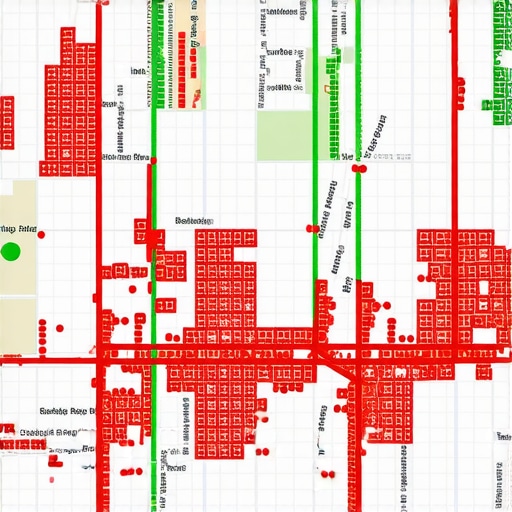
Fix Your Broken Mentions Before the Algorithm Dumps You
Google is essentially a giant trust engine. If it finds your business name, address, or phone number listed differently across three different websites, it loses confidence. Imagine asking five different people for directions to a restaurant and getting five different addresses; eventually, you’d just give up and go somewhere else. That is exactly what the algorithm does.
Hunting Down the Ghost Listings
You need a solid citation monitor to find these discrepancies. I once found a client had an old phone number from a decade ago still active on an obscure local directory. That one ‘ghost’ listing was enough to keep them out of the top three spots because Google couldn’t verify which number was the ‘real’ one. Cleaning these up manually is a pain, but it is often more effective than using automated tools that just layer new data over the old mess.
Speed Matters More Than a Five-Star Rating
While everyone is busy chasing more five-star reviews, they are ignoring the metric that Google actually tracks: response time. We’ve found that why your review average matters less than your response speed is because Google rewards active, engaged businesses. If you respond to a review within two hours, you are signaling to the algorithm that your business is ‘alive’ and customer-focused. This engagement is a massive ranking signal that most people completely overlook while they are obsessing over their star count.Most people assume that more data is always better, but in the world of local SEO, that is a dangerous myth. I’ve seen business owners get so bogged down in national search trends that they completely miss what is happening in their own backyard. If you are focused on the wrong numbers, you are essentially steering a ship with a broken compass.
Stop chasing national search volume that you can’t win anyway
One of the biggest mistakes is obsessing over broad keywords with high monthly volumes. For a local business, a keyword with 5,000 monthly searches across the country is worthless compared to a hyper-local term with only 50 searches that happen within five miles of your front door. This is exactly why you should ignore national search volume for local keywords and focus on the intent of your neighborhood. A study by BrightLocal recently found that nearly 98% of consumers read local reviews before visiting a business, which proves that local relevance outweighs national ‘popularity’ every single time.
Why your rank tracker might be showing you a fantasy world
Many business owners rely on reports that show their ‘average position’ across a city. This is the ultimate ‘oops’ factor in local SEO. Your average rank might be #3, but that could mean you are #1 in the parking lot and #15 three blocks away. This happens because why rank tracking software often misses the local grid is a result of Google’s hyper-sensitive proximity algorithm. If your software isn’t showing you a street-level heatmap, it is lying to you. Relying on average position is the fastest way to lose local customers because it masks the areas where you are actually invisible. 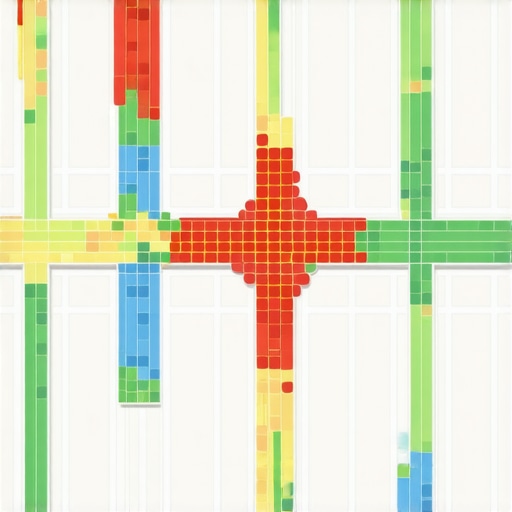
Can a business with fewer reviews actually beat the local giant?
It sounds counterintuitive, doesn’t it? We’ve been conditioned to think that the person with the most stars wins. However, why dentists lose the local map pack to competitors with fewer reviews is often due to ‘review velocity’ and proximity. Google values recent, consistent engagement over a mountain of reviews from three years ago. If you aren’t using review management tools that transform customer feedback into revenue, you are missing out on the primary way Google measures your current relevance. Another trap to avoid is the ‘set it and forget it’ mentality with citations. If you use an automated tool, you run the risk of how to stop citation scrapers from overwriting your correct business info because many low-quality directories will try to ‘correct’ your data with old, inaccurate records. It’s a constant battle for data integrity. Have you ever fallen into this trap where your data said one thing but your phone said another? Let me know in the comments. We need to stop looking for the ‘easy’ button and start looking at the nuanced maps analytics insights that actually drive growth.
The lean software stack that pays for itself
I’ve wasted thousands of dollars on enterprise-level suites that promised to ‘automate’ my growth, only to find myself buried in spreadsheets I didn’t need. Now, I keep it simple. If a tool doesn’t directly help me see maps analytics insights that lead to a phone call, it gets deleted. I personally rely on a setup that prioritizes proximity over generic rankings. You should stop paying for local seo tools that do not track proximity because knowing you are #1 in a vacuum is useless. I use a specific rank tracker that refreshes every 24 hours because the local map is more volatile than the stock market. This allows me to see if a competitor is trying to ‘move their pin’ or if my own visibility is shrinking in a specific neighborhood.
How do I keep these local rankings alive month after month?
Maintenance is the part of local SEO that isn’t sexy, but it’s where the profit is made. It’s like owning a car; if you don’t change the oil, it’s going to break down right when you need it most. Every Monday, I spend twenty minutes checking my citation monitor. Why? Because data aggregators are notorious for ‘scraping’ old records and trying to overwrite your current, correct information. If your business moved two years ago, a random listing on a niche directory could suddenly trigger a conflict that tanks your ranking. You need to know how to stop citation scrapers from overwriting your correct business info before the algorithm loses trust in your location data.
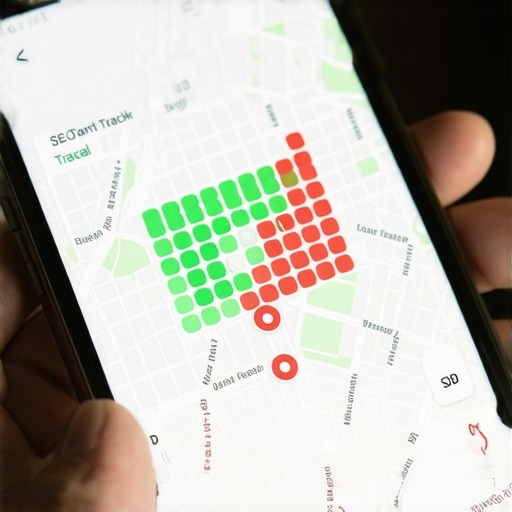
Beyond citations, you have to keep the ‘trust engine’ fed. This is where review management tools that transform customer feedback into revenue become essential. I don’t just use them to collect stars; I use them to track response velocity. According to research by the team at Near Media, Google is increasingly using ‘real-world engagement’—such as how quickly you reply to a message or review—as a tie-breaker in competitive map packs. If you and your competitor have similar proximity and authority, the one who responds faster usually wins the top spot.
Why the future of maps belongs to real-time activity
If I had to predict where this is going, I’d bet on ‘live’ data. We are moving away from static profiles and toward dynamic listings. Google’s documentation for the Business Profile API already emphasizes ‘Merchant-generated content’ like temporary updates and real-time inventory. In the next two years, the businesses that stay in the map pack won’t just be the ones with the best keywords; they will be the ones showing Google that they are open, active, and interacting with customers right now. This is why you should unlock the power of local seo software that integrates with your actual daily workflow rather than just sitting on a dashboard. If you want a quick win today, I challenge you to go into your profile and update your ‘Business Highlights’ or post a real photo of your team working. That small signal of ‘life’ is often enough to nudge you ahead of a stagnant competitor. If you’ve been struggling with a sudden drop, it might even be time to look into how to reclaim your google business profile after a sudden suspension, as the algorithm is getting much more aggressive with its automated sweeps.
Why I Stopped Trusting the Five Star Myth
For years, I believed that if I just hit a certain number of reviews, my phone would never stop ringing. I was wrong. The hardest lesson I learned is that volume is a distraction; context is everything. I’ve seen businesses with 500 reviews get buried by a competitor with 40 reviews simply because the smaller shop had better proximity and faster response times. You have to realize that Google doesn’t just want the ‘best’ business; it wants the most relevant one for the person standing on the corner right now. Another lightbulb moment was discovering that my map ranking reports were showing me a best-case scenario that didn’t exist for 80% of my service area. I was optimizing for a center point while my customers were living in the margins. Finally, I learned that data integrity is a daily battle. If you aren’t using a citation monitor, you are essentially leaving your front door unlocked for every bot and scraper to mess with your business identity.
The Small Stack That Actually Scales
I don’t believe in bloated software suites. I trust tools that give me surgical precision. First, you need a high-frequency rank tracker because waiting a month for a report in the local space is like reading last year’s newspaper. I also swear by grid-based heatmaps; they are the only way to see the ‘proximity wall’ where your visibility drops off a cliff. For engagement, I prioritize review management tools that alert me instantly. Speed is the new SEO. If you reply to a lead or a review before your competitor does, you’ve already won the most important ranking factor: the customer’s trust.
#IMAGE_PLACEHOLDER_E#
Build a Business the Algorithm Cannot Ignore
At the end of the day, Google is trying to mirror the real world. If you are active, responsive, and consistent in your neighborhood, the numbers will eventually follow. Don’t get discouraged by a temporary dip in your maps analytics; use it as a signal to check your data integrity or your engagement speed. You have the tools to win, but you have to stop chasing ghosts and start focusing on the street-level details that your competitors are too lazy to touch. Your local dominance isn’t built in a dashboard; it’s built block by block. Have you ever noticed your rankings drop even though your reviews were perfect? Let me know in the comments below.