I still remember the cold sweat I broke into three years ago. I was sipping my morning coffee, feeling pretty good about my shop’s ranking, when I opened my dashboard. There it was. A string of three one-star reviews, all posted within ten minutes of each other. The “customers” had names like “User123” and “Xyzzy,” and they complained about a rude receptionist. Problem is, I don’t even have a receptionist. I felt a mix of rage and total helplessness. I’d spent years building my reputation, and in one cup of coffee, it felt like it was all going down the drain.
Your local reputation is more fragile than you think
If you’ve been there, you know that fake reviews aren’t just a nuisance. They are a direct attack on your livelihood. Early in my journey, I made the classic mistake of thinking I could just ignore them. I figured the “real” customers would see through the noise. I was wrong. I even tried to buy a “reputation cleanup” service from a random guy on a forum once. It was a $200 lesson in what not to do. He just made things worse by creating more footprints that looked suspicious to the algorithm. The local seo software I was using at the time started showing a terrifying trend: my click-through rate was plummeting.
Even though my rank tracker still showed me in the top three, people were choosing the guy below me because my profile looked like a war zone. According to a study by BrightLocal, 81% of consumers say they check Google Reviews for local businesses. That is a massive number. If those four out of five people see a “pattern of failure”—even a fake one—they won’t bother to call. They just move on to the next pin on the map. This is why you need to be proactive. I learned the hard way that review management tools are your first line of defense when the trolls come knocking.
Is it actually worth the stress of fighting back?
I get the skepticism. You’re busy running a business, not playing digital detective. You might wonder if it’s better to just let it go. But let me tell you, when you spot the review patterns that flag a targeted reputation attack, you gain the power to strike back. I once saw a competitor try to sabotage my local rankings by flooding my profile with nonsense. If I hadn’t been watching my maps analytics, I would have lost thousands in potential leads that month. Have you ever had a competitor try to sabotage your map pin with a wave of fake accounts? It’s a lonely feeling, but I promise you don’t have to just take it.
Stop the bleed before the algorithm penalizes your silence
The biggest lie we’re told is that Google’s AI will automatically catch the fakes. It doesn’t. Not always. In fact, if you don’t respond or flag them correctly, the algorithm might actually think those reviews are legitimate reflections of a poor customer experience. I used to spend hours manually checking every directory, but now I know a citation monitor is much more efficient at catching the inconsistencies that often accompany these attacks. Today, I’m going to show you exactly how to identify these “phantom” reviewers so you can protect your local authority and keep your lead flow healthy.
Hunt for the digital fingerprints left by ghosts
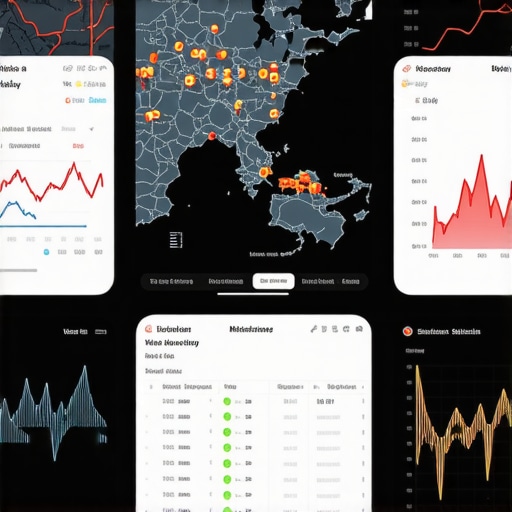
Identifying a fake review isn’t just about spotting typos or angry emojis; it’s about reading the digital trail. When I was hit with that wave of reviews, I dove into my maps analytics to see where the traffic was coming from. In a normal month, my views are hyper-local. But during the attack, I saw a spike in profile views originating from a server farm three states away. It was a clear red flag. You have to look for the hidden review patterns that signal a targeted reputation attack, such as multiple accounts posting within minutes or profiles with zero previous activity suddenly becoming very vocal about your business. Think of your analytics like a heart rate monitor; when the pulse jumps for no reason, someone is likely trying to game the system.
Use your NAP data as a lie detector
Your next move is to use a citation monitor trick to find every mention of your brand across the web. Why? Because trolls often post the same fake story on Yelp, Facebook, and niche directories simultaneously to overwhelm you. If the details they mention don’t match your actual business flow—or if they use an outdated address—Google’s algorithm starts to see the inconsistency. I once spent three days cleaning up citation errors that confuse google because a competitor had suggested edits to my business info right before the review bomb. It was a coordinated strike designed to make my business look illegitimate. By keeping your data identical across all platforms, you make it much harder for these fake claims to stick.
Fight back with data instead of emotion
It is incredibly tempting to reply to a fake reviewer with all the fire in your soul, but that is a trap. Instead, lean on modern management tools to filter out competitor review sabotage. These tools provide the timestamps and data logs you need when filing a formal removal request. I have found that the hidden benefit of responding to negative reviews within 2 hours is that it signals to Google you are a high-engagement, legitimate business. For the fakes, keep it surgical: We have no record of a customer by this name or this interaction. This response is not for the troll; it is for the real customers reading and the Google manual reviewer who will eventually look at your flag.
Stay ahead of the dip with proactive monitoring
While your rank tracker might show a temporary dip from the rating hit, the engagement of you fighting back and flagging content actually helps stabilize your visibility. I remember watching my pins drop from the top spot to the seventh in a single afternoon. It felt like my phone stopped ringing instantly. But by documenting the spike in local seo software and showing that the reviewers had never even been in my physical proximity, I was able to get four of the five reviews removed within a week. You are a business owner, not a punching bag, and your data is the shield that keeps your reputation intact.
Let’s dig deeper into the data because most business owners are looking at the wrong scoreboard. Everyone tells you that getting to the top of the map pack is the ultimate goal, but I’ve seen businesses with #1 rankings go bankrupt while the guy at #4 buys a second vacation home. The industry-wide obsession with “average rank” is a trap. In my experience, why tracking average rankings is the fastest way to lose local leads boils down to the proximity gap. Google doesn’t show the same results to a person standing in your lobby as it does to someone three blocks away. If your rank tracker isn’t showing you a grid of your neighborhood, it’s feeding you vanity metrics that don’t reflect your actual reach.
Your rank tracker might be feeding you vanity metrics
The contrarian truth is that a high ranking is useless if it’s not happening where the money is. I’ve audited dozens of profiles where the owner was thrilled with a “Green” report, but their maps analytics showed zero phone calls. This happens because of the proximity paradox: the tighter Google’s radius gets, the more your “average” rank becomes an irrelevant mathematical mean. You need to stop celebrating a #1 spot that only exists in a 500-foot radius around your front door. Have you ever fallen into this trap? Let me know in the comments.
The automated citation trap you need to escape
Here is a specific warning for anyone using those “sync and forget” services. We’ve been conditioned to think that more citations are always better. That is a dangerous mistake. I’ve found that why manual citation cleanup is better than automated tools often comes down to “scraper loops.” Automated tools often fail to kill duplicate listings; they just layer new data on top of old errors. Even worse, you need to know how to stop citation scrapers from overwriting your correct business info, or you’ll find your address reverting to a 5-year-old location every Tuesday. This creates a “data fog” that confuses the algorithm and kills your local authority.

Why does that abandoned profile three blocks away still outrank you?
It’s the question that keeps local business owners up at night. You have 200 five-star reviews, and a competitor with a grainy photo and zero reviews is sitting in the top spot. According to the Whitespark Local Search Ranking Factors report, while reviews are massive, they aren’t the only engine. Often, that abandoned profile is winning because of the authority signals most local seo software overlooks, such as historical click-through data or niche-specific directory relevance. Furthermore, why most review management tools fail to catch the one metric that matters is that they ignore the *velocity* and *sentiment keywords* within the text, focusing only on the star count. Google’s AI is reading the actual words your customers use to see if you’re a match for the searcher’s intent, not just a high-rated shop. To win, you have to move past the basics and start managing your digital footprint with surgical precision.
The local SEO checklist I run every Monday morning
Once you’ve cleared the immediate fire of fake reviews, the real work begins: maintaining that hard-earned territory. I’ve seen too many business owners treat their map presence like a trophy they won once, only to find it covered in dust and dropped to page two three months later. To stay on top, I rely on a specific stack of local seo software that goes beyond surface-level reporting. Every Monday, I spend exactly thirty minutes looking at my ‘proximity spread.’ I don’t care if I’m #1 at my desk; I care if I’m #1 at the coffee shop three miles south where my target demographic actually lives. This is where a rank tracker becomes more than a luxury—it becomes your early warning system.
How do I keep my map rankings stable for the long haul?
Stability comes from consistent, clean data signals. If you let your citation monitor go dark for a few months, I guarantee you’ll find a dozen ‘zombie’ listings with your old phone number or a misspelled suite number. These small errors erode your authority. I personally check my maps analytics to ensure my ‘Search to Lead’ ratio is holding steady. If impressions are up but calls are down, it usually means a competitor has updated their photos or added a more compelling offer. You have to be the shark that never stops swimming. Google’s own Search Quality Evaluator Guidelines emphasize that for local businesses, even a handful of ‘unreliable’ reputation signals can lead to a downgrade in your trustworthiness score.
Ditch the generic reports for a proximity-based rank tracker
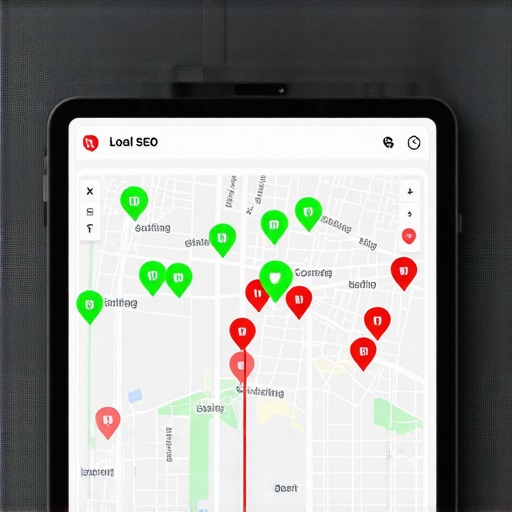
The most common mistake I see is relying on ‘average position’ reports. As I’ve mentioned before, why tracking average rankings is the fastest way to lose local leads is because it hides the holes in your coverage. I prefer using the rank tracker setup that shows real neighborhood proximity via a grid overlay. This tells me exactly where my ‘influence’ ends. When I see the rankings turn from green to red at a specific intersection, I know that’s where I need to focus my next local content push or review acquisition campaign. It’s surgical, not a shotgun approach.
AI and the future of local discovery
Looking ahead, the trend is moving toward ‘Review Sentiment Search.’ We are already seeing Google’s AI pull specific snippets from reviews to answer highly specific queries like ‘best gluten-free pizza near me that delivers late.’ This makes your review management tools even more critical. It’s no longer just about the 5-star rating; it’s about the keywords your customers are naturally using in their feedback. In the next two years, I predict that ‘Search Generative Experience’ (SGE) will prioritize profiles that have the most high-context, conversational reviews over those with just a high volume of generic ‘Great service!’ posts.
If you want to stay ahead of this curve, try this advanced tip today: Next time you respond to a positive review, don’t just say ‘Thanks!’ Instead, mention a specific service and the neighborhood you performed it in—something like, ‘It was a pleasure helping with your HVAC repair in the West End!’ This reinforces your proximity and service relevance simultaneously. If you’re feeling overwhelmed by the technical side of this, you can always contact us for a deep dive into your specific map data. Keeping your business on the map is a marathon, not a sprint, and having the right tools makes the miles much easier to handle.
Why Data Always Beats My Gut Feeling When Trolls Attack
After years of fighting digital fires, I realized that a single star doesn’t define your business—your response to it does. I stopped obsessing over the bad actors and started focusing on the objective patterns. I learned that your maps analytics tell a much deeper story than a comment section ever could. If you see a weird surge in traffic from a location where you don’t even have customers, you’ve found your culprit. Also, never underestimate the power of citation monitor alerts; they are the smoke detectors for your brand’s digital health. I also learned that the hidden review patterns that signal a targeted reputation attack are often visible long before the first rating drops if you are watching the right signals.
My Daily Stack for Maintaining a Clean Digital Footprint
I don’t believe in ‘set it and forget it’ systems, but I do trust tools that give me manual control and clear visibility. I rely heavily on local seo software that visualizes the map pack as a grid, providing a real-world view of my influence. I also keep a close eye on review management tools that alert me the second a new comment goes live. Why? Because speed is your greatest weapon against a reputation attack. If you catch it early, you can filter out competitor review sabotage before it impacts your lead flow or your general local authority.
Own Your Local Territory Before Someone Else Does
Your business is more than just a pin on a screen; it’s a reflection of your hard work and dedication. Don’t let a few bad actors or a messy rank tracker report discourage you from showing up every day. You now have the blueprints to defend your reputation and dominate your local neighborhood using the rank tracker setup that shows real neighborhood proximity. The algorithm is constantly evolving, but the need for authentic, reliable local data never changes. Stay vigilant, keep your data clean, and watch your local authority grow. If you ever feel like you’re losing the battle, feel free to contact us to get your map presence back on the right path. Have you ever dealt with a review that was clearly fake? Let me know in the comments below!