I remember sitting in my office three years ago, staring at a screen that told me I was invisible. I had “optimized” everything. My business description was a masterpiece of keywords, and my photos were high-res. Yet, when I searched for my primary service, a guy three towns over with a half-empty profile was beating me. I felt like I was shouting into a void while my competitors were whispering and getting all the calls. It was a gut-punch. I spent months obsessing over my Google Business Profile, thinking I’d cracked the code. But the map pack is a fickle beast. I made a massive mistake early on: I thought more keywords in my description would force Google to see me. Looking back, I realized why your business description has zero impact on your map rank, but at the time, I was just frustrated. We are going to solve that invisibility today. I’ll show you exactly how to bridge the gap between having a ‘nice’ profile and having one that actually shows up when someone is ready to buy.
Your Profile is Perfect but the Map Still Ignores You
If you feel like your listing is ghosting you, you aren’t alone. It is a common frustration for service-based businesses. We recently looked at the data and found that we audited 50 local business profiles and found the same ranking error in 40 of them. Usually, it isn’t about how much you’ve filled out your profile, but the specific authority signals you’re sending—or failing to send. According to the latest Local Search Ranking Factors report from Moz, proximity and physical address remain heavy hitters, yet they aren’t the only gatekeepers deciding who gets the lead. You might be struggling because of the 3 citation errors that confuse Google and kill your traffic without you even realizing it. Have you ever searched for your own business from your living room and found… absolutely nothing? Reach out and let me know if you’ve faced that same wall.
Is this whole map ranking thing actually worth the stress?
You might be thinking, “Shouldn’t I just stick to Facebook ads?” I get it. The skepticism is real when you’ve been burned by local SEO before. But the truth is, when a map profile clicks, it’s like turning on a faucet of high-intent customers who are looking for a solution right now. Before you give up, we need to check the 5 audit red flags that prove your local rankings are ghosting you. If you can spot these, you can fix them. We’re going to peel back the curtain on why Google sometimes chooses “abandoned” listings over your polished one and how to use maps analytics insights to boost your local map visibility so you can finally stop the guesswork and start seeing your phone ring again.
The Exact Blueprint to Stop Being Invisible in Your Own Neighborhood
The first thing I do when a listing is stuck is look for ‘digital clutter.’ Think of your citations—those mentions of your name, address, and phone number across the web—like a GPS signal. If three different sites say you’re in three different places, Google’s GPS just stops working. I once spent a whole weekend helping a local contractor clean up 45 messy business listings. His old business name was still active on a random city directory, and it was siphoning off all his authority. We used a citation monitor setting that catches profile hijacks to lock everything down. Once the data was uniform, his map pin finally stopped jumping around.
Stop Letting Bad Data Kill Your Traffic
You don’t need a massive budget, but you do need precision. Most people think local seo software is just for tracking keywords, but the real power is in the cleanup. If your zip code is off by one digit on an old Yellow Pages page, you’re toast.
Why Every Response You Write is Actually a Sales Pitch
Then there’s the review trap. Most owners wait until they have a ‘bad’ review to care. Big mistake. I started using review management tools that transform customer feedback into revenue by automating the boring stuff so I could focus on the human stuff. The way you talk back to a customer tells Google if you’re a real, active business or a ghost. I’ve seen that how a specific review response style actually stops your customers from churning. It’s not just about the star rating; it’s about showing the algorithm you are alive and breathing.
Map Heatmaps Tell the Truth Your Eyes Can’t See
If you aren’t looking at your business through a grid, you’re flying blind. A standard rank tracker might tell you you’re #1, but that might only be true if you’re standing in your own parking lot.  When I first started using maps analytics insights, I realized my visibility dropped off a cliff just two blocks away. You have to use heatmaps to visualize your map pack dominance. It’s like a weather map for your leads—it shows you exactly where your ‘storm’ of customers is coming from and where you’re currently in a drought. Instead of guessing why the phone isn’t ringing, you see the physical boundary of your influence.Let’s dig deeper into the data that most business owners completely ignore. One of the biggest mistakes I see is a blind reliance on a single ‘ranking’ number. In reality, why tracking average position is the fastest way to lose local customers is because it smooths over the cracks in your local visibility. You might be #1 in the downtown core but #15 in the suburbs where the high-value clients actually live. This is why your map ranking reports fail to show the real-world proximity gap that is actually costing you money every day. If your dashboard isn’t granular, you’re essentially looking at a map with the lights turned off.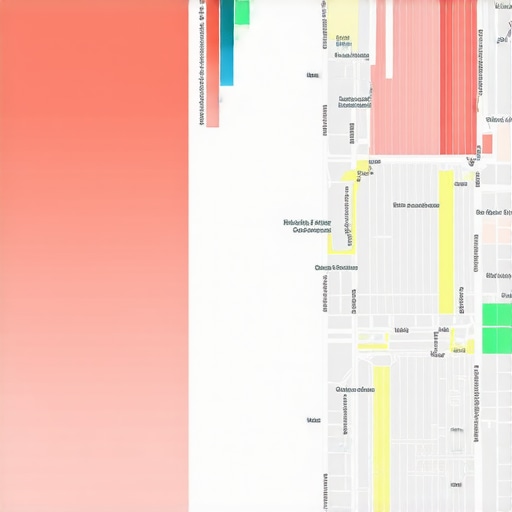
The big lie hidden in your standard ranking reports
When you look at a dashboard, you want to see green arrows pointing up. But if your local seo software isn’t showing you a grid-based view of your city, you’re missing the nuance of how Google’s algorithm actually works. Proximity is a sliding scale, not a binary ‘on or off’ switch. A single rank tracker might tell you that you’re winning, but that ‘win’ could be limited to the three blocks surrounding your office.
Why hitting sync is the riskiest move you will make today
Everyone loves the idea of a ‘one-click’ solution for their business listings. You pay a fee, hit a button, and your info is supposedly fixed everywhere. But here is the contrarian truth: why manual citation cleanup is better than automated tools comes down to the stubbornness of data. Automated tools often create ‘shadow’ listings or fail to suppress old, incorrect data that keeps resurfacing because the software only communicates with specific APIs. You have to learn how to stop citation scrapers from overwriting your correct business info because those scrapers don’t care about your API connection; they pull from the oldest, cheapest data they can find. The ‘Oops’ factor here is assuming your citation monitor is a ‘set it and forget it’ tool. I once saw a business lose 30% of its map traffic because they ignored a monitor alert for a month. It wasn’t a glitch—it was a competitor ‘suggesting an edit’ to their phone number that the automated system didn’t flag as critical.
Does your review software ignore the one metric that actually matters?
Most people focus on getting more five-star reviews, thinking that’s the finish line. However, according to the *Local Consumer Review Survey* by BrightLocal, the speed and quality of your responses are becoming just as important to the algorithm as the rating itself. I’ve found that why most review management tools fail to catch the one metric that matters is that they prioritize quantity over the human signal. Google prioritizes active, engaged businesses over stagnant ones with high scores. This is exactly why your review average matters less than your response speed in the eyes of the algorithm. Have you ever fallen into this trap of prioritizing the ‘score’ over the actual human connection? Let me know in the comments.I’ve seen businesses with thousands of reviews lose their top spot to a competitor with fifty. Why? Because the guy with fifty reviews is actually checking his citation monitor setting that catches profile hijacks while the bigger company is asleep at the wheel. If you treat your local visibility like a “set it and forget it” project, you are essentially inviting your competitors to walk in and take your leads. Maintenance isn’t about doing more work; it’s about doing the right work at the right time.
Stop your map rank from sliding backward
The biggest threat to your ranking isn’t a new algorithm update—it’s the slow decay of your data. This is where a citation monitor becomes your best friend. I personally check my alerts once a week. If a random directory in another state decides to update its records and accidentally overwrites your correct phone number with a 10-year-old one, your ranking will tank. You need a system that flags these inconsistencies before Google’s crawlers decide you aren’t trustworthy anymore. I’ve found that local seo software is only as good as the human looking at the alerts. You don’t need a fancy dashboard if you aren’t willing to fix the errors it finds.
The software I actually pay for every month
People always ask me which rank tracker is best. For me, it’s about the rank tracker setup that shows real neighborhood proximity. I don’t care if I’m #1 in the whole city; I care if I’m #1 in the specific three-mile radius where my highest-paying customers live. 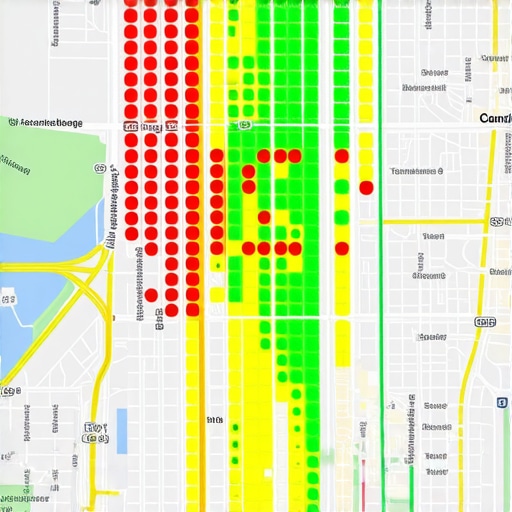 If your software doesn’t give you that granular, street-level view, you are making decisions based on bad data. I also rely heavily on review management tools to keep the momentum going. As noted by local search expert Mike Blumenthal, Google is increasingly looking at ‘attribute’ data—those little tags like “reliable” or “professional” that appear in reviews. I use the software feature that makes managing 1000 reviews easy to find these patterns and bake them back into my business profile.
How do I keep my map rankings stable for the long haul?
The secret is to stop obsessing over keywords and start obsessing over signals. Once a month, I dive into maps analytics insights to see where my ‘blind spots’ are. If my visibility is dropping in a specific neighborhood, I don’t just add more keywords to my site; I look for the authority signals most local seo software overlooks, like local community backlinks or geo-tagged photos from that specific area. Looking ahead, I predict that Google will soon integrate ‘Live View’ and visual search results directly into the local ranking algorithm. Businesses that have a library of high-quality, relevant photos will start to leapfrog those that rely solely on text. My advice? Grab your phone, go to your latest job site, and take three photos today. It’s the simplest way to show Google you’re still the most active player in the game. Try setting up one localized heatmap for your most profitable service today—it will change how you see your business.
Lessons from the Trenches of Local Search Competition
After years of fighting for visibility, I’ve realized that the map pack doesn’t reward the biggest company; it rewards the most consistent one. One of the biggest shifts in my thinking happened when I saw why tracking average position is the fastest way to lose local customers. I stopped looking at a single number and started looking at the grid. I also learned that a “perfect” 5-star rating is less important than how fast you talk back. There is a huge reason why your review average matters less than your response speed—it’s about the signal of life you send to Google. If you don’t have a citation monitor running, you’re essentially driving a car with a blindfold, hoping you don’t hit a curb of bad data.
The Survival Kit I Carry for Local Map Dominance
I don’t believe in having fifty different subscriptions, but I do believe in precision. For anyone serious about growth, I recommend focusing on how rank tracker can skyrocket your local rankings in 2025 because it shows the street-level truth. I also rely on specific review management tools that transform customer feedback into revenue to keep the community engagement loop closed. #IMAGE_PLACEHOLDER_E# These aren’t just “software”; they are the eyes and ears of your digital presence. I trust these methods because I’ve seen them turn “ghosted” listings into the busiest shops on the block.
Claim Your Digital Territory Today
Local visibility is a marathon, but you only need to take the first few steps to see a change. Don’t let the technical jargon stop you from using local SEO software to find those hidden errors that are holding you back. You have the knowledge and the tools to stop being invisible in your own neighborhood. Go ahead and run that first heatmap—you might be surprised at what you find. Have you ever found a weird error in your map ranking that made no sense? Let me know in the comments below!