I will never forget the sinking feeling in my gut when I realized I had spent six months building a business on a foundation of sand. I had set up a P.O. Box at the local post office, thinking I was being smart and keeping my home life private. I figured, ‘Hey, it is a real address, right?’ Wrong. I was constantly checking my phone to see if I had finally cracked the top three, but I was nowhere to be found. If you have ever wondered how to monitor ranking flux without checking your phone every hour, you know the anxiety of seeing a big fat zero where your business name should be. I made the classic mistake of thinking Google would treat my mailbox like a storefront. It did not. I was effectively a ghost in my own town. Today, I am going to show you exactly why that ‘convenient’ mailbox is actually a wall between you and your customers, and how you can fix your address situation without compromising your privacy.
Google Maps Needs to Know You Actually Exist
The harsh reality is that the local algorithm is designed to connect people with physical locations they can actually visit. When I used that P.O. Box, I was essentially telling the world that my business did not have a front door. I thought I was following the rules, but I completely missed the fact that your listing optimization is useless if you miss this address formatting rule. Google is incredibly strict about this; according to their official guidelines, any business address that is a P.O. Box or a mailbox in a remote location is ineligible for a profile. I learned the hard way that trying to take a shortcut here does not just slow you down—it disqualifies you from the race entirely. If you are not appearing in the local pack, you might want to look at maps analytics insights to boost your local map visibility to see just how much traffic you are leaving on the table.
Is a virtual office actually worth the extra cost?
I know what you are thinking because I thought it too: ‘But I do not want strangers showing up at my house!’ It is a valid fear. You might be tempted to look into virtual offices as a middle ground, but even those can be a minefield. Before you sign a lease for a ‘virtual’ suite, you need to check if those addresses are already flagged by Google as ‘spammy’ coworking hubs. I remember thinking I could outsmart the system with a cheap virtual suite, only to find out that 50 other ‘businesses’ were using the same suite number. It was a mess. Have you ever had your business profile suspended or hidden because of an address issue? It is a nightmare, but we can wake up from it together by using a citation monitor to keep your data clean and honest.
Trade your ghost mailbox for a legitimate street presence
The first thing I did after my P.O. Box disaster was stop pretending. If you are a service-based business, Google actually allows you to hide your home address, but you must use a real residential or commercial location during the verification phase. I have seen too many people try to ‘re-verify’ with another mailbox service, and it never ends well. You need to know how to re-verify your business without the snail mail wait to get back in the game quickly. I once tried to ‘hack’ this by using a neighbor’s business address, and Google caught on within 48 hours. Don’t be like me. Use your actual home address and select the ‘I serve customers at their locations’ option. It is the safest way to stay in Google’s good graces while keeping your privacy intact. Google views your address like a passport; if the stamps don’t match your story, you aren’t crossing the border into the local pack.
The manual scrub that saves your reputation
Once your address is corrected in your Google Business Profile, the real work begins. Your old P.O. Box is likely still haunting you on Yelp, Yellow Pages, and random local directories. Think of these like digital breadcrumbs; if Google follows them and finds a dead end, it loses trust in you. I remember a specific project where we had to clean up 45 messy business listings without buying another subscription. It felt like weeding a garden that had not been touched in a decade. You have to hunt down every instance of that old address and update it manually or via direct outreach. When I was dealing with those 45 messy listings, I realized that many directories actually ‘scrape’ each other. If you leave one bad address out there, it can replicate like a virus. This is why a citation monitor is non-negotiable. 
Track your new proximity across every neighborhood
After the cleanup, you need to see if the medicine is actually working. Most people check their rankings from their office and think they are winning, but that is a trap because proximity is a moving target. I started using a rank tracker setup that shows real neighborhood proximity to see exactly where my visibility dropped off. I once worked with a landscaper who could not understand why his phone stopped ringing in the high-end part of town. After we set up the right tracking, we saw a literal wall in the data. He had an old listing for a defunct ‘office’ right on the border of that neighborhood that was cannibalizing his main profile. By identifying this gap and using how to wipe out duplicate listings without overpaying for citation cleanup services, we finally stabilized his map pin. It is like having a sonar system for your business; you can see the obstacles in the water before you crash into them. You want to see your local authority expand outward in concentric circles, not just stay a tiny dot on a map that nobody can find.Don’t trust every number your dashboard spits out. Most business owners get blinded by green arrows and ‘average rank’ metrics, but I have learned that why tracking average position is the fastest way to lose local customers is the most overlooked truth in the industry. An ‘average’ rank of 3.5 does not mean you are winning; it often means you are #1 at your front door and #20 just two miles away. In my experience, chasing a city-wide average is like trying to average the weather in a mountain range—it tells you nothing about where you actually need a coat. Have you ever fallen into this trap of trusting the ‘green’ without looking at the map? Let me know in the comments.
Why does your map visibility drop off so suddenly at the town border?
This is the ‘Proximity Paradox’ that leaves even seasoned pros scratching their heads. You can have a perfect profile, yet the algorithm treats a river or a highway like an invisible wall. According to the Whitespark Local Search Ranking Factors study, proximity to the searcher remains a top-tier signal, but it is often manipulated by the density of your competitors and your own physical location. If you are not using the rank tracker setup that shows real neighborhood proximity, you are essentially flying blind through a storm. 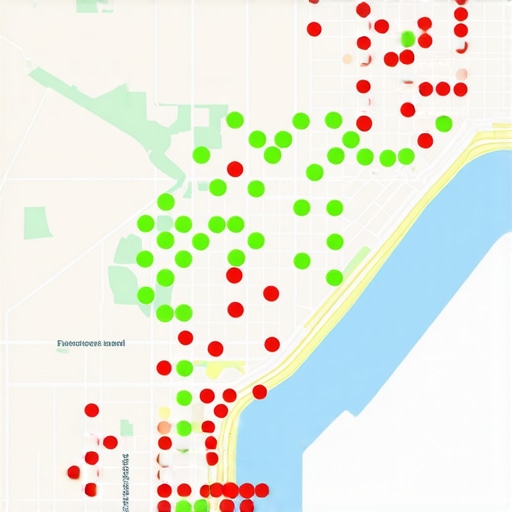 The automated scraper trap that destroys your hard work. There is a common belief that ‘set it and forget it’ automation is the gold standard for citations. It isn’t. In fact, blindly trusting local seo software what we learned after testing the top 10 options can lead to a ‘data loop’ where a tool accidentally pulls an old phone number from a 2012 blog post and overwrites your verified Google data. I have seen it happen dozens of times. You must learn how to stop citation scrapers from overwriting your correct business info before you scale your presence. Another nuance is the ‘Impression Vanity’ trap. Seeing your maps analytics spike feels great, but why map impressions are a vanity metric if no one is clicking call becomes painfully obvious when your phone stays silent. You need review management tools that transform customer feedback into revenue by focusing on intent-rich keywords in your replies. Simply saying ‘thanks for the review’ is a wasted opportunity to tell the algorithm exactly what services you provided and where. I have found that including the neighborhood name and the specific service in your response can subtly nudge your proximity outward more effectively than any generic backlink.I have realized that the hardest part of this entire journey isn’t actually getting to the top; it’s staying there when the algorithm decides to shift under your feet like tectonic plates. Once you have cleared the hurdle of your address and fixed those initial errors, the maintenance phase begins, and this is where most people drop the ball. I personally use a citation monitor because I don’t have the time to manually check every directory every month. It’s my early warning system. If a rogue aggregator suddenly decides my business name is ‘The Best Plumbing Co’ instead of my actual legal name, I get an alert before the search engines have a chance to penalize me for inconsistency. You need to learn how to stop citation scrapers from overwriting your correct business info because they are relentless.
The rank tracker setup that actually predicts your bank balance
When I first started, I was obsessed with ‘average position.’ I eventually learned that why tracking average position is the fastest way to lose local customers is because it hides the truth. Now, I strictly use the rank tracker setup that shows real neighborhood proximity. I want to see a grid of the city, not just a single number. If I see a cluster of red dots in a high-value neighborhood, I know exactly where my next local ad campaign or ‘street-level’ content needs to focus. This is the rank tracking feature that actually predicts revenue growth because it shows you the exact physical gaps in your market share. Joy Hawkins from Sterling Sky recently pointed out a massive shift in how ‘Openness’ signals affect rankings—Google is now heavily favoring businesses that are physically open at the time of the search. This means your tracking needs to account for time-of-day fluctuations, or you are looking at a partial picture. 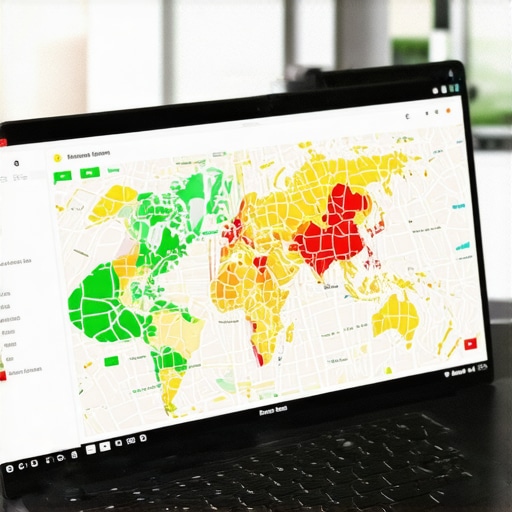
How I maintain my map dominance without losing my mind
Maintenance is about efficiency. I stopped trying to do everything manually and started relying on local seo software what we learned after testing the top 10 options to handle the heavy lifting of data syncing. But tools are only as good as the strategy behind them. For instance, review management tools that transform customer feedback into revenue are essential, but I use them to specifically look for the hidden review patterns that signal a targeted reputation attack. If you aren’t watching the frequency and sentiment of your mentions, you can’t react fast enough to a surge of fake feedback. Looking ahead to 2025, I predict that AI-driven ‘Search Generative Experience’ will make your maps analytics even more volatile. We are moving toward a world where Google provides a ‘concierge’ answer instead of a list of names. To survive that shift, you need to provide the algorithm with high-intent signals that prove you are the most relevant local authority. My best advice? Take ten minutes today to how to use heatmaps to visualize your map pack dominance. If you see ‘dead zones’ more than two miles from your shop, that is your immediate priority for optimization.
The expensive cost of trying to outsmart a trillion-dollar company
Looking back at my detour into P.O. Box obscurity, the biggest lesson I learned was about the nature of trust. I realized that Google is not trying to make life difficult for business owners; it is trying to protect the customer. If someone drives to a mailbox store expecting a physical shop, Google’s reputation takes a hit. When I finally used my real address as a service-area business, the local algorithm stopped fighting me and started helping me.
I also learned that a citation monitor is not just a luxury; it is the only way to catch the small data drifts that slowly erode your authority. Consistency across the web is far more powerful than any short-term hack or clever address trick. Real growth happens when your digital presence matches your physical reality, providing a clear signal to the algorithm that you are a reliable choice for searchers.
My must-have stack for keeping your data clean
If I had to start over today, I would not do it manually. I have refined a toolkit that prevents burnout while maintaining local dominance. First, I rely on local seo software what we learned after testing the top 10 options to handle the heavy lifting of syncing data across directories. This ensures that a random scraper does not undo months of hard work by overwriting your verified info.
To keep the phone ringing, I use review management tools that transform customer feedback into revenue. This helps me maintain a high response rate and ensure my keywords are naturally reflected in customer interactions. Finally, I never go a week without diving into my maps analytics. These insights are the pulse of your business—if clicks are down while impressions are up, you know exactly where to pivot your strategy.
It is time to reclaim your local authority
Fixing your address and cleaning up your digital footprint is not a one-time chore; it is the foundation of your business’s future. It can be frustrating to see competitors ranking with messy profiles, but the algorithm is always catching up. By focusing on legitimate proximity and accurate data, you are building a profile that thrives through every update. Don’t let a fear of privacy or a complex verification process hold you back from the customers who are searching for you right now. You have the tools, you have the strategy, and now you have the momentum to win. Have you ever seen your business vanish from the map because of a simple address change or a P.O. Box issue? Let me know in the comments below.