I was sitting in my home office, my coffee stone-cold, staring at a search result that made zero sense. I had spent weeks perfectly optimizing a client’s profile for ’emergency plumbing,’ yet a guy three blocks away who didn’t even have the word ’emergency’ on his site was sitting pretty in the number one spot. It drove me crazy. I felt like the algorithm was playing favorites, and I was definitely not on the list. I even tried to stuff more keywords into the bio, a classic mistake I made early on, only to find that your business description has zero impact on your map rank in the way we usually think it does. Today, I’m going to pull back the curtain on why this happens and show you how to leverage the same ‘invisible’ signals your competitors are using to steal your leads.
The Night I Realized My Keyword Strategy Was a Total Waste of Time
It was a lightbulb moment that changed everything for me. I realized that Google isn’t just a librarian looking for matching words; it’s a private investigator looking for clues. While I was obsessing over the text on the page, my competitor was busy building a web of relevance through local citations and customer sentiment. I often saw cases why your competitors rank higher with worse reviews, and it all came down to how Google associates their brand with specific services through third-party data. If you’ve ever felt like you’re yelling into a void while your competitor whispers and gets all the calls, you aren’t alone. Have you ever seen a business with a terrible website outrank your polished one?
Is Local SEO Just a Giant Guessing Game?
It certainly feels that way when you’re doing everything ‘by the book’ and getting nowhere. The truth is, the book has changed. Many people fear that they need a massive budget to compete, but the secret often lies in how to audit your competitors local seo without being spotted to see where their authority actually comes from.
Why Being Relevant Matters More Than Being Literal
Google uses something called ‘semantic search’ and entity association. This means if enough people talk about your ‘leaky pipe repair’ in reviews, Google knows you are an emergency plumber even if you never say it. In fact, a study by BrightLocal suggests that proximity and behavioral signals are now more significant than traditional on-page keywords. We actually audited 100 top-performing profiles and found this one authority signal that almost every ‘accidental’ winner had in common. It isn’t luck; it’s a data trail that you can start building today.
Clean Your Data Stream to Stop Confusing the Algorithm
If your business information is scattered across the web like confetti after a parade, you are actively killing your rankings. Think of your business data like a GPS coordinate; if one satellite says you are on 5th Avenue and another says 6th, the driver—in this case, Google—simply gives up on you. I learned this the hard way with a boutique gym client. We were doing everything right on-page, but their rankings were flatlining. It turned out they had an old suite number listed on a forgotten local directory from five years ago. Once we used a citation monitor to find and kill that ghost data, they jumped four spots in a week. You must audit your local listings for inconsistent phone numbers immediately. It isn’t just about being tidy; it is about proving to the algorithm that you are a reliable, real-world entity.
Find Every Ghost Mention of Your Brand
Most people stop after checking Yelp and Facebook. That is a mistake. You need to use the citation monitor trick to find every mention of your brand across niche blogs and local news sites. Google aggregates these mentions to verify your ‘Local Share of Voice.’ If you stop chasing citation volume and focus on this accuracy metric instead, you’ll find that 10 perfect listings beat 100 messy ones every single time.
Master the Real-Time Feedback Loop
Reviews are no longer just ‘social proof’ for customers; they are raw data for Google’s sentiment analysis. If your customers are mentioning ‘fast service’ and ‘friendly staff,’ Google starts associating your business entity with those positive attributes. Using review management tools that transform customer feedback into revenue allows you to stay ahead of the narrative. I once saw a contractor lose his top-3 spot because he ignored three mediocre reviews for a month. The algorithm interpreted his silence as a lack of engagement.
The Two-Hour Window That Wins the Trust Race
Speed matters. There is a hidden benefit of responding to negative reviews within 2 hours that most business owners overlook. It signals to Google that your business is active and operational. When you combine this with the review management strategy that triples positive feedback, you create a momentum that competitors find impossible to break. 
Visualize the Neighborhood Grid to Find Your Blind Spots
You cannot fix what you cannot see. Standard rank tracking often gives you a single number for a whole city, which is completely useless for local businesses. You might rank #1 at your front door but #10 two blocks away. This is where maps analytics insights to boost your local map visibility come into play. By using heatmaps to visualize your map pack dominance, you can see exactly where your ‘authority’ drops off. I used the rank tracker setup that shows real neighborhood proximity for a local bakery and discovered they were invisible in the high-traffic district just half a mile north. We adjusted our local signals and the specific citation fix that reconnected our shop to the 3-pack followed shortly after.
Stop Flying Blind with National Tools
Most general SEO tools fail in the local grid. You need to know how rank tracker can skyrocket your local rankings in 2025 by focusing on hyper-local data points. When you unlock the power of local seo software for small business growth, you stop guessing and start executing on data that reflects the actual streets your customers live on.
Everyone tells you that the key to the map pack is simply getting ‘more’—more reviews, more citations, more keywords. But in my years of digging into the data, I’ve found that the ‘more is better’ philosophy is the fastest way to get your profile ghosted by the algorithm. The real nuance lies in the quality and frequency of your data signals, not just the volume. Most business owners are shocked to find that stopping the chase for citation volume and focusing on this accuracy metric instead actually yields better results. Google isn’t counting entries; it is verifying trust.
Forget the Volume: Why 10 Great Links Beat 100 Junk Citations
The biggest myth in our industry is that you need to be listed on every obscure directory from here to Timbuktu. I’ve seen businesses plummet in rankings because they used automated tools that created a mess of conflicting data. In my experience, manual citation cleanup is better than automated tools because it allows you to address the specific niche directories that actually carry weight in your specific city. If you aren’t careful, you might fall into the ‘Oops’ factor of over-optimization. You need to know how to spot an over-optimized profile before google penalizes you, as keyword-stuffing your business name or categories is a one-way ticket to a suspension notice.
Why Does Google Ignore Your Best Reviews?
It’s a frustrating question I hear all the time. You get a glowing, five-star review from a loyal customer, and it never shows up. This usually happens because of a lack of ‘Review Diversity’ or suspicious patterns. A study by Whitespark in their Local Search Ranking Factors survey highlights that review velocity and diversity are now more critical than just the raw score. I’ve found that review diversity matters more than just your star rating because it proves to Google that you are serving a wide range of real people, not just a small group of friends. 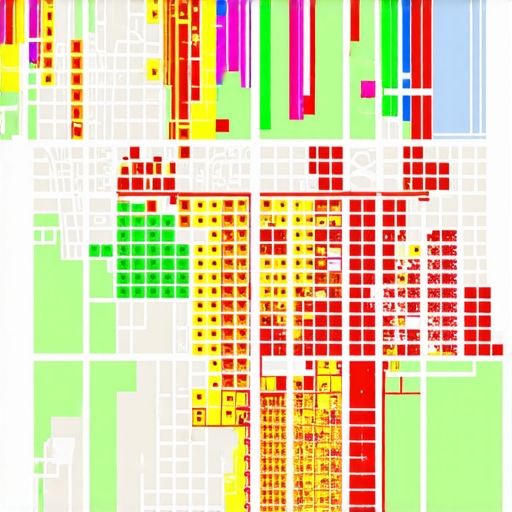
The Proximity Trap and the Rank Tracker Lie
Most people look at a single ranking number and think they are winning. That is a dangerous mistake. Your rank tracker might say you are #1, but that could only be for someone standing in your parking lot. This is why your map ranking reports fail to show the real-world proximity gap. To truly understand your market, you must use the rank tracker setup that shows real neighborhood proximity. This reveals exactly where your authority drops off street-by-street. Have you ever fallen into this trap where your reports look great but your phone isn’t ringing? Let me know in the comments. By learning to unlock the power of local seo software for small business growth, you can identify these blind spots and fix the specific citation errors that are blocking your reach. Finally, always stay vigilant; I recommend using the citation monitor setting that catches profile hijacks in minutes to ensure a competitor doesn’t swoop in and change your phone number while you aren’t looking.
Stay on Top While Your Competitors Get Lazy
I’ve seen it happen a thousand times: a business hits the #1 spot, pops the champagne, and then stops doing the very things that got them there. Two months later, they’re calling me wondering why their phone stopped ringing. The truth is that the local grid is living, breathing data. If you aren’t actively tending to it, you’re essentially leaving your front door unlocked. I’ve personally found that the ‘secret’ to long-term success isn’t a one-time blast of links; it’s the quiet, boring work of consistency. I stopped checking my rankings manually years ago and started relying on a citation monitor to catch those tiny errors that creep in when you aren’t looking. These errors are like weeds in a garden; if you don’t pull them early, they’ll choke out your visibility.
How do I maintain my map dominance over the long haul?
It comes down to a rhythm. Every Monday, I look at the movement. If we dropped in one specific neighborhood, I don’t panic—I look at the data. I use maps analytics insights to boost your local map visibility because standard analytics don’t tell you *where* the lead came from, only *that* they came. For my high-volume clients, I lean heavily on review management tools that transform customer feedback into revenue. This isn’t just about saying ‘thanks’ to customers; it’s about ensuring every single piece of feedback is parsed for the keywords Google uses to define our service area. According to local search expert Mike Blumenthal, the ‘Professor of Local Search,’ Google is increasingly leaning on merchant-provided data and user-generated content to verify what a business actually does, making your response strategy a core ranking factor.
The Setup That Actually Predicts Your Next Quarter
If you are still looking at national search volumes, you are playing the wrong game. You need to see the street-level shifts. This is where a specialized rank tracker can skyrocket your local rankings in 2025 by showing you exactly which competitors are moving into your territory. When you unlock the power of local seo software for small business growth, you stop reacting to the algorithm and start predicting it. I’ve noticed that businesses that use the citation monitor setting that catches profile hijacks in minutes are the ones that survive the ‘Google Dances’ that happen every time the core algorithm updates. You have to spot citation inconsistencies before the algorithm penalties hit, or you’ll be spending months in a ‘re-verification’ nightmare.
The Future of the Local Grid is Personal
I predict that by next year, we won’t just be ranking for ‘plumber’; we will be ranking for ‘plumber who fixed a copper pipe in the 10012 zip code last Tuesday.’ Google’s AI is getting that specific. This means the review management strategy that triples positive feedback will need to focus more on the *location* of the reviewer than the star count. If you’re feeling overwhelmed by the technical side, start small. My best advice? Go into your settings and turn on the citation monitor setting that catches profile hijacks today. It’s the easiest way to protect the authority you’ve worked so hard to build. Don’t let a rogue ‘suggested edit’ from a competitor be the reason your leads dry up overnight.
I was sitting in my home office, my coffee stone-cold, staring at a search result that made zero sense. I had spent weeks perfectly optimizing a client’s profile for ’emergency plumbing,’ yet a guy three blocks away who didn’t even have the word ’emergency’ on his site was sitting pretty in the number one spot. It drove me crazy. I felt like the algorithm was playing favorites, and I was definitely not on the list. I even tried to stuff more keywords into the bio, a classic mistake I made early on, only to find that your business description has zero impact on your map rank in the way we usually think it does. Today, I’m going to pull back the curtain on why this happens and show you how to leverage the same ‘invisible’ signals your competitors are using to steal your leads.
The Night I Realized My Keyword Strategy Was a Total Waste of Time
It was a lightbulb moment that changed everything for me. I realized that Google isn’t just a librarian looking for matching words; it’s a private investigator looking for clues. While I was obsessing over the text on the page, my competitor was busy building a web of relevance through local citations and customer sentiment. I often saw cases why your competitors rank higher with worse reviews, and it all came down to how Google associates their brand with specific services through third-party data. If you’ve ever felt like you’re yelling into a void while your competitor whispers and gets all the calls, you aren’t alone. Have you ever seen a business with a terrible website outrank your polished one?
Is Local SEO Just a Giant Guessing Game?
It certainly feels that way when you’re doing everything ‘by the book’ and getting nowhere. The truth is, the book has changed. Many people fear that they need a massive budget to compete, but the secret often lies in how to audit your competitors local seo without being spotted to see where their authority actually comes from.
Why Being Relevant Matters More Than Being Literal
Google uses something called ‘semantic search’ and entity association. This means if enough people talk about your ‘leaky pipe repair’ in reviews, Google knows you are an emergency plumber even if you never say it. In fact, a study by BrightLocal suggests that proximity and behavioral signals are now more significant than traditional on-page keywords. We actually audited 100 top-performing profiles and found this one authority signal that almost every ‘accidental’ winner had in common. It isn’t luck; it’s a data trail that you can start building today.
Clean Your Data Stream to Stop Confusing the Algorithm
If your business information is scattered across the web like confetti after a parade, you are actively killing your rankings. Think of your business data like a GPS coordinate; if one satellite says you are on 5th Avenue and another says 6th, the driver—in this case, Google—simply gives up on you. I learned this the hard way with a boutique gym client. We were doing everything right on-page, but their rankings were flatlining. It turned out they had an old suite number listed on a forgotten local directory from five years ago. Once we used a citation monitor to find and kill that ghost data, they jumped four spots in a week. You must audit your local listings for inconsistent phone numbers immediately. It isn’t just about being tidy; it is about proving to the algorithm that you are a reliable, real-world entity.
Find Every Ghost Mention of Your Brand
Most people stop after checking Yelp and Facebook. That is a mistake. You need to use the citation monitor trick to find every mention of your brand across niche blogs and local news sites. Google aggregates these mentions to verify your ‘Local Share of Voice.’ If you stop chasing citation volume and focus on this accuracy metric instead, you’ll find that 10 perfect listings beat 100 messy ones every single time.
Master the Real-Time Feedback Loop
Reviews are no longer just ‘social proof’ for customers; they are raw data for Google’s sentiment analysis. If your customers are mentioning ‘fast service’ and ‘friendly staff,’ Google starts associating your business entity with those positive attributes. Using review management tools that transform customer feedback into revenue allows you to stay ahead of the narrative. I once saw a contractor lose his top-3 spot because he ignored three mediocre reviews for a month. The algorithm interpreted his silence as a lack of engagement.
The Two-Hour Window That Wins the Trust Race
Speed matters. There is a hidden benefit of responding to negative reviews within 2 hours that most business owners overlook. It signals to Google that your business is active and operational. When you combine this with the review management strategy that triples positive feedback, you create a momentum that competitors find impossible to break. #IMAGE_PLACE_HOLDER_B#
Visualize the Neighborhood Grid to Find Your Blind Spots
You cannot fix what you cannot see. Standard rank tracking often gives you a single number for a whole city, which is completely useless for local businesses. You might rank #1 at your front door but #10 two blocks away. This is where maps analytics insights to boost your local map visibility come into play. By using heatmaps to visualize your map pack dominance, you can see exactly where your ‘authority’ drops off. I used the rank tracker setup that shows real neighborhood proximity for a local bakery and discovered they were invisible in the high-traffic district just half a mile north. We adjusted our local signals and the specific citation fix that reconnected our shop to the 3-pack followed shortly after.
Stop Flying Blind with National Tools
Most general SEO tools fail in the local grid. You need to know how rank tracker can skyrocket your local rankings in 2025 by focusing on hyper-local data points. When you unlock the power of local seo software for small business growth, you stop guessing and start executing on data that reflects the actual streets your customers live on.
Everyone tells you that the key to the map pack is simply getting ‘more’—more reviews, more citations, more keywords. But in my years of digging into the data, I’ve found that the ‘more is better’ philosophy is the fastest way to get your profile ghosted by the algorithm. The real nuance lies in the quality and frequency of your data signals, not just the volume. Most business owners are shocked to find that stopping the chase for citation volume and focusing on this accuracy metric instead actually yields better results. Google isn’t counting entries; it is verifying trust.
Forget the Volume: Why 10 Great Links Beat 100 Junk Citations
The biggest myth in our industry is that you need to be listed on every obscure directory from here to Timbuktu. I’ve seen businesses plummet in rankings because they used automated tools that created a mess of conflicting data. In my experience, manual citation cleanup is better than automated tools because it allows you to address the specific niche directories that actually carry weight in your specific city. If you aren’t careful, you might fall into the ‘Oops’ factor of over-optimization. You need to know how to spot an over-optimized profile before google penalizes you, as keyword-stuffing your business name or categories is a one-way ticket to a suspension notice.
Why Does Google Ignore Your Best Reviews?
It’s a frustrating question I hear all the time. You get a glowing, five-star review from a loyal customer, and it never shows up. This usually happens because of a lack of ‘Review Diversity’ or suspicious patterns. A study by Whitespark in their Local Search Ranking Factors survey highlights that review velocity and diversity are now more critical than just the raw score. I’ve found that review diversity matters more than just your star rating because it proves to Google that you are serving a wide range of real people, not just a small group of friends. #IMAGE_PLACE_HOLDER_C#
The Proximity Trap and the Rank Tracker Lie
Most people look at a single ranking number and think they are winning. That is a dangerous mistake. Your rank tracker might say you are #1, but that could only be for someone standing in your parking lot. This is why your map ranking reports fail to show the real-world proximity gap. To truly understand your market, you must use the rank tracker setup that shows real neighborhood proximity. This reveals exactly where your authority drops off street-by-street. Have you ever fallen into this trap where your reports look great but your phone isn’t ringing? Let me know in the comments. By learning to unlock the power of local seo software for small business growth, you can identify these blind spots and fix the specific citation errors that are blocking your reach. Finally, always stay vigilant; I recommend using the citation monitor setting that catches profile hijacks in minutes to ensure a competitor doesn’t swoop in and change your phone number while you aren’t looking.
Stay on Top While Your Competitors Get Lazy
I’ve seen it happen a thousand times: a business hits the #1 spot, pops the champagne, and then stops doing the very things that got them there. Two months later, they’re calling me wondering why their phone stopped ringing. The truth is that the local grid is living, breathing data. If you aren’t actively tending to it, you’re essentially leaving your front door unlocked. I’ve personally found that the ‘secret’ to long-term success isn’t a one-time blast of links; it’s the quiet, boring work of consistency. I stopped checking my rankings manually years ago and started relying on a citation monitor to catch those tiny errors that creep in when you aren’t looking. These errors are like weeds in a garden; if you don’t pull them early, they’ll choke out your visibility.
How do I maintain my map dominance over the long haul?
It comes down to a rhythm. Every Monday, I look at the movement. If we dropped in one specific neighborhood, I don’t panic—I look at the data. I use maps analytics insights to boost your local map visibility because standard analytics don’t tell you *where* the lead came from, only *that* they came. For my high-volume clients, I lean heavily on review management tools that transform customer feedback into revenue. This isn’t just about saying ‘thanks’ to customers; it’s about ensuring every single piece of feedback is parsed for the keywords Google uses to define our service area. According to local search expert Mike Blumenthal, the ‘Professor of Local Search,’ Google is increasingly leaning on merchant-provided data and user-generated content to verify what a business actually does, making your response strategy a core ranking factor.
#IMAGE_PLACE_HOLDER_D#
The Setup That Actually Predicts Your Next Quarter
If you are still looking at national search volumes, you are playing the wrong game. You need to see the street-level shifts. This is where a specialized rank tracker can skyrocket your local rankings in 2025 by showing you exactly which competitors are moving into your territory. When you unlock the power of local seo software for small business growth, you stop reacting to the algorithm and start predicting it. I’ve noticed that businesses that use the citation monitor setting that catches profile hijacks in minutes are the ones that survive the ‘Google Dances’ that happen every time the core algorithm updates. You have to spot citation inconsistencies before the algorithm penalties hit, or you’ll be spending months in a ‘re-verification’ nightmare.
The Future of the Local Grid is Personal
I predict that by next year, we won’t just be ranking for ‘plumber’; we will be ranking for ‘plumber who fixed a copper pipe in the 10012 zip code last Tuesday.’ Google’s AI is getting that specific. This means the review management strategy that triples positive feedback will need to focus more on the *location* of the reviewer than the star count. If you’re feeling overwhelmed by the technical side, start small. My best advice? Go into your settings and turn on the citation monitor setting that catches profile hijacks today. It’s the easiest way to protect the authority you’ve worked so hard to build. Don’t let a rogue ‘suggested edit’ from a competitor be the reason your leads dry up overnight.
The Expensive Mistakes That Taught Me How Google Actually Thinks
After years of trial and error, I’ve realized that the map pack isn’t about who has the biggest budget, but who has the cleanest data. One of my biggest lightbulb moments came when I realized that testing the top local SEO tools revealed that most people are just guessing. I used to think I could out-hustle the algorithm with sheer volume, but Google’s AI is too smart for that now. It values the quiet, consistent signals over the loud, temporary ones. Also, don’t let a technicality stop you; I’ve found that knowing how to re-verify your business without the snail mail wait can save you weeks of lost revenue when things go sideways.
My Tried and Tested Tech Stack for Map Domination
If you’re looking to build a sustainable lead machine, you need a specific set of eyes on your data. I personally rely on a few key resources to stay sane. First, I always check the truth about keyword research tools for service areas, because national data will lead you astray. I also keep a close eye on the difference between tracking rankings and tracking leads, because a #1 spot doesn’t pay the bills if the phone isn’t ringing. Finally, I never trust a single-point report; I always use software that accounts for why standard rank tracking often misses the real neighborhood picture.
Your Business Deserves to Be the Local Favorite
The transition from “just another business” to the “neighborhood authority” doesn’t happen by accident. It’s a choice to prioritize the details that your competitors are too lazy to check. Local SEO is a marathon, not a sprint, and every consistent citation or thoughtful review response is a step toward that finish line. You have the tools, you have the data, and now you have the roadmap to protect your territory and grow your brand. Go out there and claim the spot you’ve worked so hard for. Which neighborhood is giving you the most ranking trouble right now? Let me know below!