I sat in my office for three hours, refreshing my screen and praying for a miracle that just wasn’t coming. I had just launched five new pages targeting the neighboring suburbs, convinced that my business was about to explode. Instead, my rank tracker showed me the cold, hard truth: I was invisible the moment I stepped outside my own zip code. It felt like I’d built a bridge that ended halfway across the river. If you’ve ever felt that sting of seeing Position 50+ for a town only ten minutes away, you’re not alone. I’ve been there, and I’ve wasted thousands of dollars on neighborhood pages that did absolutely nothing but clutter my site. Today, I’m going to pull back the curtain on why this happens and how we can actually fix it together.
The Brutal Reality of Proximity in Local Search
Google is obsessed with proximity, and frankly, it’s getting harder to trick the algorithm into thinking you’re local when you aren’t. I used to think I could just swap out city names on a template and call it a day. That was my first big mistake. I created what I now call ghost pages—content with no soul and no real connection to the community. According to research from Sterling Sky, proximity remains the single most important ranking factor for the local pack, which means your service area pages are fighting an uphill battle against businesses with actual storefronts. But here is the secret: you don’t need a physical office in every town, you just need to stop acting like a robot.
Is this strategy actually worth the effort for a small business?
You might be wondering if it’s even possible to outrank the guy who actually lives in the next town over. The answer is yes, but not by using the same old city-plus-service keyword stuffing that everyone else is doing. When I finally stopped treating my service area pages like SEO experiments and started treating them like local landing pages, my maps analytics finally started showing green outside my home base. We’re going to dive into the local strategy for ranking in towns where you have no office and look at how to actually build authority where you don’t have a roof. Have you ever noticed your rankings drop off a cliff the second you leave your city limits?
Your Template Approach is Killing Your Authority
If you are using the same images, the same testimonials, and the same basic text for ten different towns, Google sees it as thin content. I learned this the hard way when I realized my citation monitor was picking up inconsistent data that confused the search engines. You need to prove you’ve actually been to those towns. Mention the local high school, talk about the specific types of homes in that neighborhood, or link to a local project you completed there. It’s about building real authority signals that software alone can’t fake. By shifting from quantity to quality, you stop being a digital intruder and start becoming a local choice.
Stop Copying and Pasting Your Town Names
I once spent three weeks trying to rank for a suburb called Oak Creek. I followed every guru tip: I swapped the H1, changed the meta description, and hit publish. My rank tracker didn’t move an inch. It wasn’t until I stopped using a template that the needle moved. I realized that Google’s algorithm isn’t just looking for the word Oak Creek; it’s looking for context. When I started mentioning the specific Tudor-style homes in that neighborhood and our work near the local high school, my rankings finally blipped from the second page to the first. Treat your page like a travel guide for that specific area. If you can’t mention a local landmark or a specific neighborhood quirk, you haven’t done enough research.
Watch Your Rankings Through a Hyper-Local Lens
Standard SEO tools often tell you that you are Position 3 for your whole city, but that’s a lie. Local SEO is a game of inches, not miles. If you aren’t using the grid-based ranking method, you’re flying blind. It’s like trying to navigate a ship using a map of the entire ocean when you really just need to know where the rocks are in the harbor. I’ve seen my own rankings be a 1 at the street corner of my office and a 20 just two blocks away. You need specialized local seo software that tracks proximity to understand where your green zone actually ends and where your competitors are eating your lunch.
Find Where Your Leads Actually Live
Don’t just guess which towns to target based on property value or gut feeling. Your maps analytics hold the real treasure map. I spent months targeting a high-end zip code only to realize through my data that 70% of my actual phone calls were coming from a modest suburb I had completely ignored. By shifting my focus to where the demand already existed, I tripled my lead volume without increasing my marketing budget. You have to use maps analytics to find your most profitable neighborhoods before you commit to building out new service pages.
Reviews Prove You Actually Showed Up
A review from a customer in your home city is great, but a review from a customer in your target suburb is gold. Whenever we finish a job in a new area, we use review management tools to specifically request feedback that mentions the location. It sounds small, but when Google sees a verified review mentioning The best service in Oak Creek, it validates your service area page more than any expensive backlink ever could. This specific review management strategy is what helps a solo business outrank a corporate giant by proving real, boots-on-the-ground relevance.
Keep Your Data Clean or Lose the Map Pack
The biggest silent killer of service area rankings is messy data. If your citation monitor flags inconsistent addresses or old phone numbers across the web, Google loses trust. Think of it like a background check; if the stories don’t line up, you aren’t getting the job. I once saw a client’s rankings vanish because a scraper site had listed their old home office address from five years ago. We had to use a monitor to find and kill those ghost listings before the map pin would move back to the top. Consistency isn’t just a best practice; it’s the foundation of your authority in a town where you don’t have a physical roof.
But even if your data is ‘clean,’ you’re probably looking at the wrong numbers. Most people treat a rank tracker like a scoreboard, but in local SEO, it’s more like a weather vane—it only tells you which way the wind is blowing, not if your house is on fire. I’ve seen businesses celebrate being #1 for ‘plumber’ while their phone hasn’t rung in days because they were tracking average position, which is a vanity metric. If you’re at #1 in the middle of a park where nobody lives, your rankings are functionally worthless. To actually scale, you must unlock the power of local seo software that measures local intent rather than just global positions.
Why Your Average Position is a Total Lie
Standard local seo software often blurs the reality of how customers find you. A single number cannot represent your visibility in a city of thousands of homes. The legendary Darren Shaw’s Local Search Ranking Factors study has consistently highlighted that citation volume is a diminishing return, yet I still see people buying packages of 200 junk listings for towns 50 miles away. This is where the citation consistency myth comes into play. It’s not about how many times you’re listed on obscure directories; it’s about how many high-authority, local sources confirm your existence to Google. Spreading your data too thin across low-quality sites can actually trigger a spam filter instead of a ranking boost.
Does a perfect 5.0 rating actually hurt your conversions?
Surprisingly, yes. Research from the Spiegel Research Center suggests that purchase probability peaks for products with ratings between 4.2 and 4.5. A perfect 5.0 often looks ‘too good to be true’ to a savvy customer and can lead to skepticism. The real needle-mover isn’t the decimal point; it’s your response speed. We’ve found that responding to negative reviews within 2 hours does more for your local reputation and conversion rates than a hundred fake 5-star bots ever could. It proves there is a human behind the screen who cares about the community.
The Dangerous Addiction to Automated Citations
The biggest trap for growing businesses is the ‘automation addiction.’ People want to click a button and have their citation monitor fix everything instantly. However, manual citation cleanup is almost always more effective because automated tools often fail to catch the deep-seated ‘ghost’ listings that continue to confuse Google’s algorithm. These tools also frequently fall victim to the map analytics glitch that can make it look like you’re getting local traffic when it’s actually just bot pings from your own rank tracking software. If you aren’t careful, you might spend your entire budget fixing problems that don’t actually exist while ignoring the ones that are killing your calls.
The Silent Glitch in Your Traffic Reports
You need to stop trusting the high-level dashboards and start looking at the hyper-local grid changes. If your software doesn’t show you exactly how you rank block-by-block, you’re making decisions based on half-truths. Many platforms fail to explain why rank tracking software often misses the local grid, leaving you wondering why your shop is empty despite your ‘green’ reports. Have you ever fallen into this trap of trusting a ‘Position 1’ only to find out you were invisible three streets over? Let me know in the comments.It’s one thing to reach the top; it’s an entirely different beast to stay there. I’ve seen businesses climb to the #1 spot, celebrate with a steak dinner, and then drop to page three by the time the bill arrives. The truth is, your competitors are using the same local seo software as you, and they’re hungry. To keep your spot, you need a routine that doesn’t require forty hours a week. I personally rely on a very specific setup that alerts me the moment a citation is tampered with. It’s not about doing more work; it’s about having a citation monitor setting that catches profile hijacks before they become permanent. I once had a competitor try to change my business hours to ‘Closed’ on a Friday afternoon. Without an automated alert, I would have lost an entire weekend of emergency calls. This isn’t just theory; it’s digital self-defense.
The Tech Stack I Use to Sleep at Night
When people ask me for recommendations, I tell them to stop buying ‘all-in-one’ suites that do ten things poorly. I prefer a surgical approach. I use a rank tracker setup that specifically monitors 1×1 mile grids because it’s the only way to see where my authority actually ends. If you’re just looking at a dashboard that says ‘Average Position: 3,’ you’re essentially looking at a weather report from three towns over. You need to know which street corner is losing heat. 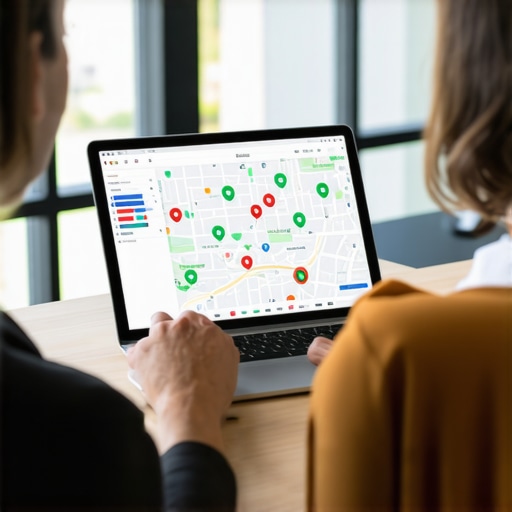 I also pair this with review management tools that prioritize response speed over everything else. As Mike Blumenthal, a pioneer in local search and co-founder of Near Media, often points out, the interaction between a business and its customers in the owner response section is a massive signal of ‘freshness’ to Google’s algorithm. It tells them the lights are on and someone is home.
How do I keep my map pin from moving when I’m busy?
Maintaining your presence is about consistency, not intensity. I set aside exactly twenty minutes every Monday morning to audit my maps analytics for any weird spikes in ‘branded’ vs. ‘discovery’ searches. If I see a drop in discovery, I know my service area pages are getting stale. The future of this industry is moving toward ‘Zero-Click’ searches, where AI-driven summaries like Search Generative Experience will answer the customer before they ever see your website. In that world, your only currency is the ‘Verified’ data Google pulls from your citations and reviews. If you haven’t yet, I highly recommend you stop your business name from being hijacked by locking down your core listings now. If you don’t control your data, someone else will eventually try to edit it for you. Give that grid-based tracking a shot this week—you might be surprised to see which neighbor is actually seeing your map pin.
What Your Dashboard Isn’t Telling You About Proximity
After years of trial and error, I’ve realized that the biggest barrier to growth isn’t your competition; it’s the data you choose to believe. Here are a few lightbulb moments that changed everything for me: First, I learned that the citation consistency myth often leads business owners to waste time on low-impact directories while ignoring the local signals that actually move the needle. Second, I discovered the data gap—that frustrating reality where your rankings are rising but your phone stays silent because you aren’t targeting the right search intent. Finally, it became clear that why your map data does not match your actual sales often comes down to tracking global averages instead of hyper-local reality. Real success happens when you stop looking at the map as a whole and start winning it block by block.
Building Your Hyper-Local War Chest
You don’t need a massive budget to dominate your service area, but you do need the right tools in your corner. I personally rely on a high-precision rank tracker to visualize exactly where my authority drops off. For protecting my brand’s reputation, I use review management tools that alert me the second a customer speaks, allowing me to respond with lightning speed. To keep the technical foundation strong, a dedicated citation monitor is non-negotiable for catching competitor edits or scraper errors before they confuse Google. These aren’t just expenses; they are the guardrails that keep your business visible in a crowded market.
It’s Time to Reclaim Your Local Turf
Local search is constantly shifting, but the fundamentals of human connection and data accuracy never go out of style. You have the ability to outmaneuver the biggest corporations by simply being more present and more responsive to your neighbors. By choosing the right local seo software and applying these strategies, you are no longer just another pin on the map—you are the local authority. Don’t let another lead slip through the cracks because of a proximity glitch you didn’t see coming. Have you ever seen your rankings thrive in one suburb while completely tanking in the next? Let me know your experience in the comments below.