I remember sitting at my desk, staring at a screen that told me I was doing everything right, yet my phone wasn’t ringing. I had the sleek website, I was obsessively checking my rank tracker every hour, and my data looked ‘fine.’ But the shop was empty. My lightbulb moment didn’t come from a fancy seminar; it came from a frustrated neighbor who told me, ‘I tried to find a local repair guy, but all I found were industrial consultants.’ That hit me hard. I had categorized my business to sound professional and corporate, but in doing so, I made myself completely invisible to the actual people standing on my doorstep looking for help.
Stop Playing Hide and Seek with Your Local Customers
It’s a bitter pill to swallow, but your choice of business category is often the invisible wall between you and a booked calendar. When I first started out, I made the classic mistake of picking a category that described what I *wanted* to be, rather than what people were actually searching for. I learned the hard way that we audited 50 local business profiles and found that categorization errors are the silent killers of conversion. If you’re a plumber but you’ve listed yourself under ‘Home Improvement,’ you’re competing with flooring companies and painters while the person with the burst pipe is clicking on the guy listed as an ‘Emergency Plumber.’ You might have the best review management tools in the world, but if Google’s map doesn’t think you belong in the searcher’s specific bucket, those five-star ratings won’t ever see the light of day. Today, I’m going to show you how to peel back the curtain on your maps analytics to see where the disconnect is happening. We’ll move past the guesswork and find the specific primary categories that actually trigger the local pack.
Is This Tiny Setting Really More Important Than My Reviews?
I get it. You’ve spent years building a reputation, and the idea that one dropdown menu could override all that hard work feels insulting. But here’s the reality: Google is a machine that thrives on relevance. According to research from Whitespark’s Local Search Ranking Factors survey, the primary category is the single most influential on-page signal for local rankings. It’s the foundation. Think of it like this: your reviews are the quality of the food in your restaurant, but your category is the sign on the front door that tells people you aren’t a hardware store. Have you ever noticed your competitors outranking you despite having worse service? It’s probably not luck; it’s likely because they’ve aligned their profile with the exact intent of the local searcher. If you’ve ever felt like your profile is ghosting you, check out these 5 audit red flags to see if your category is the culprit. So, have you checked your primary category lately, or did you just ‘set it and forget it’ three years ago?
How to Spot the Category Gaps Google is Hiding
To fix a ranking problem, you first have to see the map as Google sees it. I stopped guessing and started using maps analytics to dissect the top three results in my area. Google doesn’t always show every secondary category on the surface, so you have to look deeper into the ‘under-the-hood’ data of your competitors. It’s like checking the ingredients on a rival’s secret recipe; you won’t find the magic just by looking at the packaging. You need to identify the specific primary category they have locked in that is triggering the local pack.
Find What the Top Dogs are Hiding
I remember working with a local locksmith who was stuck on page three for months. He was listed as a generic ‘Locksmith,’ which sounded perfectly logical. However, when we looked at the guys in the top spots, they were all listed under ‘Emergency Locksmith.’ We made that one tiny shift, and within 48 hours, his phone was buzzing with people locked out of their cars. To do this effectively, you need to know how to audit your competitors local seo without being spotted. Look for the common denominator. If the top three businesses all share a primary category that is different from yours, you’ve just found your smoking gun. 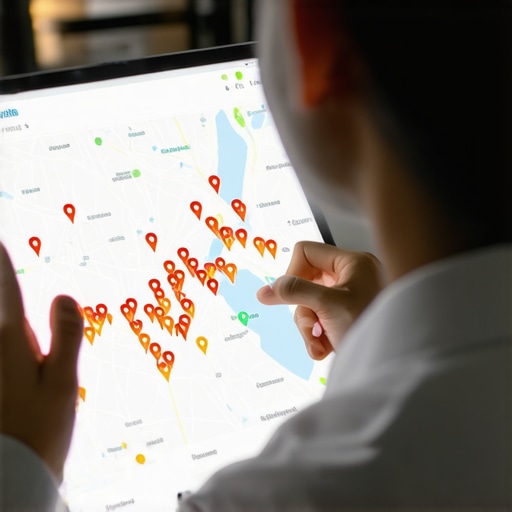
Choose Relevance Over Your Own Ego
It is tempting to add ten different secondary categories to cast a wider net, but this often backfires by diluting your authority. Think of Google’s algorithm as a specialized headhunter. If they need a high-end brain surgeon, they aren’t looking for the ‘General Practitioner’ who also lists ‘Plumbing’ and ‘Landscaping’ as skills. You need to be the specialist. During my time testing various local seo software, the most dominant profiles were always the ones that stayed laser-focused on their core service. Use a rank tracker to monitor how your position shifts as you refine these categories. If you drop an irrelevant secondary category and your primary keyword jumps three spots, you know you’re on the right path.
Synchronize Your Identity to Build Real Trust
Your choice of category on your Google profile is only half the battle. If your listings on Yelp, Bing, or niche industry directories still claim you are a ‘General Contractor’ while your Google profile says ‘Kitchen Remodeler,’ the algorithm hits a wall of confusion. It sees a conflict in your data and decides your business isn’t stable enough for the top spot. This is where a citation monitor becomes your most valuable asset. I once saw a thriving business lose nearly half its traffic because a rogue data scraper updated their info on an old directory with the wrong category. You must identify and fix the 3 citation errors that confuse google and kill your traffic before the algorithm penalizes you. By using the profile audit tool settings that actually drive local phone calls, you can ensure your category data is perfectly mirrored across the entire web, proving to Google that you are exactly who you say you are.I have a confession: I used to be a data addict. I thought that if I bought every piece of local seo software on the market, I’d magically become the king of the map pack. It was a lie. The biggest mistake most people make is equating more features with more revenue. In reality, why tracking average rankings is the fastest way to lose local leads is because ‘average’ is often a fiction. If you rank #1 ten miles away but #10 in the neighborhood where your customers actually live, your ‘average’ looks great, but your shop remains empty. You need a rank tracker setup that shows real neighborhood proximity to see the ground-level truth.
Why Your Map Rankings Are Probably Lying to You
Here is a nuance most people miss: proximity is dynamic. Google’s ‘Opossum’ update changed the landscape by filtering out businesses that were too close to each other, but it also made your rank highly dependent on exactly where the searcher is standing. I’ve seen business owners celebrate a ‘Top 3’ report while their maps analytics showed a massive drop in actual clicks. This happens when you ignore why your map ranking reports fail to show the real world proximity gap. A report is just a snapshot, but local search is a moving target. According to BrightLocal’s Local Search Grid research, rankings can fluctuate by five or more positions just by moving two blocks down the street. 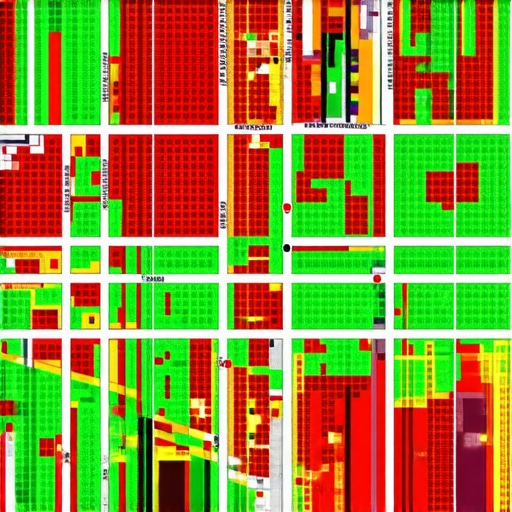
The Automated Citation Trap Most People Fall Into
Everyone tells you to use automated tools to ‘fix’ your citations instantly. In my experience, this is the ‘oops’ factor that kills long-term authority. Automated scrapers are often the ones creating the mess in the first place by overwriting custom formatting. If you rely solely on a bot, you might miss the fact that a rogue scraper just changed your phone number on a niche directory. This is where the citation monitor setting that catches profile hijacks in minutes becomes a lifesaver. You don’t need a tool that just pushes data; you need one that alerts you when someone—or something—tries to change it. I always tell my clients that why manual citation cleanup is better than automated tools comes down to precision. A bot won’t notice that your address formatting is slightly off on an industry-specific site, but Google’s algorithm certainly will.
How to Outsmart Competitors Without Being Seen
If you want to win, you have to stop looking at your own profile and start looking at theirs. But don’t just mimic them; you need to know how to audit your competitors local seo without being spotted to find the ‘proximity gaps’ they are leaving wide open. Maybe they have more reviews, but their response time is sluggish. You can use review management tools to not just gather feedback, but to respond faster and with more localized keywords than they ever could. Have you ever fallen into this trap where your data said one thing but your phone said another? Let me know in the comments.Now that we’ve identified the leaks in your local profile, it’s time to focus on the long-term grind that keeps the phone ringing. I used to think I could just fix my categories once and be done with it, but the reality is that the internet is a chaotic place, and your business data is constantly under threat from ‘helpful’ automated updates. I’ve found that citation monitor alerts are the only way to sleep soundly at night. Every few weeks, a random data aggregator or a scraper will try to overwrite my precise shop hours with information it pulled from an outdated directory or a competitor’s site. If you aren’t watching, these small errors pile up like rust until Google’s trust in your location finally wavers. You absolutely have to learn how to stop citation scrapers from overwriting your correct business info before the algorithm flags your profile as unreliable and shoves you to page two.
The Tech Stack That Actually Moves the Needle
I don’t believe in buying every shiny new tool that hits the market; most of them are just overpriced vanity metric generators designed to look good in agency reports. Instead, I focus on local seo software that gives me granular, actionable intel. My absolute non-negotiable is a rank tracker setup that shows real neighborhood proximity. Knowing I’m ‘generally’ in the top three is a fantasy; I need to see the grid of where I drop off and where I dominate. As Joy Hawkins from Sterling Sky points out in her ongoing research on local ranking factors, the physical proximity of the searcher remains the most aggressive filter Google applies, and it is only becoming more localized. I predict that within the next two years, ‘static’ citations will matter far less than ‘live’ signals like real-time directions requests and click-through rates. This is why your review management tools should be integrated into your daily workflow, not just used as a passive collection plate for stars.
How do I maintain my map rankings over the long haul?
Long-term success is about defensive SEO and keeping your data footprint clean. I personally set up automated ‘proximity audits’ that ping my email the second a competitor starts encroaching on my primary service area with better engagement metrics. If you aren’t using maps analytics to spot these neighborhood shifts early, you’ll find your shop ghosted by local customers before you even realize a new competitor has moved into the zip code. 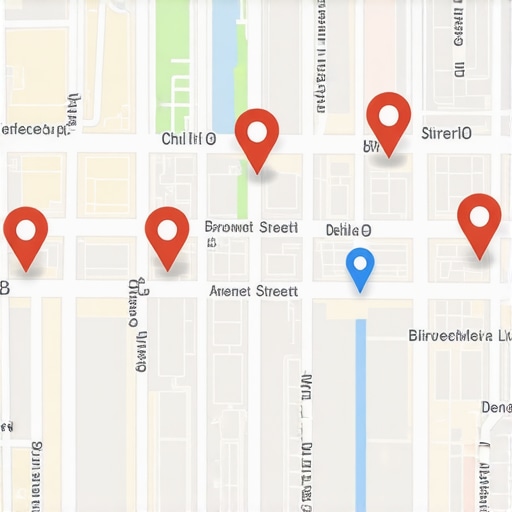 The most dominant players in any local market aren’t necessarily the ones with the most backlinks or the biggest budgets; they are the ones who guard their local data with the most intensity and respond to changes in real-time. My advanced tip for you today: stop checking your rankings from your office desktop where the IP address is already cached. Go three blocks away, pull out your phone, and search for your primary service as a ‘new’ customer would. If you aren’t in that top three, your proximity settings are likely failing you, and it’s time to stop guessing and start running a deep-dive proximity audit.
The Hard-Won Realities of Fighting the Map Pack
After years of tweaking profiles, I’ve realized that data consistency is more than just a checkbox—it’s the digital immune system of your business. If your categories don’t match your citations, Google views you as a risk rather than a recommendation. Also, don’t ignore your response velocity; it’s not just about getting the five-star review, it’s about proving you are ‘alive’ and active to the algorithm. Finally, remember that the map is fluid; what works on Main Street might fail on Second Avenue, which is why hyper-local monitoring is non-negotiable. I stopped treating SEO like a static billboard and started treating it like a garden that needs constant weeding.
Build Your Own Local Visibility Stack
I trust these specific tools and habits because they don’t just show vanity numbers; they show the path to more phone calls. First, a rank tracker setup that shows real neighborhood proximity is the only way to see if your efforts are working block-by-block. Next, I always keep a citation monitor running in the background. It’s my early warning system for when scrapers try to mess with my data. Lastly, I recommend setting up maps analytics to track the actual intent—like direction requests—which tells a much truer story than simple impressions. These resources ensure you are making decisions based on revenue, not just ego.
Your Blueprint to Local Authority Starts Today
Local SEO isn’t a one-time project; it’s a commitment to being the most relevant answer for your neighbors. While the technical side can feel overwhelming, focusing on your local seo software settings and guarding your category relevance will put you miles ahead of the competition who are still just ‘setting and forgetting.’ You have the tools, the strategy, and the insight—now go take back your map presence and show your community exactly why you are the best choice. Have you ever noticed your rankings drop suddenly after a competitor updated their profile? Let me know your experience in the comments below!