I’ll never forget the month I spent hunched over a cluttered spreadsheet, manually submitting my business info to 150 different directories. I thought I was doing everything right. My NAP was perfect. My categories were spot on. But after thirty days of grueling data entry, my phone stayed silent and my rankings were stuck on page four. It was a visceral, frustrating realization: I was playing a numbers game that Google had stopped caring about years ago. The truth is, most of those directories are just digital graveyards. I learned the hard way that ten powerful, relevant mentions are worth more than five hundred junk links that nobody ever clicks. Today, I want to help you avoid that soul-crushing busywork and focus on the signals that actually trigger growth.
Stop Chasing Every Single Directory on the Internet
If you’re feeling overwhelmed by the sheer volume of local SEO advice, you’re not alone. I see business owners every day who think they need to be everywhere at once. They finally stop buying generic citation bundles and realize they’ve just wasted money on background noise. In my early days, I made the massive mistake of thinking quantity equaled authority. I even once triggered a ranking drop because I used an automated tool that created three different versions of my address on “high-authority” sites. That’s why I now firmly believe why manual citation cleanup is better than automated tools for any business that values its reputation. We are going to cut through the fluff and look at how to separate the “needle-movers” from the time-wasters. We’ll look at why your citation monitor might be flagging things that don’t matter while missing the the 3 citation errors that confuse google.
Is building hundreds of citations actually worth the hype?
The short answer is a resounding no. According to industry data from Whitespark, citation volume has consistently dropped in importance as a ranking factor over the last five years, replaced by the weight of niche relevance and data accuracy. In fact, having incorrect data on a major aggregator can do more harm than having no listing at all on a minor one. I’ve seen businesses drop out of the local pack entirely just because their phone numbers were inconsistent across just five key sites. Have you ever spent hours filling out profiles only to see your competitors—with half as many links—sitting comfortably at the top of the map? It’s frustrating, right? I want to hear from you: are you currently drowning in a sea of “to-do” lists for directories you’ve never even heard of? We need to focus on what actually moves your map pin, not just what makes your spreadsheet look full.
Fix the Data Leaks Before You Buy More Traffic
I remember working with a local plumber in Chicago who had nearly 400 citations. On paper, his spreadsheet looked like an SEO masterpiece. In reality, he couldn’t crack the top 10 for ’emergency drain cleaning.’ Why? Because five years prior, he’d used a slightly different suite number at a temporary office, and that ‘ghost address’ was still haunting his profile. We didn’t need more links; we needed a surgical strike on his data. If you’re in this spot, your first move is to audit your local listings for inconsistent phone numbers and old addresses. Think of your citations like a ship’s hull—if there are holes, it doesn’t matter how fast the engine runs; you’re eventually going to sink.
Ditch the Spreadsheet for a Real-Time Citation Monitor
The old way was to check your listings once a year. The new way is to treat your data like a security system. I’ve seen competitors ‘suggest an edit’ to a client’s phone number on a Tuesday, and if we hadn’t caught it, that client would have lost a week’s worth of leads. This is why a citation monitor is non-negotiable. It’s like having a smoke detector for your brand. You don’t want a report a month after the damage is done; you want to know the second a scraper site overwrites your hard work. I firmly believe that why manual citation cleanup is better than automated tools because automated syncs often miss the nuanced errors that actually confuse the Google algorithm.
Stop Guessing Where You Rank and Map the Proximity Gap
Most business owners check their rankings by standing in their office and searching for themselves. That’s a vanity trap. You will always rank #1 when you’re standing on your own carpet. The real test is what a customer sees three miles away at a coffee shop. Using maps analytics to visualize your ‘proximity gap’ is the only way to see where your authority actually drops off. 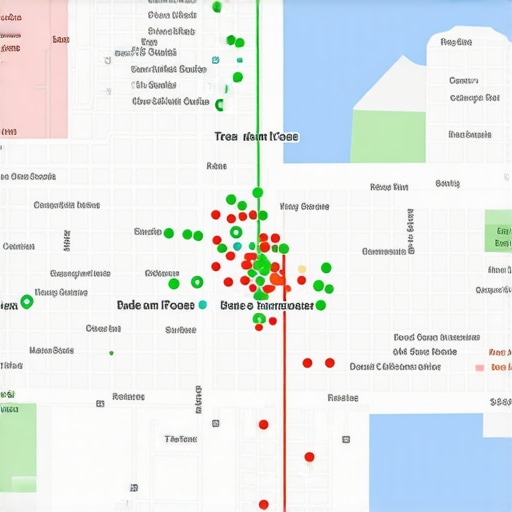 If you notice your map pin vanishes as soon as you cross a specific highway, you don’t have a ‘citation’ problem; you have a local relevance problem. I use a rank tracker that focuses on neighborhood-level data because that’s where the revenue lives.
Turn Your Reviews into a Self-Sustaining Growth Engine
High star ratings are great, but they aren’t the whole story. I once saw a dentist with a 4.9-star average get completely outranked by a competitor with a 4.2. The difference? The competitor responded to every single review within two hours. Google interprets response speed as a signal of ‘active business.’ In the local algorithm, an abandoned profile is a dead profile. You should treat review management tools as a way to engage, not just a way to collect stars. I’ve found that why your review average matters less than your response speed is one of the hardest pills for business owners to swallow, but the data doesn’t lie. When we shifted a client’s focus from ‘getting more stars’ to ‘answering every person by lunch,’ their map visibility spiked by 22% in three weeks.The biggest lie in the industry is that more reviews and a perfect star rating will solve every ranking problem. I’ve seen businesses with a flawless 5.0 rating get buried by a 4.2-star competitor simply because the competitor’s reviews contained high-intent keywords that matched the local user’s search. Most review management tools focus on the volume, but they ignore semantic density. If your customers aren’t naturally mentioning your services in their feedback, your 5-star rating is just a vanity metric. This is one reason why local keywords are getting more specific and how to adapt is the real conversation we should be having. Have you ever fallen into the trap of thinking a high rating was enough? Let me know in the comments.
The Automation Trap That Overwrites Your Best SEO Work
I have a love-hate relationship with automated sync features. While they promise convenience, the ‘oops’ factor is real. I once saw an automated citation tool overwrite a manually optimized business description with a generic, truncated version from a scraper site, causing a 15-place drop in the map pack overnight. If you are managing multiple storefronts, you have to learn how to sync hundreds of locations without data corruption. The software should be your assistant, not your pilot. I’ve found that high-level citation monitors often alert you to ‘errors’ that are actually tactical variations you’ve implemented on purpose. Blindly clicking ‘Fix All’ is the fastest way to strip away your local authority. 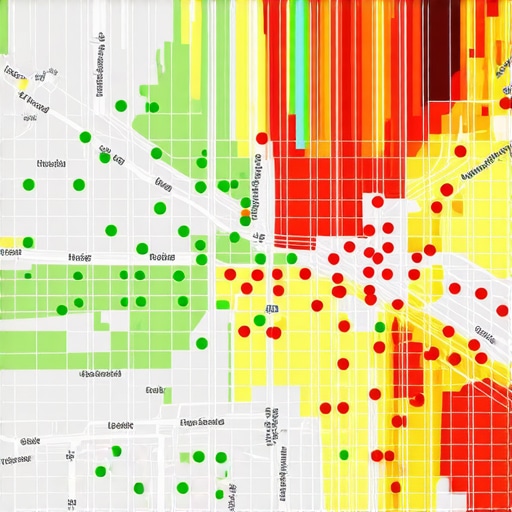
Does Google really care about the length of your review responses?
Actually, yes, but not for the reason you think. While some argue that long responses help with keywords, the real ‘hidden nuance’ is behavioral. A study by BrightLocal suggests that detailed, unique responses to both positive and negative feedback significantly increase the ‘trust score’ of a profile in the eyes of the algorithm. It’s not just about the words; it’s about proving the business is active. However, you must be careful—automated, templated responses can actually backfire if they trigger the hidden review patterns that signal a targeted reputation attack. If your responses look like a bot wrote them, Google might treat your profile like it’s on autopilot.
Stop Trusting Global Rank Trackers for Local Neighborhood Data
Another common mistake is relying on a rank tracker that only gives you a single city-wide average. Local search is hyper-local—literally block-by-block. If your tool doesn’t offer a grid-based visualization, you’re missing the ‘proximity bleed.’ I always tell my clients that the rank tracker setup that shows real neighborhood proximity is the only way to see if you’re actually winning the street corner where your highest-paying customers live. Don’t forget the hidden benefit of responding to negative reviews within 2 hours; it shows Google your business is responsive in real-time, which can actually expand your proximity radius over time. Local SEO isn’t a static task; it’s a living ecosystem that requires a scalpel, not a sledgehammer.I’ve spent years testing every tool under the sun, and if there is one thing I’ve learned, it’s that ‘set it and forget it’ is a recipe for disaster. If you aren’t actively monitoring your presence, you’re just waiting for a competitor to eat your lunch. I personally lean on a specific stack that balances automation with human oversight. For instance, I use a citation monitor set to high-alert for any changes to my core ten listings. Most people miss the citation monitor setting that catches profile hijacks in minutes, which is basically an early warning system for when a competitor tries to ‘suggest an edit’ to your hours or website URL. If you want to scale, you have to unlock the power of local seo software for small business growth that handles the grunt work while you focus on the strategy.
Stop doing the heavy lifting yourself
The real secret to long-term success isn’t working harder; it’s working smarter with data. I’ve seen businesses try to manage three or four locations manually, and by the third month, they’ve already missed a major rank tracker dip because they were too busy replying to emails. You need to see the big picture. I recommend using how to use heatmaps to visualize your map pack dominance because a list of numbers doesn’t tell you where you are actually losing ground. 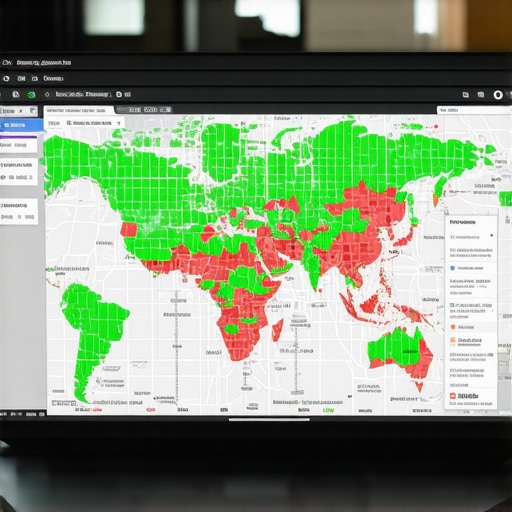
How do I keep my local rankings from falling off a cliff?
Maintenance is about consistency and catching the small stuff before it snowballs. According to Joy Hawkins of Sterling Sky, the Google ‘Vicinity’ update fundamentally shifted how proximity influences the map pack, meaning your radius can shrink overnight if your engagement signals drop. To combat this, I check my maps analytics every Monday morning. I’m looking for patterns, not just spikes. If I see clicks dropping while impressions stay high, I know there is a friction point on the profile. I also lean heavily on the software feature that makes managing 1000 reviews easy to ensure no customer is left hanging. An unanswered review is a signal to Google that the lights are off and nobody is home.
The future is all about user intent and behavior
Looking ahead to 2025, I predict that static citations will matter even less, and real-world behavioral signals—like ‘Request a Quote’ clicks and driving direction requests—will be the primary drivers of authority. This is why understanding how rank tracker can skyrocket your local rankings in 2025 is vital; you need tools that track these micro-conversions. Don’t waste time on the local keyword mistake that is wasting your marketing budget by targeting broad terms that don’t convert. Focus on the street-level data. Before you finish your workday, I want you to pull a grid-based rank report for your most profitable service. If you see more than a few red dots within two miles of your office, you have work to do. Let’s get to it.
Lessons I Learned the Hard Way While Fighting for the Local Pack
Over the years, I have realized that the biggest enemy of a small business isn’t the competitor down the street, but the bad data that lives forever on the web. I once spent three months wondering why a client’s rankings were plummeting, only to discover a citation monitor had been flagging a ‘suggested edit’ from a bot that we simply ignored. That taught me that local SEO is never a ‘set it and forget it’ task. You have to be proactive. I also learned that review management tools are not just for collecting praise; they are for identifying service gaps you didn’t know existed. If ten people mention the ‘parking is hard’ in reviews, Google sees that as a lack of accessibility, not just a complaint. Finally, I stopped looking at global rankings. I learned to how to run a local seo audit without getting overwhelmed by vanity metrics because at the end of the day, a ranking in the next state over doesn’t pay your rent.
The Setup I Use to Keep My Clients on Top
I am often asked what specific tools make the difference between a failing profile and a dominant one. My first recommendation is to always check out local seo software what we learned after testing the top 10 options to find a platform that fits your specific niche. I personally don’t make a move without a rank tracker that uses grid-based proximity data. For handling reputation, I look for tools that help me find the specific phrase that stops review sabotage in its tracks, as negative SEO attacks are becoming more common for local businesses. Lastly, I highly suggest keeping a close eye on your maps analytics every single week. If you don’t see your ‘Request a Quote’ button being clicked, your photos or descriptions are likely the problem, regardless of where you rank.
Stop Waiting for the Map Pack to Change Itself
The local algorithm can feel like a moving target, but it rewards those who stay consistent and human. You don’t need a massive marketing budget to win; you need to be the most active, accurate, and responsive business in your specific neighborhood. Use a reliable local seo software to automate the boring stuff so you can spend your time actually talking to your customers. If you feel like your visibility is slipping, don’t panic. Just follow the 12 point checklist to reclaim your vanishing google map rankings and start ticking off the boxes one by one. You have worked too hard on your business to let a messy spreadsheet or a few old citations hold you back from the growth you deserve. Have you ever noticed your rankings drop suddenly after a competitor moved in nearby? Let me know in the comments below.