I remember the exact moment I realized my digital footprint was a dumpster fire. It was 2019, and I’d just lost a high-value client because they couldn’t figure out if my office was on 5th Avenue or 5th Street. To them, those tiny discrepancies weren’t just typos—they were red flags. They told me later they thought I might be running some kind of bait-and-switch. It’s a gut-wrenching feeling to know you’re great at what you do, but the internet says you’re a fraud. I had spent hours obsessing over my website, yet I’d completely ignored the messy trail of data I’d left across the web. This is the reality for so many of us; we focus on the big picture while the small details quietly sabotage our growth. Today, I’m going to show you how to find and kill these ‘scam-like’ signals so you can finally reclaim your status as the local authority.
Stop Letting Inconsistent Listings Kill Your Reputation
You might think having your business listed on fifty different sites is a win, but if half of those listings have an old phone number or a misspelled suite name, you’re actually digging a grave for your rankings. I made the mistake of thinking Google was smart enough to ‘just know’ it was me. It wasn’t. In fact, the 3 citation errors that confuse google often start with something as simple as an abbreviated ‘St.’ versus ‘Street.’ When the algorithm sees conflicting data, it loses confidence. And when Google loses confidence, it hides you. I eventually had to learn how to audit your local listings for inconsistent phone numbers the hard way—by hand, late at night, with way too much coffee. It’s not just about the search engine, though. According to a study by BrightLocal, 93% of consumers are frustrated by incorrect information in online business directories, and that frustration leads them straight into the arms of your competitors. Using a reliable citation monitor is the only way I’ve found to keep this chaos under control without losing my mind.
Is this technical cleanup actually worth the headache?
I hear it all the time: ‘I’m a plumber, not a data scientist, does this really matter?’ The answer is a resounding yes. If your maps analytics are showing plenty of impressions but zero phone calls, you likely have a trust problem, not a traffic problem. People see your name, they see a conflicting address on a secondary directory, and they move on. They don’t have time to play detective. I’ve seen businesses skyrocket in the local pack just by cleaning up their ‘ghost’ locations. Have you ever googled your own business and felt a pit in your stomach because the results looked like they belonged to three different people? If you have, you’re not alone, and it’s a fixable disaster. By the time we’re done today, you’ll know exactly which tools to use and which manual checks are non-negotiable to ensure you look like the professional you are.
Stop the Bleeding with a Radical Data Audit
The first thing you have to do is stop guessing. You can’t fix what you can’t see, and most business owners are blind to 80% of the junk data out there. I remember working with a local bakery that was convinced they were being ‘shadow-banned.’ After ten minutes, I showed them they had three different addresses listed across Yelp, Yellow Pages, and an old local news feature. To Google, that bakery wasn’t one business; it was three ghosts. You need to learn how to audit your local listings for inconsistent phone numbers immediately. Open a private browser window and search your business name plus every old phone number or address you’ve ever used. You’ll be horrified at what surfaces. This isn’t just busy work; it’s about reclaiming your digital identity from the scrapheap of the internet. 
The Manual Fix Always Beats the Bot
I know the temptation is to buy a $50-a-month tool that promises to ‘sync’ everything instantly. Don’t do it yet. I’ve seen those automated tools overwrite correct data with old mistakes because the bot couldn’t tell which one was the truth. That is why manual citation cleanup is better than automated tools for the initial heavy lifting. You have to go into the biggest aggregators yourself and claim the profiles. When I did this for my own business, I found a listing from 2012 that still had my personal cell phone number on it. No wonder I was getting spam calls at 3 AM. Once you’ve cleaned the big players, you can use a citation monitor to keep an eye on things, but you have to do the surgery yourself first.
Use Real Data to Find the Trust Gap
If you look at your maps analytics and see that people are viewing your profile but never clicking the ‘Call’ button, you don’t have a ranking problem. You have a credibility problem. This is the specific reason your map impressions are not turning into calls. People are seeing your inconsistent data and deciding you aren’t worth the risk. To truly see how your neighbors view you, you need the rank tracker setup that shows real neighborhood proximity. Most tools give you a generic city-wide average, which is useless. You need to know if you’re ranking for the guy two blocks away, because if you aren’t, it’s likely because Google’s algorithm is confused by your conflicting location signals. Fix the address formatting, kill the duplicates, and watch those map pins actually start to stick where they belong.Most people treat their rank tracker like a high school scoreboard, but that’s exactly where the trouble starts. You see a ‘3’ next to your main keyword and think you’re winning. But here’s the contrarian truth: that number is often a vanity metric that hides a dying business. Traditional trackers usually average your position across a whole city, but Google Maps doesn’t work in averages; it works in square feet. If you’re ranking #1 at your storefront but #15 just two blocks away, your ‘average’ looks great while your phone stays silent. This is why tracking average position is the fastest way to lose local customers. I’ve seen businesses celebrate ‘ranking gains’ while their revenue actually dropped because they were gaining visibility in areas where nobody lived.
Stop Obsessing Over Your Average Position
I’ve also seen business owners get ‘data drunk’ on their maps analytics insights to boost your local map visibility. They see impressions climbing and assume the strategy is working. The ‘oops’ factor? You might be falling for the map analytics glitch that inflates your traffic reports. Sometimes a spike in views isn’t real customers; it’s bot traffic or Google showing your pin to people twenty miles away for a completely irrelevant query. If you don’t filter this noise, you’ll spend money optimizing for ghosts. I once worked with a contractor who had ‘record-breaking’ impressions, but 90% of them were from people searching for a similarly named business in a different state.
Why does my rank tracker show green while my actual leads stay red?
The answer lies in the ‘proximity gap.’ If you aren’t using a tool that tracks ranking on a hyper-local map grid, you’re essentially flying a plane with a broken altimeter. This is why rank tracking software often misses the local grid. According to the 2024 Local Search Ranking Factors study by Whitespark, proximity to the searcher remains the most heavily weighted signal in the local pack. If your software isn’t showing you exactly where your ‘visibility bubble’ pops, you’re wasting your marketing budget on the wrong neighborhoods. 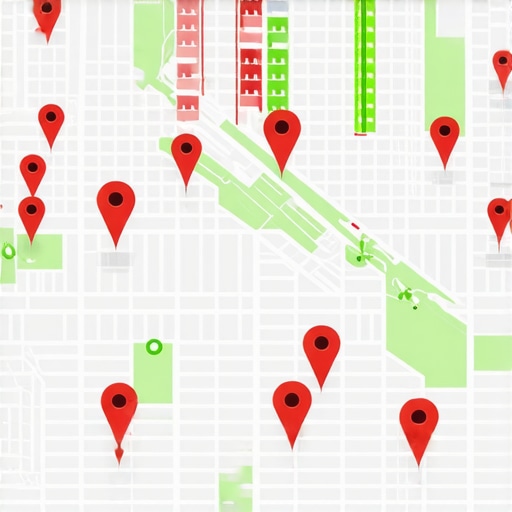
The Invisible Trap in Your Monthly Map Reports
Then there’s the review trap. We’re told that more stars equal more money. But modern evidence suggests that why your review average matters less than your response speed is the new reality of the algorithm. Google’s AI rewards active engagement and ‘recency’ over a static high score from three years ago. Using review management tools that transform customer feedback into revenue isn’t just about collecting stars; it’s about signaling to the algorithm that you are a living, breathing, responsive business. If a competitor has a 4.2 rating but responds to every person within an hour, and you have a 4.9 but haven’t replied to anyone in months, Google is going to favor the ‘active’ business every single time. Have you ever fallen into this trap of chasing ‘vanity numbers’ while your actual shop stayed empty? Let me know in the comments.
The biggest lie in the SEO world is that you can ‘set it and forget it.’ I fell for it once. I spent three months cleaning up every single directory listing, reached the top of the map pack, and then stopped looking. Two months later, my traffic plummeted. A local competitor had started ‘suggesting edits’ to my business hours and phone number, and because I wasn’t watching, Google accepted them. If you aren’t using local seo software to automate the watchtower, you’re basically building a sandcastle on a tidal flat. You need a system that alerts you the second someone tries to touch your digital property. I now rely on a citation monitor that pings my phone if even a single ‘St.’ is changed to ‘Street’ on a niche directory, because that’s the level of precision the algorithm demands today.
The Software Features That Actually Pay the Bills
When you start scaling, you’ll realize that most tools are just fancy spreadsheets. You need to look for the software feature that makes managing 1000 reviews easy, specifically those that use sentiment analysis to tell you why people are unhappy before they even leave a one-star rating. I’ve found that the best setups aren’t the most expensive ones, but the ones that allow you to monitor ranking flux without checking your phone every hour. For my money, I want a dashboard that connects my maps analytics directly to lead volume. If the data doesn’t show a direct line from a map view to a phone call, it’s just noise. As Joy Hawkins from Sterling Sky often points out, Google is constantly testing new ‘overlay’ features in the local pack; if your software isn’t catching these layout shifts, you’re optimizing for a version of the web that no longer exists.

How can I keep my map rankings from sliding backward?
Maintenance is a game of consistency, not intensity. I’ve seen more success from businesses that spend ten minutes a week on their profile than those that do a ‘big push’ once a year. This means checking the citation monitor setting that catches profile hijacks in minutes and ensuring your response rate to new reviews is under four hours. In the near future, I predict we will see ‘AI-agent’ searchers that bypass the map pack entirely if they see any signal of inactivity. If your profile looks ‘static,’ you’ll be invisible to the next generation of voice and AI search. You have to treat your Google Business Profile like a social media feed—constant updates, fresh photos, and immediate engagement are the only ways to defend your territory. If you’re feeling overwhelmed by the technical debt, my best advice is to run a local seo audit without getting overwhelmed by vanity metrics today. Pick one neighborhood where your rank is a ‘4’ and use the rank tracker setup that shows real neighborhood proximity to find the exact street where you’re losing. Fix that one spot first. It’s more rewarding than chasing a city-wide average that doesn’t exist.
The Hard-Earned Lessons That Finally Fixed My Phone Lines
Looking back at my 2019 disaster, I realized that I wasn’t just fighting a technical error; I was fighting a trust gap. One of the biggest shifts in my perspective happened when I stopped looking at a city-wide average and started looking at street corners. You have to realize that the key difference between tracking rankings and tracking leads is how you interpret the proximity of your searchers. If you are ranking number one at your shop but invisible at the coffee house two streets over, you don’t have a ranking—you have a hobby. I also learned that why your business category choice might be hiding you from customers often comes down to the sub-categories your competitors are using to ‘sneak’ into related searches. Finally, the most brutal truth is that a static profile is a dying profile. Even if you have the best photos, if you haven’t posted an update in three months, Google assumes you’ve closed your doors.
My Must-Have Gear for Fighting the Proximity War
I don’t believe in buying every tool on the market, but I do believe in having a surgical toolkit. To save yourself the headache I went through, you need to be intentional about your stack. I always recommend starting with a deep dive into local seo software: what we learned after testing the top 10 options to see which interface actually fits your daily workflow. For ongoing maintenance, a reliable citation monitor is non-negotiable; it acts like a digital security guard for your address data. I also rely heavily on review management tools that transform customer feedback into revenue because they allow me to automate the ‘thank you’ notes that signal activity to the algorithm. These aren’t just expenses; they are the infrastructure that prevents your reputation from being sabotaged by bad data or aggressive competitors.
Your Future Customers Are Waiting Two Blocks Away
The road to local authority isn’t paved with complex ‘hacks’ or secret codes. It’s paved with consistency and the willingness to look at the data that everyone else is ignoring. If you’re feeling stuck, don’t try to fix the whole city at once. Download the 12 point checklist to reclaim your vanishing google map rankings and just focus on your immediate neighborhood first. When you see that first ‘pin’ turn green on your map grid, the momentum will carry you the rest of the way. Reclaiming your digital identity is the most profitable thing you can do for your business this year. If you ever run into a technical wall you can’t climb, you can always reach out to us at our contact page for a second pair of eyes. You’ve worked too hard on your business to let a messy digital footprint hold you back from the success you deserve. Have you ever found a weird duplicate listing for your business that you didn’t create? Let me know in the comments below!