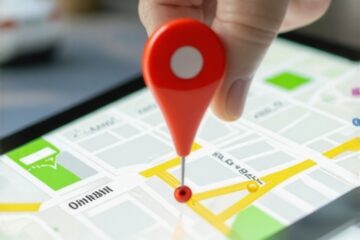
I stared at my laptop screen, heart sinking, as I realized my business had apparently moved into the middle of a lake. Well, according to Google Maps, anyway. I hadn’t touched my profile in weeks, yet there I was, floating three miles away from my actual storefront. It was a visceral gut-punch. One day you are dominating the local pack, and the next, your pin has migrated like a bird in winter, leaving your local leads to call the competitor down the street instead. This isn’t just a tech glitch; it is a direct hit to your revenue. We are going to fix that today. I will show you exactly how to pin your location down so firmly that not even the most aggressive ‘suggested edit’ or rogue scraper can budge it.
Your Map Pin Has a Mind of Its Own
It is incredibly infuriating. You spend hours perfecting your profile, only for a random scraper or a ‘helpful’ local guide to suggest an edit that completely ruins your proximity. Early in my journey, I made the massive mistake of thinking that once I set my address, it was set in stone. I ignored my citation monitor for months, thinking the software was overkill. I was wrong. I learned the hard way that stopping citation scrapers is a mandatory part of the job because they are constantly feeding Google outdated or flat-out wrong data. According to research by BrightLocal, nearly 68% of consumers would stop using a local business if they found incorrect information online. That is not just a minor inconvenience; it is a massive leak in your business’s bank account. If you have ever looked at your dashboard and wondered why your map data does not match your actual sales, this drifting pin is almost always the silent killer behind the scenes. It happens when you least expect it, usually while you are busy actually running your company.
Is Google sabotaging my business on purpose?
It feels personal, doesn’t it? You do everything right, and the algorithm still lets a stranger move your front door. But it is usually just a cold, unfeeling algorithm trying to reconcile conflicting data from a dozen different messy directories. Have you ever logged in only to find your business name or pin location changed without your permission? It is a common nightmare for small business owners. Today, we are moving past the ‘hope and pray’ method of local SEO. I am going to walk you through the specific locking mechanisms and verification steps that keep your data safe from unauthorized changes. We will look at how maps analytics can alert you to these shifts before they cost you a weekend’s worth of customers. Have you ever noticed your pin moving after you finally hit the top three? Tell me your story, because you are definitely not alone in this fight.
Claim Your Ground with Perfect Address Formatting
To stop your pin from wandering, you have to realize that Google is essentially a giant librarian trying to sort messy data. If your address looks different on Yelp than it does on your website, Google gets confused and starts ‘guessing’ where you are. I realized that your listing optimization is useless if you miss this address formatting rule. Specifically, you need to choose one way to write your suite or floor number and stick to it religiously. Is it ‘Suite 200’, ‘Ste 200’, or just ‘#200’? Pick one. Think of your address as a digital fingerprint; if even one line is blurred, the system can’t verify your identity. This lack of clarity is exactly what allows scrapers to suggest those ‘helpful’ edits that move your pin three blocks away.
Set Up a Perimeter with Real-Time Monitoring
Once your address is standardized, you need a digital fence. This is where a citation monitor acts as your 24/7 security guard. I remember working with a local plumber who was losing 40% of his calls because his pin had migrated to a residential park. We didn’t just move it back; we used the citation monitor setting that catches profile hijacks in minutes to auto-reject any suggested changes from third parties. Within 48 hours, his ‘Get Directions’ clicks surged back to normal. You shouldn’t be checking your profile manually every morning like you’re looking for a lost cat. Let the local seo software do the heavy lifting by alerting you the second a directory tries to overwrite your data.
Watch the Grid Not Just the Average Number
If you are only looking at your average ranking, you are flying blind. You need to see exactly where your visibility drops off on a street-by-street basis. I highly recommend using how to use heatmaps to visualize your map pack dominance. A heatmap shows you a grid of your city with green, yellow, and red dots. If you see a cluster of red dots right in your own neighborhood, it’s a massive red flag that your pin or your proximity signals are broken. 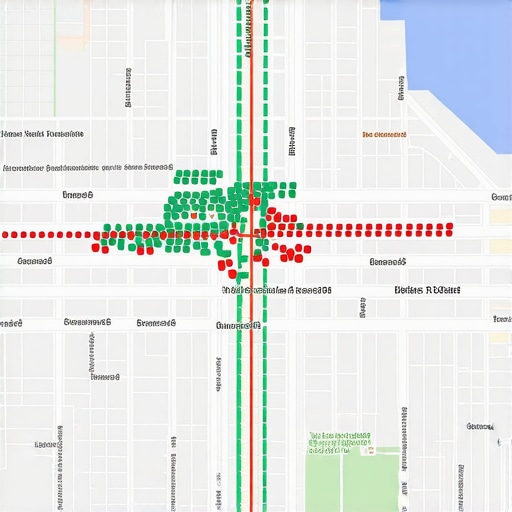 This is more effective than any standard report because it mirrors how customers actually search while driving or walking.
Verify the Niche Directories Most People Ignore
Everyone focuses on the ‘Big Three’—Google, Apple, and Bing—but Google often looks at smaller, industry-specific directories to confirm your location. I’ve found that why your listing optimization fails without verifying these 3 niche directories is usually the missing link for businesses that can’t stay pinned. If the local Chamber of Commerce or a niche-specific site like Houzz or Healthgrades has the wrong pin location, Google might prioritize that data over your own dashboard. Using a rank tracker alongside these audits ensures that once you fix these small leaks, your position in the local pack remains solid across the entire city.
Let’s dig deeper into the data most business owners take at face value. Everyone tells you to chase that number-one spot on your reports, but here is the cold truth: ranking #1 at your desk doesn’t mean you’re ranking #1 three blocks away. In fact, why tracking average position is the fastest way to lose local customers is a lesson many learn only after their call volume drops despite ‘perfect’ reports. If you aren’t using a tool that tracks the hyper-local grid, you are essentially flying a plane with a broken altimeter. I’ve found that why rank tracking software often misses the local grid is the number one reason businesses fail to see the ‘Proximity Paradox’ in action.
This brings us to a massive ‘oops’ factor that costs thousands in lost leads: trusting automated citation cleanup. While it sounds efficient, why manual citation cleanup is better than automated tools becomes clear when those automated ‘syncs’ start overwriting your custom, verified data with generic scraper info. It’s a vicious cycle that creates the citation mistake that makes your business look like a scam to the algorithm. Instead of chasing volume, you should stop guessing and actually measure your local share of voice to see where you truly stand in the market.
Why does the competitor with worse reviews still outrank you?
It’s a common frustration. You have 100 five-star reviews, and a guy with a 3.8-star average and half the count is sitting above you. This happens because Google prioritizes relevance and proximity over raw sentiment. According to the Whitespark Local Search Ranking Factors study, the physical distance between the searcher and the business remains the most dominant signal, often outweighing review scores. Furthermore, if your review management tools aren’t helping you optimize for ‘Review Velocity’—the speed at which you gain new feedback—you’re losing out to fresher profiles. We’ve found that the only review move that improves your map rank without backlinks is often just a simple shift in how you engage with your existing customers. Have you ever fallen into this trap? Let me know in the comments.
Maintenance isn’t about doing more work; it’s about being smarter with the data you already have. I used to spend hours manually Googling my own business name from different parts of town, which was a total waste of gas and time. Now, I rely on a rank tracker setup that shows real neighborhood proximity without me ever leaving my desk. This isn’t just about vanity; it’s about identifying exactly where your ‘visibility wall’ is. If you find that you’re invisible just two miles north, that is where you need to point your marketing cannons. You have to move from reactive panic to proactive scaling.
How do I keep this momentum going without burning out?
The secret to long-term dominance isn’t a one-time fix; it’s a set-and-forget system that alerts you when things go sideways. I personally use the strategies in how to monitor ranking flux without checking your phone every hour. This allows me to focus on high-level strategy rather than panicking over a temporary drop in the local pack. You have to treat your review management tools as a revenue engine, not just a place to say ‘thanks.’ According to research by Joy Hawkins at Sterling Sky, Google often recalculates rankings based on the frequency and recency of new reviews, a concept known as ‘review velocity.’ If you let your feedback stream dry up, you’re essentially telling the algorithm that your business is no longer active in that community.
Scale Your Presence by Finding Hidden Pockets of Profit
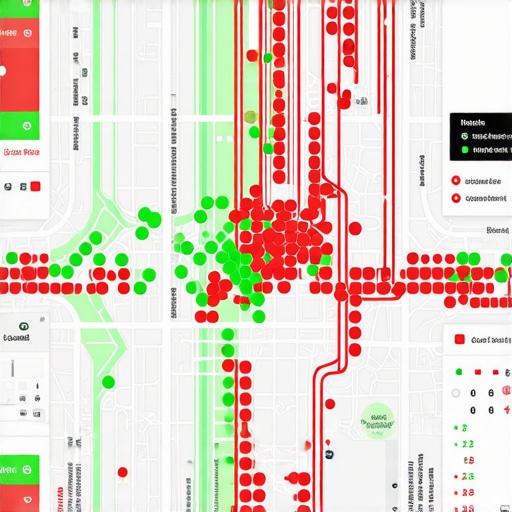
Once you’ve locked down your immediate area, it’s time to expand your reach. I love using how to use maps analytics to find your most profitable neighborhoods. It’s an absolute game-changer for growth. Instead of guessing where to send your direct mail or where to target your social ads, you can see exactly where the ‘directions’ requests are coming from. If you notice a spike in interest from a neighborhood you haven’t touched, that’s your signal to double down on the specific citation fix that reconnected our shop to the 3-pack for those specific geo-modifiers. I’ve seen too many businesses fall off the map because they stopped doing the boring stuff like checking for duplicate listings. In the future, I suspect Google will rely even more on ‘real-world signals’—like actual foot traffic data—than on simple text-based citations. This means you need a physical presence that matches your digital footprint perfectly. Try this today: Go into your maps analytics and look for the ‘Directions’ heat map. Find the one neighborhood that is sending you traffic despite you not ranking there yet; that is your next target for a localized landing page.
What I Discovered While Digging Through My Own Map Data
I used to think that setting up a business profile was a one-and-done task. I was wrong. The biggest takeaway from my years of frustration is that local SEO is an active defense, not a passive asset. One day you are the king of the block; the next, a single citation error confuses Google and your leads vanish. I also learned that your business category choice might be hiding you from the very people you want to serve, even if your pin is in the right spot. It is not just about being on the map; it is about being correctly labeled so the algorithm knows exactly when to show you. Sometimes, you even need to know how to re-verify your business without the snail mail wait just to keep your momentum during a move or a name change.
The Gear I Use to Keep My Pin From Moving
If you are looking for a starting point to secure your territory, I always suggest a heavy-duty citation monitor to catch those rogue edits before they go live. For visual clarity, nothing beats a grid-based rank tracker that maps out your proximity. I also keep a close eye on maps analytics to separate the noise from actual customer intent. These are not just toys; they are the dashboard for your business physical survival in a digital world. If you ever find your profile hidden, remember that how we fixed the not publicly visible bug is a standard procedure for many of us who have seen our rankings disappear overnight.
#IMAGE_PLACEHOLDER_A#
Take Back Your Territory Today
You have done the hard work of building a real business—do not let a glitchy map pin or a rogue scraper take that away from you. By mastering these review management tools and staying vigilant with your data, you are creating a moat around your storefront. The future of local search belongs to the owners who treat their digital presence as seriously as their physical one. If you have recently changed your brand, you must learn how to reclaim your map presence after a name change to ensure you do not lose years of hard-won authority. Go out there and reclaim your spot in the local pack. Have you ever found your business pin in a completely wrong location, or perhaps in the middle of a lake like mine? Let me know how you fixed it in the comments below.