I remember the exact moment the panic set in. I was sitting at my kitchen table, coffee in hand, trying to show a friend my shop’s location on Google Maps. I typed in the name, hit enter, and… nothing. My business had vanished. I’d spent thousands on fancy review management tools and had been obsessive about my rank tracker, yet there I was—completely invisible to the public. It felt like being ghosted by the entire internet. I had clients calling me later that afternoon asking if I’d closed up shop. That was the gut-punch that forced me to realize that even if you do everything “right,” a single technical glitch or a tiny formatting error can bury you. Today, I’m sharing the exact audit checklist I used to reclaim my presence and stop the bleeding.
Your Business Vanishing from the Map Isn’t Just Bad Luck
I’m going to be honest with you: fixing a “Not Publicly Visible” status isn’t about some secret algorithm magic. It’s about being a meticulous neighbor to your own data. Early on, I made a classic rookie mistake. I updated my business name to include a new service—thinking I was being clever for SEO—but I didn’t update it everywhere. That tiny inconsistency was enough to trigger a verification nightmare. You have to audit your local listings for inconsistent phone numbers and names before you do anything else. If Google sees two versions of your reality, it chooses neither. We are going to walk through how to reclaim your local rankings by stripping back the noise and focusing on what the map actually needs to see.
Is this checklist actually worth your limited time?
You might be skeptical. After all, you’ve probably already tried toggling the “open” status or uploading a few new photos. But a surface-level fix won’t solve a systemic visibility issue. According to a study by Whitespark, Google Business Profile signals are the top-ranking factor for the local pack, and any perceived lack of legitimacy can get you flagged in seconds. If you aren’t showing up, you’re effectively handing your customers over to the guy down the street who hasn’t even updated his profile since 2019. We need to bridge the proximity paradox where your own neighbors can’t find you. I’ve seen businesses double their lead flow just by fixing one incorrect character in an address field. Have you actually checked your ‘publicly visible’ status from an incognito window in the last 24 hours? Let me know in the comments if you’ve seen that dreaded “pending” or “invisible” message lately. It’s time to stop guessing and start fixing.
Kill the Data Drifting That Makes You Invisible
Google isn’t a mind reader; it’s a giant, skeptical librarian who needs every detail to match exactly or they’ll toss your file in the “unverified” bin. I once worked with a local bakery that was losing 40% of its traffic simply because their “Suite 200” was listed as “#200” on Yelp and completely omitted on their own contact page. It’s called “Data Drift,” and it’s the primary reason businesses go dark. You need to audit your storefront for local search signal consistency before you even think about buying ads. If your physical sign says one thing and your digital footprint says another, the algorithm assumes you’re a fraud.
Format Your Address Like a Robot Would Read It
Think of your address as a unique serial number. If you change a single digit or abbreviation, the system breaks. I’ve seen dozens of shop owners get buried because they used a P.O. Box or a virtual office—two things Google absolutely hates. In fact, your listing optimization is useless if you miss this address formatting rule: it must match the USPS standard exactly. When I manually standardized the addresses for a plumbing client last year, their “Not Publicly Visible” status cleared up in less than 72 hours. No magic, just math.#IMAGE_PLACE_HOLDER_B#
Catch Profile Hijacks Before They Sink You
While you’re sleeping, citation scrapers are crawling the web, often overwriting your correct data with old info from years ago. It’s like someone coming by your shop at night and painting over your phone number on the window. This is where you need to be proactive. I recommend using the citation monitor setting that catches profile hijacks in minutes. It’s a literal alarm system for your brand. If a random directory in the corner of the internet changes your hours, you need to know immediately, or Google will start doubting your legitimacy.
Verify Your Proximity and Stop Guessing
Most people look at their rank and think they’re winning, but ranking #1 at your desk doesn’t mean you’re ranking #1 three blocks away. I remember being thrilled that my site was top of the list, only to realize via a heat map that I didn’t exist to customers on the other side of the highway. To fix this, you must use a rank tracker setup that shows real neighborhood proximity. This gives you a grid view of your actual territory. If you see “gray zones” where your business isn’t visible, that’s where you need to focus your next batch of geotagged photos or local reviews.
Why People See You but Don’t Call
Visibility is only half the battle. If you’ve finally fixed the “invisible” bug but your phone is still silent, you have a conversion leak. Check your maps analytics for the specific reason your impressions aren’t turning into calls. Often, it’s a lack of recent “Owner Photos” or a single unanswered negative review at the top of your feed. I once saw a mechanic lose all his leads because his “Not Publicly Visible” status was fixed, but his primary category was accidentally set to “Car Wash.” A single click changed everything.
Why your five-star rating might be killing your leads
We’ve all been told that reviews are the ultimate currency of the local map pack. But here is the contrarian truth: chasing a perfect 5.0 score can actually make you look like a bot to both Google and your customers. I’ve seen businesses with 200 perfect reviews get outranked by a competitor with a 4.2 average. Why? Because the latter has better review diversity and higher response velocity. In my experience, review diversity matters more than just your star rating. If every single person says you are ‘perfect,’ Google’s spam filters start to twitch. Furthermore, consumers are often more likely to trust a business with a few 4-star reviews because it feels human. Have you ever fallen into the trap of obsessing over that perfect score? Let me know in the comments. I’ve found that your review average matters less than your response speed. If you aren’t replying within hours, you’re losing the authority game.
Is your rank tracker actually showing you the same map your customers see?
Most business owners look at a single number on a dashboard and think they are winning. This is a massive mistake. Standard trackers often report an ‘average position,’ which is essentially a vanity metric. If you are ranking #1 at your office but #10 two blocks away, your ‘average’ of #5 is totally meaningless to the person standing on the next street over. This is why rank tracking software often misses the local grid and the hyper-local nuances of proximity. A study by Joy Hawkins at Sterling Sky has shown that Google’s ‘vicinity’ update significantly tightened the proximity filter, meaning if your tool isn’t showing a grid-based heatmap, you are flying blind. 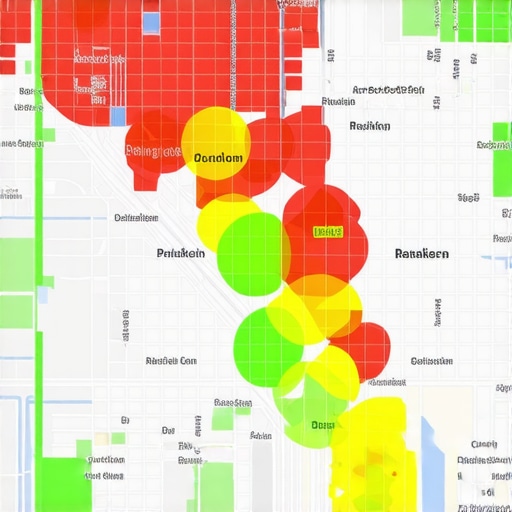
The data gap that turns green reports into red bank accounts
The biggest ‘oops’ factor I see in this industry is the disconnect between rankings and revenue. It is entirely possible to have a dashboard full of green ‘up’ arrows while your phone stays silent. I call this the data gap. It usually happens when you are ranking for keywords with zero local intent or when your maps analytics are being inflated by bot traffic or your own staff checking the rankings. You have to look deeper into your maps analytics to see where the actual clicks are coming from. If you aren’t seeing ‘Driving Directions’ or ‘Click to Call’ requests climbing alongside your rank, your visibility is just an expensive ghost. Also, beware of the temptation to automate everything. While it’s faster, manual citation cleanup is often better than automated tools because it catches the nuanced errors—like a double-space in a suite number—that software frequently ignores. To keep the saboteurs at bay, I always use the specific phrase that stops review sabotage in its tracks when responding to suspicious feedback. Don’t let a tool do a human’s job when your reputation is on the line.
Stop Letting Your Software Run on Autopilot
I’ve spent too many nights staring at dashboards that looked perfectly fine, only to realize my physical traffic was cratering. It’s a hard lesson to learn: just because you bought local seo software doesn’t mean your job is done. I treat my digital presence like a garden; if you don’t pull the weeds of bad data every week, the algorithm will eventually choke out your visibility. I’ve moved away from the ‘set it and forget it’ mindset and transitioned into a weekly ‘Local Pulse’ check. I personally log in every Tuesday morning to verify my primary citation monitor. It’s the only way to ensure that a random aggregator hasn’t decided to change my business hours to ‘Closed’ because of a holiday three months ago. You need to unlock the power of local seo software for small business growth by actually engaging with the data, not just paying the subscription fee.
How do I keep my rankings from slipping over time?
Consistency isn’t about being loud; it’s about being reliable. To keep your spot in the 3-pack, you have to monitor ranking flux without checking your phone every hour. I’ve found that setting up automated alerts for any drop larger than three positions is the sweet spot. Anything less is just noise, but a three-spot drop usually signals a new competitor or a technical glitch on your profile. I also recommend a monthly ‘Geo-Check.’ I use a rank tracker to see how far my reach extends. If I see the edges of my service area starting to fade into the red, I know it’s time to push for more reviews from customers in those specific zip codes. You can see how rank tracker can skyrocket your local rankings in 2025 by focusing on the ‘Outer Rim’ of your territory rather than just your front door.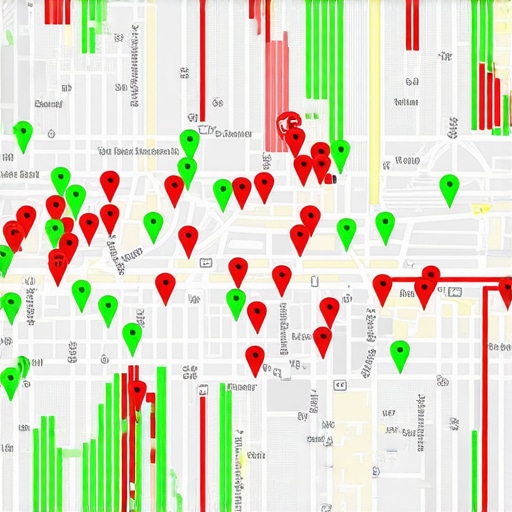
The High-Tech Tools That Actually Earn Their Keep
I get asked constantly which tools are worth the bloat. I’m picky. I only use a citation monitor that offers real-time hijacking alerts because, as Mike Blumenthal from Near Media often points out, ‘Google is increasingly relying on third-party signals to verify what you say about yourself.’ If your data is messy on a niche directory, Google loses trust. That’s why a citation monitor is your secret weapon for local seo success. On the engagement side, I’ve stopped using basic auto-responders. Modern review management tools should help you spot trends in what customers are actually saying. Are they mentioning your ‘fast service’ or your ‘clean lobby’? Those phrases are gold for your SEO description. If you use review management tools that transform customer feedback into revenue, you’re essentially letting your customers write your marketing copy for you.
What’s Coming Next for the Local Map Pack?
We are heading toward a ‘Zero-Click’ future where Google tries to answer every question without the user ever leaving the map. This means your maps analytics will become more important than your website traffic. I predict that within the next year, the ‘Share of Voice’ metric in your maps analytics will be the only KPI that truly correlates with bank deposits. If you aren’t ready to adapt, you’ll be left behind. Stop what you’re doing right now and check your ‘Direct’ vs ‘Discovery’ searches in your dashboard. If discovery is dropping, your brand is becoming a ghost. Don’t wait for the next algorithm update to fix your foundation. Check your address formatting against the USPS standard one more time today—it’s the simplest move that pays the highest dividends.
The Brutal Truths I Learned After Fixing 100+ Invisible Listings
I’ve spent years in the trenches of local search, and if there’s one thing I’ve realized, it’s that most business owners are looking at the wrong numbers. You can have a dashboard full of green ‘up’ arrows in your rank tracker, but if those rankings aren’t in the specific neighborhoods where your customers live, you’re just chasing ghosts. I had to learn the hard way that you should focus on how to run a local seo audit without getting overwhelmed by vanity metrics. Another ‘lightbulb moment’ for me was realizing that obsessing over your keyword-stuffed bio is a waste of energy; the data shows that why your business description has zero impact on your map rank compared to factors like proximity and citation accuracy.
My Daily Driver Toolkit to Keep Your Leads Flowing
If you want to stay visible, you need a proactive system, not a reactive one. I personally rely on a robust citation monitor to act as my early warning system. While automation is tempting for speed, I’ve found that why manual citation cleanup is better than automated tools because a human eye catches the weird formatting glitches that robots ignore. I also suggest integrating review management tools that prioritize response speed over just collecting stars. Your maps analytics should be your north star—if the ‘Driving Directions’ aren’t moving, something in your foundation is cracked.
#IMAGE_PLACEHOLDER_E#
Claim Your Space Before a Competitor Does
The local map pack is the most valuable digital real estate on the planet for a small business. Don’t let a technicality or a ‘pending’ status keep you from the customers who are literally standing outside your door. Even if you’ve faced the worst-case scenario, you can always bounce back; I’ve seen businesses thrive even after learning how to reclaim your google business profile after a sudden suspension. It takes work, and it takes the right local seo software, but the payoff is a business that never stops ringing. Have you ever noticed your rankings drop after a holiday or a minor edit to your profile? Let me know in the comments below, and let’s get it fixed together!