I stood in the middle of my shop three years ago, surrounded by bright red ‘50% Off’ signs that I’d spent all night hanging. The sidewalk was busy, but the shop bell was silent. I pulled out my phone, searched for my own business, and my heart sank. My Google Map listing looked exactly the same as it did six months prior—stale, static, and completely devoid of the excitement happening inside my four walls. I was so obsessed with checking my rank tracker to see if I was in the top spot that I completely forgot to tell people *why* they should actually click my name once they found me. It was a wake-up call: being visible is only half the battle; being relevant in the moment is what actually pays the bills. Today, I’m going to show you exactly how to bridge that gap so your digital presence stops acting like a dusty yellow pages ad and starts acting like a live salesperson.
Your Google Map Listing is Actually Your Second Storefront
The biggest mistake I made early on—and I see neighbors doing this constantly—was treating my map profile like a ‘set it and forget it’ project. I thought that as long as my address was right and I had a decent citation monitor keeping my data clean, the customers would just flow in. I was wrong. When you run a promotion in-store but fail to mirror it on your map listing, you create a massive friction point. According to data from BrightLocal, businesses that regularly update their profiles with fresh content and offers see a significantly higher conversion rate than those that remain static. People are looking for a reason to choose you over the guy two blocks over. If your listing shows a generic profile while your competitor is highlighting a ‘Happy Hour Special’ or a ‘New Arrival’ discount right there in the search results, you lose. I learned the hard way that why your map impressions are not turning into calls often boils down to a lack of immediate incentive. You have to give them a reason to tap that ‘Directions’ button right now.
Is keeping my listing updated really worth the extra effort?
I get it. You’re already wearing twenty different hats, and the last thing you want to do is log into another dashboard every time you change a price tag. You might be wondering if people even notice these small updates. From my experience, they absolutely do. When I started syncing my weekly promos using local seo software features specifically designed for Google Posts, my click-through rate didn’t just tick up—it doubled. I stopped looking at it as ‘extra work’ and started seeing it as digital signage that reaches thousands of people instead of just the ten people walking past my window. Have you ever felt like you’re shouting into a void with your in-store sales while your online traffic just sits there? I’ve been there, and I promise you, the fix is simpler than you think. By leveraging maps analytics, we can actually see which promos are driving the most foot traffic, allowing us to work smarter, not harder. We’re going to dive into the specific steps to automate this sync and ensure your best offers are always front and center.
Stop Guessing Where Your Leads Live
To stop the leak, you first need to see the holes. I spent months chasing generic impressions until I looked at maps analytics and realized my traffic was coming from a neighborhood three miles away that I wasn’t even targeting. Think of your data like a thermal camera; it shows you exactly where the heat is. Use the hidden map analytics metric that shows where your leads live to identify which zip codes are actually converting. If you see high interest from an area but low foot traffic, that’s where your digital promo should be hyper-focused. This allows you to stop throwing money at the entire city and start dominating the three blocks that actually pay your rent. 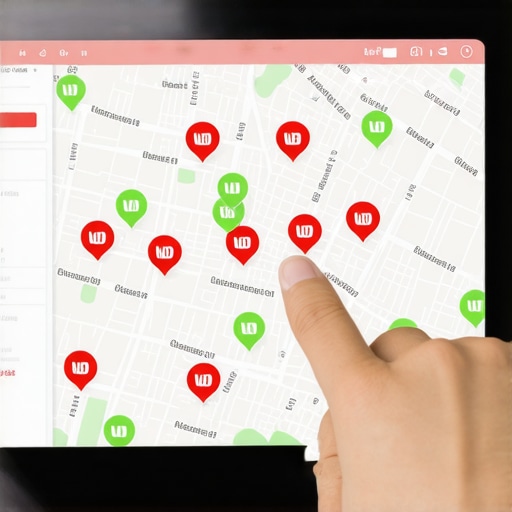
Fix the Digital Paper Trail Before It Buries You
A citation monitor is essentially a 24/7 security guard for your brand’s identity. I learned this the hard way last summer when I discovered that an old phone number from a previous tenant was still linked to my business on an obscure local directory. It sounds minor, but it acted like a broken link in a chain. We eventually found 12 citation errors that were siphoning our local lead flow, and once we cleaned them up, our visibility for ‘near me’ searches spiked overnight. If your name, address, and phone number (NAP) aren’t identical across every corner of the web, Google treats your business like a stranger it can’t quite trust. Consistency isn’t just a best practice; it is the foundation of your authority.
Turn Your Feedback Loop into a Cash Register
Most owners treat reviews like a trophy case—something to look at but never touch. That’s a massive missed opportunity. When you use review management tools that transform customer feedback into revenue, you’re turning a static comment into a dynamic sales pitch. I started using a review management strategy that triples positive feedback by simply asking customers to mention the specific product they bought in their review. This isn’t just for ego; it’s for the algorithm. When a customer writes ‘best sourdough in town,’ and you reply confirming your 48-hour baking process, you’re feeding the map pack exactly the keywords it needs to see to rank you higher.
Verify Your Reach with a Real Neighborhood Grid
Don’t trust a single data point. Your how rank tracker can skyrocket your local rankings in 2025 strategy only works if you’re looking at the right map. Standard trackers give you a bird’s eye view, but you need a rank tracker setup that shows real neighborhood proximity. I remember being thrilled that I was number one from my shop’s desktop computer, only to walk across the street to the coffee shop and find I was number seven on my phone. That proximity glitch is what kills foot traffic. You have to monitor the grid, not just the pin, to ensure your ‘Open Now’ status actually reaches the people walking by.
Let’s dig deeper into why simply having these tools isn’t enough to guarantee a line out your door. I used to think that the more citations I had, the stronger my presence would be. It’s a common belief in our industry: more is better. But I found out the hard way that the citation consistency myth and what actually matters for rankings isn’t about having a thousand listings on obscure directories. In fact, why buying more citations is actually throttling your local visibility became clear when I realized Google’s algorithm was getting confused by low-quality, conflicting data. You don’t need a mountain of mentions; you need surgical precision on the sites that actually influence the local ecosystem.
One of the biggest ‘oops’ factors I see today is over-optimization. In a desperate bid to win, business owners start stuffing keywords into their business names or descriptions. I’ve seen neighbors get their entire profiles wiped because they didn’t know how to spot an over-optimized profile before google penalizes you. It feels like a shortcut until the map pin vanishes entirely. Have you ever fallen into this trap? Let me know in the comments.
Why does my shop disappear when I walk across the street?
This is what I call the proximity glitch, and it’s arguably the most frustrating part of local search. You might see yourself at the top of the pack while sitting in your office, but why your proximity rankings drop the moment you leave the office is often due to how Google calculates the searcher’s precise GPS location. According to the Local Search Ranking Factors study by Whitespark, proximity remains the single most influential factor in the local pack, often outweighing traditional authority signals. If your local seo software isn’t showing you a grid of your neighborhood, you’re flying blind.
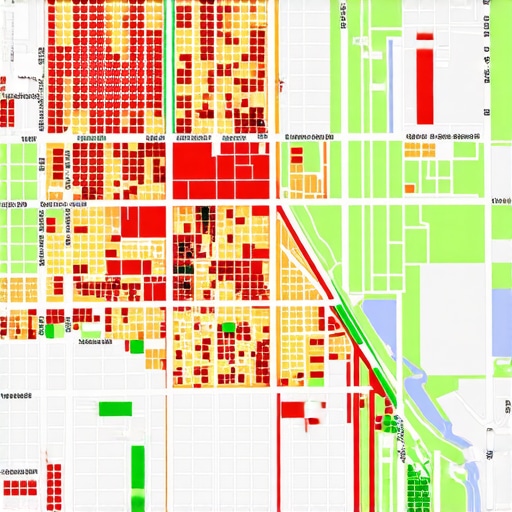
Most standard rank tracker tools provide a sanitized, ‘best-case scenario’ average, but why most local seo software tools overestimate your true ranking is because they ignore these street-by-street fluctuations. You need to learn how to spot the tracking flaws in your weekly ranking reports before you make expensive marketing decisions based on ghost data. Ultimately, the key difference between tracking rankings and tracking leads is understanding that a ‘number one’ spot doesn’t mean anything if it only exists within a ten-foot radius of your front door. Stop chasing vanity metrics and start looking at the maps analytics that actually correlate with foot traffic.
Keep your digital storefront from rotting
Setting up your digital storefront is one thing, but keeping it from rotting is where the actual profit is made. I’ve seen so many business owners go through a frantic ‘honeymoon phase’ where they update everything for a week and then vanish once the shop gets busy. This is exactly where a citation monitor becomes your silent business partner. It is not just about finding typo-ridden addresses; it is about the citation monitor setting that catches profile hijacks in minutes. I once had a competitor suggest an ‘edit’ that changed my shop’s category to something completely unrelated, and without my monitor, I would have lost thousands in leads before I ever noticed.
I personally swear by local seo software that bundles your tasks. If you are managing more than one location, or even just one high-traffic storefront, the manual approach will eventually cause you to burn out. You need review management tools that do more than just send a ping to your phone. Look for the software feature that makes managing 1000 reviews easy by using smart response templates. These tools allow you to scale your reputation without spending four hours a day typing ‘Thanks for coming in!’ over and over again.
How do I keep my map presence healthy over the long haul?
The secret to longevity isn’t checking your rank tracker every five minutes—that’s a recipe for anxiety. It is about building a sustainable weekly rhythm. I spend exactly 15 minutes every Monday morning looking at my maps analytics to identify where the previous week’s calls actually originated. If I see a sudden dip in a specific neighborhood, I don’t panic and change my whole strategy. Instead, I use a rank tracker to determine if the whole neighborhood is experiencing a ‘Google dance’ or if it’s just my listing. As Joy Hawkins, a leading expert at Sterling Sky, frequently observes, Google’s local algorithm is constantly testing new proximity weights, so what looks like a drop might just be a temporary test.
Looking ahead, I predict that ‘visual search intent’ is going to dominate the maps app. We are moving toward a world where Google uses AI to scan the background of your uploaded photos to see if you have specific products in stock. This makes your media gallery more important than your business description. This is why I always recommend the one photo move that gets more clicks than a five-star rating: start uploading real, high-resolution photos of your workspace and team in action at least twice a month. It creates a level of trust that no amount of keyword-stuffing can match.
If you take away one lesson from my three years in the trenches, let it be this: stop treating your online presence like a task you ‘finish.’ It is an ecosystem that requires maintenance. You need to weed out bad data with a citation monitor, feed the engine with new maps analytics insights, and protect your territory with a solid tracker. Don’t just read this and move on—go into your profile right now and try the specific photo labeling tweak that boosts map impressions. It is a tiny adjustment that can drastically change how Google perceives your relevance this week.
The Brutal Truth About Digital Dust
Looking back, the biggest lesson wasn’t about a specific button I clicked; it was realizing that Google rewards attention. If you treat your listing like a static chore, the algorithm treats it like an abandoned building. I’ve learned that why your local ranking reports feel like they are lying to you usually comes down to the fact that rankings are temporary, but a well-maintained reputation is permanent. Here’s what the data won’t tell you:
- Consistency matters more than a sudden burst of updates; Google likes a steady pulse of activity.
- Your why your map data does not match your actual sales is often because the searcher was just ‘window shopping’ on their phone; your job is to make them stop scrolling and start driving.
- A clean profile is your best insurance policy against the ‘Google dance’ that shifts rankings randomly every few weeks.
Tools That Saved My Sanity and My Sales
I don’t believe in over-complicating things. To stay ahead, I rely on a tight circle of resources. First, I use a dedicated local seo software suite to handle the heavy lifting of scheduling my Google Posts so I stay relevant without being on my phone all day. For deep-dive research, I always check the Sterling Sky blog—they are the gold standard for staying ahead of algorithm shifts. When it comes to my own performance, I focus on the map analytics metric that actually shows you where money is made, which is usually the ‘Get Directions’ request rather than just ‘Total Views.’ Lastly, keep a link to how to reclaim your google business profile after a sudden suspension bookmarked; it is better to have it and not need it than to lose your listing during peak season.
Claim the Spot You Deserve
Your business is the heartbeat of your neighborhood, and you deserve a digital presence that reflects the hard work you put in every day. Don’t let a stale listing or a few broken citations be the reason a customer chooses the corporate chain over your local expertise. By using the right maps analytics and staying diligent with your citation monitor, you are building a moat around your livelihood. Start with one small update today—your future customers are already looking for you. Have you noticed a gap between your online map views and the number of people actually walking through your door? Let me know below.