I remember sitting in my home office three years ago, staring at a screen filled with beautiful green circles. My favorite rank tracker was telling me I was the absolute king of the hill for my primary service. I felt invincible. But then I looked at my call logs for the week. Nothing. It was a gut-punch moment. I had the rankings, but I didn’t have the revenue. Our phones had stopped ringing despite the software saying we were winning. That’s when I realized I was looking at the map all wrong.
Why a Top Ranking Doesn’t Always Equal a Payday
Listen, I get it. We all love seeing our business name at the top of the pack. It feels like winning. But if those views aren’t turning into “Request a Quote” clicks or “Get Directions” taps, you’re just winning a beauty contest that pays zero dollars. My biggest mistake early on was obsessing over where I was on the grid rather than what people did when they saw me there. You need to dive into maps analytics insights to see the behavior, not just the position. If you’ve ever felt like your reports were lying to you, you aren’t alone. Have you ever seen your rankings skyrocket while your actual lead flow stayed completely flat? I’d love to hear if you’ve hit that same wall.
Is all this tracking software just a distraction from real work?
It’s easy to feel like you’re drowning in data. I spent months manually checking my phone from different parking lots because I didn’t trust the numbers I was seeing. The truth is, why your map data does not match your actual sales usually comes down to one specific disconnect: the proximity of the searcher. According to a study by BrightLocal, nearly 76% of consumers who search for something nearby on their smartphone visit a related business within a day. If your analytics show thousands of “impressions” but zero visits, you’re likely ranking for people who are too far away to actually drive to you. You need to find the hidden map analytics metric that reveals exactly which neighborhoods are actually sending you customers, so you can stop wasting time on the ones that aren’t.
Stop Trusting Single-Point Ranking Reports
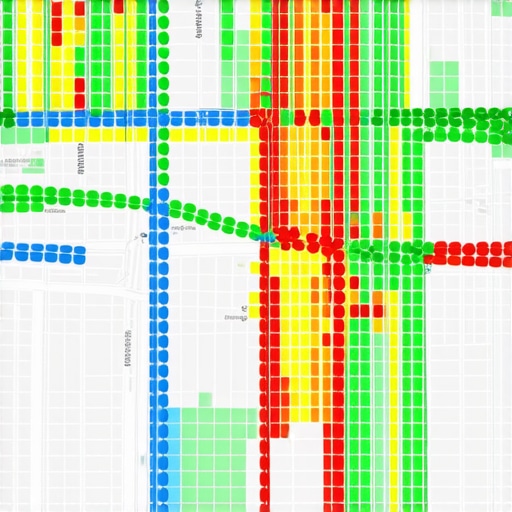
If you are still looking at a single ranking number for your city, you are flying blind. Local search doesn’t work like a global Google search; it changes every few blocks. I learned this the hard way with a locksmith client who was convinced he was ‘number one’ because he searched from his own desk. In reality, two blocks away, he didn’t even show up in the top twenty. To fix this, you need to use the grid-based ranking method that reveals your real search presence. This visualizes your visibility as a heat map over your actual service area, rather than a single static number. When you see exactly where your ‘green zones’ turn to ‘red zones,’ you can stop guessing and start targeting specific neighborhoods.
Kill the Inconsistencies Before They Kill Your Rank
Google is a verification engine. If your business name is ‘Joe’s Pizza’ on Yelp but ‘Joe’s Pizza & Pasta’ on your Google Profile, Google gets confused. In my second year of consulting, I spent three weeks chasing my tail on a ranking drop, only to find out a former employee had accidentally changed the suite number on a minor directory. That one tiny error created a ripple effect that tanked our authority. This is why you need a citation monitor running in the background at all times. It acts like a digital bodyguard, alerting you the moment a scraper or a competitor tries to overwrite your data. You specifically need to audit your local listings for inconsistent phone numbers, as this is the most common reason the algorithm loses trust in your physical location.
Speed Trumps Your Five-Star Rating
Everyone obsesses over their average star rating, but the algorithm—and your customers—care more about your pulse. I’ve seen businesses with a 4.2 rating outrank those with a 4.9 simply because they respond to feedback within minutes instead of weeks. Using review management tools allows you to automate the notification process so you never miss a beat. Think of it this way: a review left unanswered is a customer ignored in front of the whole world. I once watched a client’s lead flow double in thirty days just by shifting their focus; we stopped chasing ‘perfect’ and started chasing ‘fast.’ The data proves that why your review average matters less than your response speed is a core pillar of local authority. If a competitor is beating you despite having worse reviews, check their response time; I bet they’re faster than you.
The Map Pin Move That Changed Everything
Sometimes the solution isn’t digital at all; it’s geographic. One of the messiest but most effective things I ever did was literally re-verify a client’s map pin position. We discovered that Google had their office entrance listed at the back of an industrial park, which added two miles of ‘travel time’ in the algorithm’s eyes compared to the main road entrance. By executing the map pin move that stopped competitors from stealing our leads, we reclaimed a massive chunk of proximity-based traffic. This isn’t about cheating; it’s about accuracy. If your map pin is even fifty feet off, you’re potentially excluding yourself from the ‘near me’ searches of people standing right across the street.
I’ve spent hundreds of hours digging into the backend of various platforms, and the most dangerous thing you can do is assume the “Average Position” is a real number. Let’s get real for a second: why most local SEO software tools overestimate your true ranking is essentially down to lazy math. They check five points in a city and call it a day, but local search is a game of inches, not miles. If you’re ranking first at your front door but thirtieth at the grocery store two blocks away, that “Average 15” doesn’t tell you the story of your business; it just hides the fact that you’re invisible to 90% of your potential customers.
Why does your map rank tank the second you leave the office?
This is the proximity trap that catches even seasoned marketers. Most rank tracker setups are configured to check from a static point, often ignoring the “halo effect” of your physical location. According to research by Whitespark in their annual Local Search Ranking Factors study, proximity remains the single most powerful signal, but it’s also the most volatile. You need a rank tracker setup that shows real neighborhood proximity to see how the “near me” filter shifts in real-time. If you aren’t seeing the grid move as you move, your software is feeding you a fantasy.
The Citation Volume Trap is Killing Your Productivity
The old-school advice is to get listed on every obscure directory from here to Timbuktu. I’m here to tell you that chasing 500 citations is a waste of your life. In fact, the citation consistency myth has led many business owners to spend thousands on “cleanup services” for sites that get zero traffic. You should stop chasing citation volume and focus on this accuracy metric instead: are your core four (Google, Apple, Bing, and Yelp) perfect? Once those are locked, you’re better off finding the citation source you are ignoring that actually drives traffic, like a hyper-local neighborhood association or a niche industry guild, rather than a generic “Yellow Pages” clone.
The silent killer of local authority: The Scraper Loop
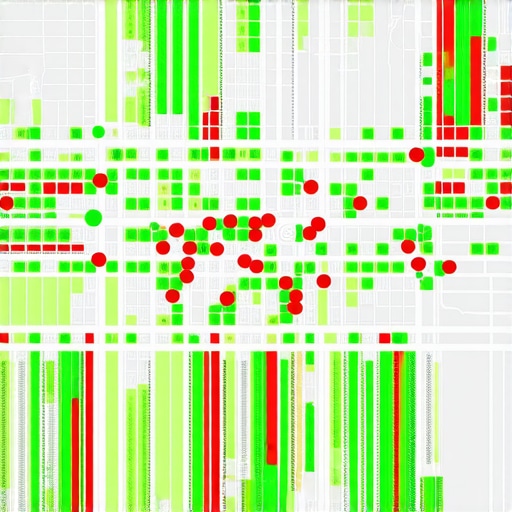
Here is the “oops” factor no one warns you about: the scraper loop. If you use a citation monitor that isn’t properly synced with your manual edits, the software might “discover” old, incorrect data on a low-tier site and try to “fix” your Google profile with the wrong info. I once saw a client lose their map pack spot for two weeks because an automated tool reverted their phone number to a tracking line from 2018. You have to how to stop citation scrapers from overwriting your correct business info or you’ll be stuck in a permanent cycle of data corruption. It’s about being surgical, not just automated.
Stop Chasing National Vanity Metrics
If you’re still looking at monthly search volume from a national perspective, you’re flushing your budget. Why you should ignore national search volume for local keywords is simple: a term that gets 10,000 hits globally is worthless if none of those searchers are within a 5-mile radius of your shop. I’d rather rank for a “boring” keyword with 20 monthly searches that actually results in a phone call than a high-volume vanity term that just inflates my analytics. Have you ever fallen into this trap of chasing big numbers that didn’t move the needle? Let me know in the comments.
Building on that, the most frustrating part of this journey isn’t the climb—it’s the maintenance. I’ve seen dozens of businesses fight their way into the top three, only to vanish thirty days later because they stopped paying attention to the ‘boring’ stuff. You have to treat your local presence like a garden; if you don’t pull the weeds of bad data, they’ll eventually choke out your growth.
Stop your rankings from sliding backward
I personally set a calendar alert for the first Monday of every month to do a deep dive into my data. I don’t just look at the ‘pretty’ charts; I look for the anomalies. My first stop is always the citation monitor dashboard. I’m looking for ‘data drift’—those tiny changes in your address format or phone number that happen when a low-tier directory updates its database with five-year-old info. You have to know how to stop citation scrapers from overwriting your correct business info, or you’ll spend your whole life fixing the same three errors. This isn’t just about being a perfectionist; it’s about protecting your authority signals from being diluted by automated bots.
How do I maintain local rankings without working 40 hours a week on them?
The secret is high-level automation that alerts you to problems rather than just giving you more work. I rely heavily on review management tools that ping my phone the second a new comment is posted. Joy Hawkins from Sterling Sky, a recognized leader in the local search space, has often pointed out that Google’s proximity filters are getting tighter and more sophisticated. This means your maintenance isn’t just about ‘fixing’ things; it’s about staying active. If you use the software feature that makes managing 1000 reviews easy, you can maintain that critical ‘heartbeat’ signal without it becoming a full-time job. Activity is a ranking factor that many people overlook because it’s hard to measure, but the algorithm notices when a profile goes silent.
The future of maps is predictive
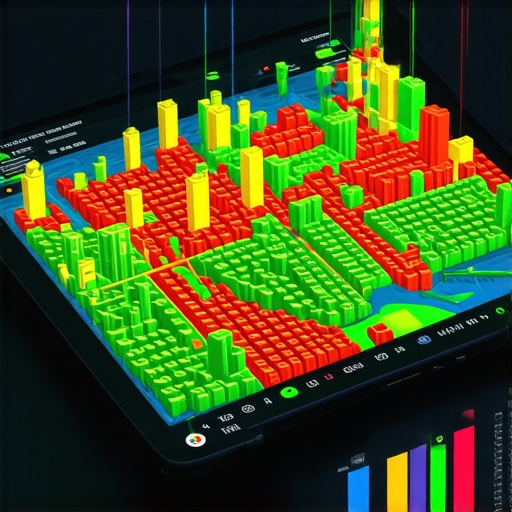
As we head toward 2025, the game is shifting from ‘where am I’ to ‘where will I be.’ The next generation of local seo software for small business growth is moving toward predictive modeling. I’ve started playing with the rank tracking feature that actually predicts revenue growth based on search trends in specific zip codes. Instead of reacting to a drop in calls, these tools warn you when a competitor is starting to encroach on your ‘green zone’ on the map grid. This allows you to be proactive rather than defensive. You can use maps analytics insights to see exactly which neighborhood is about to become a battleground. If you see your rank tracker setup that shows real neighborhood proximity starting to show yellow dots where they used to be green, you know it’s time to push for more local reviews or update your neighborhood-specific service pages.
My best advice for scaling? Don’t try to do it all at once. Pick one specific advanced tip from this guide—like cleaning up your core citations or setting up a high-frequency rank tracker—and master it this week. Local SEO is won in the margins, and the businesses that win are the ones that refuse to let their data rot. Check your ‘Zip Code’ report in your analytics today; if you aren’t getting leads from the area right outside your front door, you have a proximity glitch that needs your immediate attention.
The Expensive Lessons I Learned While Chasing Empty Ranking Numbers
One of my biggest lightbulb moments was realizing that a #1 ranking for a broad term often attracts ‘window shoppers’ from three towns over who will never buy. I also discovered that your citation monitor isn’t just a setup-and-forget tool; it’s your early warning system against competitors who try to ‘suggest an edit’ to your hours just before a holiday weekend. Most importantly, I stopped looking at global averages and started obsessing over the rank tracker setup that shows real neighborhood proximity, because that’s where the high-intent buyers actually live. I finally understood that why your map data does not match your actual sales is often because we are ranking for the wrong search intent.
#IMAGE_PLACEHOLDER_E#
The Tools That Save My Sanity Every Single Week
If you are looking to build a stack that actually works, I recommend focusing on three core pillars. First, a grid-based tracker that visualizes your ‘local share of voice’ rather than a simple list. Second, review management tools that allow for mobile-first responses; speed is your greatest competitive advantage in the eyes of both Google and your customers. Finally, I always keep an eye on local seo software for small business growth that integrates with your actual lead data, so you can see the direct line between a green dot on a map and a ringing phone in your office. I personally trust sources like Sterling Sky for algorithm updates and Whitespark for citation depth analysis.
Stop Looking at the Map and Start Leading the Market
The transition from a business that ‘shows up’ to a business that ‘dominates’ happens when you stop reacting to the algorithm and start mastering your data. Local search is becoming more personal and more predictive every day. Don’t let the technical jargon overwhelm you; at its heart, this is still about being the most trusted and visible option in your neighborhood. When you combine your local expertise with the right local seo software for small business growth, you don’t just climb the rankings—you own the neighborhood. Have you ever noticed your ranking drop when you move just a few blocks away from your office? I’d love to hear your stories in the comments below.