I remember the exact moment my stomach dropped. I was sitting in a quiet coffee shop, checking my phone, and decided to search for my own business. Nothing. Not page one, not the local pack, not even on the third page of the maps. I’d just spent three months’ worth of marketing budget on a ’boutique agency’ that promised to make me the king of the neighborhood. Instead, they’d turned me into a digital ghost. I logged into my dashboard and saw the carnage: they had changed my business name to include fifteen different keywords, listed me in categories I didn’t even serve, and created a dozen duplicate listings that were fighting each other for dominance. It was a mess. A high-stakes, revenue-killing disaster. If you’re reading this, you’re probably in that same boat. You trusted someone with the keys to your Google Business Profile (GBP), and they drove it straight into a ditch. Maybe you’re seeing map impressions tanking or your phone has stopped ringing altogether. Today, I’m going to show you exactly how to undo the damage. We aren’t just going to ‘tweak’ things; we are going to perform a full-scale restoration using the same methods I used when I had to clean up messy listings for my own sanity. Have you ever logged into your Google Business Profile only to realize someone else’s ‘improvements’ turned your traffic into a ghost town?
Take Back Your Digital Storefront from the So-Called Experts
The first thing we have to address is ownership. One of the biggest mistakes I made early on was letting an agency set themselves up as the ‘Primary Owner’ of my profile. I thought I was being helpful and streamlining the process. In reality, I was giving away the deed to my house. When things went south, I had to spend weeks proving to Google through countless support tickets that I actually owned the business. Before you do anything else, verify that you have full control. If you don’t, that is your first mission. Agencies should be ‘Managers,’ never the primary owners. Once you have the keys back, it’s time to look at the data. Many firms use local seo software to blast your information across the web, but if they put in the wrong address or a tracking number that isn’t yours, they’ve created a messy citation overlap that confuses Google’s algorithm. You need to become a detective. I’ve realized that why most local marketing agencies fail is because they prioritize speed over accuracy. They want to show you a report with 100 new links, even if those links are sending customers to a disconnected phone number.
Is a Damaged Profile Even Worth Saving
You might be tempted to just delete the whole thing and start over. Don’t. Deleting a profile with history, even bad history, is often like burning down a house because the wallpaper is ugly. You lose the reviews, the age, and the underlying authority you’ve built. According to a study by BrightLocal, over 60% of consumers find incorrect information in local directories to be a major trust-breaker, but Google’s algorithm is surprisingly forgiving if you show a consistent pattern of correction. We’re going to use a citation monitor to find every single lie told about your business online and replace it with the truth. It takes work, but reclaiming your spot in the 3-pack is entirely possible if you stop the automated ‘optimization’ and start doing the manual heavy lifting. We’ll start by checking your rank tracker to see where the real gaps are, rather than relying on those glossy, fake reports the agency sent you last month. It’s time to get your hands dirty and fix the foundation.
Stop Trusting Those Shiny Agency PDF Reports
Most agencies send you a monthly report that looks like a victory lap. They show you green arrows and rising visibility scores, but your bank account usually tells a different story. If your rank tracker is only checking from one central point, it is lying to you. Real local SEO happens block by block, not just at city hall. You need a rank tracker setup that shows real neighborhood proximity so you can see where you are actually winning and where you are a digital ghost. I remember a locksmith I helped last year whose agency report said he was #1 city-wide, but a quick audit showed he was invisible everywhere except the three blocks surrounding his own house. We used a simple profile audit that found 20 leads we were giving to competitors just because his service area was set up incorrectly.
Hunt Down the Ghost Listings Eating Your Leads
Think of your business data as a digital DNA strand. When an agency creates a dozen different versions of your name, address, and phone number, they have effectively given your business an identity crisis. Google’s algorithm is a trust engine; if it sees conflicting data, it loses confidence and drops your ranking. You have to learn how to spot citation inconsistencies before the algorithm penalties hit. This is not just about the big guys like Yelp; it is about the small, niche directories that scrapers love. I have found that the citation monitor trick to find every mention of your brand is the only way to catch those rogue entries an agency left behind. We once had to perform a specific citation fix that reconnected our shop to the 3-pack after discovering a former expert had listed our business under a tracking number they owned. 
Turn Your Review Section Into a Conversion Engine
Fixing the technical mess is only half the battle. If your maps profile looks like a desert, nobody is going to click the call button. But do not fall for the trap of buying fake reviews or using automated bots. Google’s AI is getting terrifyingly good at spotting patterns. Instead, leverage review management tools that transform customer feedback into revenue by automating the ask at the right moment. I have seen businesses with fewer reviews outrank giants simply because their response speed was faster and their feedback was more diverse. When you dive into your maps analytics insights to boost your local map visibility, look for the interaction tab. If people are finding you but not clicking, your profile lacks the social proof needed to close the deal. If you are managing multiple storefronts, make sure you know how to sync hundreds of locations without data corruption, or you will just be scaling the same mistakes across your entire brand. Accuracy is your new competitive advantage.
Stop falling for the ‘set it and forget it’ citation myth
Most business owners are told that once they sync their data with an automated aggregator, their job is done. In my experience, this is where the trouble actually begins. Automated tools are great for speed, but they are notoriously bad at catching the nuanced errors that lead to a messy citation overlap. I have found that why manual citation cleanup is better than automated tools is simply because aggregators often overwrite each other, creating a loop of incorrect data that confuses Google. You must know how to stop citation scrapers from overwriting your correct business info, or you’ll be fighting the same ghost listings every three months. Real authority isn’t about being in 200 directories; it’s about being perfectly consistent in the top 20.
Your rank tracker is probably lying to you
If you are looking at a single number as your ‘ranking,’ you are missing the bigger picture. Why tracking average rankings is the fastest way to lose local leads is a hard lesson I learned after seeing a client’s dashboard show a ‘90% visibility’ score while their phone stopped ringing. The issue is why your ranking reports look great while your shop stays empty: most trackers check from a single point. Local SEO is hyper-local, meaning you might be #1 at the coffee shop across the street but #15 at the grocery store two blocks away. You need a rank tracker setup that shows real neighborhood proximity to identify these dead zones before a competitor moves in. 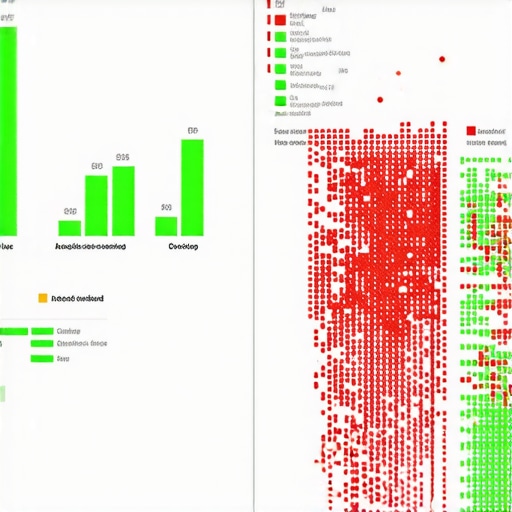
Why do customers three blocks away struggle to find you?
This is the ‘proximity paradox’ that many ‘experts’ ignore. Google prioritizes proximity above almost everything else, but if your data is slightly off, that radius shrinks. According to the 2023 Whitespark Local Search Ranking Factors study, citation consistency and high-quality local signals are still the foundational ‘permission to play.’ However, the nuance is that why your review average matters less than your response speed is now a critical engagement signal. If your maps analytics insights to boost your local map visibility show high impressions but zero calls, it’s usually because your engagement signals are stale. I recommend using how we used review automation to filter out local competitor sabotage to ensure your reputation stays intact without you having to manually monitor it 24/7. Have you ever fallen into the trap of trusting a green arrow on a report while your lead flow stayed flat? Let me know in the comments.
Stop the slow decay with a solid maintenance rhythm
Once you have clawed your way back into the local 3-pack, the real work begins. I have seen too many business owners treat local SEO like a marathon with a finish line; in reality, it is more like a garden that needs constant weeding. The moment you stop looking, a competitor or a rogue bot will suggest an edit to your business hours or, worse, your phone number. This is why I personally rely on local seo software that alerts me the second an unauthorized change occurs. You need to know how to stop citation scrapers from overwriting your correct business info because those automated systems never sleep. I spend about thirty minutes every Monday morning reviewing my citation monitor just to ensure the ‘truth’ about my business hasn’t been diluted by some low-tier directory data dump.
Why I trust specific data points over vanity scores
I stopped looking at ‘average ranking’ years ago. If you want to know why, just look at why tracking average position is the fastest way to lose local customers. It hides the dead zones where your competitors are eating your lunch. Instead, I obsess over the rank tracker setup that shows real neighborhood proximity. I want to see a grid of the city, block by block. If I see a cluster of red dots in a high-traffic neighborhood just two miles away, I know I need to adjust my local content strategy for that specific area. This level of granularity is what separates the shops that stay busy from the ones that wonder why the phone only rings on Tuesdays. 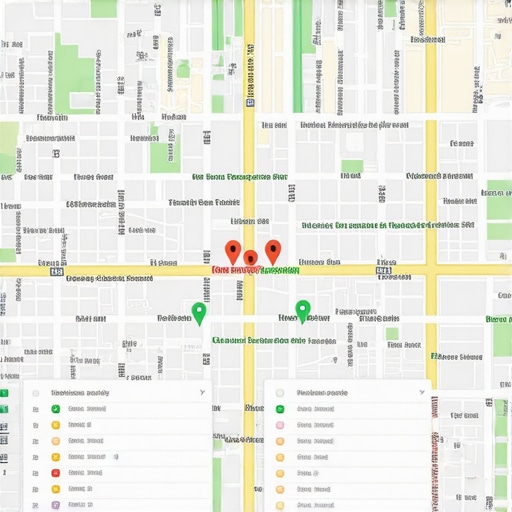
How can I keep my profile healthy for the long haul?
Maintenance is about consistency in two areas: data and engagement. On the data side, keep your rank tracker running to catch sudden drops that might signal a technical glitch or an algorithm update. On the engagement side, your maps analytics insights to boost your local map visibility will tell you if customers are actually clicking. I highly recommend using review management tools that transform customer feedback into revenue to handle the influx of feedback. Joy Hawkins from Sterling Sky, a leading expert in local search, has frequently noted that Google is placing more weight on ‘behavioral signals’ like click-through rates and call volume. In the future, I predict that AI-driven ‘Search Generative Experience’ will rely even more heavily on the nuance within your reviews to decide who to recommend. My advice? Go into your settings today and set up a 2-hour response goal for every new review. That single human tweak will outrank any ‘optimization’ a bot can offer.
Why I Finally Stopped Chasing Global Ranking and Focused on My Own Block
Looking back at the stress of that initial map drop, I realized I was focusing on the wrong numbers. I was addicted to the total volume of citations rather than the quality of the ones that actually moved the needle. First, manual intervention is your best defense. While automated tools can help with speed, the real breakthroughs happened when I manually corrected those niche directories that scrapers kept messing up. Second, speed of engagement is the new authority. If you aren’t using review management tools to respond to feedback within minutes, you’re leaving money on the table. Finally, I learned that the proximity paradox is a brutal reality; you cannot expect to rank everywhere without proving your local relevance block by block.
Tools That Saved Me When My Leads Went Dark
I don’t trust many automated platforms, but a few have become non-negotiable for my daily workflow. I use a citation monitor to act as a digital watchdog, alerting me the second a competitor or a rogue bot tries to suggest a ‘better’ phone number for my shop. For strategic planning, I rely on a rank tracker that focuses on neighborhood-level proximity rather than useless city averages. #IMAGE_PLACE_HOLDER_E# To truly understand why people are clicking—or passing me by—I dive into maps analytics insights every single month to adjust my photo and post strategy based on real user behavior.
Take Back Control of Your Neighborhood Traffic
Reclaiming a damaged profile isn’t about magic tricks; it is about persistent, accurate data management. It is about making sure Google trusts your information more than the background noise. You have the tools and the roadmap now to turn your business from a digital ghost back into a local powerhouse. Start with the one correction today that you’ve been putting off. Investing in the right local seo software is the first step toward long-term stability and lead flow that doesn’t disappear when an agency contract ends. You’ve got this. Have you ever found a tracking number or a strange address on your profile that you didn’t put there? Let me know in the comments below!