I will never forget sitting across from a local plumber named Dave while he stared at a forty-page PDF with the same look of despair usually reserved for a burst main. His marketing agency had sent over a monthly performance review packed with terms like backlink velocity and LSI keyword density. Dave looked at me and asked, Does this mean people are calling me for water heaters or not? I felt a sharp pang of guilt. Years ago, I used to send those exact same types of reports. I thought I was being thorough, but I was actually being a barrier to his success. I was hiding the truth behind a wall of jargon. Today, I want to promise you that we are going to strip all that away. We are going to find the signal in the noise and focus only on the metrics that actually put money in your pocket. Have you ever looked at an SEO report and felt more confused than when you started?
Stop Drowning in Data That Does Not Pay the Bills
It is a common trap. Many agencies and even some local SEO software options rely on vanity metrics to justify their cost. They show you massive spreadsheets because they are easy to automate, not because they are helpful. I once spent three hours explaining maps analytics to a florist who just wanted to know why her shop was invisible to people three blocks away. I realized then that more data usually just leads to more confusion. According to research from the Forbes Communications Council, the most effective reporting focuses on simplicity and actionable insights rather than overwhelming the client with technical jargon. If you cannot understand your report in less than five minutes, the report is the problem, not you. You deserve to see why your local ranking reports actually matter to your bottom line.
Does a massive report actually mean you are getting results?
There is a sneaky fear that if your report is only one page long, your SEO person is slacking off. I used to be terrified of this. I thought if I did not provide a book-length analysis, my clients would think I was lazy. But the truth is, a clear rank tracker setup that shows your actual neighborhood visibility is worth a thousand pages of global keyword data. Have you ever felt like you needed a PhD just to understand if your marketing was working? If you have, you are exactly who I wrote this for. We are going to break down the specific components of a report that actually matter, so you can stop guessing and start growing.
Cut the Noise and Focus on Three Vital Signs
To get Dave those phone calls he wanted, we had to stop looking at everything and start looking at the right things. Think of your SEO data like a car dashboard; you do not need to know the temperature of the exhaust manifold to know if you are running out of gas. Most business owners get lost in the weeds of global search volume when they should be looking at their local neighborhood. I remember a locksmith in Chicago who was celebrating because his impressions were up 400%. He thought he was about to retire early. But when I looked at his actual dashboard, his phone was dead silent. We discovered he was ranking for locksmith training instead of emergency lockout. We quickly implemented the map profile fix that finally turned impressions into trackable phone calls, and the change was almost instant. This taught me a hard lesson: why map impressions are a vanity metric if no one is clicking call.
Turn Map Views into Real Conversations
If you are looking at a report and it does not show you call counts or direction requests, it is hiding the truth. You want to see how many people took an action after seeing your name. Many review management tools now track this, showing how a simple reply can trigger a lead. I once worked with a landscaper who had a 4.8-star rating but zero new leads from his profile. We realized his service area was set too wide, making him look irrelevant to people next door. By refining his local focus, we stopped his data from being diluted by clicks from two towns away.
Lock Down Your Business Info Like a Vault
Think of your business information as your digital identity. If it is inconsistent, the algorithm gets confused and stops recommending you. This is where a citation monitor acts like a 24/7 security guard. I once saw a competitor for a garage door client literally move their map pin to the middle of a public park just to be closer to a high-value zip code. It was a blatant play to steal leads. Because we had the citation monitor setting that catches profile hijacks in minutes, we caught the discrepancy before it tanked our client’s rankings. Without that alert, we would have been wondering why our leads dropped for weeks.
See Your Business Through the Eyes of Your Neighbors
Traditional ranking reports give you a single number for a whole city, which is a lie. In the real world, you might be #1 at the coffee shop across the street and #10 at the grocery store two miles away. You need the rank tracker setup that shows real neighborhood proximity to see the truth. 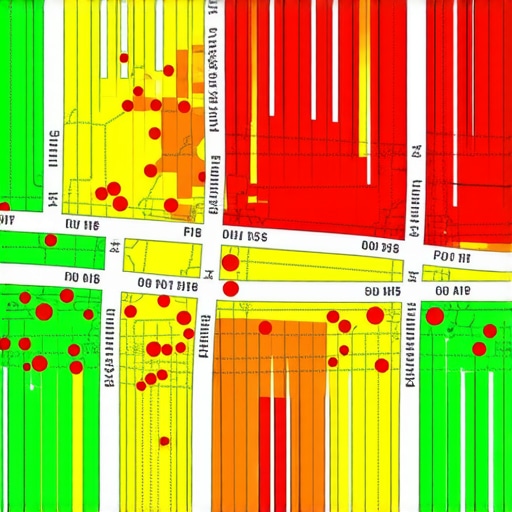 Using a visual grid allows you to see exactly where your visibility drops off. I used this for a local bakery that could not understand why they were busy on Tuesdays but dead on Saturdays. The heatmap showed that a competitor was dominating the map pack only on the weekends due to their specific operating hours. This is how to use heatmaps to visualize your map pack dominance and adjust your strategy based on where you are actually losing ground. It is about winning block by block, not city by city.Let’s dig deeper because here is where most people get tripped up. I often see business owners obsessed with their average ranking across the city. This is a massive mistake. In my experience, tracking an average is the fastest way to ignore the neighborhoods where you are actually losing money. If you are using a standard rank tracker, you are only getting half the story. You need to see the proximity gap—the literal street where your dominance ends. According to the annual Whitespark Local Search Ranking Factors survey, proximity remains the strongest signal, but it is also the most volatile. This volatility is why your map ranking reports fail to show the real-world proximity gap if they are not scanning at a granular, neighborhood level.
Why does your optimized business profile still rank below abandoned listings?
It drives business owners crazy. You have filled out every detail, but a profile that has not posted since 2018 is still beating you. This happens because the algorithm values historical relevance over recent profile completeness. Sometimes, your optimized business profile still ranks below abandoned listings because those legacy profiles have years of accumulated behavioral data that you have not matched yet. It is a nuance most local SEO software won’t tell you. You cannot just optimize and expect an instant win; you have to signal consistent activity. One of the best ways is through the hidden benefit of responding to negative reviews within 2 hours. It shows both Google and potential customers that your business is responsive and active. Another common trap is address formatting. You would be shocked how many people fail because of a simple suite number. Your listing optimization is useless if you miss this address formatting rule. If Google sees Suite 100 on your website and #100 on your map profile, you are creating algorithmic friction. This is where a citation monitor becomes vital to your success. But do not just buy a bot-driven bundle. I firmly believe why manual citation cleanup is better than automated tools because bots often overwrite correct data with generic best guesses. Using the citation monitor trick to find every mention of your brand helps you spot those hidden duplicates that automated systems frequently miss. Finally, do not let maps analytics distract you with total views. Focus on localized actions. If you are a service business, you might even need the local strategy for ranking in towns where you have no office, which requires a completely different mindset than traditional SEO. Have you ever fallen into this trap of chasing vanity metrics instead of actual leads? Let me know in the comments.I have seen too many businesses climb to the top of the local pack only to fall off a cliff because they treated their digital presence like a one-time project rather than a lifestyle. If you are not watching your data weekly, you are essentially leaving your front door unlocked. I personally rely on a robust citation monitor because the moment a competitor suggests a malicious edit to your phone number on a niche directory, your authority starts to leak. It is not just about getting there; it is about staying there. I always tell my clients that local SEO software is your early warning system. For example, I use a specific rank tracker to monitor neighborhood-level shifts every Tuesday morning. If I see a dip in one specific zip code, I know exactly where to focus my content and engagement efforts for the week.
How can you keep your business at the top of the map pack consistently?
Long-term maintenance is less about fixing what is broken and more about feeding the algorithm fresh, positive signals. You need to provide the engine with a steady stream of proof that you are still the best option. I have found that using the software feature that makes managing 1000 reviews easy allows even small teams to keep their response time under two hours. According to Joy Hawkins, a leading expert in the field and founder of Sterling Sky, Google’s algorithm updates frequently tighten the proximity filter, making your response speed and review recency even more critical for staying visible to nearby searchers. If you are scaling to multiple locations, you must learn how to sync hundreds of locations without data corruption, or you will eventually find your listings competing against each other for the same clicks. 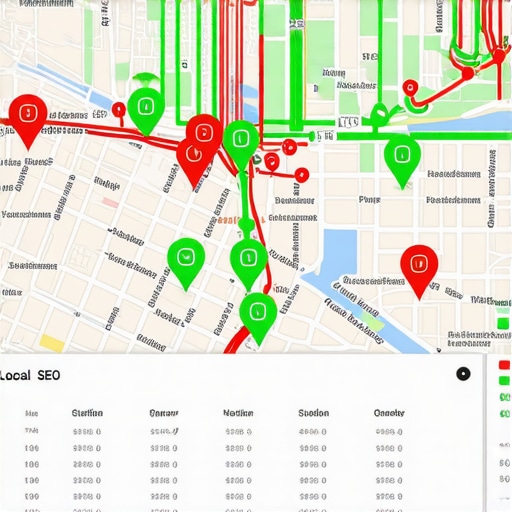
What the Future of Neighborhood Search Actually Looks Like
I predict we are rapidly moving toward a zero-click environment where maps analytics will matter far more than traditional website traffic. Google is already heavily testing AI-generated summaries of customer feedback. This means if your customers frequently mention specific qualities, those phrases will likely become primary ranking triggers. To stay ahead of this trend, stop looking at your city-wide average and start using the rank tracker setup that shows real neighborhood proximity. This level of granularity allows you to identify high-conversion blocks that your competitors are completely ignoring. Stop worrying about the entire city and start winning your street. My challenge to you today: Open your review management tools and find one neutral or negative review from the last month that you have not addressed yet—reply to it now with a helpful, non-defensive solution. These small, consistent moves are exactly what keep you on the map while others fade away.
I have spent years in the trenches of local search, and if there is one thing I have learned, it is that the algorithm does not care about your effort—it cares about your evidence. You can work eighteen hours a day, but if your digital data is messy, you are essentially invisible to the people who need you most. We have covered a lot in this series, from the intricacies of maps analytics to the importance of a 24/7 citation monitor, but the real magic happens when you stop viewing these as technical chores and start seeing them as the heartbeat of your business presence.
Hard Truths I Learned While Watching Small Businesses Struggle Online
First, stop trying to rank for the whole state. I have seen companies go bankrupt trying to be #1 in a city of 5 million when they could have owned the three-mile radius around their office and stayed profitable for decades. Winning your street is more valuable than being a ghost in a skyscraper. Second, consistency is a form of authority. Every time you perform a local listings audit for inconsistent phone numbers, you are telling the search engine that you are a reliable, real-world entity. Finally, remember that engagement is a two-way street. These profile engagement signals that move the needle are not just for bots; they are for the person on the other end of the screen who just needs a solution at 2 AM. If you are not responsive, you are not relevant.
The Tools That Keep My Clients on Top
If you are feeling overwhelmed by the sheer number of choices on the market, my advice is to start small and focus on accuracy. I always recommend finding a reliable local SEO software that prioritizes neighborhood proximity rather than just city-wide volume. You need a platform that treats your local area like the unique ecosystem it is. I personally stand by our research on testing the top local SEO software options because we looked for the features that actually drive revenue, not just pretty charts that look good in a meeting. A good tool should simplify your life, not add another layer of confusion to your workday.
#IMAGE_PLACEHOLDER_E#
Take Back Control of Your Digital Neighborhood
The local landscape is changing fast, but it is also becoming more human and localized than ever before. By focusing on your rank tracker setup for real neighborhood proximity, you are choosing to show up for the people who live and work right next to you. It is a powerful, sustainable way to build a community-driven business that survives any algorithm update Google throws your way. I encourage you to use this 12-point checklist to reclaim your rankings and start seeing your business through the eyes of your neighbors. What is the biggest roadblock preventing your business from showing up in the local 3-pack today? Let me know in the comments below.