I stared at the screen until my eyes blurred, wondering how a person I’d never met could tank my reputation in under thirty seconds. It was a ‘hit and run’ review—scathing, anonymous, and claiming a service failure on a day I wasn’t even open. My heart pounded as I realized my local presence was a sitting duck. I was so focused on my rank tracker metrics that I completely ignored the back door I had left wide open for trolls. For years, I operated under the naive assumption that the platforms themselves would filter out the noise. They don’t. Early in my journey, I made the amateur mistake of leaving every single notification and ‘public edit’ setting on the default mode. I thought it made me accessible; in reality, it made me vulnerable. Today, I am going to show you the exact settings I changed to build a digital fortress. We are moving beyond just reacting to bad comments and focusing on how to filter out competitor review sabotage before it ever touches your average star rating.
Stop Letting Your Business Profile Be a Public Playground
It is a hard pill to swallow, but most review platforms are built for the consumer, not the business owner. This means the default settings usually favor the ‘reviewer’ even if that reviewer is a bot or a disgruntled competitor from three towns over. According to the World Economic Forum, fake reviews influence roughly $152 billion in global e-commerce spending annually, which is a staggering amount of market distortion. When I first started digging into my maps analytics, I noticed a weird spike in ‘user-suggested edits’ that were actually malicious attempts to mark my business as ‘permanently closed.’ It was a wake-up call. You need to stop viewing your profile as a set-it-and-forget-it asset and start treating it like a high-security vault. Have you ever refreshed your dashboard only to find a scathing review for a service you do not even provide?
Is micromanaging my settings actually worth the hassle?
You might think that spending time clicking through obscure privacy and verification menus is a waste of time compared to ‘real’ marketing. I used to think the same until a single weekend of targeted fake reviews dropped my map ranking from the top spot to the second page. Now, I use review management tools that alert me the second a pattern looks fishy. The goal today is to show you how to identify the review patterns that flag a targeted attack so you can shut them down before the algorithm decides they are legitimate. We are going to strip away the vanity metrics and perform a local SEO audit specifically focused on your reputation security. It is about taking back control of your brand’s narrative.
Secure Your Core Data Before the Trolls Arrive
To stop the bleeding, you have to understand that your business information is constantly being ‘shuffled’ by bots and aggressive third-party directories. I learned the hard way that if you do not anchor your data, someone else will move the anchor for you. I once spent three grueling weeks fighting with a niche directory that insisted my office was located in the middle of a local lake because a scraper bot pulled an old, incorrect listing from a defunct local blog. This is why you must learn how to stop citation scrapers from overwriting your correct business info immediately. It is like putting a high-grade deadbolt on your digital front door; without it, you are just inviting data corruption that will eventually tank your visibility.
Identify the Leaks in Your Citation Network
Think of your business citations like a trail of breadcrumbs leading customers to your door. If just one breadcrumb is poisoned with the wrong phone number or a misspelt address, the whole trail becomes suspect to search engine algorithms. I used to ignore the smaller, niche directories because I thought they didn’t matter, but then I realized that Google uses them as a ‘trust signal’ to cross-reference your validity. I now use a citation monitor trick to find every mention of your brand across the web, allowing me to spot these inconsistencies before they confuse the ranking algorithm. 
Take Control of the Feedback Loop
Once your data is locked down, you have to manage the humans—or the malicious bots pretending to be them. My personal turning point was a quiet Tuesday morning when three ‘one-star’ reviews hit my profile in less than ten minutes. They all mentioned a ‘rude receptionist’ I do not even have on staff. By the time I noticed the notifications, my click-through rate in the map pack had already started to dip because customers saw that fresh negativity. That was the day I implemented review automation to filter out local competitor sabotage. These modern tools do not just delete bad reviews; they flag suspicious timing and location patterns that no real, physical customer would ever exhibit.
Watch for These Red Flags in Your Analytics
You cannot fix what you cannot see, and ignoring your dashboard is a recipe for a slow business death. I started performing a simple profile audit every single month to see where my leads were actually going. During one audit, I discovered a competitor had ‘suggested an edit’ to my website link on my profile, subtly redirecting my mobile traffic to their own landing page. It was brilliant, devious, and nearly cost me a dozen high-value clients before I caught the discrepancy. This is exactly why you need to know how to spot fake reviews before they destroy your local authority. By the time the negative impact shows up in your average star rating, the damage to your monthly revenue is already done. Finally, stop refreshing your browser every hour to check your map position. Instead, use a system that shows you how to monitor ranking flux without losing your mind. This lets you focus on running your actual business while the software watches the perimeter for incoming threats.”, “image”: {“imagePrompt”: “A professional digital security shield icon overlaying a local business map pin on a smartphone screen, representing protection against data theft and malicious edits.”, “imageTitle”: “Protecting Local Business Listings from Malicious Edits”, “imageAlt”: “A security shield protecting a business map listing from unauthorized changes and fake reviews.”}, “categoryId”: 0, “postTime”: “”}
The biggest mistake I see veterans making isn’t laziness—it’s trust. We’ve been conditioned to believe that if the dashboard turns green, the bank account will follow. But after auditing hundreds of profiles, I’ve realized that why your local ranking reports feel like they are lying to you is often a matter of geography, not just SEO. Most people treat a rank tracker like a GPS, but in reality, it’s often just a snapshot of a single street corner. If you are only looking at your average position, you are effectively flying blind.
Stop Obsessing Over Your Average Ranking Number
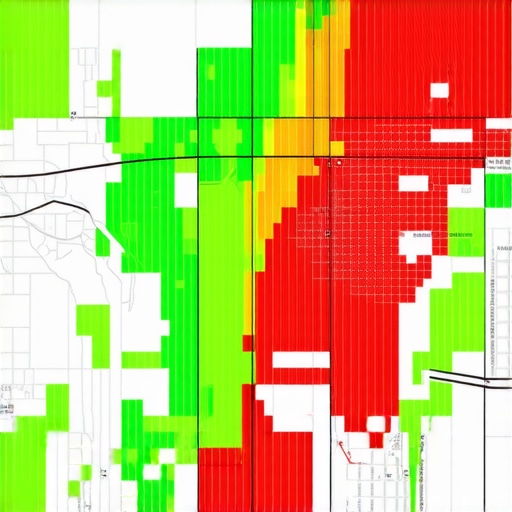
Here is the contrarian truth: a business ranking #1 on average can still be losing 80% of its potential local leads. Why? Because local search is hyper-fragmented. I’ve seen cases where why tracking average position is the fastest way to lose local customers becomes painfully obvious once you look at a grid-based heatmap. You might dominate the block your office is on, but disappear entirely two streets over. According to research from Sterling Sky, the proximity of the searcher is the most volatile ranking factor, yet most software averages this out into a meaningless vanity metric. You need to how to use heatmaps to visualize your map pack dominance rather than trusting a single digit on a PDF report.
How do I know if my rank tracker is actually measuring proximity or just vanity?
An advanced reader knows that the “proximity glitch” can make a failing business look like a titan. If your tool doesn’t allow you to set specific geo-coordinates for every scan, it is giving you a false sense of security. I once worked with a client who thought they were winning until we realized their local rank tracker flaw was only pulling data from a single high-authority IP address. We had to pivot and start using the rank tracker setup that shows real neighborhood proximity to see the gaps where competitors were eating our lunch. Have you ever fallen into this trap of trusting a high average rank while your phone stopped ringing? Let me know in the comments.
The Dangerous Allure of Automated Citation Cleanup
Everyone says you should just buy a big bundle of citations and let the software do the work. In my experience, this is the quickest way to create a mess you can’t fix. This is the “Oops” factor most gurus won’t tell you: automated tools often create more duplicates because they can’t distinguish between a slight address variation and a completely new location. This is why manual citation cleanup is better than automated tools for long-term stability. If you rely solely on a citation monitor, you might miss the the 3 citation errors that confuse Google and keep your business out of the Local 3-Pack. I’ve found that how to wipe out duplicate listings without overpaying requires a human eye to ensure the algorithm doesn’t get cross-eyed. Don’t just settle for quantity; we stopped tracking total citations and started tracking accuracy because that is what actually moves the needle in 2025.
Maintaining your edge isn’t about working harder; it’s about building a software stack that actually talks to itself. After years of manually checking spreadsheets, I realized that the true winners in this game are those who automate the boring stuff so they can focus on high-level strategy. I finally found that local seo software what we learned after testing the top 10 options isn’t just about finding the most features, but finding the one that integrates your data without causing a migraine. If you’re managing more than one storefront, you absolutely have to learn how to sync hundreds of locations without data corruption. One bad sync can revert your carefully optimized hours or phone numbers across the entire web in minutes.
Scale Your Business Without Losing Your Sanity
Most owners I talk to are terrified of scaling because they think it means multiplying their workload. It doesn’t. I treat my citation monitor as my 24/7 digital security guard. Instead of hunting for errors, I wait for the software to tell me when something is broken. This is why I consider a citation monitor your secret weapon for local seo success; it frees up about ten hours of my month that I used to spend on manual audits. If you are still doing this by hand, you aren’t a business owner; you’re a data entry clerk for Google.
How do I keep my rankings stable as my city grows?
The key is to stop looking at static numbers and start looking at movement. Neighborhoods change, new competitors open, and Google’s algorithm shifts. I rely heavily on maps analytics to see if a drop in traffic is a ‘me’ problem or a ‘market’ problem. If everyone in my zip code is seeing a dip, I don’t panic and change my settings. This prevents the ‘over-optimization’ trap that leads to account suspensions. According to a landmark study by Joy Hawkins at Sterling Sky, the 2021 ‘Vicinity Update’ fundamentally changed how proximity is weighted, proving that sometimes your ranking drop is simply a result of Google tightening its radius, not a failure of your SEO. 
The Future of Search Belongs to the Hyper-Local
Looking ahead, I predict that ‘zero-click’ searches—where the user gets all the info from the map pack without ever visiting your site—will become 90% of your lead flow. This means your profile needs to be a conversion machine, not just a billboard. You have to understand why your ranking reports look great while your shop stays empty. If your rank tracker says you are #1 but your phone isn’t ringing, you likely have a ‘conversion leak’ in your profile photos or your review responses. In 2025 and beyond, AI-driven search filters will favor businesses that have the most ‘human’ signals, such as high-frequency review responses and real-time photo updates. My advice? Stop trying to beat the algorithm with tricks and start feeding the algorithm the high-quality data it craves. Try this today: Audit your three closest competitors using a heatmap tool to find exactly where their ‘influence’ ends, then target your next local ad campaign at that specific street-level border.
The Brutal Lessons My Analytics Taught Me About Trolls
After years in the trenches, I’ve realized that the biggest threat to your map position isn’t a smarter competitor—it is a messy data trail. Here are the lightbulb moments that changed my strategy forever:
- Automated fixes are often automated failures: I learned that blindly trusting a tool to sync my data without checking for the 3 citation errors that confuse google usually results in three new duplicate listings.
- Reviews are a security metric, not just a social one: Your review management tools shouldn’t just be about saying thank you; they are your early warning system for a targeted reputation attack.
- Proximity is a moving target: A static rank report is a lie. If you aren’t looking at real-world neighborhood movement, you’re looking at history, not the present.
Tools I Use to Keep the Phone Ringing
You don’t need fifty subscriptions, but you do need a stack that actually works together. I personally rely on a high-precision rank tracker that uses mobile-first coordinates to avoid the ‘office Wi-Fi’ bias. For data integrity, I treat my citation monitor your secret weapon for local seo success as an insurance policy that never sleeps. Finally, I always keep a tab open for maps analytics because that is where the truth about your actual foot traffic lives.
#IMAGE_PLACEHOLDER_E#
Own Your Digital Territory Today
The local landscape is becoming more competitive every hour, but most of your competitors are still using the ‘set it and forget it’ method. By taking these steps to secure your profile and audit your data, you are already miles ahead of the pack. It takes courage to stop chasing vanity numbers and start building a fortress, but the payoff is a lead flow that doesn’t disappear when the algorithm shifts. Using the right local seo software is about reclaiming your time so you can actually serve the customers walking through your door. Have you ever noticed your map ranking change drastically when you drive just a few blocks away from your office? Let me know your experience in the comments below!