I will never forget the Tuesday morning I realized my local business had basically vanished into thin air. One minute I was sipping coffee, the next I was staring at a Google Maps listing that had my address but a competitor’s phone number and a business name I didn’t recognize. It’s a gut-wrenching feeling. You feel violated, but mostly you feel helpless as you watch your hard-earned traffic get diverted to a digital ghost ship. I used to be one of those guys who figured “it won’t happen to me,” but that morning changed everything. I had spent months trying to skyrocket my local rankings, only to see it all evaporate because I wasn’t watching the back door. Early in my journey, I made a massive mistake: I treated my citation monitor like a passive reporting tool rather than an active security alarm. I ignored a series of “minor” alerts about my business name being slightly tweaked, thinking it was just a data glitch. It wasn’t. It was a slow-motion hijack that ended with my listing being suspended. Today, I am going to show you the exact configuration that stops these thieves in their tracks before they can do permanent damage.
Your Profile is Vulnerable if You Only Check it Once a Month
I used to think that as long as I was using local seo software to track my positions, I was safe. The reality is that the local ecosystem is volatile, and malicious edits are a common tactic for unethical competitors. According to data from the 2024 BrightLocal Local Consumer Review Survey, roughly 85% of consumers have found incorrect info on a business’s online profile—a trust-killer that often starts with unmonitored edits. If you don’t have an automated way to stop citation scrapers from overwriting your data, you are essentially leaving your storefront unlocked at night. I learned the hard way that a simple rank tracker isn’t enough; you need a system that pings your phone the second a core field like your phone number or website URL is touched by anyone other than you.
Is this monitoring setup actually worth the extra effort?
You might be thinking that this sounds like overkill or just another notification to clutter your inbox. I get it—we are all busy. But consider the alternative: if you don’t catch a hijack early, you might find yourself frantically searching for how to reclaim your google business profile after a sudden suspension. That process can take weeks of back-and-forth with support, all while your phones stay silent. Have you ever woken up to find a “suggested edit” that totally changed your business category or moved your map pin to the middle of a lake? It happens more often than you’d think, and it’s why I’ve become so obsessed with this one specific alert threshold. By the time we are done today, you’ll have a fortress around your local data that even the most persistent scrapers can’t crack.
Treat Your Business Data Like a High-Security Vault
The biggest mistake most owners make is assuming their data is static once they hit ‘Save’ on a profile. Think of your business listing like a high-end storefront in a neighborhood where the street signs change overnight. If you aren’t looking, you might wake up to find your front door blocked by a wall. To prevent this, you need to transition from passive observation to active defense. This starts by configuring your citation monitor to flag any change to your NAP (Name, Address, Phone) data within 24 hours. I learned this the hard way when a competitor used a ‘suggested edit’ to change my suite number, effectively sending my customers to a locked hallway. 
Watch the Core Fields that Scrapers Love to Target
Most hijackers aren’t trying to delete your business; they want to steal its ‘juice.’ They will often leave your name alone but swap the website URL to a lead-gen page or change the phone number to a tracking line they control. This is why you need to use local seo software that monitors the integrity of your links across the entire web, not just on Google. Last summer, I was working with a local plumber who suddenly stopped getting calls on a Friday afternoon. He thought it was just a slow weekend until I checked his maps analytics and realized his ‘Website’ button was pointing to a dead 404 page because of a botched scraper update. If we hadn’t known how to stop citation scrapers from overwriting his data, he would have lost thousands in weekend emergency calls.
The Simple Way to Proof Your Citations Against Competitor Edits
The secret to a bulletproof profile isn’t just checking for errors; it is creating a ‘Source of Truth’ that the algorithm trusts more than random user suggestions. You should prioritize how to spot citation inconsistencies before they settle into the search ecosystem. When the local algorithm sees conflicting data between your website and a directory like Yelp or Bing, it gets confused and defaults to the most ‘recent’ info, even if it’s wrong. To combat this, I use the simple way to proof your citations against competitor edits: a weekly sync that pushes your correct data out to the major aggregators, effectively ‘drowning out’ the noise of malicious suggestions.
Stop Competitors from Using Review Sabotage
Malicious edits aren’t the only way to lose your spot in the map pack. I’ve seen competitors leave a string of vague, one-star reviews to tank a business’s average rating right before a busy season. This is where review management tools become part of your security stack. These tools allow you to spot patterns—like five bad reviews in two hours from accounts with no profile pictures—so you can flag them to Google immediately. When you combine this with how a rank tracker can skyrocket your local rankings by showing you exactly where you are losing ground, you move from being a victim to being the most dominant, protected player in your local market.
The Lie of the Average Ranking
Most business owners I talk to are obsessed with one number: their average ranking. They open their rank tracker and if they see a “1.4,” they think they’re winning. I’m here to tell you that tracking average rankings is the fastest way to lose local leads. Why? Because the map pack is hyper-local. A study by Whitespark on the Top Local Search Ranking Factors recently highlighted that proximity remains the #1 signal. You might be #1 at your office desk, but if you drive three blocks away, you’ve vanished. If your local seo software isn’t showing you a grid of results across the whole neighborhood, it is giving you a false sense of security.
Why does your proximity shrink even when your rankings look perfect?
This is the nuance that separates the pros from the amateurs. You can have a perfect 5.0 rating and still lose the map pack to a competitor with half your reviews because they have better street-level relevance. I’ve seen dental practices lose local leads to less qualified competitors simply because they didn’t realize their map pin placement was off by twenty feet. Have you ever noticed your traffic tanking while your dashboard shows green? That is the proximity gap in action. Have you ever fallen into this trap? Let me know in the comments.

The Address Formatting Trap That Kills Authority
Another oops factor that people miss is the technical minutiae of how Google reads your address. I used to think Suite 500 and #500 were the same thing. They are not. Your local seo software might not flag it, but address formatting rules are the foundation of your authority. When you have inconsistencies, the algorithm loses confidence in your location. It’s not just about being correct; it’s about being identical. If your citation monitor isn’t checking for character-for-character matches across the web, you are leaving a massive opening for competitors to outrank you. Don’t let your maps analytics fool you into thinking everything is fine when your foundation is crumbling.
Review Count is a Vanity Metric without Velocity
The most dangerous myth in this game is that more reviews automatically equate to higher rankings. I’ve seen businesses lose the local map pack to competitors with fewer reviews because they ignored velocity and response speed. If you get 100 reviews in a week and then go silent for three months, Google sees a dead business. Advanced review management tools are meant for more than just saying thanks. They are meant to help you filter out competitor review sabotage and maintain a consistent pulse. According to a BrightLocal expert survey, response speed is now a top-tier conversion factor. If you aren’t using settings that prevent fake negative feedback or focusing on ignoring national search volume for hyper-local intent, you are leaving your reputation to chance. Let’s dig deeper into how to fix these gaps before your next reporting cycle.
Automate Your Local Defense Before You Burn Out
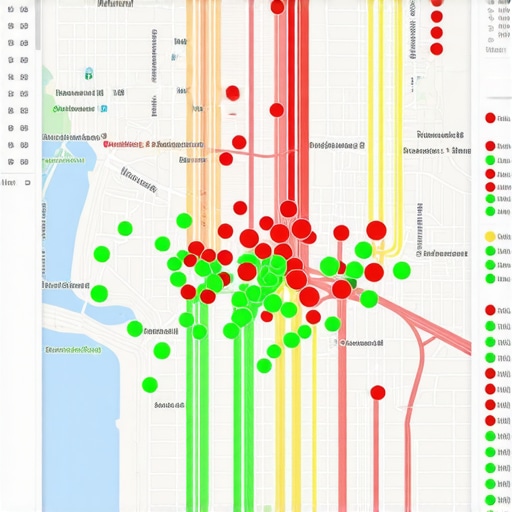
Maintaining a top-3 spot isn’t a trophy you win once; it’s a rental you pay for every single day with data integrity. I reached a point where I stopped looking at my dashboard unless my local SEO software sends a priority alert. If you are still manually checking your positions every morning, you aren’t a business owner—you are an unpaid intern for an algorithm. I personally rely on a stack that centers around a grid-based rank tracker setup that shows real neighborhood proximity. This is the only way to see if a competitor is eating your lunch two blocks over while you are celebrating a green report at your desk. You have to move away from vanity metrics and learn how to run a local SEO audit that actually identifies revenue-leaking errors rather than just listing positions.
How do I maintain my ranking dominance year after year?
The secret is a ‘Zero Trust’ policy toward third-party directories. I use a rank tracking feature that alerts me to any ‘suggested edits’ on Google before they go live. Joy Hawkins, a renowned expert in the local SEO space, has often pointed out that Google’s automated ‘understanding’ of a business can be easily swayed by conflicting data across the web. To combat this, I’ve mastered how to sync locations without data corruption, ensuring that every single mention of my brand is an exact clone of my official website data. If you let even one suite number vary, you are inviting the algorithm to doubt your existence. This is why I use a citation monitor trick to scrub the web for ghost listings that might be siphoning off your authority.
The Tools That Actually Earn Their Keep
I get pitched a new ‘AI SEO’ tool every week, but 90% of them are just wrappers for basic data you can get for free. The ones that stay in my toolkit are those that offer granular control over reputation. I’ve seen review automation filter out local competitor sabotage in real-time, which is worth more than a hundred backlink campaigns. Looking ahead, I predict that ‘Search Generative Experience’ (SGE) will make standard map packs even more competitive. In the next 18 months, if your maps analytics don’t show you as the undisputed authority in your micro-neighborhood, you won’t even show up in the AI-generated summaries. My advice? Stop obsessing over national trends and start using local SEO software for small business growth that focuses on hyper-local signals. Try this today: Go into your monitoring tool and set an ‘Immediate Alert’ for any change to your business phone number or website URL. That five-minute setup is the difference between a thriving business and a suspended profile.
What Most Agencies Keep Secret About Local Data Integrity
Reflecting on my years in the trenches, the biggest lightbulb moment was realizing that automated data syncs can sometimes be your worst enemy if not monitored closely. I have seen perfectly optimized listings get throttled because a low-quality directory overwrote a suite number that was already correct. Another hard truth? Your average position is a total vanity metric if you do not know why tracking average position is the fastest way to lose local customers. It is always better to be #1 in the three blocks surrounding your shop than #5 across the whole city. Finally, never underestimate the power of human intervention; the reason why manual citation cleanup is better than automated tools becomes clear the moment a bot accidentally deletes your primary category during a batch update.
My Go-To Toolkit for Owning the Neighborhood
If you are ready to stop guessing and start growing, I recommend building a stack that focuses on grid-based reporting. I personally swear by local seo software that offers granular control over your NAP data. I also rely heavily on maps analytics to bridge the gap between vague impressions and actual customer intent. For those managing multiple storefronts, mastering how to sync hundreds of locations without data corruption is the only way to stay sane while scaling. #IMAGE_PLACEHOLDER_E# I also keep a close eye on Sterling Sky’s research and the Local Search Forum to catch algorithm shifts before they hit my dashboard.
Reclaim Your Local Kingdom and Sleep Better
You have worked too hard to let a suggested edit or a scraper bot dismantle your digital storefront. Setting up a proactive citation monitor is more than just another SEO task; it is an insurance policy for your livelihood. Once you have your rank tracker setup that shows real neighborhood proximity, you will finally see the digital landscape exactly as your customers do. Do not wait for a suspension notice to start caring about your data. Take control now, and watch your local authority grow sustainably. Have you ever caught a competitor trying to change your business details on Google? Let me know your experience in the comments below!