I remember sitting in my dim office at 11 PM, staring at a screen of emerald green dots on my rank tracker and feeling like the absolute king of the city. On paper, I was crushing it. My business was sitting at #1 for every major keyword across three zip codes. But then I looked at the actual lead volume coming from those areas. My phone was silent. I was ranking in industrial zones, empty parks, and low-income areas where nobody actually wanted what I was selling. I was a local legend in a ghost town. It was a visceral, gut-punch realization: being visible is useless if you aren’t visible to the people with credit cards in their hands. [image_placeholder]
The Day I Stopped Caring About Global Rankings
For years, the experts have told us that the Map Pack is the only thing that matters. While they aren’t entirely wrong, they often forget to mention that not all neighborhoods are created equal. Using maps analytics insights to boost your local map visibility is about more than just seeing your name in lights; it is about identifying the specific street corners where your customers actually live and breathe. I learned the hard way that why your current rank tracker reports miss the hyper-local grid changes can lead you to waste your entire marketing budget chasing green dots that do not convert. Today, I am going to show you how to peel back the curtain on your map data to find your high-value neighborhoods. According to a study by BrightLocal, proximity is the king of ranking factors, but understanding profitable proximity is what actually builds a business.
Is maps data really accurate enough to bank on?
You might be thinking that these map dots are just a rough guess. I used to be a skeptic too. I would see myself at #1 when I was standing in my own lobby, but then I would drive three blocks away and disappear entirely. That is the proximity paradox at work. You might worry that the data is too glitchy to trust or that managing it is too time-consuming. I once ignored a weird dip in my citation monitor because I thought it was a reporting error, only to find a competitor had basically hijacked my visibility in the town wealthiest suburb. The truth is, when you stop looking at average position and start focusing on the hidden map analytics metric that shows where your leads live, you stop guessing and start growing. Have you ever noticed that you rank higher in the neighborhoods where you actually make the least amount of money?To fix the phantom ranking problem, you have to realize that why tracking average position is the fastest way to lose local customers isn’t just a catchy phrase—it is a mathematical reality. If you rank #1 on a highway but #10 in the wealthy suburb two miles away, your ‘average’ looks great, but your bank account stays empty. You need to move from bird’s-eye views to street-level data.
Ditch the Average and Watch the Grid
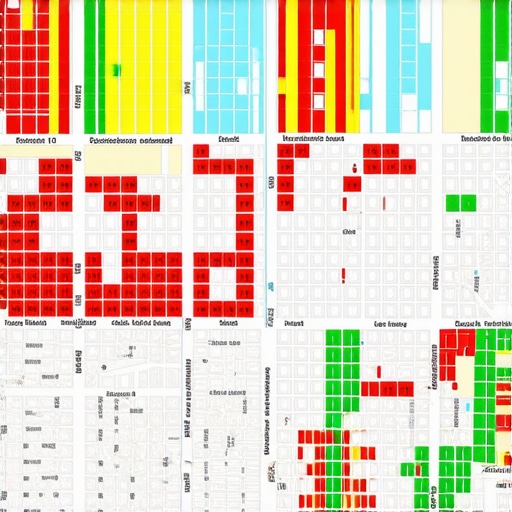
I used to work with a high-end dentist who was obsessed with being #1 for the term ‘Invisalign.’ When we pulled up his reports, he was indeed #1. The problem? He was #1 in the middle of a lake and a public park. The residential areas where the families actually lived showed him at #15. We only saw this because we switched to a grid-based the rank tracker setup that shows real neighborhood proximity. Instead of one single number, we saw a 13×13 grid of dots over the city. It was a sea of red over the homes and green over the water. Once you see the grid, you realize that why your current rank tracker reports miss the hyper-local grid changes is exactly why you aren’t getting phone calls. 
Hunt for Your Proximity Glitches
Most business owners assume their profile is perfect because they filled out the name and phone number. However, why your local seo audit is not finding your proximity glitches often comes down to tiny, invisible errors. I once spent three days troubleshooting why a roofing client’s visibility dropped off a cliff exactly four blocks from their shop. It turned out to be a simple formatting error in their address that caused a ‘data split’ in the algorithm. We discovered that your listing optimization is useless if you miss this address formatting rule. If Google sees ‘Suite 101’ in one place and ‘#101’ in another, it loses confidence in your physical location, and your ranking radius shrinks from five miles to five blocks. Use a citation monitor to ensure every single mention of your business is identical down to the last comma.
Identify Where the Money Actually Lives
Once your data is clean, you need to look at the hidden map analytics metric that shows where your leads live. This involves looking at ‘Request Directions’ data inside your maps analytics. If you see people are asking for directions from a specific neighborhood where you aren’t ranking well, that is your primary target. You don’t need to rank everywhere; you just need to rank where the intent is highest. You can even use how to audit your storefront for local search signal consistency to ensure that the photos and exterior shots you upload to your profile match the physical reality those customers see when they finally drive to your location. Stop trying to conquer the whole map and start dominating the three zip codes that actually pay your bills.
I have spent years looking at local search data, and if there is one thing I have learned, it is that the most dangerous number in marketing is a ‘good’ average. We love to look at a high star rating or a #1 ranking and assume the work is done. But here is a hard truth: I have seen businesses with five hundred reviews get absolutely buried by a competitor with fifty. Most people think they need to hoard reviews like a dragon hoards gold, but volume is a vanity metric if you lack diversity and velocity. In my experience, a stagnant profile with a thousand generic ‘great job’ reviews is less authoritative than a profile getting three detailed, keyword-rich reviews a week. This is exactly why most review management tools fail to catch the one metric that matters: relevance over quantity.
Don’t Let Citation Scrapers Sabotage Your Hard Work
Another massive trap I see business owners fall into is the ‘set it and forget it’ approach to their business listings. You might pay for a one-time cleanup and think you are safe for the year. However, the internet is full of automated data scrapers that are constantly overwriting your info with old, cached data from 2014. If you do not have a strategy for how to stop citation scrapers from overwriting your correct business info, your ‘clean’ data will be a fragmented mess within six months. It is a silent killer for your rankings because it slowly erodes Google’s trust in your physical location. You need a citation monitor that does more than just list your name; it needs to alert you the second an old phone number or a misspelled street name resurfaces on a random directory.
Why does my map data look like a total lie compared to my sales?
This is the question that keeps most CMOs up at night. You see a spike in impressions, yet your front desk is bored. The map analytics glitch that inflates your traffic reports often stems from Google counting ‘ghost’ impressions—times your pin showed up for a broad search even if the user never scrolled past the first result. According to local search expert Joy Hawkins from Sterling Sky, proximity is frequently skewed by these non-intent views. If you are not distinguishing between a casual view and a ‘Request Directions’ action, you are chasing ghosts. This leads to the painful realization of why your map data does not match your actual sales. You have to look past the top-line numbers and see where the actual engagement is happening. If you are still looking at a single ranking number across an entire city, you are flying blind. In fact, why rank tracking software often misses the local grid is the number one reason local campaigns fail. You might be #1 at the coffee shop next door, but #20 at the residential development where your customers actually live. Have you ever fallen into this trap where your reports looked amazing but your phone was dead silent? Let me know in the comments.
Local SEO is not a trophy you win once and put on a shelf; it is a garden that actively wants to die every time you turn your back. I have seen businesses claw their way to the top of the map pack only to vanish in three months because they stopped looking at their data. Maintenance is the part of the job that everyone hates because it feels like chores, but it is the difference between a one-hit-wonder and a local legacy. The reality is that your competitors are not sitting still. They are likely using local seo software to find the gaps you left behind when you stopped being vigilant.
The Software That Actually Earned a Spot on My Dashboard
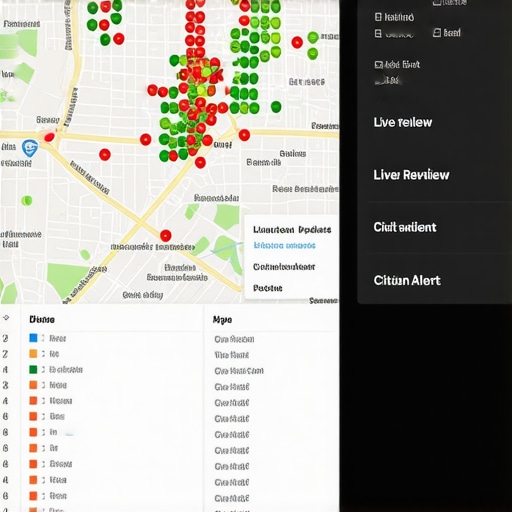
I have tested almost every tool on the market, and my stack is now leaner than it has ever been. I do not need fifty tabs open; I need three things: a grid-based tracker, a dynamic citation monitor, and a review engine. I personally rely on the citation monitor setting that catches profile hijacks in minutes. This is non-negotiable because I have had clients whose phone numbers were changed on minor directories by malicious bots, leading Google to suspend their main profile for ‘data inconsistency.’ If you are managing multiple spots, you need to know how to sync hundreds of locations without data corruption, or you will spend your entire life manually fixing zip codes.
When it comes to reviews, I stopped chasing volume and started chasing context. I use review management tools that transform customer feedback into revenue by highlighting the specific services customers are praising. According to Darren Shaw, founder of Whitespark and author of the Local Search Ranking Factors study, behavioral signals like the ‘velocity’ of new reviews and the inclusion of keywords in those reviews are now heavier ranking weights than a simple high star count. This is the only review move that improves your map rank without backlinks: getting customers to mention your specific service and your city in their text.
How can I keep these rankings alive for the long haul?
Consistency is the only thing the algorithm respects over time. You should be auditing your profile every fourteen days. This does not mean a full technical deep dive, but rather a quick check for ‘Suggested Edits’ from the public that you might have missed. If you want to unlock the power of local seo software for small business growth, use it to automate the boring stuff like name-address-phone (NAP) monitoring so you can focus on high-impact tasks like uploading fresh geotagged photos. In the next two years, I predict we will see the map pack move almost entirely toward AI-driven summaries of user photos and real-time inventory—if your data is not clean now, you will be invisible when that shift hits. My challenge to you: Go into your maps analytics today and look at your direction requests versus your total impressions. If that ratio is less than 2%, you are ranking in the wrong neighborhoods. Adjust your grid, find the high-intent zip codes, and stop wasting your time on ghost traffic.
The Hardest Lesson I Learned About Proximity and Map Profits
After years of trial and error, I’ve realized that visibility in a vacuum is pure vanity. The key difference between tracking rankings and tracking leads is understanding the specific buy-intent of a neighborhood. I once ranked #1 in a massive radius, but it was all residential zones that didn’t need my B2B services. I learned to focus on my maps analytics insights to find where the money actually lives, not just where the grid is greenest. Don’t be afraid to let a low-value neighborhood go red if it means your high-value zip codes are bright green.
My Daily Workflow for Bulletproof Map Visibility
To stay ahead without burning out, you need a lean, effective stack. I personally rely on a citation monitor to catch those pesky data scrapers before they undo my hard work. It’s also vital to leverage review management tools that transform customer feedback into revenue. This ensures your profile stays fresh and authoritative without you having to manually check fifty different directories every morning. I also check how rank tracker can skyrocket your local rankings by identifying ‘proximity gaps’ where a simple address formatting fix could double your reach.
Claim Your Neighborhood Before a Competitor Does
Local search isn’t a “set it and forget it” task; it’s a living, breathing part of your business’s reputation. If you’re ready to stop guessing and start growing, you can unlock the power of local seo software to automate the technical side so you can focus on what you do best: serving your community. Every day you wait is a day a competitor is moving their pin closer to your best leads. Go out there, audit your grid, and dominate your local area. Have you ever noticed your rankings spiking in areas where no one actually buys from you? Let me know your experience in the comments!