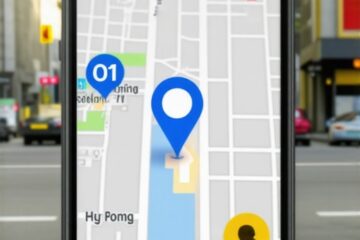
I’ll never forget the Tuesday I lost my cool in a Starbucks parking lot. I had spent six months obsessively tweaking my Google Business Profile, and according to my reports, I was the king of the neighborhood. I was sitting right there, latte in hand, seeing my shop at the top of the Map Pack. Then I started driving home. Three miles down the road, I pulled over, refreshed the search, and my business had vanished. Not just dropped to third—it was gone. Completely. It felt like I’d been ghosted by an algorithm I thought I finally understood. I was falling for the Proximity Trap, a mistake I made early on by assuming that a number one ranking meant I was the top result for everyone in town.
That Awful Moment I Realized My Rankings Were a Lie
It’s a gut-punch. You check your phone while standing in your office, and there you are, shining in the 3-pack. But the reality is that Google’s near me algorithm is incredibly sensitive. If you aren’t looking at the grid-based ranking method that reveals your real search presence, you’re basically flying blind. I spent thousands of dollars on ads before I realized that my organic reach was essentially a tiny circle around my front door. Today, I’m going to show you how to break out of that circle and actually stay visible when customers search for you from the other side of the tracks.
Is local SEO really just a big lie?
I get it. You feel like the game is rigged. Why bother with all this if your visibility evaporates the second someone crosses a major intersection? The truth is, Google prioritizes proximity above almost everything else. In fact, research highlighted by Search Engine Journal indicates that distance is a primary factor that often overrides even the best review scores. But that doesn’t mean you’re stuck.
The Invisible Wall That Kills Your Local Visibility
The problem is that most rank tracking software often misses the local grid and gives you a single average number that doesn’t exist in the real world. I used to rely on these reports, feeling proud of a 3.2 average position, while my actual customers were seeing a blank space. It wasn’t until I started diving into maps analytics insights that I saw the proximity ghost in action. My shop was a powerhouse within 500 yards, but a ghost at two miles. Have you ever checked your rankings from a mile away and felt that sinking feeling in your stomach? We are going to fix the shrinking proximity circles that are strangling your lead flow. It’s not just about being near; it’s about proving to Google that you are the most relevant authority for that neighborhood, regardless of where the searcher is standing.
Visualize the Battlefield with Heatmaps
To break the proximity trap, you first have to see it. Most people look at a single ranking number and think they’re winning, but that’s like trying to judge the weather for an entire state by looking at one thermometer in your backyard. You need to see the cold spots. I remember working with a local locksmith who swore his SEO was perfect because he was #1 while sitting at his desk. When we ran a grid report, we saw he was #1 for exactly two blocks; three blocks away, he was #14. By using heatmaps to visualize your map pack dominance, you identify the exact intersections where your authority drops off. This isn’t just about pretty colors; it’s about knowing where to focus your content and citation efforts. If you don’t have the rank tracker setup that shows real neighborhood proximity, you are fighting a ghost.
Identify the Data Gaps Killing Your Authority
Once you see the gaps, you have to find out why Google doesn’t trust you once you cross the main highway. Often, it’s a trust issue rooted in messy data. Think of Google as a paranoid librarian; if one index card says you’re on ‘Main St’ and another says ‘Main Street,’ the librarian gets confused and hides your book. I once spent three days cleaning up a client’s listings because their old marketing agency had used five different tracking numbers. It was a nightmare, but fixing the 3 citation errors that confuse Google and kill your traffic is the fastest way to reconnect those broken signals. You need a way to keep a constant eye on these mentions. A citation monitor setting that catches profile hijacks in minutes ensures that a competitor doesn’t swoop in and change your phone number while you’re busy running your business.
Turn Customer Feedback into a Search Signal
Reviews are not just about social proof anymore; they are a primary ranking signal that tells Google how relevant you are to specific neighborhoods. If a customer in the north part of town mentions your service in their review, Google starts to associate your business with that specific geography. I’ve seen businesses jump five spots in the map pack just by encouraging customers to mention their neighborhood in their feedback. However, managing this manually is a recipe for burnout. Using review management tools that transform customer feedback into revenue allows you to respond faster and more strategically. When you respond to a review within two hours, you aren’t just being polite; you’re showing Google’s algorithm that your business is active and engaged. If you aren’t watching maps analytics insights to see which areas are sending you the most reviews, you’re leaving a massive amount of local authority on the table. Focus on the neighborhoods where you’re already gaining traction and use that momentum to push your visibility into the next zip code over.Let’s dig deeper into the data that’s actually hitting your dashboard. Most business owners are obsessed with their ‘average position,’ but I’m going to tell you something controversial: that number is a total phantom. In my experience, relying on a single average is the quickest way to go broke. If you are ranked #1 in your own lobby but #15 three blocks away, a generic report might tell you that you’re ‘averaging #8.’ But nobody scrolls to #8. This is precisely why tracking average position is the fastest way to lose local customers. You aren’t seeing the reality of the street; you’re seeing a smoothed-out lie.
Stop chasing the average position phantom
The real needle-mover isn’t the average; it’s the ‘Share of Local Voice’ across a specific grid. When you realize that rank tracking software often misses the local grid, you start looking for the micro-fluctuations that actually matter. I’ve seen businesses spend months optimizing for keywords that have zero local intent, simply because their software didn’t distinguish between a global search and a ‘near me’ search. A study by Whitespark confirms that while citation signals have decreased in overall weight, the accuracy of those citations is more critical than ever. It’s not about how many places you are listed; it’s about Google not finding a single reason to doubt your location.
Can you actually dominate a neighborhood without a physical storefront?
This is the million-dollar question for service-area businesses. Many pros will tell you it’s impossible to outrank a brick-and-mortar shop from the next town over, but they’re wrong. By using the local strategy for ranking in towns where you have no office, you can signal relevance through localized content and hyper-specific reviews. The trap most people fall into is using automated tools to ‘blast’ their info everywhere. I’ve learned the hard way that why manual citation cleanup is better than automated tools comes down to the details that scrapers miss—like that one old Yelp listing with your 2018 phone number that’s still poisoning your local trust.
The automated cleanup trap that breaks your local trust
Here is the ‘oops’ factor I see every single week: business owners trust a ‘sync’ button to fix their digital footprint. These tools often overwrite custom-optimized descriptions or, worse, create duplicate ‘ghost’ listings that confuse the algorithm. You need to be looking at the hidden map analytics metric that shows where your leads live, not just where they click. If your traffic is up but your phone isn’t ringing, you likely have a proximity glitch where you’re visible to people who are too far away to actually visit. Have you ever fallen into this trap of trusting a green checkmark on a dashboard while your sales stayed flat? Let me know in the comments. We need to stop looking at vanity metrics and start looking at the street-level data that actually converts.Once you’ve finally cracked the code and seen those pins turn green, the real challenge begins. I’ve learned the hard way that a number one ranking is a lease, not an ownership. If you stop paying attention, a competitor will move in. Maintenance isn’t just a chore; it’s defensive warfare. To keep my sanity, I’ve refined a routine to monitor ranking flux without checking your phone every hour. I don’t care about the daily wiggles, but I do care about the trends. If I see a three-day slide in a specific neighborhood, I know it’s time to dig into the data.
Don’t let your hard-won rankings slide into the abyss
The secret to staying on top isn’t doing more work; it’s doing the right work. I treat my citation monitor as my secret weapon for early warnings. It’s like a security camera for my brand’s reputation. Just last month, a scraper site changed my business hours to ‘Closed’ on a Tuesday, and I would have never known if my alerts hadn’t fired. Joy Hawkins, a renowned local SEO expert at Sterling Sky, has frequently pointed out how factors like ‘Openness’ and the ‘Open Now’ filter can drastically swing visibility for certain categories. This is exactly why the simple tweak to your business hours that actually boosts visibility is so critical—if Google thinks you’re closed, you’re invisible.
How can I keep my local presence from fading over time?
Consistency is your best friend. I set aside twenty minutes every Friday morning to review my maps analytics to find my most profitable neighborhoods. I look for where the ‘Get Directions’ clicks are coming from and double down on content for those areas. It’s about maintaining the authority you’ve built while slowly expanding the radius of your influence.
The lean software stack I use to stay on top
I don’t use twenty tools; I use three that actually work. First, a grid-based tracker to see the real battlefield. Second, review management tools that transform customer feedback into revenue by helping me respond to every mention in record time. And third, a lead-focused dashboard because I’ve realized that the rank tracking feature that actually predicts revenue growth is the only metric my bank account cares about. 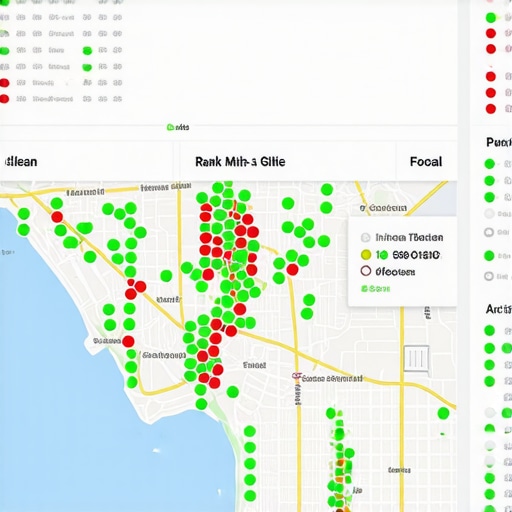 Looking ahead, I suspect we are moving toward a hyper-real-time local search environment. With the rise of AI-driven search, Google is going to prioritize businesses that provide instant, updated data—like live inventory or current wait times. My advanced tip for you today? Start including neighborhood-specific keywords in your review responses. If a customer mentions your shop in ‘Westside,’ reply by mentioning how much you love serving the ‘Westside’ community. It’s a subtle signal that carries massive weight. Go into your dashboard right now and find one neighborhood where you’re currently at position #4 and reply to a recent review with a localized nod. It’s the fastest way to nudge yourself back into that 3-pack.
What No One Tells You About Fighting the Proximity Ghost
Over the years, I’ve realized that the biggest barrier to ranking isn’t your competition; it’s the data noise you create yourself. One of my biggest lightbulb moments was discovering that your listing optimization is useless if you miss this address formatting rule. If Google can’t reconcile your ‘Suite B’ with ‘#B’, you’ve already lost the proximity war before you even start driving.
Another hard truth: stars alone are a vanity metric. I used to chase a perfect 5.0 rating, but I eventually learned why review diversity matters more than just your star rating. Google is scanning those reviews for semantic keywords that prove you actually perform the services you claim in specific neighborhoods. Finally, never underestimate a desperate competitor. I’ve seen rivals report legitimate listings as ‘permanently closed’ on Friday evenings just to capture the weekend traffic. Vigilance is your only real defense.
The Toolkit That Actually Keeps My Business on the Map
If you’re tired of guessing where you stand, you need a lean stack that tells the truth. First, I never launch a strategy without the grid-based ranking method that reveals your real search presence. It is the only way to see the ‘cold spots’ in your visibility. For handling the daily grind of customer interaction, I rely on review management tools that transform customer feedback into revenue because response speed is a direct signal to Google that your business is alive and well.
To protect my hard-won positions, my citation monitor acts as my secret weapon, catching data scrapers before they can poison my local authority. For ongoing education, I always look toward the annual Local Search Ranking Factors study—it’s the gold standard for separating SEO myths from reality.
Take Back Your Neighborhood Today
Local visibility is the lifeblood of your business, and it is far too important to leave to chance or smoothed-over average ranking reports. When you combine the right local SEO software with a commitment to hyper-local street data, the proximity trap stops being a threat and starts being your greatest competitive advantage. You have the strategy; now it is time to light up that grid. What is the biggest ‘cold spot’ on your ranking grid right now? Let me know in the comments below.