I’ll never forget the rainy Tuesday I realized I was being played. I was sitting in my truck, just two streets over from my office, feeling pretty smug about my business growth. My expensive dashboard told me I was ranking #1 for my main keyword. But when I pulled up my phone and searched for my own service? Nothing. Crickets. A competitor from two towns over was sitting in my spot. I felt like I’d been sold a bill of goods. It turns out, I was looking at the wrong data entirely. I was obsessed with a single average number while ignoring the street-level reality of how customers actually find us. [image_placeholder]
Your Ranking Reports Are Lying to Your Face
Most of us fall into the trap of checking a single ranking number and calling it a day. I did it for years. I wasted thousands on a fancy rank tracker that gave me a warm, fuzzy feeling but zero actual insight into why my phone wasn’t ringing. The truth is, Google doesn’t see your city as one big block. It sees it as a hyper-local grid where your visibility can vanish the moment you cross a major intersection. If you aren’t looking at maps analytics insights that show this proximity gap, you’re basically flying a plane with a broken altimeter. According to data shared by Google, 88% of consumers who do a local search on their smartphone visit or call a store within a day. If you’re invisible three blocks away, you’re losing those people instantly.
Is this specific metric actually worth the headache?
You might be thinking another metric is the last thing you need. I get it. But my biggest mistake early on was ignoring why my map ranking reports failed to show the real-world proximity gap. I thought my authority would carry me across the whole zip code, but local SEO is a battlefield of inches. Today, we’re going to fix that. I’m going to show you how to find the Search Grid metric that highlights exactly where your competitors are weak so you can swoop in and take those leads. Have you ever checked your rankings while standing in a different part of town and been shocked by what you saw? Once you see the map for what it really is, you’ll stop paying for local SEO tools that treat your location like a static dot and start seeing the gaps where your rivals are sleeping. It all starts with the rank tracker setup that shows real neighborhood proximity, and it’s simpler than you think.
Map Out the Local Grid Before You Spend Another Dollar
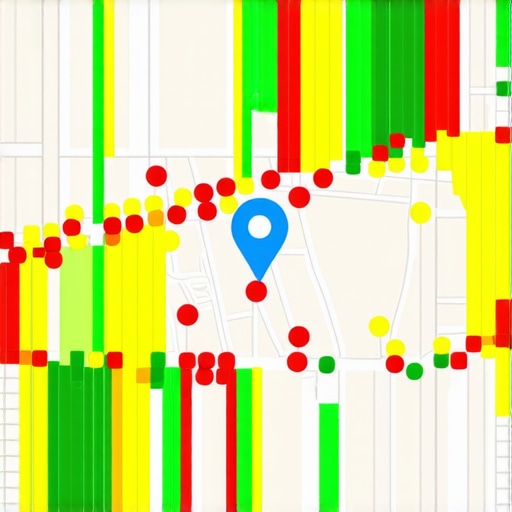
Think of your local ranking like a radio signal. If you’re standing right next to the tower, the music is crystal clear. But move three miles away, and the static takes over. This is exactly what happens with your Google Business Profile. I used to think a single “Rank 1” result meant I owned the city. I was wrong. To see the truth, you need to configure the rank tracker setup that shows real neighborhood proximity. Instead of one data point, you want a 5×5 or 11×11 grid of pins across your service area. This shows you exactly where your “signal” drops off. I remember doing this for a locksmith in Chicago. On paper, he was top 3. In reality, he was only visible in a four-block radius because a competitor had a slightly better optimized profile just down the street. Once we saw the “red zones” on the map, we knew exactly where we needed to focus our efforts.
Find the Holes in Your Competitor’s Map Presence
Once you have your grid, don’t just look at your own red dots—look at who is winning in those areas. You need to learn how to audit your competitors local SEO without being spotted. Are they winning because they have more reviews, or is it because their primary category is different? I once found a competitor outranking my client simply because they had a “Showroom” tag that we hadn’t considered. It wasn’t about backlinks; it was about local relevance. You can use maps analytics insights to compare your “share of voice” against theirs. If you see a rival dominating a specific neighborhood, check their engagement signals. Are people actually clicking for directions there?
Stop Obsessing Over Star Ratings and Start Responding Fast
Everyone wants a 5.0, but Google actually cares more about how active you are. In my experience, why your review average matters less than your response speed is one of the most overlooked ranking factors. I’ve seen profiles with a 4.2 rating outrank 4.9s simply because the 4.2 owner responded to every single review within two hours. It signals to the algorithm that the business is alive and breathing. To keep up with this without losing your mind, you need review management tools that transform customer feedback into revenue. It’s about creating a “velocity” of engagement that competitors can’t match manually.
Clean Up the Digital Paperwork No One Told You About
Finally, you have to tackle the “invisible” data. I spent three weeks wondering why a client’s rankings tanked, only to find out an old Yelp listing had an extra “Suite B” in the address that didn’t exist anymore. That tiny inconsistency was enough for Google to lose trust. You must learn how to audit your local listings for inconsistent phone numbers and addresses. This isn’t glamorous work, but using a citation monitor is like having a security guard for your data. It catches these errors before they turn into ranking penalties. If your data is messy, no amount of optimization will save you.
Most people believe that if they just fix their business description, they’ll climb the ranks. I’ve got news for you: why your business description has zero impact on your map rank is a hard pill to swallow, but the algorithm almost entirely ignores that field for ranking purposes. It’s for the user, not the bot. If you’re spending hours keyword-stuffing your ‘About’ section while ignoring your primary category, you’re rearranging deck chairs on the Titanic. Let’s dig deeper into the mechanics of what actually moves the needle. In my experience, the biggest ‘oops’ factor is relying on ‘Average Position’ metrics. Why tracking average position is the fastest way to lose local customers comes down to simple math: an average of #1 and #20 is #10, but a #10 rank in the map pack is effectively invisible. You need to see the grid, not the average. 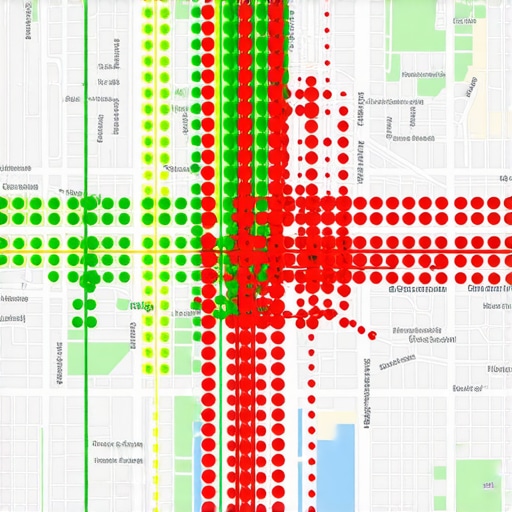
Stop Trusting Automated Citation Syncers Blindly
There is a dangerous myth that buying a subscription to a citation aggregator solves your data problems forever. It doesn’t. In fact, why manual citation cleanup is better than automated tools is often evident when ‘zombie data’—old phone numbers or addresses—keeps resurfacing because a scraper found an unverified 10-year-old directory. I’ve seen businesses get caught in a loop where their software ‘fixes’ the data on Monday, and a scraper overwrites it on Tuesday. You have to learn how to stop citation scrapers from overwriting your correct business info by claiming the ‘power directories’ manually. According to a study by BrightLocal, citation consistency remains a top-five foundational ranking factor, but its ‘weight’ is easily neutralized by a single conflicting major data provider.
Is your local SEO audit missing the proximity glitches?
If you aren’t looking at the hyper-local level, you’re missing the ‘proximity paradox.’ This is where why your local SEO audit is not finding your proximity glitches becomes a massive liability. Your software might say you’re winning, but if a competitor has higher ‘Review Diversity,’ they’ll snatch the lead the moment a customer moves 500 feet away. Why review diversity matters more than just your star rating is a nuance that most beginners miss; Google wants to see that you are relevant for multiple services and keywords within those reviews, not just a high volume of generic ‘Great service!’ comments. Have you ever fallen into this trap of trusting a ‘green’ ranking report while your phone stayed silent? Let me know in the comments.
Once you’ve cleared the initial hurdles, the real battle shifts from how you get to the top to how you actually stay there. I’ve seen businesses hit the #1 spot only to disappear overnight because they stopped monitoring the small stuff. The secret to long-term dominance isn’t a secret at all; it’s about having a system that catches errors before Google does. This is where you move from manual guesswork to professional-grade tools. I personally rely on a citation monitor to alert me the second a rogue directory tries to change my client’s phone number. If you aren’t watching your data like a hawk, you’re leaving your rankings to chance.
How do I maintain my map dominance over the long haul?
Maintenance comes down to two things: consistency and speed. You need to perform a monthly check to ensure everything is still aligned. I always recommend that business owners learn how to audit your storefront for local search signal consistency at least once a quarter. This isn’t just about your address; it’s about making sure your service categories haven’t been ‘suggested’ into something irrelevant by a competitor’s edit. If you are managing multiple spots, the stakes are higher. You’ll need to know how to sync hundreds of locations without data corruption, or you’ll find yourself playing a never-ending game of digital whack-a-mole.

Beyond the data, your biggest asset is your reputation. If you’re getting more than five reviews a week, doing it manually is a recipe for burnout. I’ve found that using the software feature that makes managing 1000 reviews easy is the only way to stay sane while maintaining that critical two-hour response window. It allows you to spot trends in customer feedback that the algorithm eventually picks up as authority signals. As local search expert Joy Hawkins noted in her research on the ‘Openness’ factor, Google is increasingly prioritizing businesses that are not only relevant but demonstrably active and available during the hours they claim to be open. If your profile looks abandoned for even a week, your ‘signal’ starts to fade.
The Future of Local Search is Hyper-Local Personalization
Looking ahead, I predict that ‘standard’ rankings will matter less than ‘contextual’ rankings. Google is moving toward showing results based on a user’s specific past behavior and hyper-precise micro-locations. We are moving away from the city-level view and toward the street-corner view. To prepare for this, you should start using review management tools that transform customer feedback into revenue by encouraging customers to mention specific services and neighborhoods in their feedback. This creates the ‘diversity’ that the algorithm craves for these new, smaller search clusters. My advice? Don’t wait for the next update to wipe you out. Go into your dashboard today and check your response time on your last five reviews. If it’s longer than 24 hours, that is your first target for improvement.
I’ll never forget the rainy Tuesday I realized I was being played. I was sitting in my truck, just two streets over from my office, feeling pretty smug about my business growth. My expensive dashboard told me I was ranking #1 for my main keyword. But when I pulled up my phone and searched for my own service? Nothing. Crickets. A competitor from two towns over was sitting in my spot. I felt like I’d been sold a bill of goods. It turns out, I was looking at the wrong data entirely. I was obsessed with a single average number while ignoring the street-level reality of how customers actually find us. [image_placeholder]
Your Ranking Reports Are Lying to Your Face
Most of us fall into the trap of checking a single ranking number and calling it a day. I did it for years. I wasted thousands on a fancy rank tracker that gave me a warm, fuzzy feeling but zero actual insight into why my phone wasn’t ringing. The truth is, Google doesn’t see your city as one big block. It sees it as a hyper-local grid where your visibility can vanish the moment you cross a major intersection. If you aren’t looking at maps analytics insights that show this proximity gap, you’re basically flying a plane with a broken altimeter. According to data shared by Google, 88% of consumers who do a local search on their smartphone visit or call a store within a day. If you’re invisible three blocks away, you’re losing those people instantly.
Is this specific metric actually worth the headache?
You might be thinking another metric is the last thing you need. I get it. But my biggest mistake early on was ignoring why my map ranking reports failed to show the real-world proximity gap. I thought my authority would carry me across the whole zip code, but local SEO is a battlefield of inches. Today, we’re going to fix that. I’m going to show you how to find the Search Grid metric that highlights exactly where your competitors are weak so you can swoop in and take those leads. Have you ever checked your rankings while standing in a different part of town and been shocked by what you saw? Once you see the map for what it really is, you’ll stop paying for local SEO tools that treat your location like a static dot and start seeing the gaps where your rivals are sleeping. It all starts with the rank tracker setup that shows real neighborhood proximity, and it’s simpler than you think.
Map Out the Local Grid Before You Spend Another Dollar
Think of your local ranking like a radio signal. If you’re standing right next to the tower, the music is crystal clear. But move three miles away, and the static takes over. This is exactly what happens with your Google Business Profile. I used to think a single “Rank 1” result meant I owned the city. I was wrong. To see the truth, you need to configure the rank tracker setup that shows real neighborhood proximity. Instead of one data point, you want a 5×5 or 11×11 grid of pins across your service area. This shows you exactly where your “signal” drops off. I remember doing this for a locksmith in Chicago. On paper, he was top 3. In reality, he was only visible in a four-block radius because a competitor had a slightly better optimized profile just down the street. Once we saw the “red zones” on the map, we knew exactly where we needed to focus our efforts.
Find the Holes in Your Competitor’s Map Presence
Once you have your grid, don’t just look at your own red dots—look at who is winning in those areas. You need to learn how to audit your competitors local SEO without being spotted. Are they winning because they have more reviews, or is it because their primary category is different? I once found a competitor outranking my client simply because they had a “Showroom” tag that we hadn’t considered. It wasn’t about backlinks; it was about local relevance. You can use maps analytics insights to compare your “share of voice” against theirs. If you see a rival dominating a specific neighborhood, check their engagement signals. Are people actually clicking for directions there?
Stop Obsessing Over Star Ratings and Start Responding Fast
Everyone wants a 5.0, but Google actually cares more about how active you are. In my experience, why your review average matters less than your response speed is one of the most overlooked ranking factors. I’ve seen profiles with a 4.2 rating outrank 4.9s simply because the 4.2 owner responded to every single review within two hours. It signals to the algorithm that the business is alive and breathing. To keep up with this without losing your mind, you need review management tools that transform customer feedback into revenue. It’s about creating a “velocity” of engagement that competitors can’t match manually.
Clean Up the Digital Paperwork No One Told You About
Finally, you have to tackle the “invisible” data. I spent three weeks wondering why a client’s rankings tanked, only to find out an old Yelp listing had an extra “Suite B” in the address that didn’t exist anymore. That tiny inconsistency was enough for Google to lose trust. You must learn how to audit your local listings for inconsistent phone numbers and addresses. This isn’t glamorous work, but using a citation monitor is like having a security guard for your data. It catches these errors before they turn into ranking penalties. If your data is messy, no amount of optimization will save you.
Most people believe that if they just fix their business description, they’ll climb the ranks. I’ve got news for you: why your business description has zero impact on your map rank is a hard pill to swallow, but the algorithm almost entirely ignores that field for ranking purposes. It’s for the user, not the bot. If you’re spending hours keyword-stuffing your ‘About’ section while ignoring your primary category, you’re rearranging deck chairs on the Titanic. Let’s dig deeper into the mechanics of what actually moves the needle. In my experience, the biggest ‘oops’ factor is relying on ‘Average Position’ metrics. Why tracking average position is the fastest way to lose local customers comes down to simple math: an average of #1 and #20 is #10, but a #10 rank in the map pack is effectively invisible. You need to see the grid, not the average.
Stop Trusting Automated Citation Syncers Blindly
There is a dangerous myth that buying a subscription to a citation aggregator solves your data problems forever. It doesn’t. In fact, why manual citation cleanup is better than automated tools is often evident when ‘zombie data’—old phone numbers or addresses—keeps resurfacing because a scraper found an unverified 10-year-old directory. I’ve seen businesses get caught in a loop where their software ‘fixes’ the data on Monday, and a scraper overwrites it on Tuesday. You have to learn how to stop citation scrapers from overwriting your correct business info by claiming the ‘power directories’ manually. According to a study by BrightLocal, citation consistency remains a top-five foundational ranking factor, but its ‘weight’ is easily neutralized by a single conflicting major data provider.
Is your local SEO audit missing the proximity glitches?
If you aren’t looking at the hyper-local level, you’re missing the ‘proximity paradox.’ This is where why your local SEO audit is not finding your proximity glitches becomes a massive liability. Your software might say you’re winning, but if a competitor has higher ‘Review Diversity,’ they’ll snatch the lead the moment a customer moves 500 feet away. Why review diversity matters more than just your star rating is a nuance that most beginners miss; Google wants to see that you are relevant for multiple services and keywords within those reviews, not just a high volume of generic ‘Great service!’ comments. Have you ever fallen into this trap of trusting a ‘green’ ranking report while your phone stayed silent? Let me know in the comments.
Once you’ve cleared the initial hurdles, the real battle shifts from how you get to the top to how you actually stay there. I’ve seen businesses hit the #1 spot only to disappear overnight because they stopped monitoring the small stuff. The secret to long-term dominance isn’t a secret at all; it’s about having a system that catches errors before Google does. This is where you move from manual guesswork to professional-grade tools. I personally rely on a citation monitor to alert me the second a rogue directory tries to change my client’s phone number. If you aren’t watching your data like a hawk, you’re leaving your rankings to chance.
How do I maintain my map dominance over the long haul?
Maintenance comes down to two things: consistency and speed. You need to perform a monthly check to ensure everything is still aligned. I always recommend that business owners learn how to audit your storefront for local search signal consistency at least once a quarter. This isn’t just about your address; it’s about making sure your service categories haven’t been ‘suggested’ into something irrelevant by a competitor’s edit. If you are managing multiple spots, the stakes are higher. You’ll need to know how to sync hundreds of locations without data corruption, or you’ll find yourself playing a never-ending game of digital whack-a-mole.
Beyond the data, your biggest asset is your reputation. If you’re getting more than five reviews a week, doing it manually is a recipe for burnout. I’ve found that using the software feature that makes managing 1000 reviews easy is the only way to stay sane while maintaining that critical two-hour response window. It allows you to spot trends in customer feedback that the algorithm eventually picks up as authority signals. As local search expert Joy Hawkins noted in her research on the ‘Openness’ factor, Google is increasingly prioritizing businesses that are not only relevant but demonstrably active and available during the hours they claim to be open. If your profile looks abandoned for even a week, your ‘signal’ starts to fade.
The Future of Local Search is Hyper-Local Personalization
Looking ahead, I predict that ‘standard’ rankings will matter less than ‘contextual’ rankings. Google is moving toward showing results based on a user’s specific past behavior and hyper-precise micro-locations. We are moving away from the city-level view and toward the street-corner view. To prepare for this, you should start using review management tools that transform customer feedback into revenue by encouraging customers to mention specific services and neighborhoods in their feedback. This creates the ‘diversity’ that the algorithm craves for these new, smaller search clusters. My advice? Don’t wait for the next update to wipe you out. Go into your dashboard today and check your response time on your last five reviews. If it’s longer than 24 hours, that is your first target for improvement.
The Map Pack Realities That Took Me Three Years to Accept
Looking back, I realize that local SEO isn’t a one-and-done task—it is a digital hygiene habit. One of my biggest lightbulb moments was realizing that authority isn’t just about links anymore. It is about the 3 subtle authority signals that force your business into the local pack, which are often invisible to the naked eye. Another hard lesson? Negativity isn’t always a death sentence. In fact, I discovered the hidden benefit of responding to negative reviews within 2 hours; it actually increases consumer trust more than a wall of perfect reviews. Finally, don’t panic if your listing vanishes. I have learned how to reclaim your google business profile after a sudden suspension without losing my mind, and it usually comes down to having your documentation ready before the glitch happens.
The Toolkit That Keeps My Phone Ringing
If you’re serious about scaling, you cannot do this with a manual spreadsheet. You need to unlock the power of local seo software for small business growth. My must-have list includes a dedicated citation monitor to protect my data from scrapers and professional rank tracking. These aren’t just expenses; they are the infrastructure that lets you sleep at night while your competitors are manually fighting fires. I also highly recommend looking into the rank tracker setup that shows real neighborhood proximity to ensure you aren’t being fooled by average numbers.
Take Back Your Territory Today
The local landscape is changing fast, but that’s actually good news for you. While your rivals are obsessing over vanity metrics, you now have the blueprint to dominate the hyper-local grid. Stop flying blind and start using local seo software that actually reflects the street-level reality of your customers. You have the knowledge; now you just need to apply it. Have you ever noticed your rankings change drastically just by driving three blocks away from your office? Let me know in the comments below!